Your new post is loading...

|
Scooped by
Beeyond
February 2, 4:39 AM
|
Effective, durable options to address faltering dialysis access circuits have remained elusive, leaving a significant unmet need in long-term access maintenance. Until now. Promising interim data have emerged from the prospective, multicentre DEScover trial evaluating the Solaris DE sirolimus-eluting, electrospun polytetrafluoroethylene (PTFE) covered stent for the treatment of failed access circuits, drawing high hopes from leading global vascular specialists that a transformational solution might finally be at hand. “We have never had a drug-eluting platform that directly addressed the issue of edge restenosis, which is where most of these types of devices fail, when they fail,” says Peter Schneider (University of California San Francisco, San Francisco, USA). “This is where the Solaris DE platform will have a big impact—it will be a one-of-a-kind.”
|
|
Scooped by
Beeyond
January 29, 10:47 AM
|
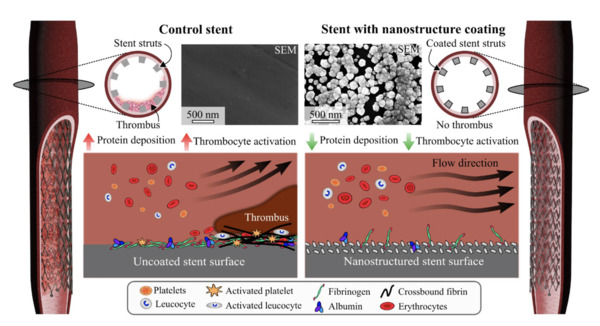
Inherent to any stenting procedure is the prescription of dual antiplatelet therapy (DAPT) to reduce the platelet response. Clinical guidelines recommend 6–12 months of DAPT, depending on stent type, clinical picture and patient factors. Our hypothesis is that a nanostructured noble metal coating has the potential to reduce protein deposition and platelet activation. These effects would reduce subsequent thrombo-inflammatory reactions, potentially mitigating the need for an extensive DAPT in the acute phase. Here, a noble metal nanostructure coating on stents is investigated.
|
|
Scooped by
Beeyond
January 26, 9:12 AM
|
In the BuMA-OCT randomised trial, the novel BuMA PLGA-polymer with electro-grafting base layer SES was superior to the EXCEL PLA-polymer SES in the primary endpoint of stent strut coverage at three-month follow-up.
|
|
Scooped by
Beeyond
January 26, 3:37 AM
|
Based on the “strong” results of the IN.PACT AV Access trial across different anatomical regions in native fistulas, he explains, DCBs should be used as “first-line treatment” for stenosis. In his opinion, de novo lesions are the “perfect” place to start DCB treatment, because the paclitaxel has a cytotoxic action for cells in active proliferation.
|
|
Scooped by
Beeyond
January 26, 3:35 AM
|
STARS DAPT aims to study the difference between a P2Y12 receptor inhibitor-based single antiplatelet therapy (SAPT) regimen after a short period of dual antiplatelet therapy (DAPT) versus conventional six or 12 months of DAPT. The co-primary endpoints at 12 months are major adverse cardiac and cerebrovascular events and major bleeding complications.
Newer generation polymer-free DES like the Abluminus np with thin struts, fusion and abluminal coating of Sirolimus aids in natural vascular healing of the arteries, faster re-endothelialisation and mitigating chronic inflammation which permits the possibility of potentially shortening the DAPT requirement, Concept Medical says in a press release. Abluminus np has been studied in single-arm Indian registries with promising safety and efficacy leading up to STARS DAPT being the first randomised evaluation
|
|
Scooped by
Beeyond
January 26, 3:34 AM
|
This preliminary study failed to demonstrate the superiority of the Abluminus DES+ over the DP-EES in diabetic patients in terms of neointimal proliferation.
|
|
Scooped by
Beeyond
January 8, 6:25 AM
|
Platelet-derived growth factor (PDGF) has been implicated in the pathogenesis of arterial atherosclerosis and venous neointimal hyperplasia. We examined the effects of PDGF isoforms on smooth muscle cells (SMCs) from arterial and venous origins in order to further understand the differential responsiveness of these vasculatures to proliferative stimuli. Serum-starved human arterial and venous SMCs exhibited very different proliferative responses to PDGF isoforms. Whereas, proliferation of arterial SMCs was strongly stimulated by PDGF-AA, venous SMCs showed no proliferative response to PDGF-AA, but instead demonstrated a significantly greater proliferative response to PDGF-BB than arterial SMCs. Part of this difference could be attributed to differences in PDGF receptors expression.
|
|
Scooped by
Beeyond
January 8, 6:09 AM
|
Platelets play an important role in the restenosis process after balloon angioplasty. Early experimental studies highlighted this role. Thrombocytopenia inhibits the intimal hyperplasia after arterial injury, provided it is established well before the time of injury and is sustained. Previous experimental studies and clinical trials testing antiplatelet drugs have been disappointing, suggesting that new and more powerful agents, such as the GP IIb/IIIa antagonists, may be required. These agents represent new hope to reduce restenosis after coronary angioplasty, as suggested by 6 months of follow-up in the EPIC study.
|
|
Scooped by
Beeyond
January 8, 6:07 AM
|
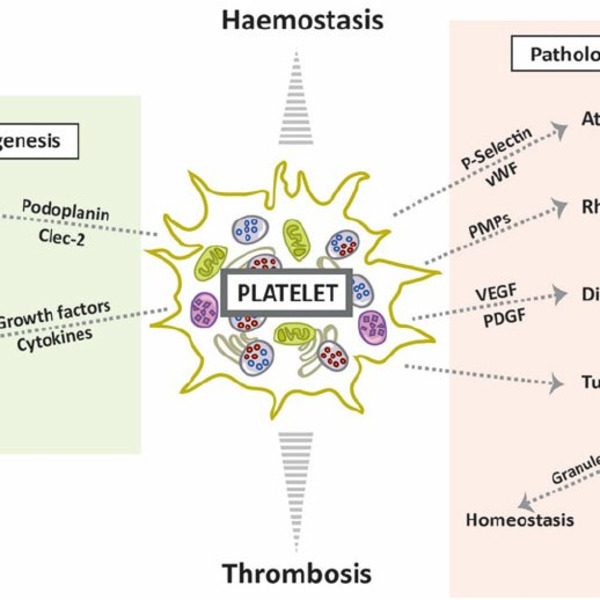
Platelets possess an armory of pro- and anti-angiogenic proteins, which are actively sequestered and highly organized in α-granule populations. Platelet activation facilitates their release, eliciting potent angiogenic responses through mechanisms that appear to be tightly regulated. In conjunction, the release of platelet-derived phospholipids and microparticles has also earned merit as synergistic regulators of angiogenesis. Consequently, platelets have been functionally implicated in a range of angiogenesis-dependent processes, including physiological roles in wound healing, vascular development and blood/lymphatic vessel separation, whilst facilitating aberrant angiogenesis in a range of diseases including cancer, atherosclerosis and diabetic retinopathy.
|
|
Scooped by
Beeyond
January 8, 6:04 AM
|
With their exceptional structural and functional features, platelets play critical roles in hemostasis, vasomotor function, and immunity. In hemostasis, their contribution far exceeds their simple participation in the formation of the ‘platelet plug’. The multiple interactions that exist between platelets, the vessel wall, and the coagulation system complicate the fundamental process of hemostasis and particularly that of thrombosis. Antithrombotic drugs that interfere with platelet functions are under continuous development. The next frontier in this area will probably be reached when antithrombotic drugs that manage to differentiate thrombosis from hemostasis make their way into clinical practice, offering the prospect of safer antiplatelet therapy. Given the rapidly expanding use of the direct oral anticoagulants, establishing their exact impact on platelet functions is another open area for research.
|
|
Scooped by
Beeyond
January 8, 6:02 AM
|
Deep learning applications may assist in automatically detecting coronary arteries on invasive coronary angiography (ICA).
|
|
Scooped by
Beeyond
January 8, 5:59 AM
|
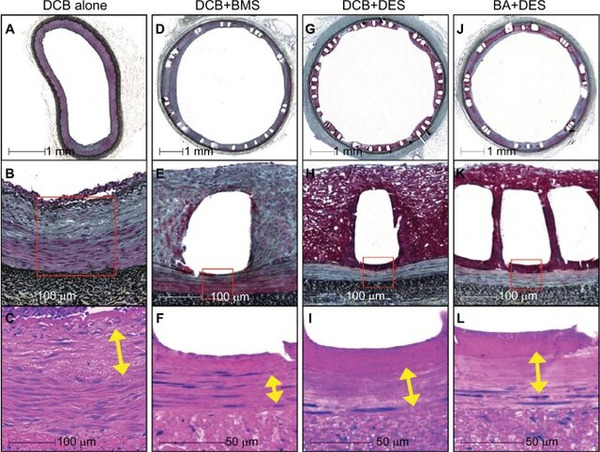
Smooth muscle proliferation and migration after percutaneous intervention represent the end result of natural healing processes triggered by vascular injury. Vascular smooth muscle cell proliferation, especially after stent implantation, plays a critical role in neointimal hyperplasia through cellular expansion and extracellular matrix deposition. Elucidating the molecular mechanisms responsible for smooth muscle cell proliferation has led to the development of novel therapeutic approaches, including rapamycin- and paclitaxel-eluting stents that have significantly improved the care of patients with coronary artery disease. To address the concerns about the potentially increased incidence of stent thrombosis in patients treated with drug-eluting stents, newer stents and coronary devices have been developed such as drug-eluting stents with biodegradable polymers, drug-eluting stents that are polymer-free, stents with novel coatings, completely biodegradable stents, bifurcation stents, and drug-eluting balloons.
|
|
Scooped by
Beeyond
January 8, 5:57 AM
|
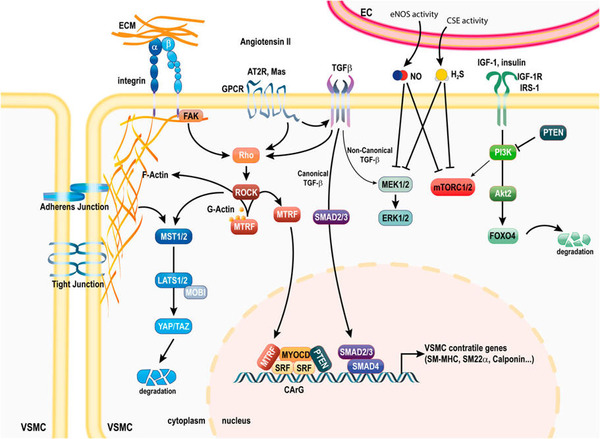
Arterial occlusive disease is the leading cause of death in Western countries. Core contemporary therapies for this disease include angioplasties, stents, endarterectomies and bypass surgery. However, these treatments suffer from high failure rates due to re-occlusive vascular wall adaptations and restenosis. Restenosis following vascular surgery is largely due to intimal hyperplasia. Intimal hyperplasia develops in response to vessel injury, leading to inflammation, vascular smooth muscle cells dedifferentiation, migration, proliferation and secretion of extra-cellular matrix into the vessel’s innermost layer or intima. In this review, we describe the current state of knowledge on the origin and mechanisms underlying the dysregulated proliferation of vascular smooth muscle cells in intimal hyperplasia, and we present the new avenues of research targeting VSMC phenotype and proliferation.
|
|
Scooped by
Beeyond
January 7, 3:22 PM
|
These result demonstrate that in vivo endothelial cells replication stops long before the aorta is repopulated and suggest that some mechanism other than contact between endothelial cells can prevent endothelial cell replication.
|
|
Scooped by
Beeyond
January 7, 3:20 PM
|
Although animal models provide detailed knowledge about restenosis, large variability in the neointimal hyperplasia response impairs clinical translatability. The sequence and weighting of the different factors, such as mechanical stressors, endothelial permeability, monocyte influx, VSMC proliferation, and migration, as well as synthesis of extracellular matrix, need to be further investigated. For this purpose, it is necessary to be aware of the specific characteristics and distinct differences among the corresponding animal models.
|
|
Scooped by
Beeyond
January 7, 3:18 PM
|
Under physiological shear conditions, a 50-fold higher number of recirculating biotinylated cells attached to the avidin-modified metal surfaces compared to bare metal counterparts. Delivery of biotinylated endothelial cells to the carotid arterial segment containing the implanted avidin-modified stent in rats results in immediate cell binding to the stent struts and is associated with a 30% reduction of in-stent restenosis in comparison with BMS.
|
|
Scooped by
Beeyond
January 7, 3:17 PM
|
Restenosis at the site of an endoluminal procedure remains a significant problem in the practice of interventional cardiology. We present current data on intimal hyperplasia, which identify the major role of endothelial cells (ECs) in the development of restenosis. Considering endothelial denudation as one of the most important mechanisms contributing to restenosis, we focus more attention on methods of accelerating restoration of endothelial continuity. Prevention of restenosis may be achieved by promoting endothelial regeneration through the use of growth factors, EC seeding, vessel reconstruction with autologous EC/fibrin matrix, and the use of estrogen-loaded stents and stents designed to capture progenitor ECs.
|
|
Scooped by
Beeyond
January 7, 3:13 PM
|
Reendothelialization was completed in < 66 h. During reendothelialization, cell migration and replication proceeded simultaneously until confluence was reached. Following confluence, as migration ceased, cell density returned toward control levels. It continued to rise, associated with continued, though attenuated, nuclear incorporation of [3H]thymidine, until it reached 112–212 times that of adjacent uninjured control endothelium.
|
|
Scooped by
Beeyond
January 7, 3:00 PM
|
After 48 hours, this wound was covered by replicating endothelial cells which were densely packed together. This increased density remained over the site of injury for at least 4 weeks. A circular injury denuded a zone one to two endothelial cells wide. This wound was repopulated by endothelial cells within 8 hours without cell replication. No intimal thickening occurred in the vessels after either injury.
|
|
Scooped by
Beeyond
January 7, 2:59 PM
|
Regeneration of the endothelial lining is mediated by cells flanking the injury. Endothelial repair does not require circulation of tip/stalk specification. Cells driving regeneration express a cohort of stress response genes. Atf3 is required for regeneration of the endothelial lining of large arteries
|
|
Scooped by
Beeyond
January 2, 11:56 AM
|
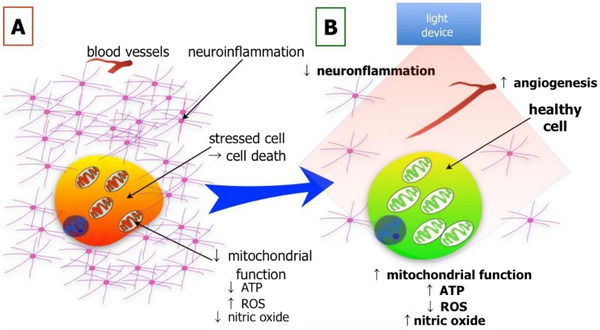
Two of the most common, often fatal, forms of cardiovascular disease are acute myocardial infarction and stroke. Both conditions involve compromised blood flow to target organs, resulting in dysfunction and subsequent death of cardiac and brain cells. Unfortunately, treatment options aiding the recovery phase have not been readily forthcoming over the years. In this narrative review, we explore the effectiveness of red and near infrared light treatment—known also as photobiomodulation (known henceforth as "light")—in improving the recovery process after either acute myocardial infarction or stroke in both preclinical and clinical studies. For preclinical studies, we consider the key findings gleaned from a large number of studies using a wide range of animal models that mimic the human conditions, showing that light treatment addresses the hallmarks of pathology associated with both these conditions; it stimulates mitochondrial activity, limits the infarct size, reduces inflammation and improves reperfusion.
|
|
Scooped by
Beeyond
December 31, 2025 9:38 AM
|
Recently, angiography-derived index of microvascular resistance (angio-IMR) has emerged as a less invasive alternative to estimate CMD during cardiac catheterization. Whether CMD differs across vessel territories and populations remains disputed.
|
|
Scooped by
Beeyond
December 28, 2025 7:52 AM
|
In a Corelab setting, the inter- and intra- observer reproducibility for strut count, strut apposition and strut tissue coverage measurements with OCT is excellent, ca. 1%. This emphasises the value of OCT as a tool for the clinical long-term assessment of stents.
|
|
Scooped by
Beeyond
December 24, 2025 12:43 PM
|
The American Heart Association is backing an AI startup aimed at improving detection of hard-to-diagnose conditions like cardiac amyloidosis and heart failure with preserved ejection fraction (HFpEF). The company, named Ultromics, offers a platform that analyzes routine echocardiograms to help clinicians catch disease earlier, particularly for women who are more likely to be missed.
|
|
Scooped by
Beeyond
December 22, 2025 6:33 AM
|
Giacoppo and colleagues provide one of the strongest long term evidence that P2Y12 inhibitor monotherapy offers better protection against major heart and brain events than aspirin after DAPT is completed following PCI, without causing more major bleeding. More importantly, the study raises an important question: why is aspirin still used as the standard antiplatelet drug when patient risk profiles have changed so much?
|

Curated by Beeyond
BEEYOND is a consulting company in the field of disruptive innovation, accompanying established companies on out-of-the-core growth strategy, from creation of new concepts to product launch. Reach us at: contact@beeyond.fr.
|