Your new post is loading...

|
Scooped by
Beeyond
July 25, 7:09 AM
|
A few years ago, I booked a flight from Lima to Cusco that, thanks to a mix-up, was scheduled ten days earlier than the one my friends were on. When I landed in Cusco—a city not exactly known for its strong internet infrastructure—I couldn’t get WhatsApp to load, and I didn’t have a local Peruvian number to fall back on. Trying to reach my friends or figure out how to get to our accommodation quickly became a bit of a mission. I’ve spent a lot of time in the quiet corners of the world—coastal towns along Brazil’s southeastern São Paulo state, where cell service fades at the shoreline, and the vast open plains of Patagonia, where the stars easily outnumber people.
|
|
Scooped by
Beeyond
July 6, 3:31 AM
|
The industry has spent two years talking about enterprise agents. The bigger prize for operators is sitting in the consumer base they already bill every month.
|
|
Scooped by
Beeyond
July 3, 11:52 AM
|
On July 1, 2026, the Wall Street Journal dropped a story that moved $130 billion of market value in an afternoon: SpaceX had quietly shown investors a prototype handset during its IPO roadshow. Slimmer than an iPhone, with a proprietary operating system, a Qualcomm Snapdragon chip and xAI’s Grok woven into its core. Elon Musk’s response took four words, “utterly false”, and the market’s response took about 7% of SPCX shares, erasing more than $50 billion of Musk’s net worth and, for a day, his title as the world’s first trillionaire.
|
|
Scooped by
Beeyond
June 26, 12:07 PM
|
Is your telco network Mythos-safe? This is not a rhetorical question but a critical survival test for every CEO. Models like Mythos can now parse 50 million lines of code in minutes, using semantic reasoning to chain hidden vulnerabilities into lethal attack paths. And yes, this is just “version 1.0” of the AI-Frontier models. The industry’s comfort with legacy debt or relying on a hard shell to protect a soft interior is not enough.
|
|
Scooped by
Beeyond
June 25, 10:47 AM
|
Telcos are losing a war they don't even realize they're fighting. While carriers waste time competing with each other over minor price cuts, outside tech giants and agile startups are carving up their market share.
Starlink is bypassing ground infrastructure with satellites to cap home broadband prices. Twilio and RingCentral have turned enterprise voice into a software API for AI agents. Apple Passkeys and startups like Socure have eliminated the lucrative telco SMS verification step by handling identity directly on the device using biometrics. Even in heavy infrastructure, Nvidia is building its own data backbones, and companies like Boldyn Networks and many others are deploying private networks directly for factories using open spectrum. These are just a few examples, and if you extend this to the AI economy, there are hundreds of startups carving out small pockets of opportunity.
|
|
Scooped by
Beeyond
June 23, 9:44 AM
|
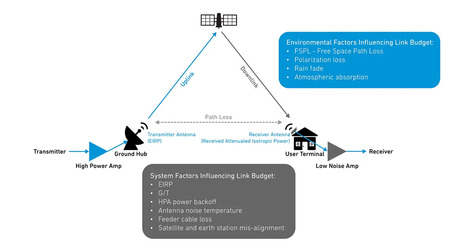
When a consumer installs a satellite dish on a roof, they establish a pristine, uncompromised line of sight to the sky using an active phased-array antenna with massive gain (30+ dBi). That architecture scales. Direct-to-Device does not. When you remove the dedicated roof dish and attempt to close that same 500 km link with an unmodified smartphone, you are forced to rely on an isotropic, omnidirectional antenna yielding roughly 0 dBi of gain and operating at a fraction of a watt of transmit power.
Despite the massive satellite apertures currently being deployed to brute-force the uplink, the laws of physics remain unforgiving. Orbital D2D cannot provide meaningful concurrent sector capacity, cannot provide low latency, and, due to a microscopic penetration margin, absolutely cannot provide indoor coverage.
Orbital D2D is more like an insurance policy. It is a brilliant, necessary solution for the 0.0001% of edge cases like the stranded hiker, the mid-ocean SOS, and extreme remote telemetry. But for Telcos tasked with delivering gigabits of data to dense urban and suburban populations, where 80% of data is consumed indoors, orbital D2D is practically useless as a core capacity layer.
|
|
Scooped by
Beeyond
June 21, 5:53 PM
|
At Reliance's Annual General Meeting, Jio shared a detailed proposal with India’s space regulator, IN-SPACe, outlining a massive orbital infrastructure project. The plan details the deployment of a proprietary Low Earth Orbit satellite constellation comprising approximately 1,650 satellites. Positioned at an operational altitude of approximately 650 kilometers, the network is designed to target two distinct service models: high-throughput rural fixed broadband and Direct-to-Device connectivity, which allows standard, off-the-shelf smartphones to connect directly to satellites without specialized satellite dishes or hardware modifications.
|
|
Scooped by
Beeyond
June 18, 3:39 AM
|
By anchoring machine identities directly at the network or hardware level, operators can definitively authenticate automated assets and enforce strict security boundaries. Recent initiatives by operators like SK Telecom and StarHub demonstrate this emerging use case, moving beyond high-level AI experimentation to build concrete frameworks that assign verifiable identities to autonomous systems, enabling audit, monitoring, and secure machine-to-machine operations.
|
|
Scooped by
Beeyond
June 14, 8:09 AM
|
Telco is still treating AI traffic as a synchronous chat interface, failing to account for the kinetic scale of what is actually occurring. The transition from human-latency software to machine-velocity swarms has already happened, and nobody is prepared for what is coming. I don't know the full implications either, but I could see some areas that are critical to discuss.
|
|
Scooped by
Beeyond
June 10, 8:40 AM
|
“There is a 1% population that’s not covered today in very rural areas,” Desroches stated. “And I think satellite is a great solution for that... but within urban and suburban areas, the infrastructure that is in place is better. It is the cost per bit to deliver that is cheaper.”. From the perspective of a tier-one telecom operator managing a $176 billion connectivity business that provides nationwide premium fiber and 5G service across America, this position makes total sense.
But the moment you set foot outside the telecom world, the broader financial market paints a radically different picture. Wall Street analysts are issuing downgrades over the satellite threat, and SpaceX is currently on its roadshow for a historic June 12 IPO targeting a $1.75 trillion valuation. It is a number built almost entirely on the premise of disrupting the global telecommunications market; in fact, SpaceX models Starlink’s total addressable market at $1.3 trillion, which is the exact size of total global telecom revenues.
|
|
Scooped by
Beeyond
June 6, 10:25 AM
|
The postman. I remember him from when I was a kid. He was an elderly man who brought letters to the door. We got excited when the doorbell rang because it meant news, a connection, or an update. Technology killed that job. Faster, cheaper ways to send messages replaced him. It wasn’t because the job was bad; it was because the economics of communication changed.
We’re seeing the exact same thing happen in telecom customer care right now. People like to say “AI will assist the human,” implying a nice, happy future where machines and people work together. That’s a lie. AI is not helping reps but replacing them. This is driven by three simple things: customers demand zero friction, speed matters more than small talk, and the cost of human labor is way too high.
The Telco call customer care layer is not evolving, but ending. Now, the human part doesn’t stop at zero. As the front lines go fully automated, a tiny group of about 5% of humans will remain. This is a high-stakes, specialized workforce. Their job is harder and more intense than anything we’ve seen before.
|
|
Scooped by
Beeyond
June 3, 7:02 AM
|
Techco is dead.The definition was always consulting fluff.
McKinsey defined Techco as an evolution into “platform-oriented innovators akin to today’s top tech players.” The financial mechanics prove this is a category error. Telcos and tech companies share nothing but the letter “T”. The inherent financial structure leaves no room for debate: telecom runs on 1% R&D; tech runs on 15% or more. We do not write proprietary operating systems or build global developer ecosystems. We manage heavy, long-lived physical infrastructure, power, and heating loads, using standardized vendor hardware.
Attempting to secure a software valuation by changing corporate vocabulary does not alter the depreciation cycle of a cell tower or the CapEx of a fiber trench. Techco is simply the newest headstone in the telecom graveyard, buried alongside WAP portals, Telco 2.0, DSP, and the Smartpipe.
|
|
Scooped by
Beeyond
May 30, 11:04 AM
|
The telecom world is split right down the middle over a major spending decision. This is even more polarizing than whether Pizza should have pineapple or if cats are better pets than dogs. The Telco fans are divided!
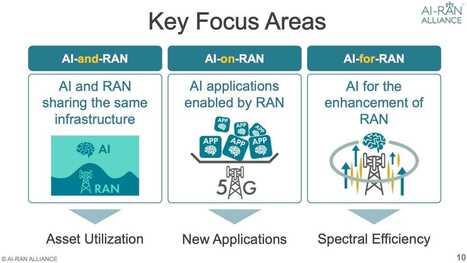
Telcos are trying to figure out whether tomorrow’s radio networks actually need GPUs, or if they can just keep using dedicated ASICs or even the CPU hardware they already have. The decision may seem small, but it has massive consequences across the value chain, vendors, the ecosystem, Capex, and monetization.
To understand where people stand, I ran a poll on LinkedIn asking if we actually need GPUs in the RAN to build a future-proof RAN network, or if the standard ASIC/CPU approach is enough. The results showed a clear dividing line. Around 60% said standard ASICs and CPUs are good enough, while 40% feels GPUs are mandatory.
|
|
|
Scooped by
Beeyond
July 9, 9:11 AM
|
In April 2026, an unreleased AI model found a software flaw that had survived 27 years of human review inside OpenBSD, the operating system security professionals choose precisely because it is hardened. Anthropic deemed the model Claude Mythos Preview too dangerous to release to the public.
The telecom industry filed the story under cybersecurity and moved on. But that is the wrong reading of what is coming.
Mythos did more than embarrass the security profession. It exposed the founding assumption of the mobile generation model. Not the caricature that networks only change once a decade, because they are patched and upgraded constantly, but something subtler and harder to fix.
The generational cycle sets the speed at which the industry can revise its assumptions, and the operational doctrine around it sets the speed at which even routine fixes reach the live network.
|
|
Scooped by
Beeyond
July 4, 9:30 AM
|
Yup, you can be a trillion-dollar company; you can have the cheapest plans on the market; you can hire the best engineers in the world. But if you don’t have enough spectrum, everything is an uphill battle. Spectrum is the land your network is built on. Everything else, such as radios, software, and marketing, is what you build on top of it, and no amount of construction skill compensates for a small lot.
The United States is about to prove this twice. Once with fresh performance data that shows exactly how spectrum, not equipment, decides who wins today. And once with what’s coming with the mother of all spectrum auctions, 160 MHz of prime mid-band, the rules for which the FCC votes on July 22, 2026, which could redraw the American wireless map for the next decade.
|
|
Scooped by
Beeyond
June 28, 9:45 AM
|
There is massive confusion in the Telecom sector regarding what an AI agent actually is, how it functions, and the type of network infrastructure it requires. The industry has lazily reduced the entire debate to a binary choice: either put an expensive GPU at the network edge, or keep it in the cloud?
The reality is far more complex and dangerous.
The shift from human-triggered chatbots to autonomous, machine-speed agents is triggering a structural latency crisis that completely rewrites network economics. For Telcos and cloud providers alike, solving this architectural challenge will determine who captures the premium token value of the Inference Economy and who gets relegated to selling low-margin data pipes.
|
|
Scooped by
Beeyond
June 26, 12:07 PM
|
The question of whether Elon Musk can execute a Jio-style entry into the US wireless market is easily answered: yes, he can, and it is highly likely to happen. There is a specific reason Musk has been selling a massive vision to his financial backers; during the recent IPO roadshow, SpaceX suggested to investors that Starlink’s addressable market is the entire global communications sector, representing an estimated $1.6 trillion in total value.
|
|
Scooped by
Beeyond
June 24, 10:11 AM
|
In the next 30 days, global telecommunications networks will route 3 quadrillion AI tokens—generating 77 exabytes of traffic. Yet, over the course of an entire 12-month fiscal year, the collective direct AI revenue for the world's top operators caps out at roughly $1 billion. That is 0.04% of the $2.52 trillion AI economy.
|
|
Scooped by
Beeyond
June 22, 9:50 AM
|
Telecom autonomy has struggled to evolve under traditional machine learning models because these older systems operate as uninterpretable black boxes. Machine learning excels at deterministic tasks and pattern recognition across massive datasets. However, network engineers managing critical infrastructure require clear explanations before executing system changes.
This lack of explainability stalled the progression of autonomous networks. Handing over control of complex actions without understanding the underlying math creates an extremely risky trust gap for Telcos. To resolve this, Nokia and Google Cloud designed the Gemini-powered agents using a “glass box” architecture.
Instead of executing an unverified command, the action reasoner agent functions as an advisory layer. It processes the network data and presents a confidence-based recommendation to the human operator. Because these specialized agents can explain their conclusions and reasoning, they elicit greater trust from users. Human engineers retain control and final approval over critical control points before logging and executing fixes. By combining autonomous data analysis with human observability, the platform establishes the required safety to deploy machine-speed operations.
|
|
Scooped by
Beeyond
June 19, 9:39 AM
|
Global mobile network data traffic grew by 22% between the first quarter of 2025 and the first quarter of 2026. That is a steady number, but it shows growth is slowing. Compare that to 2019, when the explosion of mobile video caused traffic to spike by 80% year-on-year. The data shows that the predicted AI data tsunami on the access network is absent.
|
|
Scooped by
Beeyond
June 14, 9:52 AM
|
In 1960, a legendary Harvard Business School professor named Theodore Levitt published a paper that essentially called the most powerful executives in the corporate world a bunch of unimaginative fools. He argued that entire industries stagnate and die not because people stop buying things, but because executives fundamentally misunderstand what business they are actually in.
Later in his career, Levitt dropped a hammer that should be bolted to the wall of every telecom boardroom on earth today. He stated that there is no such thing as a commodity, and that all goods and services are differentiable. Levitt believed that “commoditization” was never an inevitable law of economics; instead, it was simply a failure of imagination. He argued that even the most basic, elemental raw materials on earth could be differentiated through packaging, service, proximity, or context. To Levitt, settling for selling a commodity meant that a management team had entirely given up on strategy.
|
|
Scooped by
Beeyond
June 13, 9:10 AM
|
Sure, 6G will deliver necessary operational improvements. It will utilize new 7GHz spectrum, improve radio performance, and lower the cost per bit for operators still recovering from the 5G capex hangover. However, consumers and enterprises do not pay a premium for faster pipes. Connectivity is now a hyper-commoditized utility.
If Telcos want to capture value in this new economy, they must stop defining their core business as “connectivity.” Telecom is a distribution business.
Networks serve as the last-mile delivery system for the global economy. In the past, the industry distributed voice, SMS, and 8K video. Today, the asset being distributed is intelligence. Hyperscalers are building massive, centralized AI data centers, but that compute power requires a physical delivery mechanism to reach users.
To get in the path of the money, telecom operators must pivot to distributing AI agents and semantic compute to the edge.
|
|
Scooped by
Beeyond
June 8, 5:21 AM
|
Unplanned downtime costs manufacturers $50B annually. Root causes, prevention strategies, and CMMS-powered approaches to eliminate reactive maintenance.
|
|
Scooped by
Beeyond
June 5, 9:21 AM
|
When I worked at Google, the cultural difference was clear. Engineers there were treated like stars. This wasn’t just a figure of speech; they earned the same respect and pay as top athletes like Messi or Michael Jordan. They got million-dollar contracts because leadership knew that nothing would happen without their talent. The business team at Google understood their job was to support the engineers’ work. They knew the product was the engineering, and they treated the engineers with real respect.
Contrast that with the average telecom operator or vendor today. If you walk into a typical telco office, you will find the engineers in the backseat, hidden away in back rooms, tasked with the mundane, high-pressure duty of keeping the network alive. They are the ones sweating over the five-nines, ensuring the infrastructure stays up through every crisis, while the people at the front of the room- the business folks, the strategic advisors, the ones who talk big and sell the “digital transformation” vision- take the glory. It is a massive absurdity.
|
|
Scooped by
Beeyond
June 1, 11:34 AM
|
Yes, Laser is the ultimate communications medium. Physics dictates that transmitting photons through a vacuum offers near-infinite bandwidth with zero latency constraints. But deploying naked lasers on Earth has historically been an exercise in frustration. Atmospheric turbulence, fog, rain, and physical interference forced the industry to wrap light in glass cables or default to the reliable, albeit slower, medium of radio frequencies.
For decades, Free Space Optics, or FSO, was dismissed as a fragile science experiment, and, to some extent, the case was officially closed.
Laser communications are back, driven by an explosion of technology developments and critical infrastructure needs that were once far from mainstream. Today, lasers are taking over every single layer of the network topology simultaneously, building a seamless architecture from space down to the terrestrial core. In orbit, optical inter-satellite links are creating massive mesh networks in a vacuum to route data globally.
|