Your new post is loading...

|
Scooped by
Beeyond
July 9, 9:11 AM
|
In April 2026, an unreleased AI model found a software flaw that had survived 27 years of human review inside OpenBSD, the operating system security professionals choose precisely because it is hardened. Anthropic deemed the model Claude Mythos Preview too dangerous to release to the public.
The telecom industry filed the story under cybersecurity and moved on. But that is the wrong reading of what is coming.
Mythos did more than embarrass the security profession. It exposed the founding assumption of the mobile generation model. Not the caricature that networks only change once a decade, because they are patched and upgraded constantly, but something subtler and harder to fix.
The generational cycle sets the speed at which the industry can revise its assumptions, and the operational doctrine around it sets the speed at which even routine fixes reach the live network.
|
|
Scooped by
Beeyond
July 1, 11:45 AM
|
A Token Policy architecture functions as a hybrid system, moving beyond the traditional network layers. It requires a convergence of functions that bridge the transport layer, where the 5G core operates, with the application layer, where token-based requests are actually generated.
Because the network must now “read” the intent of the traffic, we are essentially building a cross-layer gateway that sits between the user equipment and the service destination. The long-term viability of this approach depends on whether the 3GPP decides to standardize these functions.
|
|
Scooped by
Beeyond
June 18, 8:41 AM
|
In 1932, American industrialist Eben Byers died after his jaw physically collapsed from drinking “Radithor”, an over-the-counter energy drink infused with raw radium. In the early 20th century, society was so mesmerized by the superficial “glow” of radiation that brands blindly put thorium and radium into cosmetics, toothpaste, and water. It wasn’t until 1938, when the lethal, cellular-level destruction of radiation became undeniable, that governments stepped in, stripped radioactive elements from consumer shelves, and locked nuclear energy behind strict regulatory walls.
Today, we are repeating that exact historical error.
|
|
Scooped by
Beeyond
June 8, 5:21 AM
|
Unplanned downtime costs manufacturers $50B annually. Root causes, prevention strategies, and CMMS-powered approaches to eliminate reactive maintenance.
|
|
Scooped by
Beeyond
June 3, 7:02 AM
|
Techco is dead.The definition was always consulting fluff.
McKinsey defined Techco as an evolution into “platform-oriented innovators akin to today’s top tech players.” The financial mechanics prove this is a category error. Telcos and tech companies share nothing but the letter “T”. The inherent financial structure leaves no room for debate: telecom runs on 1% R&D; tech runs on 15% or more. We do not write proprietary operating systems or build global developer ecosystems. We manage heavy, long-lived physical infrastructure, power, and heating loads, using standardized vendor hardware.
Attempting to secure a software valuation by changing corporate vocabulary does not alter the depreciation cycle of a cell tower or the CapEx of a fiber trench. Techco is simply the newest headstone in the telecom graveyard, buried alongside WAP portals, Telco 2.0, DSP, and the Smartpipe.
|
|
Scooped by
Beeyond
May 28, 5:44 AM
|
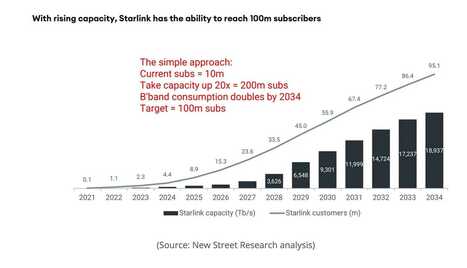
While the telecom sector spent years comfortably looking down on satellite internet as a niche utility for remote cabins, the cold mathematics of orbital infrastructure have been quietly laying the groundwork for an absolute takeover. A recent comprehensive forecast by the analyst firm New Street Research projected that Starlink will scale from its current base of roughly 10.3 million users to a massive 100 million subscribers by 2034. That means capturing nearly 10% of the global fixed broadband market and translating that density into roughly $49 billion to $55 billion in annual top-line revenue.
|
|
Scooped by
Beeyond
May 26, 7:27 AM
|
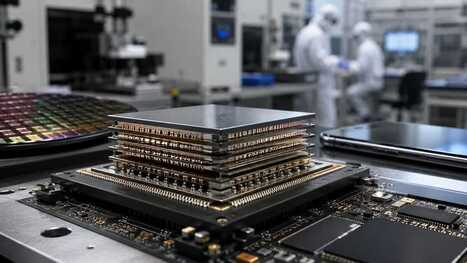
The U.S. sanctions banned Huawei from buying the machines required to physically print transistors that small on a flat piece of silicon.
Huawei’s response was to abandon the 2D plane. Instead of shrinking the physical transistor down to 1.4nm, they are taking larger, older transistors and stacking them vertically using a 3D architecture called LogicFolding. They shrink the distance the signal travels by going up, delivering the exact same 1.4nm processing speed without needing the restricted U.S. technology.
|
|
Scooped by
Beeyond
May 24, 5:51 AM
|
As a follow-up to our ongoing tracking of the telecommunication market, the structural contraction we’ve been mapping is visibly accelerating. The BT Group recently announced plans to eliminate up to 40% of its workforce by 2030, representing approximately 27,500 jobs. This follows a broader pattern across the global sector: Verizon recently executed a $2 billion restructuring program involving 15,000 corporate roles, while T-Mobile filed to reduce its corporate management layer in Bellevue, Washington. Across the entire ecosystem, operators and their supply chains are systematically reducing headcount.
The telecommunications labor market is locked into a structural contraction that will continue at least through this decade, and the reasons have nothing to do with AI or any technological shift.
|
|
Scooped by
Beeyond
May 21, 9:20 AM
|
To appreciate the significance of this development, it is helpful to look back at the previous defining era of telecommunications. In the early 2010s, as smartphones became ubiquitous and app economies exploded, the metric of value for both carriers and consumers shifted dramatically. This was the era of the gigabyte. Subscriptions, usage caps, and pricing tiers were all defined by data consumption. Telcos established the price per gigabyte as their primary billing KPI, monetizing the massive demand for mobile internet, video streaming, and app-based services. For a decade, the “GB per month” was the yardstick of digital life.
|
|
Scooped by
Beeyond
May 14, 9:37 AM
|
A Tier One telco threw me an “acid test” question today. The question was much sharper: “With around 10,000 satellites in orbit today, how many fixed broadband households can Starlink actually support? 20 million, 30 million, 100 million?” That question is important because it is not about coverage but about damage. Fixed and cable players do not lose sleep because Starlink can draw a coverage map over the planet; they lose sleep if Starlink can take paying broadband households at scale without destroying its own quality.
|
|
Scooped by
Beeyond
May 8, 10:09 AM
|
Telecom operators are under pressure from rising costs, customers who expect instant digital service, and competitors that can launch faster. Many operators assume they must finish large-scale modernization before AI can deliver value. In practice, that sequence is too slow. The same legacy complexity that blocks transformation is also where AI can help first.
A better approach runs AI and modernization in parallel. Well-scoped AI agents can take on targeted work—like confirming orders or triaging tickets—while highlighting the exact bottlenecks to fix next. When agents repeatedly stall or escalate, it often points to broken handoffs, conflicting rules, missing data, or fragile integrations.
|
|
Scooped by
Beeyond
May 8, 9:59 AM
|
The space broadband market is not one race — it is three distinct businesses competing with incompatible cost structures, customer bases, and path-to-profitability timelines. Starlink’s residential average revenue per user (ARPU) of $90–120/month is already funding its next phase of enterprise expansion, while Amazon Leo (formerly Project Kuiper) has yet to prove it can convert $25 billion in infrastructure spend into durable margin. Meanwhile, direct-to-device (D2D) challengers led by AST SpaceMobile are betting on wholesale telco partnerships rather than consumer subscriptions — a model that changes who captures the economics. Investors holding positions in any of the three need to understand which business they actually own.
|
|
Scooped by
Beeyond
May 5, 8:40 AM
|
In the early 1990s, the telecommunications industry was built on the logic of continuity. The dominant architecture was circuit switching, a system in which a physical, dedicated path, a “solid line” of copper, was required for the entire duration of a communication. To the executives of that era, business was a series of analog fixtures: a phone call was an open circuit, a memo was a physical object in a mailbag, and a movie was a continuous strip of celluloid.
When pioneers like Donald Davies and Paul Baran proposed breaking information into discrete “packets” that could find their own path across a network, the reaction was often dismissive. Legacy carriers viewed discretization as an invitation to chaos. They argued that “chopping up” a voice call into tiny fragments and hoping they would reassemble on the other end would compromise the system's reliability. In their view, reality had mass, and information could not be divorced from its physical medium without catastrophic failure.
|
|
|
Scooped by
Beeyond
July 3, 11:52 AM
|
On July 1, 2026, the Wall Street Journal dropped a story that moved $130 billion of market value in an afternoon: SpaceX had quietly shown investors a prototype handset during its IPO roadshow. Slimmer than an iPhone, with a proprietary operating system, a Qualcomm Snapdragon chip and xAI’s Grok woven into its core. Elon Musk’s response took four words, “utterly false”, and the market’s response took about 7% of SPCX shares, erasing more than $50 billion of Musk’s net worth and, for a day, his title as the world’s first trillionaire.
|
|
Scooped by
Beeyond
June 29, 9:49 AM
|
The question is not if, but how. Mapping the strategic paths for SpaceX’s entry into the terrestrial mobile space, and why, while difficult, it is far from impossible for Musk.
|
|
Scooped by
Beeyond
June 14, 7:09 AM
|
AI-RAN (artificial intelligence—radio access network) is a technology that enables the full integration of AI into the radio access network to realize transformative gains in operational performance, deliver new AI-based services, and unlock monetization opportunities. It enhances connectivity across mobile networks by leveraging AI to improve spectral efficiency, dynamic traffic handling, and real-time responsiveness.
|
|
Scooped by
Beeyond
June 6, 9:18 AM
|
While they may not represent the revolution many predicted, autonomous taxi fleets are rolling out in more cities and becoming a promising urban mobility option. A BCG analysis estimates that the global robotaxi fleet could range between 700,000 to 3 million vehicles by 2035 and that fares in some markets will be lower than traditional ride-hailing services.
The speed of deployment will be influenced by the costs of entering new markets, the time needed to scale up, consumers’ willingness to embrace robotaxis, and the degree to which they capture share from other transportation modes. To win in this increasingly competitive market, operators will need patience and years of substantial investment. They’ll also need to navigate complex regulatory, operational, and technological challenges.
|
|
Scooped by
Beeyond
June 1, 11:34 AM
|
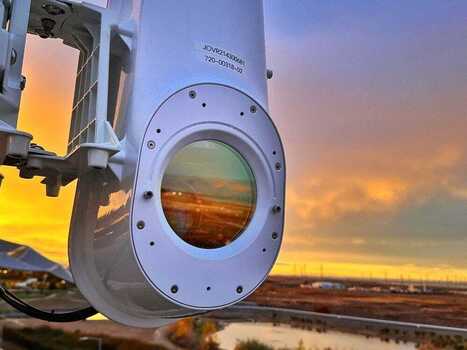
Yes, Laser is the ultimate communications medium. Physics dictates that transmitting photons through a vacuum offers near-infinite bandwidth with zero latency constraints. But deploying naked lasers on Earth has historically been an exercise in frustration. Atmospheric turbulence, fog, rain, and physical interference forced the industry to wrap light in glass cables or default to the reliable, albeit slower, medium of radio frequencies.
For decades, Free Space Optics, or FSO, was dismissed as a fragile science experiment, and, to some extent, the case was officially closed.
Laser communications are back, driven by an explosion of technology developments and critical infrastructure needs that were once far from mainstream. Today, lasers are taking over every single layer of the network topology simultaneously, building a seamless architecture from space down to the terrestrial core. In orbit, optical inter-satellite links are creating massive mesh networks in a vacuum to route data globally.
|
|
Scooped by
Beeyond
May 26, 10:05 AM
|
Today, video streaming consumes around 70% of network traffic. Naturally, we spent years building infrastructure optimized for humans watching screens, chasing peak download speeds, and fighting buffering.
That architecture is about to change dramatically.
The 2026 Cisco report reveals a rapid structural shift in how networks are used. AI inference token consumption is growing 10x year over year, and by 2035, inference alone will account for 25% of total network traffic. But this time, the real issue is not volume but the shape of the data.
Agentic AI operates autonomously at software speed. An agent executing a task generates up to 450% more traffic than a human would. More importantly, it requires sustained state and upstream capacity, not downstream bursts. Autonomous agents don’t care about gigabit downlink speeds. Their survival relies entirely on Time To First Token (TTFT) and an unbroken connection to the model.
If you are still engineering exclusively for downstream consumer video, you are building for the past. Here is the technical reality of the new inference network.
|
|
Scooped by
Beeyond
May 26, 7:26 AM
|
Look at the machine the telecom industry built.
It is, without exaggeration, the most complex and astonishing technological achievement in human history. Right now, it seamlessly connects 6 billion human beings and 21 billion machines. It works everywhere, anytime, and almost for free.
Engineers designed this infrastructure to operate with 99.999% reliability. Every five years, they completely rebuild it from the ground up just to make it run 10x faster. It keeps the global digital economy breathing across continents, oceans, and concrete.
It is an absolute miracle of physics.
And the reward?
Nobody loves the telco. In fact, the public barely tolerates them. When you look at the cold, hard data, the telecom sector sits at the absolute bottom of global brand loyalty. It ranks below airlines and banks, and is functionally tied to the local tax authority in the hearts of its own consumers.
|
|
Scooped by
Beeyond
May 22, 3:55 AM
|
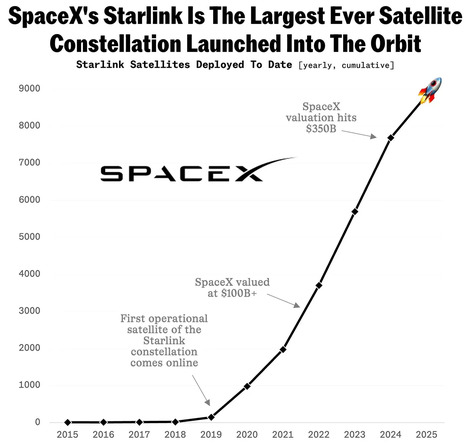
The financial markets are currently parsing the implications of SpaceX’s proposed $1.75tn IPO valuation. While much of the initial retail focus has centered on the company’s interplanetary ambitions, institutional investors are scrutinizing a far more grounded thesis detailed in the May 2026 S-1 filing. The prospectus outlines a strategic pivot from a launch-and-logistics provider to a vertically integrated global telecommunications and compute utility.
At 94 times its projected 2025 consolidated revenue of $18.67bn, SpaceX’s valuation represents a significant departure from traditional aerospace and telecommunications multiples. The justification rests on the company’s definition of a staggering $28.5tn Total Addressable Market. By partitioning this TAM into space logistics ($370bn), global connectivity ($1.6tn), and AI infrastructure ($26.5tn), the prospectus argues that the historical separation between the physical transport of data and the compute layer is converging, and the company intends to capture the margins of both.
|
|
Scooped by
Beeyond
May 19, 10:19 AM
|
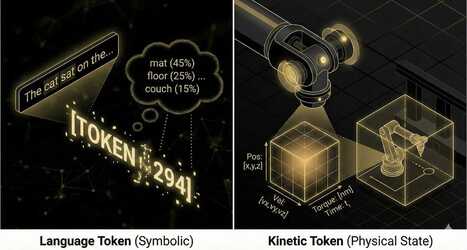
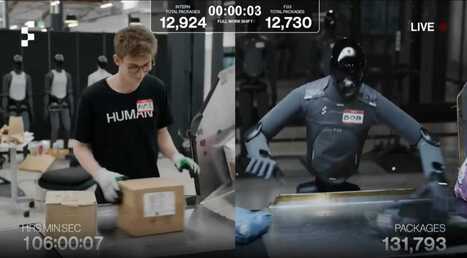
Look at the image above. On the left is your current human subscriber. For the last two decades, you have sold them GBs per month, fought over marginal ARPU increases, and watched every single app try to commoditize your network. That race to the bottom didn’t end up really well.
On the right is your brand-new customer.
Figure just ran a live drill in which a human intern competed against its Figure 03 humanoid, “Bob,” to see who could sort and categorize more packages. The result? The human lost the moment they had to step away to go to the bathroom. F.03 just kept working.
|
|
Scooped by
Beeyond
May 10, 10:13 AM
|
The data center industry is hitting a massive physical wall: the power grid simply cannot keep up with the exploding demand for AI compute. Expanding traditional, centralized server farms is slow and expensive, currently hampered by a staggering 2,600 GW backlog of projects awaiting utility connections. To bypass this gridlock, NVIDIA has partnered with smart-panel maker SPAN and homebuilder PulteGroup to launch XFRA. In plain English, they are bypassing the commercial utility queue entirely by deploying enterprise-grade AI data centers directly in residential backyards, running on the spare electricity from everyday homes.
|
|
Scooped by
Beeyond
May 8, 10:08 AM
|
How AI for telecommunications is reshaping operators: mature tech, documented ROI, and a 90-day roadmap to drive measurable opex and customer wins.
|
|
Scooped by
Beeyond
May 7, 2:49 PM
|
Direct-to-cell works by turning Starlink’s low Earth orbit satellites into something that behaves, from your phone’s perspective, exactly like a terrestrial cell tower. No special hardware. No firmware update. No new SIM card. Your existing LTE smartphone connects to a satellite orbiting roughly 340 miles overhead as if it were pinging a tower down the street.
The implications are profound. The entire value chain of terrestrial telecom — land acquisition, tower construction, power systems, ground maintenance, spectrum auctions — gets replaced by a constellation that scales globally from a single launch facility. There is no permitting fight. There is no easement negotiation with a reluctant landowner. There is no multi-year deployment timeline.
|