Your new post is loading...

|
Scooped by
Beeyond
July 17, 12:34 PM
|
Le Français Withings frappe un grand coup outre-Atlantique, puisque la medtech fondée par Éric Carreel devient la seule entreprise européenne retenue par les autorités américaines pour le lancement d'un tout nouveau programme de santé.
|
|
Scooped by
Beeyond
July 5, 9:22 AM
|
Targeting the critical complications of thromboembolism and device-related infection in long-term left ventricular assist devices (LVADs), we developed a facile, one-step rapid co-polymerization strategy based on mussel-inspired polyphenol chemistry to construct a copper-integrated polydopamine/tannic acid (Ti/PDT(Cu)) nanocomposite coating. By incorporating tannic acid, we synergistically accelerated dopamine oxidative polymerization and drastically shortened the fabrication period. This approach constructs a robust dual-crosslinked network through covalent/hydrogen bonds and metal-phenolic coordination, endowing the coating with a uniform nanoscale roughened structure, excellent hydrophilicity, and superior long-term structural integrity in physiological environments. Crucially, the optimized coating design overcomes the inherent drawbacks of conventional PDA-Cu systems—such as uncontrollable ion burst release and poor physiological stability. It provides durable, broad-spectrum bactericidal efficacy while enabling sustained, endothelium-mimicking catalytic nitric oxide generation.
|
|
Scooped by
Beeyond
June 14, 12:00 PM
|
Accurately predicting the outcome of drug candidates remains a central challenge in preclinical research. Traditionally, this has relied on the use of 2D cell cultures or animal models. In recent decades, significant efforts have been made to develop 3D in vitro models that better recapitulate in vivo physiology, while also minimizing the use of animal testing. In this report, we discuss spheroids, organoids, organ-on-chips, and scaffolds as well as assess their relevance as models for heart, gut, brain, liver, and tumor tissue. It appears that spheroids are uniquely appropriate for modeling tumors, where features like hypoxia - typically a limitation of 3D models - mirror the natural tumor microenvironment. The human heart, gut, brain and liver are complex organs that are still difficult to model with conventional methods; in these tissues, 3D models such as organoids and organ-on-chips appear to be the most physiologically accurate alternative. Across all these models, scaffolds and hydrogels play a central role in mimicking the native extracellular matrix and promoting physiologically relevant cell behaviour.
|
|
Scooped by
Beeyond
June 13, 6:14 PM
|
Portions plus petites, protéines en extra… Les médicaments pour la perte de poids étant de plus en plus répandus, les restaurants américains modifient leur offre pour répondre aux besoins de leurs clients.
|
|
Scooped by
Beeyond
June 8, 5:26 AM
|
Organoids and Organ-on-a-Chip technology have been considered a paradigm shift in cell culture for over a decade. However, fundamental usability and logistics aspects have hampered widespread adoption, as both require deep biological expertise and cumbersome logistics of cell materials. MIMETAS has invested in productization of organoids in its perfused high throughput OrganoPlate platform. Its OrganoReady® product line comprises of 64 adult stem cell derived colon organoids grown as perfused tubules that are delivered ready-to-use to the bench of the scientist. Turnkey assays allow monitoring of barrier function under toxic and inflammatory challenges. New products for the kidney are available in early access, and next generation models comprising fully vascularized, stroma and immune competent liver, lung and tumor tissues are available in a services setting.
|
|
Scooped by
Beeyond
June 7, 6:46 AM
|
Cellular senescence sits at the intersection of at least half of the recognized hallmarks of aging, functioning as both an upstream driver and a downstream consequence. Senescent cells accumulate because induction rates rise while immune clearance declines with age, and their SASP output drives the chronic low-grade inflammation underlying nearly every age-related disease.
|
|
Scooped by
Beeyond
June 1, 9:21 AM
|
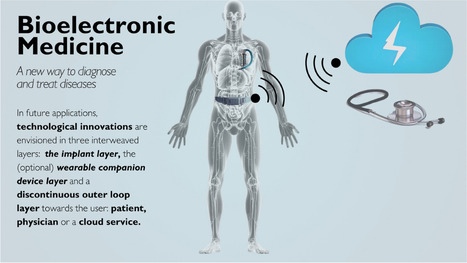
The global next-generation bioelectronic medicine device market was valued at $3.6 billion in 2025 and is projected to reach $10.8 billion by 2034, expanding at a compound annual growth rate (CAGR) of 13.7% over the forecast period from 2026 to 2034, driven by accelerating clinical validation of neuroimmune modulation therapies, rising chronic disease burden, and transformative regulatory milestones including the first-ever FDA approval of a vagus nerve stimulator for rheumatoid arthritis. Bioelectronic medicine -- the discipline of using precisely targeted electrical impulses to modulate the peripheral and central nervous systems for therapeutic benefit -- has emerged as one of the most disruptive frontiers in medical technology, offering a potential alternative or complement to biologics and pharmaceutical interventions for autoimmune, inflammatory, and neurological conditions. As of 2026, the market is being reshaped by a new generation of devices that integrate miniaturized implants, wireless power and data transfer, and AI-adaptive stimulation algorithms, enabling closed-loop therapies that dynamically respond to real-time physiological signals.
|
|
Scooped by
Beeyond
May 10, 5:58 AM
|
A Pre-Sub is a formal mechanism through which companies can request a meeting, written feedback or a teleconference directly with FDA prior to submitting a formal application. It’s a chance to have productive dialogue with the agency before you've committed to a regulatory pathway, before you’ve locked your design, and, hopefully, before you've spent years heading in the wrong direction. Used well, it's essentially a pre-game conversation with the referee.
|
|
Scooped by
Beeyond
April 28, 1:32 PM
|
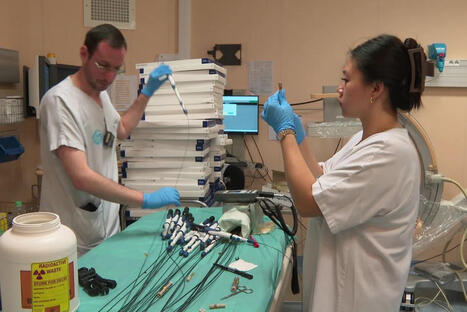
Introduits par voie naturelle, ces bâtonnets permettent une irradiation ciblée au plus près des cellules cancéreuses. "L’avantage de l’endoscopie, c’est qu’on est très près de la tumeur. Dans le tube digestif, on est contre le pancréas. Et donc, de façon très précise, on peut mettre ces sources qu’il faut rapprocher les unes des autres à peu près tous les 3 à 4 millimètres, de façon à traiter l’ensemble de la tumeur", explique Pierre-Yves Eyraud, médecin en hépato-gastroentérologie et oncologie digestive au CHU de Grenoble Alpes.
|
|
Scooped by
Beeyond
April 23, 8:59 AM
|
A l'ouverture du groupe des assises du médicament consacré au dispositif médical, j'osais évoquer la possibilité que la prochaine affaire Mediator puisse impliquer un dispositif médical (DM). Je ne m'attarderai pas sur les fermes dénégations qui m'avaient alors été opposées tant par les représentants des industriels que par ceux de l'Afssaps. Le marquage CE allié à la matério-vigilance étaient là pour protéger nos patients… nous pouvions être tranquilles…
|
|
Scooped by
Beeyond
April 4, 12:44 PM
|
Intervertebral disc degeneration (IDD) is a major cause of low back pain (LBP), significantly affecting on global disability and healthcare costs. Traditional treatments primarily focus on symptom management rather than addressing the underlying causes, such as the decline in nucleus pulposus (NP) cells and reduced extracellular matrix (ECM) synthesis. Cell therapy shows promise by replenishing NP cells, activating resident cells, and enhancing ECM deposition. However, the harsh microenvironment of IDD can hinder the survival of transplanted cells. Biocompatible hydrogels, with their ECM-like properties, provide controlled delivery of therapeutics and biologics, creating a supportive environment for cell therapy and demonstrating strong regenerative potential.
|
|
Scooped by
Beeyond
February 19, 8:21 AM
|
GLP-1 receptor agonists — sold under brand names like Ozempic and Mounjaro — were initially developed to treat diabetes. But instead of addressing biomarkers linked to certain disease outcomes, these drugs influence the central cardio-kidney metabolic process, Vaduganathan said. This overarching approach has made GLP-1 drugs the most effective and tolerable choice for most patients treating diabetes and obesity. It’s also what makes it likely that they influence a number of closely related diseases.
|
|
Scooped by
Beeyond
February 2, 4:30 AM
|
Agentic artificial intelligence (AI) gains popularity swiftly. This technology refers to AI systems designed to act autonomously towards specific goals. Agentic AI can plan, decide, take actions, and use tools without constant human prompting. Its goal-oriented behavior and decision-making capabilities make it valuable in different industries, involving healthcare. In this blog, we explore agentic AI in healthcare by focusing on real-world use cases.
|
|
|
Scooped by
Beeyond
July 5, 10:18 AM
|
As a new generation of biomaterials, biodegradable zinc (Zn)-based implants hold substantial promise for clinical use due to their favorable biocompatibility and controllable degradation behavior. This review summarizes recent progress in Zn-based implants, focusing on the physiological roles of Zn, current Zn-based implant systems, and relevant applicable standards. To address the critical challenges faced in practical applications, such as optimizing corrosion rate, antibacterial performance, and biocompatibility, researchers have employed innovative strategies, including alloying (e.g., Zn-Mg, Zn-Mn, Zn-Li), surface modifications, and functional coatings. Meanwhile, a detailed overview is provided of in vitro and in vivo degradation evaluation systems, advances in preclinical animal studies, and the status of clinical trials, together with regulatory requirements for biodegradable metals set by domestic and international authorities. Key mechanistic and translational bottlenecks that currently limit clinical adoption are identified, together with critical directions for the rational design and standardized evaluation of next-generation Zn-based implants.
|
|
Scooped by
Beeyond
June 18, 8:34 AM
|
Studies of alcohol’s effects on health have offered contradictory findings, with some suggesting a glass of red wine a day is beneficial and others saying even a drop of booze is too much. A new review attempting to clarify the risks finds more than 60 diseases, based on the World Health Organization’s International Classification of Diseases, are 100 percent attributable to consuming alcohol. But the review also finds that some of the damage can be slowed or reversed by cutting down or quitting drinking.
|
|
Scooped by
Beeyond
June 14, 10:50 AM
|
Examine how digital twins in clinical trials function as virtual control arms. This report reviews FDA guidance, AI models, and implementation requirements.
|
|
Scooped by
Beeyond
June 12, 3:20 AM
|
Le fast-track national a pour objectif de réduire significativement les délais d’évaluation des demandes d’autorisation, tout en garantissant la qualité et la rigueur éthique et scientifique de l’évaluation. Ce dispositif pilote s’adresse aux essais mononationaux de phase I ou de phase I/II intégrées, répondant à au moins l’un des critères suivants : - Maladies graves, rares ou invalidantes pour lesquelles aucun traitement approprié n’existe ;
- Premier essai dans une classe thérapeutique (avec un mécanisme d’action entièrement nouveau) ;
- Inclusion d’adolescents (12 à 18 ans) dans des essais chez l’adulte.
|
|
Scooped by
Beeyond
June 8, 5:24 AM
|
Aging is a multifactorial process driven by core mechanisms: cellular damage, epigenetic alterations, and immunosenescence. Immunotherapy addresses core aging drivers with high specificity and durability. Cutting-edge immunotherapies for senescent cell clearance show robust preclinical efficaey. Critical translational challenges include insufficient target specificity, species differences, and unclear long-term safety.
|
|
Scooped by
Beeyond
June 1, 9:24 AM
|
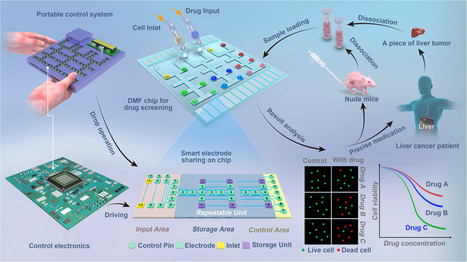
Drug screening based on in-vitro primary tumor cell culture has demonstrated potential in personalized cancer diagnosis. However, the limited number of tumor cells, especially from patients with early stage cancer, has hindered the widespread application of this technique. Hence, we developed a digital microfluidic system for drug screening using primary tumor cells and established a working protocol for precision medicine. Smart control logic was developed to increase the throughput of the system and decrease its footprint to parallelly screen three drugs on a 4 × 4 cm2 chip in a device measuring 23 × 16 × 3.5 cm3. We validated this method in an MDA-MB-231 breast cancer xenograft mouse model and liver cancer specimens from patients, demonstrating tumor suppression in mice/patients treated with drugs that were screened to be effective on individual primary tumor cells.
|
|
Scooped by
Beeyond
May 26, 7:31 AM
|
CaroFlex targets the carotid sinus, a small junction where the carotid artery, the main vessel supplying oxygen-rich blood to the head, face, and neck, branches into several smaller pathways. Clustered in this area are baroreceptors, specialized nerve endings that detect changes in arterial stretch and trigger the body’s natural blood pressure regulation response, known as the baroreflex. Existing bioelectronic devices already exist to stimulate this system, but they are typically constructed from rigid metals and plastics.
|
|
Scooped by
Beeyond
May 6, 11:02 AM
|
Des chercheurs de l’université du Mississippi ont mis au point de minuscules capsules contenant un agent anticancéreux, intégrées à un petit implant fabriqué par impression 3D. Le principe : placer cet implant directement à côté de la tumeur, pour que le médicament agisse là où il le faut, sans se disperser dans tout le corps. Pour l’instant, les tests se limitent à des cultures de cellules cancéreuses du sein, en laboratoire.
|
|
Scooped by
Beeyond
April 26, 2:25 PM
|
A woman with three autoimmune conditions improved dramatically after personalized CAR T-cell therapy. Misryoum explains how the approach resets harmful antibody production—and what challenges remain.
A single treatment can sound like a miracle in medicine, but for one woman with multiple autoimmune diseases, the turnaround has been stark—and carefully engineered.
|
|
Scooped by
Beeyond
April 20, 10:16 AM
|
Companies and researchers often fail to disclose negative trial results, resulting in significant gaps in the public record and a publication bias that obscures the true landscape of drug development outcomes—overrepresenting successes and underrepresenting failures. This gap can also create a distorted perception of the safety and efficacy of medical products.
|
|
Scooped by
Beeyond
March 22, 7:13 AM
|
Désormais, l’accès aux soins virtuels se transforme avec le lancement par Amazon de son assistant intelligent, baptisé Health AI. Disponible sur le site et l’application du géant du e-commerce, cet agent conversationnel s’adresse en priorité aux membres Prime américains qui bénéficient d’un accès gratuit et permanent à des services de santé en ligne. Un projet nourri à la fois par les frustrations courantes du système médical, délais interminables, manque de personnalisation, paperasse et par la volonté d’allier expertise clinique (One Medical) et technologies de pointe. L’objectif affiché est clair : simplifier un parcours devenu trop complexe pour des millions d’Américains.
|
|
Scooped by
Beeyond
February 2, 7:20 AM
|
New findings on cancer survival rates offer hope for the more than 2 million Americans diagnosed each year. Seven out of 10 Americans diagnosed with cancer now survive five years or more, according to the American Cancer Society, a 7 percent increase since the mid-1990s, when the rate stood at 63 percent.
The survival rate data — from patients diagnosed with cancer between 2015 and 2021 — showed, significantly, that those with high-mortality cancers and advanced diagnoses had the largest gains. Myeloma survival rates, for example, rose from 32 percent to 62 percent, and liver cancer survival rates from 7 percent to 22 percent.
|