Your new post is loading...

|
Scooped by
Beeyond
July 9, 7:24 AM
|
Sitting down in the CX Studio after presenting the results for the first time in Europe at CX 2026, Barco explains the thought process behind the “unique” SirPAD trial design, how the primary outcome of major adverse limb events (MALE) occurred in 8.8% of patients enrolled in the sirolimus-coated balloon group compared to 15% in the uncoated balloon group at one year, and how there was a statistically significant reduction in the composite key secondary endpoint of any unplanned target limb amputation or target limb revascularisation.
|
|
Scooped by
Beeyond
July 5, 10:29 AM
|
Debulking with DCB reduces amputation risk and 12-month TLR in patients with FP-ISR, particularly those with long lesions (>20 cm) or occlusive lesions (Tosaka type III), in whom it may improve 12-month primary patency. However, the advantages require further confirmation because of the limited number of studies.
|
|
Scooped by
Beeyond
July 4, 8:18 AM
|
Even under extreme mechanical stress known to delay endothelial recovery, the CD31-coated stent preserved lumen geometry and flow comparable to a DES while achieving complete endothelial coverage without drug release. Higher minimum stent and mean lumen areas suggest maintained expansion and limited neointimal growth despite the absence of antiproliferative drug. These findings indicate that the CD31 coating preserves mechanical integrity and vascular compatibility even in a stringent injury model, warranting further evaluation under standard implantation (BAR ≈ 1.05) and high-bleeding-risk conditions. By promoting rapid vascular healing without an antiproliferative agent, this biomimetic approach may represent a path toward safer DAPT de-escalation in interventional cardiology.
|
|
Scooped by
Beeyond
June 29, 9:32 AM
|
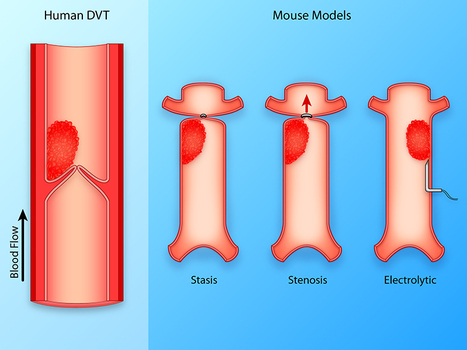
Murine models are widely used valuable tools to study deep vein thrombosis. Leading experts in venous thrombosis research came together through the American Venous Forum to develop a consensus on maximizing the utility and application of available mouse models of venous thrombosis. In this work, we provide an algorithm for model selection, with discussion of the advantages, disadvantages, and applications of the main mouse models of venous thrombosis. Additionally, we provide a detailed surgical description of the models with guidelines to validate surgical technique.
|
|
Scooped by
Beeyond
June 18, 3:44 AM
|
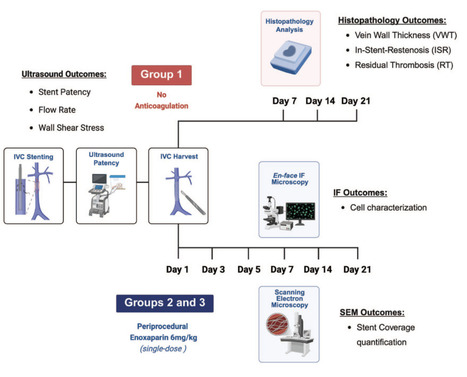
Quantifying rat venous stent patency and endothelialization via histology and microscopy revealed complete patency with anticoagulation and pathological occlusions (RT, ISR) when withholding anticoagulation. This rodent model will facilitate the preclinical testing of future venous stents.
|
|
Scooped by
Beeyond
May 26, 12:47 PM
|
Humans stand alone as the singular species with propensity to develop spontaneous DVT. Because Virchow's original description of a canine model, there has been interest in the development of animal models of thrombosis to mimic the human condition. Initial labors were directed toward development of large mammal models. The transgenic mouse era led toward efforts to translate the existing models into the smaller rodent species. Mice are amenable for the study of venous thrombosis and have the advantages of relatively low cost and the availability of different genetically manipulated strains.
|
|
Scooped by
Beeyond
May 9, 5:55 AM
|
In patients requiring bailout stenting for FPA lesions, adjunctive DCB use was associated with lower 1-year CD-TLR; however, this finding should be considered hypothesis-generating due to the retrospective design and limited sample size. No sustained benefit was observed at 2 years. No signal for increased short-term mortality was identified, although the study was not powered for safety endpoints.
|
|
Scooped by
Beeyond
May 8, 1:45 PM
|
REVA Medical, LLC today announced primary endpoint results from the MOTIV BTK randomized pivotal clinical trial evaluating the MOTIV® sirolimus-eluting bioresorbable vascular scaffold in patients with critical limb-threatening ischemia (CLTI). The results were presented today at the Charing Cross International Symposium in London, UK. Motive Sirolimus- Eluting Bioresorbable Vascular Scaffold System. The MOTIV BTK trial met both its primary safety and efficacy endpoints, demonstrating that the MOTIV scaffold provides a statistically significant improvement in clinical outcomes compared to the current standard of care, balloon angioplasty.
|
|
Scooped by
Beeyond
May 4, 10:05 AM
|
In patients with chronic limb-threatening ischemia (CLTI) who have run out of treatment options, a blood flow-diverting procedure in the foot improves several measures of quality of life (QoL) in addition to lowering the risk of major amputation, according to a secondary analysis of the PROMISE III trial.
At 6 months, patients reported being less bothered about poor circulation in their legs compared with before the procedure, as well as more participation in social activities, better sleeping habits, and fewer daily burdens associated with having open wounds.
|
|
Scooped by
Beeyond
May 4, 3:00 AM
|
The FDA’s letter indicates that, upon completing its review, it determined that it is unable to approve the PMA for VenoValve in its current form. According to a news release, the FDA indicated that the favorable revised Venous Clinical Severity Score (rVCSS) data generated by the study to show clinical improvement, together with the improvements in pain scores and venous-specific quality of life indicators, were not sufficient on their own to determine the favorability of the risk-benefit profile for VenoValve.
EnVVeno Medical said that, without a specific hemodynamic measurement that correlates with patient improvement, the FDA raised concerns about bias. The agency also considered the possibility that clinical improvement occurred as a result of the patients being enrolled in a study.
Additionally, the company said the FDA focused on safety concerns attributed to the associated open surgical procedure. That required rehospitalizations, the company said. However, it would not expect to see similar safety events with a non-surgical replacement valve.
|
|
Scooped by
Beeyond
April 26, 2:42 PM
|
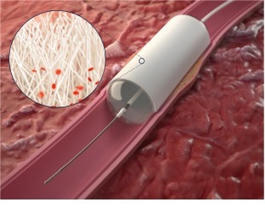
The RFS device is a bioresorbable stent built from microfibres, providing structural support to instantly open, and facilitate the reconstruction of the artery. Due to the porous design of the implant, patients’ own cells infiltrate into the mesh, triggering the formation of new vascular tissue. While the artery is being reconstructed from the inside-out, the synthetic implant gradually resorbs and ultimately disappears over time.
At LINC, Brodmann expanded on some key characteristics of the RFS. “The device is a fully electrospun tubular conduit with fibrous micro-architecture and a strutless design,” the presenter noted, also highlighting the implant’s suitability for transcatheter delivery due to a balloon-expandable design.
|
|
Scooped by
Beeyond
April 26, 2:39 PM
|
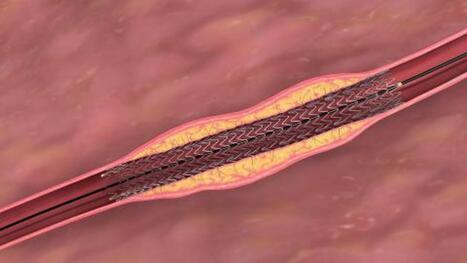
Launched in Europe in 2016 and the USA two years later following successful results from the IMPERIAL randomised controlled trial (RCT),1 the Eluvia DES is designed to provide sustained drug release and efficient drug transfer with the aim of overcoming the challenge of restenosis in the superficial femoral artery (SFA).
Steiner’s clinical experience with the Eluvia DES dates back several years. At this time, she and colleagues conducted the BEST-SFA RCT, in which Eluvia was used as a comparator. “What we observed in this analysis, and in our own clinical experience, was that the stent performed very well, effectively inhibiting the need for reintervention.” Steiner recalls. Two-year results of this study were published in 2024 in JACC: Cardiovascular Interventions.2
|
|
Scooped by
Beeyond
April 8, 4:29 PM
|
Retrievable scaffold therapy (RST) with the Spur® peripheral retrievable scaffold system (Reflow Medical; Figure 1) represents a novel approach to BTK CLTI treatment. The Spur system consists of a retrievable nitinol scaffold with radial spikes integrated onto a balloon delivery platform. The radial spikes are designed to penetrate the lesion and vessel wall in a controlled manner, reduce recoil, change vessel compliance, and create channels that enhance drug uptake to the adventitia (Figure 2).15 Following Spur RST, commercially available DCBs are applied to provide long-term patency.16–18 This combined strategy is intended to deliver stent-like results while leaving nothing behind.
|
|
|
Scooped by
Beeyond
July 5, 10:31 AM
|
The Inter-Society Consensus for the Management of Peripheral Arterial Disease (TASC) guidelines were last updated in 2007 (TASC II) and represented the collaboration of international vascular specialties involved in the management of patients with peripheral arterial disease (PAD). Since the publication of TASC II, there have been innovations in endovascular revascularization strategies for patients with PAD. The intent of this publication is to provide a complete anatomic lower limb TASC lesion classification, including the infrapopliteal segment, and an updated literature review of new endovascular techniques and practice patterns employed by vascular specialists today.
|
|
Scooped by
Beeyond
July 5, 7:56 AM
|
Learn how Spur Peripheral Retrievable Stent System is designed to treat BTK lesions after predilatation, with clinical data on patency, limb salvage, and wound healing.
|
|
Scooped by
Beeyond
June 29, 9:34 AM
|
Quantifying rat venous stent patency and endothelialization via histology and microscopy revealed complete patency with anticoagulation and pathological occlusions (RT, ISR) when withholding anticoagulation. This rodent model will facilitate the preclinical testing of future venous stents.
|
|
Scooped by
Beeyond
June 22, 11:54 AM
|
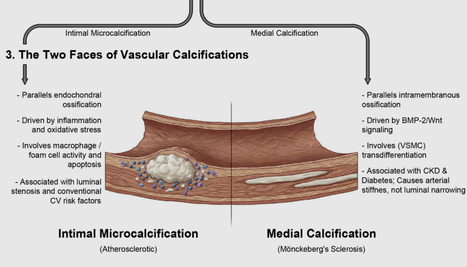
Coronary artery calcification (CAC) represents a clear sign of advanced atherosclerosis and a strong indicator of coronary artery disease burden and cardiovascular risk. Beyond its established prognostic value, CAC significantly influences plaque biology, lesion morphology, and the technical complexity of percutaneous coronary intervention (PCI). This review summarizes current knowledge on the mechanisms of vascular calcification, its clinical determinants, diagnostic assessment, and therapeutic implications. Vascular calcification is now understood as an active, regulated process involving osteogenic transdifferentiation of vascular smooth muscle cells, inflammatory signaling pathways, extracellular vesicle release, and disturbances in mineral metabolism. Distinct calcification phenotypes exert different effects on plaque stability: micro- and spotty calcifications are frequently linked to plaque vulnerability, whereas dense, sheet-like calcification is more typical of stable fibrocalcific lesions.
|
|
Scooped by
Beeyond
June 9, 7:39 AM
|
The 2026 revision of the Current Procedural Terminology (CPT) codes for lower extremity revascularization introduces important changes that are intended to better align code selection with contemporary endovascular practice.1 In this article, I highlight several key updates and illustrate how I applied the revised codes to a case of chronic limb-threatening ischemia (CLTI) in the setting of multilevel occlusive peripheral artery disease (PAD).
|
|
Scooped by
Beeyond
May 9, 5:57 AM
|
This study underscores the potential of multi-objective optimization in stent design, paving the way for PAD stents that more effectively accommodate femoropopliteal biomechanics and promote favorable mechanical conditions for healing.
|
|
Scooped by
Beeyond
May 8, 5:23 PM
|
Drug-eluting stents are beneficial in treating symptomatic peripheral artery disease (PAD) in the femoropopliteal artery. Data from the ZILVER PTX trial demonstrate that paclitaxel-eluting stents had significantly better 12-month patency rates compared to traditional angioplasty with bare-metal stents for lesions in the femoropopliteal artery (above the knee).
|
|
Scooped by
Beeyond
May 8, 10:33 AM
|
In patients requiring bailout stenting for FPA lesions, adjunctive DCB use was associated with lower 1-year CD-TLR; however, this finding should be considered hypothesis-generating due to the retrospective design and limited sample size. No sustained benefit was observed at 2 years. No signal for increased short-term mortality was identified, although the study was not powered for safety endpoints.
|
|
Scooped by
Beeyond
May 4, 3:01 AM
|
enVVeno Medical has received the investigational device exemption (IDE) approval from the US Food and Drug Administration (FDA) for a pivotal study involving a non-surgical replacement venous valve. The approval allows enVVeno Medical to begin the Transcatheter Venous Valve Endoprosthesis (TAVVE) pivotal study of its enVVe system for treating severe deep chronic venous insufficiency (CVI).
|
|
Scooped by
Beeyond
April 26, 2:51 PM
|
“The reason for stent graft failure is neointernal hyperplasia that occurs mainly on the edge of the device and sometimes in the middle of the stent graft,” Harduin detailed. The Solaris DE covered stent is built with an impermeable electrospinning PTFE membrane to limit cellular migration, allied with the sirolimus coating to block neointimal hyperplasia and restenosis. “Sirolimus is a safe and effective cytostatic drug that has been used for a long time in interventional cardiology in coronary arteries to prevent neointimal hyperplasia, restenosis, and thrombosis,” said Harduin.
Animal studies of Solaris DE have, to date, shown the persistence of the sirolimus on the outer edge of the device, he said, with one study comparing it to a conventional stent graft finding no instances of neointimal hyperplasia at 60 days following Solaris DE implantation, compared to 4.9mm3 with the conventional device.
|
|
Scooped by
Beeyond
April 26, 2:41 PM
|
The BARISTA trial, led by Lieven Maene (Onze Lieve Vrouw, Aalst, Belgium), enrolled 200 patients with all types of iliac lesions. Significantly, 34% of the study population presented with TASC C and D lesions, representing more complex anatomical scenarios and underscoring the robustness of the clinical evaluation.
At one-year follow-up, the trial demonstrated positive clinical outcomes: - Freedom from target lesion revascularisation (fTLR): 96.4%
- Freedom from restenosis: 94.1%
|
|
Scooped by
Beeyond
April 26, 2:31 PM
|
LUMIFOLLOW is a multicentre, real-world registry including 542 patients from 15 centres in France. The study reflects routine clinical practice and includes a broad spectrum of lesion complexity. Notably, 43.6% of lesions were classified as TASC C and D, and 24.2% of treated cases were restenotic lesions, underlining the challenging nature of the population evaluated.
At three years, 87.3% of patients remained free from revascularisation, confirming durable treatment effect, states the company. No device-related safety concerns were reported during the follow-up period.
|