Your new post is loading...

|
Scooped by
Beeyond
November 30, 2025 6:01 PM
|
Paradromics received Investigational Device Exemption status for the Connect-One Early Feasibility Study using its Connexus BCI. It is the first approved study to explore speech restoration with a fully implantable system. The research team wants to evaluate safety and see how well the device converts neural activity into text or a synthesized voice.
|
|
Scooped by
Beeyond
November 30, 2025 5:59 PM
|
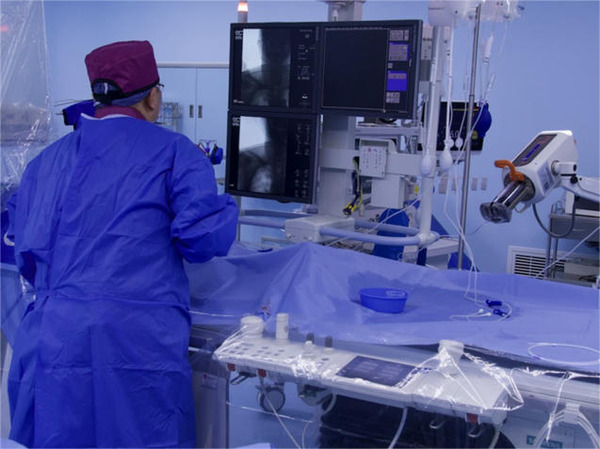
Grâce à un implant logé dans une veine cérébrale, des personnes privées de gestes retrouvent une forme d’autonomie numérique. Cette interface rend possible l’exécution d’actions numériques par la seule pensée, sans effort musculaire.
|
|
Scooped by
Beeyond
November 30, 2025 5:58 PM
|
Brad Smith said his decision to hook up a webcam to the computer he controls with his mind did not make sense to people at Neuralink, Elon Musk’s brain-computer interface company.
|
|
Scooped by
Beeyond
November 30, 2025 5:57 PM
|
Neuralink's transition from sci-fi concept to clinical reality marks a pivotal shift in med-tech. With patients now controlling digital interfaces via thought, the industry faces critical challenges in surgical durability, regulatory hurdles, and the competition between invasive and endovascular approaches. We analyze the engineering, financial, and ethical implications of this new era.
|
|
Scooped by
Beeyond
November 30, 2025 10:47 AM
|
Flexible implantable electrodes provide unprecedented opportunities for gentle mechanical interaction with soft neural tissues to acquire stable electrophysiological signals and reduce risk of tissue inflammatory response. Most electrocorticography (ECoG) electrodes adopt polymer film or silicone as substrate, with thickness sacrifice or poor micromachining precision, respectively. Besides, the distance of recessed electrode site to cortical surface leads to signal degradation. Here, we report a 3D polyimide-based electrode array on soft microbumps (height, 327 µm), with buffering contact capability and reliable mechanical strength that alleviates the mismatch from dental cement or cranial window.
|
|
Scooped by
Beeyond
November 30, 2025 10:44 AM
|
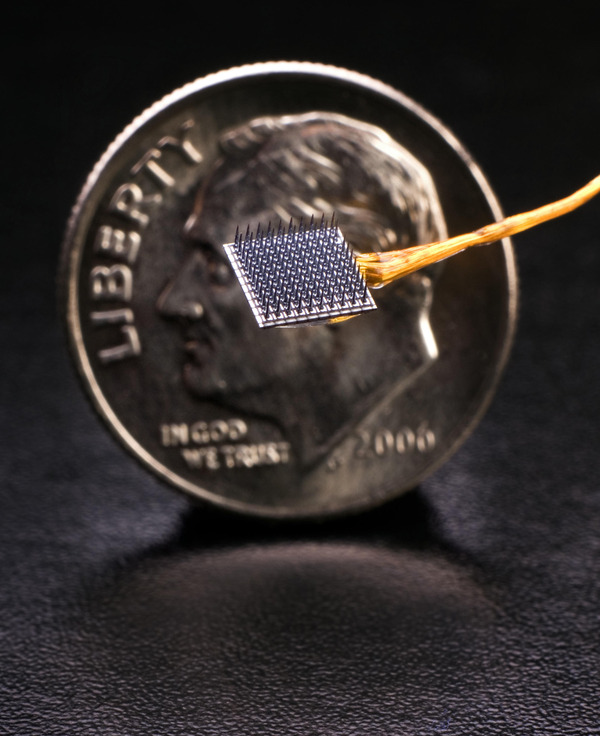
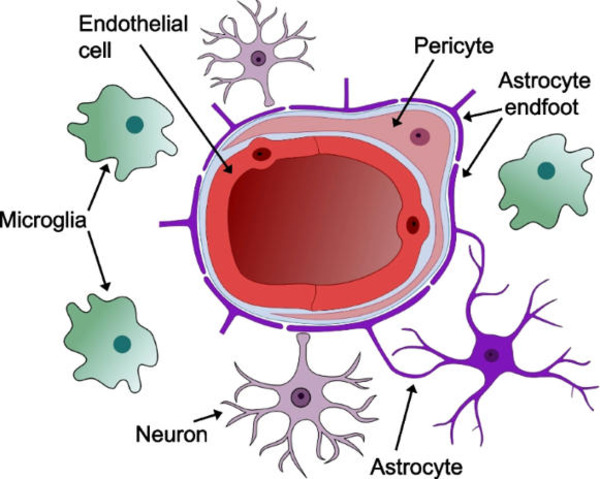
Long-term robust intracortical microelectrode (IME) neural recording quality is negatively affected by the neuroinflammatory response following microelectrode insertion. This adversely impacts brain-machine interface (BMI) performance for patients with neurological disorders or amputations. Recent studies suggest that the leakage of blood-brain barrier (BBB) and microhemorrhage caused by IME insertions contribute to increased neuroinflammation and reduced neural recording performance.
|
|
Scooped by
Beeyond
November 30, 2025 10:14 AM
|
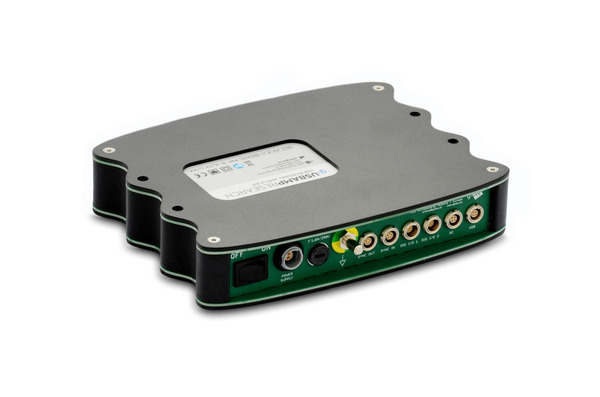
g.USBamp RESEARCH is a high-performance and high-accuracy biosignal amplifier for the acquisition and processing of physiological signals. Therefore, you can record physiological activity from the brain, eyes, heart, muscles, and more – including respiration, galvanic skin response, temperature, and many other physiological and physical parameters. Due to its sophisticated technical specifications and the large software environment, this g.USBamp RESEARCH has become a widely used standard for neuropsychological research, neurophysiologcal research, life sciences and biofeedback, neurofeedback and brain-computer interface (BCI) research.
|
|
Scooped by
Beeyond
November 30, 2025 10:13 AM
|
Use the Cyton to sample electrophysiological data (EEG, EMG, ECG, EOG, and more). This data can be leveraged for a wide range of applications from neuroscience paradigms like P300, ERP, and SSVEP to quantifying emotional states, to controlling a drone.
|
|
Scooped by
Beeyond
November 30, 2025 10:12 AM
|
Traditionally, noninvasive BCIs have been constrained by limitations in their usage environments; whereas, invasive BCIs damage neural permanently. Therefore, we proposed a novel interventional BCI, in which electrodes are implanted along the veins into the brain to acquire intracerebral EEG signals without an open craniotomy. We collect EEG signals from the primary motor cortex in the superior sagittal sinus of sheep during three different significant movements: laying down; standing; and walking. The first three month data are used to train the neural network, and The fourth month of data were used to validate. The deep learning model achieved an 86% accuracy rate in classifying motion states in validation.
|
|
Scooped by
Beeyond
November 27, 2025 6:16 AM
|
Brain-computer interfaces (BCIs) serve as a bridge connecting the brain to external devices, bypassing traditional pathways such as muscles and nerves to enable direct interaction between brain signals and machines. They hold irreplaceable value in treating neurological disorders like epilepsy and Parkinson's disease, as well as in fields such as motor function rehabilitation and auditory prosthesis development. Among these, the electrocorticogram brain-computer interface (ECoG-BCI) is regarded as the "gold standard" for clinical applications due to its superior signal quality compared to scalp electroencephalography and its lower invasiveness than intracranial electrode implants. However, existing ECoG devices have long faced a dilemma: either they feature low electrode density and limited coverage, making it difficult to capture intricate neural signals; or they require extensive craniotomy, posing high surgical risks and increasing susceptibility to complications such as cerebral oedema and infection, which severely limits their widespread adoption.
|
|
Scooped by
Beeyond
November 6, 2025 9:47 AM
|
Several companies are building brain implants to allow people to communicate with computers directly through their minds, benefitting those who are paralyzed, blind or otherwise have limited use of their limbs or sensory organs. In the long term, some entrepreneurs and investors think that brain implants will become everyday consumer technology, like cellphones. No such devices are approved by government regulators for long-term medical or recreational use.
|
|
Scooped by
Beeyond
October 11, 2025 9:28 AM
|
Neurotechnology is advancing rapidly, from medical implants to consumer brain-computer interfaces, bringing immense promise but also unprecedented risks. Neural data is uniquely sensitive, revealing thought and emotion, making security and governance essential. A holistic, layered security and governance framework is necessary to protect trust, safeguard identity and unlock the transformative potential of neurotechnology.
|
|
Scooped by
Beeyond
October 10, 2025 11:25 AM
|
Less than two years after becoming the first person to receive Neuralink’s brain-computer interface, Noland Arbaugh is living a completely transformed life.
Paralyzed from the shoulders down following a 2016 swimming accident, Arbaugh underwent a two-hour robotic surgery that implanted Neuralink’s Telepathy device into his motor cortex. This has allowed him to control devices and even play video games using only his mind.
|
|
Scooped by
Beeyond
October 10, 2025 11:24 AM
|
High-bandwidth brain–computer interfaces rely on invasive surgical procedures or brain-penetrating electrodes. Here we describe a cortical 1,024-channel thin-film microelectrode array and we demonstrate its minimally invasive surgical delivery that avoids craniotomy in porcine models and cadavers. We show recording and stimulation from the same electrodes to large portions of the cortical surface, and the reversibility of delivering the implants to multiple functional regions of the brain without damaging the cortical surface.
|
|
Scooped by
Beeyond
October 10, 2025 11:22 AM
|
The brain-computer interface developer Precision Neuroscience has put forward a study detailing the experiences of its first human patients—showing its minimally invasive approach is capable of both collecting high-bandwidth neural data and delivering stimulation without penetrating deep into tissue.
|
|
Scooped by
Beeyond
October 10, 2025 11:21 AM
|
A new clinical study could make it possible to control Apple’s Vision Pro headset using just brain signals, without the need for risky surgery. The project, led by Santa Barbara–based startup Cognixion, combines non-invasive brain-computer interface (BCI) technology with Apple Vision Pro’s built-in accessibility features, aiming to help people with serious speech and mobility challenges communicate more naturally.
|
|
Scooped by
Beeyond
October 10, 2025 11:20 AM
|
China is aggressively advancing brain-computer interface (BCI) technology through substantial investments and policies, targeting breakthroughs by 2027 in healthcare, manufacturing, and consumer sectors. Key innovations include semi-invasive implants and standards for medical devices, positioning China as a global leader despite ethical challenges and competition. This push aims to dominate neural innovation by 2030.
|
|
Scooped by
Beeyond
October 10, 2025 11:18 AM
|
The challenge of brain health calls for radical collaboration. It is only when we cross the road, yell over the back fence, and venture down the laneway that we begin to find ways to truly invest in and scaffold every brain. When the stars align – conversations, grants, clinical partners, industry partners – possibility turns into impact. Collaboration at its best builds collective power by leveraging our individual strengths.
|
|
Scooped by
Beeyond
October 10, 2025 11:16 AM
|
Neuralink has a backlog of 10,000 individuals interested in having its N1 device drilled into their skulls, according to President and Co-Founder Dongjin (DJ) Seo. The company has implanted the N1 into 12 clinical trial patients so far; Seo expects the number to grow to 25 by year's end.
People can sign up to participate in the company's clinical trials online, but to qualify, they must have either limited or no ability to use their hands due to a cervical spinal cord injury or ALS.
|
|
Scooped by
Beeyond
October 9, 2025 11:15 AM
|
Find out why Synchron Stentrode is on TIME's list of 2025's best inventions.
|
|
Scooped by
Beeyond
September 18, 2025 7:08 AM
|
For years, people with paralysis have used brain-computer interfaces to turn neural signals into actions by thinking about the actions they would like to take: typing words, controlling robotic arms, producing speech. But new research shows that the interfaces could translate not only intended speech, but internal thoughts as well. Sort of.
|
|
Scooped by
Beeyond
September 16, 2025 12:08 AM
|
In January 2024, Musk founded Neuralink to complete the world's first clinical trial of invasive brain-computer interface device implantation, which caused a sensation all over the world. Unlike the invasive brain-computer interface technology that requires the implantation of electrodes in the open skull, the interventional brain-computer interface avoids craniotomy by placing electrodes from the blood vessels, thus reducing the risk of surgery. This method is well combined with clinical medicine. The solid foundation of neurosurgical intervention technology makes the interventional brain-computer connection The mouth has the advantages of small trauma, high signal acquisition accuracy, short recovery period and so on.
|
|
Scooped by
Beeyond
September 16, 2025 12:01 AM
|
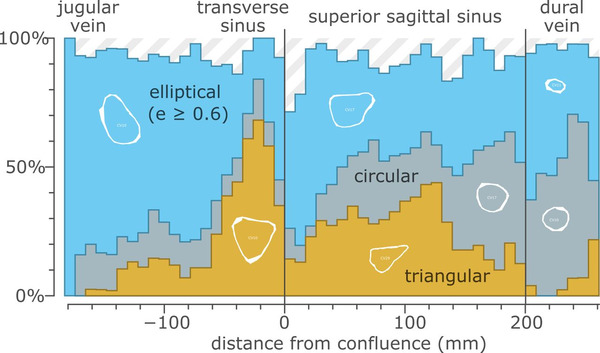
The vein of Trolard shows promise as a target for endovascular BCIs given its consistent presence and favorable dimensions. Nonetheless, constrictions and steep angulation at the SSS confluence pose challenges for device deployment. A new framework is necessary for the classification of cortical venous anatomy, to guide patient selection and procedural planning, which will require further development and validation.
|
|
Scooped by
Beeyond
September 14, 2025 9:58 PM
|
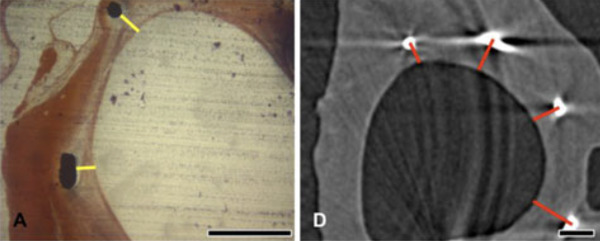
Micro-CT and the histomorphometric techniques we developed are comparable and can both be used to identify incorporation of a Stentrode implanted in cerebral vessels.
|
|
Scooped by
Beeyond
September 14, 2025 9:54 PM
|
Long story short, neural interfaces implanted throughout the body have demonstrated great success in treating a growing variety of conditions. Despite these successes, the longevity of implanted neural interface systems are impeded by mechanical, technological, and biological barriers. Mechanical and electronic failures can occur in any of the components of the implanted system. The immune response to an implanted neural interface consists of acute and chronic phases and differs between the central and peripheral nervous systems. Advances in material science and engineering are actively working to reduce the tissue response to implanted neural interfaces by reducing their size and stiffness as well as by using factors to reduce inflammation.
|

Curated by Beeyond
BEEYOND is a consulting company in the field of disruptive innovation, accompanying established companies on out-of-the-core growth strategy, from creation of new concepts to product launch. Reach us at: contact@beeyond.fr.
|