

Grâce à un implant logé dans une veine cérébrale, des personnes privées de gestes retrouvent une forme d’autonomie numérique. Cette interface rend possible l’exécution d’actions numériques par la seule pensée, sans effort musculaire.
Get Started for FREE
Sign up with Facebook Sign up with X
I don't have a Facebook or a X account

|
Scooped by
Beeyond
onto Brain Computer Interfaces & connected medical devices November 30, 2025 5:59 PM
|
 Scoop.it!
Grâce à un implant logé dans une veine cérébrale, des personnes privées de gestes retrouvent une forme d’autonomie numérique. Cette interface rend possible l’exécution d’actions numériques par la seule pensée, sans effort musculaire.

 Your new post is loading... Your new post is loading...
Scoop.it!

Merge Labs, in its own launch post, said it is pursuing “fundamentally new approaches” that aim to raise bandwidth and brain coverage while making BCIs “much less invasive,” including systems that “connect with neurons using molecules instead of electrodes,” use “deep-reaching modalities like ultrasound,” and “avoid implants into brain tissue.”
Scoop.it!

In this study, we address the issue of whether applying transcranial magnetic and vibrotactile stimulation can improve the motor imagery BMI performance. Our findings provide evidence that applying transcranial magnetic stimulation with specified parameters (frequency 5 Hz, duration 6 min, 90% of the muscle activation threshold at rest) leads to preactivation of the occipital brain region and facilitates sensorimotor integration during motor imagery. We found that this process results in TMS-induced decrease of the motor imagery BMI latency. Integration of vibrotactile feedback in motor imagery BMI leads to enhancement of the BMI performance by an increase of the ERD level of EEG patterns over the contralateral motor cortex area corresponding to the MI of the non-dominant hand and an increase in motor cortical excitability.
Scoop.it!

The BISC implant measures just 50 micrometers thick, roughly the thickness of a human hair, and occupies approximately 3 cubic millimeters of space. Ken Shepard, professor of electrical engineering at Columbia University, explained the device can slide into the space between the brain and skull. The chip contains 65,536 recording electrodes and 1,024 recording channels that capture neural activity at unprecedented resolution. All signal processing, wireless communication, and power management functions occur on the same integrated circuit, eliminating the need for bulky external canisters that current brain computer interfaces require.
Scoop.it!

In a major advance during clinical trials, a middle-aged man with quadriplegia caused by a cervical spinal cord injury is now able to steer a wheelchair outdoors and command a robotic dog to retrieve takeout food using only his thoughts. In March, the CAS research center and Huashan Hospital implanted ultra-thin electrodes – each less than 1 percent of the diameter of a human hair – into the brain of a patient with motor dysfunction, enabling mind-controlled chess playing and car racing.
Scoop.it!

The electrodes are implanted in the brain, while the controller, battery, antenna, and processor sit beneath the skin in front of the chest. An external wireless charging dock, in a similar style to what you'd see with a phone charger, allows the device to be charged and used independently.

Marco Bertolini's curator insight,
December 25, 2025 8:51 AM
To control objects - matter - with your brain - your mind - is now possible.
Scoop.it!
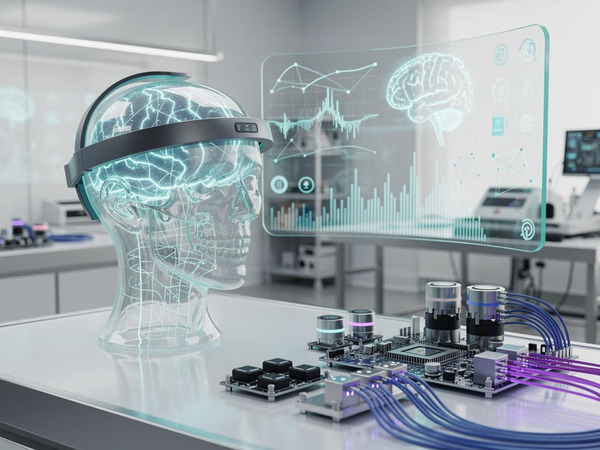
Sam Altman is launching Merge Labs, a brain-computer interface startup spinning out from nonprofit Forest Neurotech, focusing on non-invasive ultrasound to read and influence brain activity. Backed by major investments, it challenges Neuralink's implants by offering safer, scalable alternatives for therapeutics and consumer applications. This venture advances Altman's human-AI integration vision.
Marco Bertolini's curator insight,
December 25, 2025 9:17 AM
The AI - human brain integration - is the object of a competition between tech giant.
Scoop.it!
Neurosoft Bioelectronics emphasizes improvements to safety and long-term functionality with its specialized brain-computer interface. Positioned as ultra-soft and minimally invasive implants, this material science innovation is engineered to closely match the physical properties of neural tissue with the aim of reducing inflammatory responses and other surgical risks that have historically limited the durability of such devices.
Scoop.it!

The device, which is smaller than a human index finger, is soft and flexible, so it conforms to the curvature of the skull. It includes 64 tiny LEDs, an electronic circuit that powers the lights, and a receiver antenna. Additionally, an external antenna controls the LEDs using near-field-communications (NFC) — electromagnetic fields for short-range communications as is done for contactless card payments. The compact device is designed to be placed under the skin, rather than being implanted directly into the brain. "It projects light directly onto the brain [through the skull], and the response of the brain to that light is generated by a genetic modification in the neurons," Rogers told Live Science.
Scoop.it!

During the study, a non-disabled woman volunteered to hook up the electrodes and create a connection with Thomas. Once ready, Thomas could control the volunteer’s hands and even feel the sensations that they felt. To prove this, the researchers blindfolded both parties and had Thomas do various things without allowing the volunteer to know what he wanted her to do. He was able to have the volunteer’s hands open, close, grasp objects, and even touch them to feel the difference between things. In addition, the researchers connected him to Kathy Denapoli, who is a 60-year-old with a partially damaged spinal cord. He was able to help her move her hands, pick up a bottle, pour from it, and more.
Scoop.it!
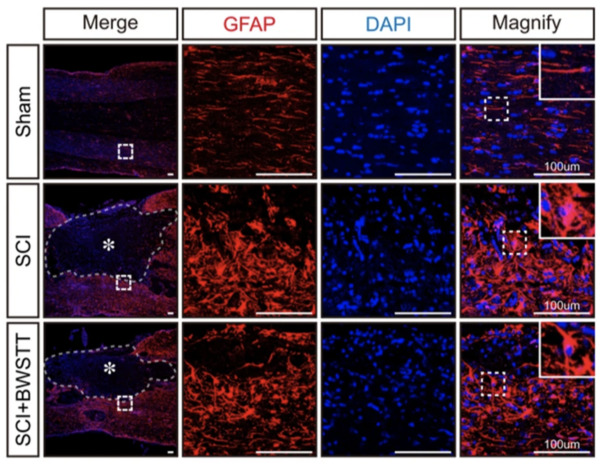
Spinal cord injury is followed by glial scar formation, which was long seen mainly as a physical barrier preventing axonal regeneration. Glial scar astrocytes lead to glial scar formation and produce inhibitory factors to prevent axons from growing through the scar, while inhibiting the conversion of reactive astrocytes into glial scar-forming astrocytes may represent an ideal treatment for CNS injury. Exercise is a non-invasive and effective therapeutic intervention for clinical rehabilitation of spinal cord injury. However, its precise therapeutic mechanisms still need to be continuously explored.
Scoop.it!

In September 2024, California quietly set a precedent. Lawmakers passed SB 1223, an amendment to the California Consumer Privacy Act (CCPA) that classifies neural data as “sensitive personal information.” For the first time in U.S. law, brain-derived signals such as electroencephalography (EEG) traces, functional MRI (fMRI) scans (a type of MRI imaging that measures and maps brain activity) or brain-computer interface (BCI) activity are treated as a category apart from other forms of biodata. The move may seem technical, but it signals a new public expectation: if companies intend to touch the brain, they will be held to stricter standards of stewardship, purpose limitation, and user control.
Scoop.it!
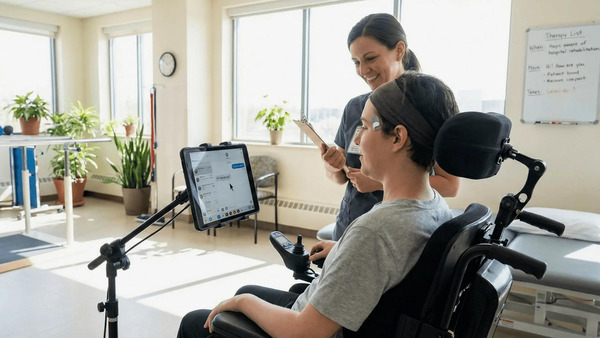
Et si un simple effort mental suffisait à faire défiler une page, envoyer un message ou contrôler un appareil ? Cette scène digne d’un film de science-fiction est désormais bien réelle. Grâce à une nouvelle interface cerveau-machine, le contrôle par la pensée devient un outil du quotidien pour certains patients.
Scoop.it!

The device (BCI) is currently undergoing clinical trials to test its initial safety and functionality in patients with mobility-limiting conditions. In the first nine months of 2024, Neuralink implanted its device in 12 patients. The trials' first participant, a man who was paralyzed after a spinal cord injury, used the implant to play video games and chess. Elon Musk stated that over 10,000 people have joined Neuralink’s patient registry in hopes of participating in future device trials.
Scoop.it!

Paradromics received Investigational Device Exemption status for the Connect-One Early Feasibility Study using its Connexus BCI. It is the first approved study to explore speech restoration with a fully implantable system. The research team wants to evaluate safety and see how well the device converts neural activity into text or a synthesized voice.
Scoop.it!

Grâce à un implant logé dans une veine cérébrale, des personnes privées de gestes retrouvent une forme d’autonomie numérique. Cette interface rend possible l’exécution d’actions numériques par la seule pensée, sans effort musculaire.
Scoop.it!

Brad Smith said his decision to hook up a webcam to the computer he controls with his mind did not make sense to people at Neuralink, Elon Musk’s brain-computer interface company.
Scoop.it!

Neuralink's transition from sci-fi concept to clinical reality marks a pivotal shift in med-tech. With patients now controlling digital interfaces via thought, the industry faces critical challenges in surgical durability, regulatory hurdles, and the competition between invasive and endovascular approaches. We analyze the engineering, financial, and ethical implications of this new era.
Scoop.it!

Flexible implantable electrodes provide unprecedented opportunities for gentle mechanical interaction with soft neural tissues to acquire stable electrophysiological signals and reduce risk of tissue inflammatory response. Most electrocorticography (ECoG) electrodes adopt polymer film or silicone as substrate, with thickness sacrifice or poor micromachining precision, respectively. Besides, the distance of recessed electrode site to cortical surface leads to signal degradation. Here, we report a 3D polyimide-based electrode array on soft microbumps (height, 327 µm), with buffering contact capability and reliable mechanical strength that alleviates the mismatch from dental cement or cranial window.
Scoop.it!

Long-term robust intracortical microelectrode (IME) neural recording quality is negatively affected by the neuroinflammatory response following microelectrode insertion. This adversely impacts brain-machine interface (BMI) performance for patients with neurological disorders or amputations. Recent studies suggest that the leakage of blood-brain barrier (BBB) and microhemorrhage caused by IME insertions contribute to increased neuroinflammation and reduced neural recording performance.
Scoop.it!
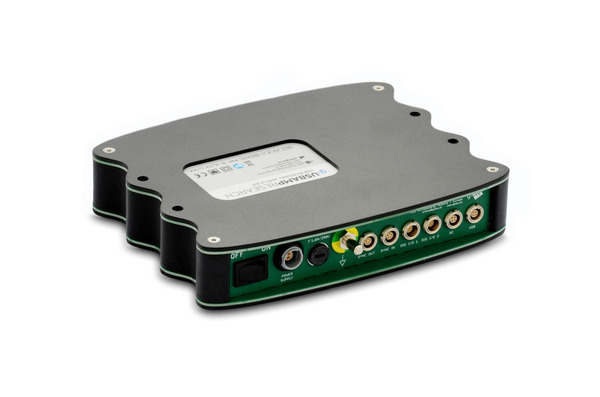
g.USBamp RESEARCH is a high-performance and high-accuracy biosignal amplifier for the acquisition and processing of physiological signals. Therefore, you can record physiological activity from the brain, eyes, heart, muscles, and more – including respiration, galvanic skin response, temperature, and many other physiological and physical parameters. Due to its sophisticated technical specifications and the large software environment, this g.USBamp RESEARCH has become a widely used standard for neuropsychological research, neurophysiologcal research, life sciences and biofeedback, neurofeedback and brain-computer interface (BCI) research.
Scoop.it!

Use the Cyton to sample electrophysiological data (EEG, EMG, ECG, EOG, and more). This data can be leveraged for a wide range of applications from neuroscience paradigms like P300, ERP, and SSVEP to quantifying emotional states, to controlling a drone.
Scoop.it!

Traditionally, noninvasive BCIs have been constrained by limitations in their usage environments; whereas, invasive BCIs damage neural permanently. Therefore, we proposed a novel interventional BCI, in which electrodes are implanted along the veins into the brain to acquire intracerebral EEG signals without an open craniotomy. We collect EEG signals from the primary motor cortex in the superior sagittal sinus of sheep during three different significant movements: laying down; standing; and walking. The first three month data are used to train the neural network, and The fourth month of data were used to validate. The deep learning model achieved an 86% accuracy rate in classifying motion states in validation.
Scoop.it!

Brain-computer interfaces (BCIs) serve as a bridge connecting the brain to external devices, bypassing traditional pathways such as muscles and nerves to enable direct interaction between brain signals and machines. They hold irreplaceable value in treating neurological disorders like epilepsy and Parkinson's disease, as well as in fields such as motor function rehabilitation and auditory prosthesis development. Among these, the electrocorticogram brain-computer interface (ECoG-BCI) is regarded as the "gold standard" for clinical applications due to its superior signal quality compared to scalp electroencephalography and its lower invasiveness than intracranial electrode implants. However, existing ECoG devices have long faced a dilemma: either they feature low electrode density and limited coverage, making it difficult to capture intricate neural signals; or they require extensive craniotomy, posing high surgical risks and increasing susceptibility to complications such as cerebral oedema and infection, which severely limits their widespread adoption.
Scoop.it!

Several companies are building brain implants to allow people to communicate with computers directly through their minds, benefitting those who are paralyzed, blind or otherwise have limited use of their limbs or sensory organs. In the long term, some entrepreneurs and investors think that brain implants will become everyday consumer technology, like cellphones. No such devices are approved by government regulators for long-term medical or recreational use.
Scoop.it!

Neurotechnology is advancing rapidly, from medical implants to consumer brain-computer interfaces, bringing immense promise but also unprecedented risks. Neural data is uniquely sensitive, revealing thought and emotion, making security and governance essential. A holistic, layered security and governance framework is necessary to protect trust, safeguard identity and unlock the transformative potential of neurotechnology.
|

Curated by Beeyond
BEEYOND is a consulting company in the field of disruptive innovation, accompanying established companies on out-of-the-core growth strategy, from creation of new concepts to product launch. Reach us at: contact@beeyond.fr.
Other Topics

#dotdot, the community internet

Aidants

Aston-Martin

Augmented & Virtual Reality

Blue Ocean Strategy

Brain Computer Interfaces & connected medical devices

Consumer Digital Health

Covid-19, SARS-Cov-2, vaccines, Remdesivir, Chloroquine...and all that Jazz

Critical Limb-Threatening Ischemia (CLTI)

Daily realities of diabetic patients

Fashion & technology

Healthcare: reloaded...

High level trending in...

In-Vitro Diagnostic

Innovating to what's next...

Instrumental cosmetics

Interventional Cardiology

Intra-Dermal drug delivery: Opportunities and Challenges?

Metabolic Activation Therapy

Multiple sclerosis

Neurovascular Intervention

Nudges

Peritoneal dialysis

Solid tumors: latest on treaments and research pathways
glioblastoma, craniopharyngioma...

SPV

Tailored Expertise Sourcing & Market Intelligence in Global Consulting

The future of e-cigarette

The Revolution Of The Car Industry

Track & Trace

Transcatheter Treatment of Mitral Regurgitation
|





