Your new post is loading...

|
Scooped by
Beeyond
March 28, 2016 12:47 PM
|
FDA approval came after the US regulator reviewed the product through its de novo premarket review pathway, a regulatory pathway for some low- to moderate-risk medical devices that are not substantially equivalent to an already legally-marketed device.
|
|
Scooped by
Beeyond
March 28, 2016 12:41 PM
|
IDC’s latest Worldwide Quarterly Wearable Device Tracker said global shipments will reach 110 million units in 2016 with vendors taking advantage of increased consumer awareness. Wearables will experience double-digit growth throughout the next five years and there will be 237.1 million devices shipped in 2020, IDC said.
|
|
Scooped by
Beeyond
March 28, 2016 12:11 PM
|
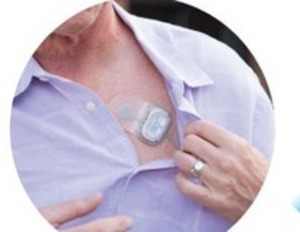
After several years in development, the MC10 BioStampRC went on sale this week. It’s a waterproof, band-aid-like sticker loaded with some of the most sophisticated tracking sensors ever created. It provides real-time access to a person’s vital signs and activity, in an entirely unobtrusive way.
|
|
Scooped by
Beeyond
March 28, 2016 12:10 PM
|
The patch monitors things like premature ventricular complexes, non-sustained ventricular tachycardia and paroxysmal atrial fibrillation – the goal is to catch hypertrophic cardiomyopathy (HCM) quick. This is the most common cardiac disorder, but it is commonly not diagnosed, and there is not approved treatment currently.
|
|
Scooped by
Beeyond
March 28, 2016 12:09 PM
|
Propeller Health and Boehringer Ingelheim announced a new commercial partnership. Under the partnership, COPD and asthma patients using Boehringer's Respimat inhaler will have the opportunity to enroll in a program at select health systems that will monitor their adherence via a Propeller sensor and improve their engagement in their health.
|
|
Scooped by
Beeyond
March 14, 2016 1:30 PM
|
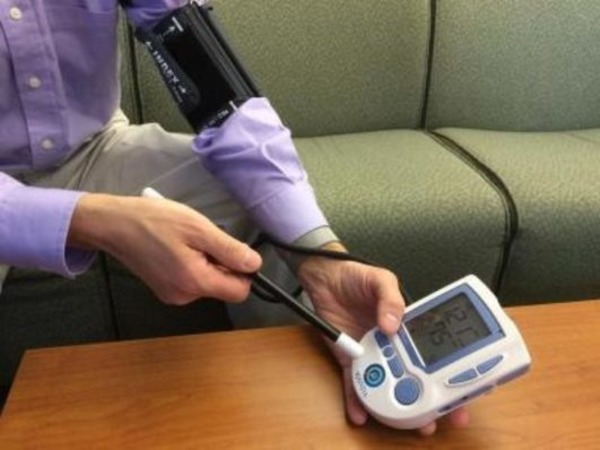
Today’s health and/or fitness trackers are but a prelude to much more interesting devices that will go beyond step counting and heart rate monitoring. The fitness wearables commercially available today are nothing more than fancy electronic pedometers that have been around for roughly 30 years, with the added pizazz of wireless connectivity to send data to the cloud. Nice features for sure, but they don’t add much in the way of medical usefulness. Furthermore, while there are many FDA-approved medical devices on the market today, such as insulin monitors and blood pressure monitors, these items perform a single function and most could hardly be described as “wearable”. Done right, next generation medical wearables might just prove to be the key catalyst for revolutionizing how healthcare is delivered.
|
|
Scooped by
Beeyond
March 14, 2016 1:26 PM
|
In our efforts to address outcomes and efficiencies at the same time, we’ve seen that digital health is most effective when integrated with existing therapy protocols, rather than as an add-on item. A few years back, we made a conscious decision to equip the majority of our devices with built-in cellular connectivity so that therapy and device performance data can flow reliably and securely. The devices send data to the cloud just one hour after therapy concludes. Because connectivity is seamlessly built into the prescribed therapy, the devices require little human interaction to do their job.
|
|
Scooped by
Beeyond
March 14, 2016 9:58 AM
|
The Internet of Things (IoT) has hit many industries, government, and certainly the lives of consumers. We now have the ability to remotely turn our appliances on or off, and to monitor what goes on in our homes when we are away. Industries can detect machinery issues and repair them remotely. Smart cities are being planned which will provide for everything from easing traffic to controlling lighting, and even to melt our streets when snow and ice threaten transportation and public safety. Another area in which IoT has amazing possibilities is health care.
|
|
Scooped by
Beeyond
March 14, 2016 9:35 AM
|
Alphabet ($GOOG) has said that big data will play a key role in its med tech initiatives. Now the company is revealing a device that can collect and sync medical information more easily. The technology could become a linchpin for Alphabet's healthcare-focused efforts.
|
|
Scooped by
Beeyond
March 14, 2016 9:30 AM
|
The internet isn’t that old if you really think about it. We've been working on it for decades but so far as public use, it's only been a short span of about 20 years. In 1974, the TCIP/IP structure that we know today had it’s birth. It was not until ten years later that the first domain name system or DNS was introduced. The first website actually came online in 1991. The internet that was proposed just a scant two years earlier came crashing into our mainstream world. It was a technological awakening that had been a long time coming.
|
|
Scooped by
Beeyond
March 14, 2016 9:26 AM
|
It can be hard to remember to take your medicine, whether you're on fluoxetine or Flintstones vitamins. A new smart device wants to use technology to help you keep up with your meds.
|
|
Scooped by
Beeyond
March 14, 2016 6:11 AM
|
Product design and development firm Cambridge Consultants has won a prestigious Red Dot Design Award for its KiCoPen smart insulin pen concept. The company was up against nearly 5,000 entries from 63 countries in the design concept category of the awards – one of the biggest and most illustrious design award schemes in the world.
|
|
Scooped by
Beeyond
March 8, 2016 9:22 AM
|
Wearables are on track to become a new channel for how patients and healthcare providers interact. They offer patients the ability to be more engaged with their healthcare plan and allow for communication of healthcare information remotely.
|
|
Scooped by
Beeyond
March 8, 2016 9:22 AM
|
As for more advanced technology, the market for wearables in healthcare is rapidly picking up the pace; and it’s not all about calorie counters and fitness trackers, either. Here are some of the top wearable technology advances we’re seeing in medicine.
|
|
Scooped by
Beeyond
March 8, 2016 9:19 AM
|
A team of researchers has combined two separate technologies to create a health-monitoring device that is noninvasive, doesn’t interfere with strenuous outdoor activities and can continuously track a user’s health at the molecular level.
|
|
Scooped by
Beeyond
March 8, 2016 9:11 AM
|
The Philips Wearable Biosensor can be comfortably worn for continuous use, offering both patients and healthcare providers a way to detect the early signs of a medical emergency.
|
|
Scooped by
Beeyond
March 4, 2016 3:06 PM
|
MobiHealthNews has been tracking FDA clearances for smartphone-connected medical devices and standalone apps for many years. So far 2014 has had its fair share — about two dozen digital health-related FDA clearances have been secured this year. Here’s a roundup:
|
|
Scooped by
Beeyond
March 4, 2016 3:05 PM
|
The next generation BD Veritor System uses an AT&T Global SIM to send test results from the BD Veritor platform to the BD cloud. The BD cloud then transmits the data in a highly secure manner to a laboratory information system or electronic health records system. Clinicians can then access information and integrate test results into patient records in a highly secure way.
|
|
Scooped by
Beeyond
February 29, 2016 12:59 PM
|
Innovative healthcare technology abounded at the 2015 Connected Health Symposium in Boston, from medical-grade wearables and telemedicine, to big data and predictive technologies. Their developers hope to solve a specific problem within healthcare, such as managing chronic diseases or chronic pain. At the symposium, 10 companies won the "Innovators Challenge" because their products were deemed genuinely new and potentially game-changing for connected health. In this photo story, SearchHealthIT highlights the five most interesting and innovative healthcare technology and devices.
|
|
Scooped by
Beeyond
February 28, 2016 4:56 PM
|
Smart, connected medical devices are now technologically and economically feasible. How might this increasingly intelligent future reshape the MedTech industry?
|
|
Scooped by
Beeyond
February 28, 2016 4:54 PM
|
Back in 2011 in a security researcher named Jay Radcliffe took to the stage at the Black Hat security conference in Las Vegas and hacked into his own insulin pump, demonstrating how a remote user could potentially deliver a fatal dose of insulin to an unsuspecting diabetic.
|
|
Scooped by
Beeyond
February 28, 2016 4:54 PM
|
Developed by a team of researchers at Dartmouth College, the wand allows users to transmit their Wi-Fi’s SSID and password to a medical device just by pointing. Dartmouth computer science doctoral student Tim Pierson said the goal of the invention was to help less tech-savvy patients take advantage of the most up-to-the-minute medical care.
|
|
Scooped by
Beeyond
February 28, 2016 4:53 PM
|
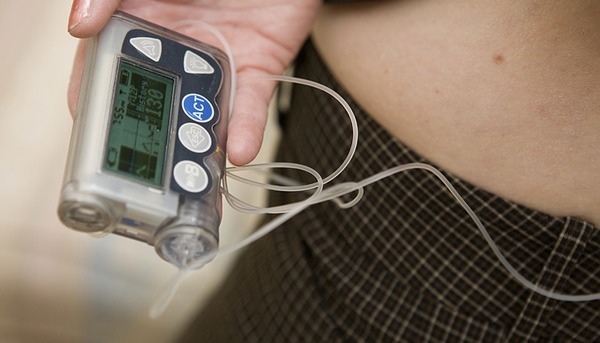
A few months ago, I was at a birthday party with one of my sons when another young man took out a medical device that had a long, thin tube leading back into his pocket. When asked, he identified it as his insulin pump, which he needed to check and set appropriately before having a piece of cake. “It’s capable of connecting to my phone via Bluetooth, but I’ve never set it up and wouldn’t know what to do with it anyway,” he said.
|
|
Scooped by
Beeyond
February 22, 2016 1:35 PM
|
But there are hurdles to wider adoption. Tele-medicine insurance reimbursement policies vary by state and, in some cases, the age of patients. Hospital administrators are concerned about the work flow and liability challenges of tracking hundreds of home-monitored patients.
Security is also a worry. Qualcomm Life's 2net platform has security baked in and meets federal privacy standards. But some older connected medical devices with off-the-shelf Bluetooth radios could be less secure.
|
|
Scooped by
Beeyond
February 18, 2016 7:05 AM
|
|

Curated by Beeyond
BEEYOND is a consulting company in the field of disruptive innovation, accompanying established companies on out-of-the-core growth strategy, from creation of new concepts to product launch. Reach us at: contact@beeyond.fr.
|