Your new post is loading...

|
Scooped by
Beeyond
April 6, 6:25 AM
|
Stent implantation is widely used to treat coronary artery disease, yet in-stent restenosis (ISR) remains a major clinical challenge. Fractional flow reserve (FFR) is the gold-standard index for evaluating restenosis severity, but current techniques are invasive and unsuitable for continuous monitoring. Here, we present a bioresorbable smart stent platform that enables real-time intravascular pressure sensing and continuous FFR monitoring. The system integrates a MEMS-based LC pressure sensor, fabricated from SU-8 and gold, onto a hybrid 3D-printed vascular stent composed of polycaprolactone (PCL) and polylactic acid (PLA). Structural refinements and an optimized fabrication process enable long-term sensor reliability, minimize signal drift, and maintain stable resonance frequency. Across 100 fabricated devices, the pressure sensors show a resonance frequency of 82.2 ± 1.7 MHz and a sensitivity of 37.48 ± 2.13 kHz/mmHg. In vitro closed-loop fluidic tests using a vascular phantom confirmed the stable, wireless operation of the device and its ability to accurately assess hemodynamic parameters. The dual-sensor configuration enables simultaneous upstream and downstream pressure measurements, yielding FFR values that closely match those from a commercial system (R² = 0.97) under varying stenosis severities. The proposed smart stent offers a promising pathway toward long-term, non-invasive vascular monitoring and early detection of ISR.
|
|
Scooped by
Beeyond
March 19, 6:31 AM
|
The g.GAMMAcap is optimized for use with g.LADYbird TMS electrodes, providing both comfort and quick mounting. Its flexible yet durable fabric includes 74 labeled standard positions (based on the extended 10-20 system) and 86 additional intermediate positions for easy electrode placement. Designed for various experiments like EPs and high-density brain mapping, it allows seamless integration with g.LADYbird electrodes. The cap includes options for a chest belt or chin straps, ensuring a secure fit during recordings.
|
|
Scooped by
Beeyond
March 19, 6:29 AM
|
If stroke, multiple sclerosis or traumatic brain injury affect the ability to move, it isn’t necessarily lost! For that reason, g.tec medical engineering developed recoveriX Neurotechnology, a unique rehabilitative approach based on brain-computer interface technology that helps the brain rewire itself.
While giving the task to imagine a hand or foot movement, recoveriX provides feedback in real-time through muscle stimulation and visual simulation. This process induces neuroplasticity within the brain to relearn hand, arm and foot movements.
|
|
Scooped by
Beeyond
March 8, 1:12 PM
|
The Synchron Stentrode system, known for its novel utilization of MEMS technology and success in a clinical trial enabling computer communication for patients [1], has inspired the development of another technology using a braided stent as a base embedded with insulated DFT wires. Each DFT wire carries a tiny electrode (Fig. 1A left), and the stent connects via a transvascular lead to an external device (Apollo I 32-channel signal acquisition system or in-house recording/stimulation unit). The study aims: 1) to assess the stent-electrode's deliverability, release, and extraction at the transverse sinus (TS) and superior sagittal sinus (SSS); 2) to evaluate signal quality collected by the new system.
|
|
Scooped by
Beeyond
March 8, 1:07 PM
|
In this study, a novel approach is demonstrated for fabricating endovascular micro-wire stent electrodes using laser welding and ablation technologies. The method significantly reduces the electrode size, making it suitable for narrower blood vessels. The quantitative results highlight the excellent electrochemical performance of the electrodes fabricated under optimal laser welding parameters, with a 1 kHz impedance of 4117 Ω, a 1 kHz phase of −68.23 degrees, a charge storage capacity (CSC) of 8.745 (mC/cm2), and a charge injection capacity (CIC) of 1.617 ×10⁻⁴C/cm2. These results indicate that the electrodes possess excellent stability and suitability for use as neural interfaces in confined vascular environments.
|
|
Scooped by
Beeyond
February 24, 10:41 AM
|
Our interconnection solutions for active implantable devices combine innovation and precision to meet the unique demands of the medical and BCI industries. From custom-designed connectors to durable cables and industry-standard connectors, our comprehensive offerings ensure reliable, high-performance connectivity for a wide range of applications. With a focus on quality and compatibility, our interconnection services support the seamless integration of active implants, enhancing device reliability and patient outcomes.
|
|
Scooped by
Beeyond
February 15, 5:50 AM
|
Ce week-end, une bonne partie des objets connectés Wemo basculent dans une nouvelle vie, beaucoup plus terre à terre. Belkin coupe l’accès à ses serveurs cloud, emportant avec eux commandes à distance, assistants vocaux et automatisations en ligne. Un rappel assez brutal d’une vérité bien connue : dans la maison connectée, tout dépend du bon vouloir et de la longévité des serveurs du constructeur.
|
|
Scooped by
Beeyond
February 14, 1:41 PM
|
Among the most promising advancements is the Endovascular Brain-Computer Interface (EBCI), an innovative approach representing a subtype of invasive brain-computer interfaces (BCIs). EBCI fosters the delivery of electrodes to intricate brain regions through an endovascular route, effectively bypassing the need for craniotomy. This technique melds the precision of high-quality signal acquisition with the safety associated with minimally invasive interventions. The EBCI framework enables profound insights into memory circuit involvement in Alzheimer’s, invoking hope for enhanced therapeutic strategies in this domain.
|
|
Scooped by
Beeyond
February 14, 1:20 PM
|
In the study, patients were directed to complete their assigned therapy five times per week over a 12-week period. Participants were at least six months post-stroke with persistent upper-extremity hemiparesis or hemiplegia, and with no upper or lower limits on baseline upper-extremity Fugl-Meyer (UEFM) scores. The study enrolment was stopped early for efficacy following a planned interim analysis. A total of 62 participants with a mean time since stroke of 5.4 years were included in the primary analysis, 37 of whom received BCI therapy and 25 of whom were allocated to standard exercise therapy.
|
|
Scooped by
Beeyond
February 9, 8:18 AM
|
In Scalable Neural Interfaces, we are exploring how to advance highly targeted minimally-invasive neurotechnologies to understand and repair the brain.
|
|
Scooped by
Beeyond
February 4, 9:13 AM
|
The NAOX Wave earbuds incorporate the same in-ear EEG technology as the NAOX Link NX01, initially designed for clinical applications. This innovation allows users to monitor their mental health, track brain activity throughout varied states such as working and sleeping, and provides analytics about cognitive function and even an estimation of the brain's age. Such data are accessible through a user-friendly companion application, making it valuable for everyday users interested in maintaining or improving mental well-being.
|
|
Scooped by
Beeyond
February 4, 9:12 AM
|
Naox Technologies has become the first medtech company to receive FDA clearance for its in-ear EEG device that can negate the need for complex and limited scalp electrodes that have been used for brain monitoring for decades.
Naox Link is an electroencephalography (EEG) platform that patients use via a small sensor worn in the ear, allowing brain activity to be monitored while they move around. According to a Jan. 6 release, the approach “enables long-duration, real-world brain monitoring beyond traditional hospital environments.”
|
|
Scooped by
Beeyond
January 23, 5:04 AM
|
Merge Labs, in its own launch post, said it is pursuing “fundamentally new approaches” that aim to raise bandwidth and brain coverage while making BCIs “much less invasive,” including systems that “connect with neurons using molecules instead of electrodes,” use “deep-reaching modalities like ultrasound,” and “avoid implants into brain tissue.”
|
|
Scooped by
Beeyond
January 19, 6:36 AM
|
In this study, we address the issue of whether applying transcranial magnetic and vibrotactile stimulation can improve the motor imagery BMI performance. Our findings provide evidence that applying transcranial magnetic stimulation with specified parameters (frequency 5 Hz, duration 6 min, 90% of the muscle activation threshold at rest) leads to preactivation of the occipital brain region and facilitates sensorimotor integration during motor imagery. We found that this process results in TMS-induced decrease of the motor imagery BMI latency. Integration of vibrotactile feedback in motor imagery BMI leads to enhancement of the BMI performance by an increase of the ERD level of EEG patterns over the contralateral motor cortex area corresponding to the MI of the non-dominant hand and an increase in motor cortical excitability.
|
|
Scooped by
Beeyond
December 25, 2025 8:50 AM
|
The BISC implant measures just 50 micrometers thick, roughly the thickness of a human hair, and occupies approximately 3 cubic millimeters of space. Ken Shepard, professor of electrical engineering at Columbia University, explained the device can slide into the space between the brain and skull. The chip contains 65,536 recording electrodes and 1,024 recording channels that capture neural activity at unprecedented resolution. All signal processing, wireless communication, and power management functions occur on the same integrated circuit, eliminating the need for bulky external canisters that current brain computer interfaces require.
|
|
Scooped by
Beeyond
December 25, 2025 8:49 AM
|
In a major advance during clinical trials, a middle-aged man with quadriplegia caused by a cervical spinal cord injury is now able to steer a wheelchair outdoors and command a robotic dog to retrieve takeout food using only his thoughts. In March, the CAS research center and Huashan Hospital implanted ultra-thin electrodes – each less than 1 percent of the diameter of a human hair – into the brain of a patient with motor dysfunction, enabling mind-controlled chess playing and car racing.
|
|
Scooped by
Beeyond
December 25, 2025 8:48 AM
|
The electrodes are implanted in the brain, while the controller, battery, antenna, and processor sit beneath the skin in front of the chest. An external wireless charging dock, in a similar style to what you'd see with a phone charger, allows the device to be charged and used independently.
|
|
Scooped by
Beeyond
December 25, 2025 8:47 AM
|
Sam Altman is launching Merge Labs, a brain-computer interface startup spinning out from nonprofit Forest Neurotech, focusing on non-invasive ultrasound to read and influence brain activity. Backed by major investments, it challenges Neuralink's implants by offering safer, scalable alternatives for therapeutics and consumer applications. This venture advances Altman's human-AI integration vision.
|
|
Scooped by
Beeyond
December 25, 2025 8:45 AM
|
Neurosoft Bioelectronics emphasizes improvements to safety and long-term functionality with its specialized brain-computer interface. Positioned as ultra-soft and minimally invasive implants, this material science innovation is engineered to closely match the physical properties of neural tissue with the aim of reducing inflammatory responses and other surgical risks that have historically limited the durability of such devices.
|
|
Scooped by
Beeyond
December 25, 2025 8:44 AM
|
The device, which is smaller than a human index finger, is soft and flexible, so it conforms to the curvature of the skull. It includes 64 tiny LEDs, an electronic circuit that powers the lights, and a receiver antenna. Additionally, an external antenna controls the LEDs using near-field-communications (NFC) — electromagnetic fields for short-range communications as is done for contactless card payments. The compact device is designed to be placed under the skin, rather than being implanted directly into the brain. "It projects light directly onto the brain [through the skull], and the response of the brain to that light is generated by a genetic modification in the neurons," Rogers told Live Science.
|
|
Scooped by
Beeyond
December 25, 2025 8:42 AM
|
During the study, a non-disabled woman volunteered to hook up the electrodes and create a connection with Thomas. Once ready, Thomas could control the volunteer’s hands and even feel the sensations that they felt. To prove this, the researchers blindfolded both parties and had Thomas do various things without allowing the volunteer to know what he wanted her to do. He was able to have the volunteer’s hands open, close, grasp objects, and even touch them to feel the difference between things. In addition, the researchers connected him to Kathy Denapoli, who is a 60-year-old with a partially damaged spinal cord. He was able to help her move her hands, pick up a bottle, pour from it, and more.
|
|
Scooped by
Beeyond
December 5, 2025 1:35 PM
|
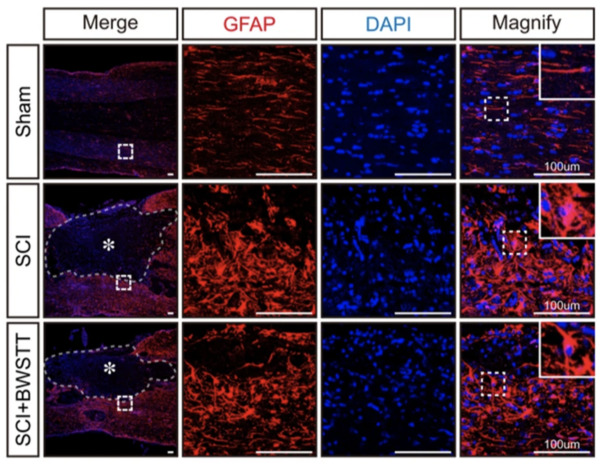
Spinal cord injury is followed by glial scar formation, which was long seen mainly as a physical barrier preventing axonal regeneration. Glial scar astrocytes lead to glial scar formation and produce inhibitory factors to prevent axons from growing through the scar, while inhibiting the conversion of reactive astrocytes into glial scar-forming astrocytes may represent an ideal treatment for CNS injury. Exercise is a non-invasive and effective therapeutic intervention for clinical rehabilitation of spinal cord injury. However, its precise therapeutic mechanisms still need to be continuously explored.
|
|
Scooped by
Beeyond
December 5, 2025 1:32 PM
|
In September 2024, California quietly set a precedent. Lawmakers passed SB 1223, an amendment to the California Consumer Privacy Act (CCPA) that classifies neural data as “sensitive personal information.” For the first time in U.S. law, brain-derived signals such as electroencephalography (EEG) traces, functional MRI (fMRI) scans (a type of MRI imaging that measures and maps brain activity) or brain-computer interface (BCI) activity are treated as a category apart from other forms of biodata. The move may seem technical, but it signals a new public expectation: if companies intend to touch the brain, they will be held to stricter standards of stewardship, purpose limitation, and user control.
This is a threshold moment for neuroethics.
|
|
Scooped by
Beeyond
December 5, 2025 1:31 PM
|
Et si un simple effort mental suffisait à faire défiler une page, envoyer un message ou contrôler un appareil ? Cette scène digne d’un film de science-fiction est désormais bien réelle. Grâce à une nouvelle interface cerveau-machine, le contrôle par la pensée devient un outil du quotidien pour certains patients.
|
|
Scooped by
Beeyond
December 5, 2025 1:30 PM
|
The device (BCI) is currently undergoing clinical trials to test its initial safety and functionality in patients with mobility-limiting conditions. In the first nine months of 2024, Neuralink implanted its device in 12 patients. The trials' first participant, a man who was paralyzed after a spinal cord injury, used the implant to play video games and chess. Elon Musk stated that over 10,000 people have joined Neuralink’s patient registry in hopes of participating in future device trials.
|

Curated by Beeyond
BEEYOND is a consulting company in the field of disruptive innovation, accompanying established companies on out-of-the-core growth strategy, from creation of new concepts to product launch. Reach us at: contact@beeyond.fr.
|