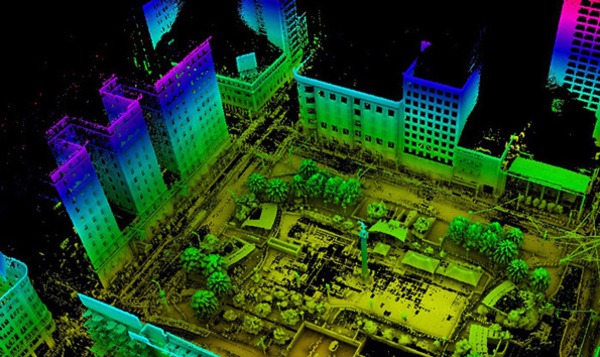
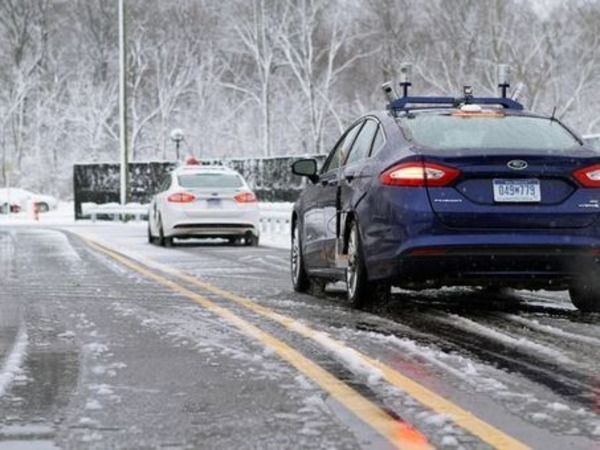
The cost of on-board electronics will be a key element in the adoption speed of the autonomous car and one of the key points remains that of the very many sensors needed for the algorithms that will drive the car in the middle of the traffic. In this respect, however, the LiDAR (laser detection and ranging) with a cost of several thousand dollars per unit remains a brake on the appearance of autonomous cars at a cost compatible with what motorists are willing to put in a car. Velodyne, one of the main manufacturers of LiDAR has just announced that it will be able to halve the price of its VLP-16, a “small” LiDAR on board. One of the obstacles to the marketing of autonomous cars has just been overcome.
Most experts now agree that the internal combustion (IC) engine will disappear for most applications over the next few decades. Not in three years, but certainly in thirty. Until recently, this perspective was anathema. Electric vehicles (EVs) had been the “next big thing” for a century, so industry players could be forgiven for not believing this time will be different. But this time it is.
Renault is further electrifying cars, vans, trucks, and entire fleets. It is entering regions few companies bring their electric cars to. It plans to have 8 fully electric vehicles on the market by 2022 and 12 electrified models. It has also given us a more idealistic visualization of an electric future, one for 2030. Renault recently shared its innovative vision of the electric ecosystems — the SYMBIOZ. It is an integrated house and car that work together in harmony. The home and car will essentially share their energy.
Bright Box was founded in 2012, has operations in Europe and conducts business globally. It provides a turn-key connected car platform that links drivers to their vehicles, and the vehicles to networks of car dealers and original equipment manufacturers (OEMs).
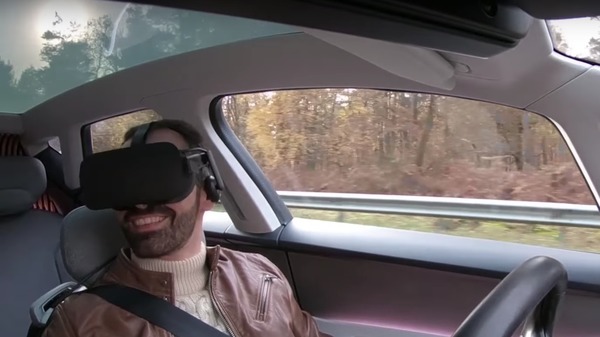
Renault, with the help of Ubisoft and a few million dollars, has created a new VR simulation you actually experience while driving. Users put on the headset, which is paired with the car’s real front-facing motion sensors to reimagine the image of the road in front of you.
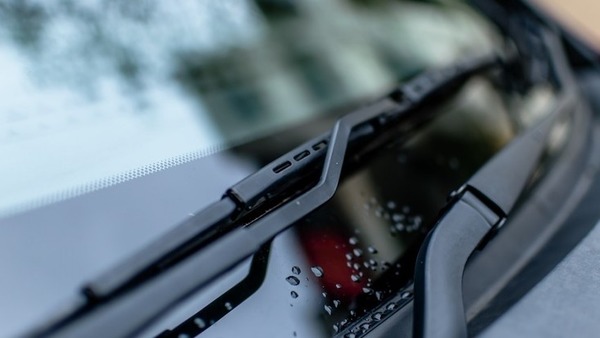
Tesla may be among the most technologically advanced car companies in the world but there was one thing its customers have been missing: automatic windshield wipers. While seemingly a simple feature and standard on most new models, Tesla drivers have been missing out since an update to the car's software in October 2016. But Tesla CEO, Elon Musk has promised his devout drivers that the update is coming soon.
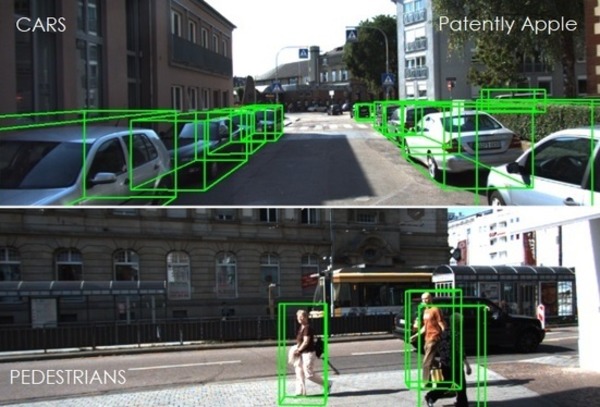
On November 22 Patently Apple posted a brief report covering the publication by Apple's Senior AI Researcher Yin Zhou and Machine Learning Research Scientist Oncel Tuzel on how self-driving cars could better detect pedestrians and cyclists while using fewer sensors. A PDF of their full Paper titled, "VoxelNet: End-to-End Learning for Point Cloud Based 3D Object Detection," could be accessed here. The graphic illustrated above is from that paper.
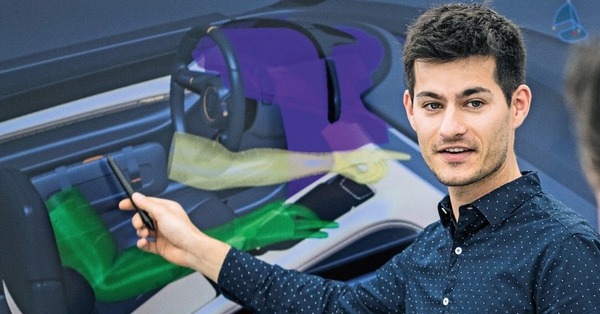
Porsche went on to suggest its interiors will be equipped with more touchscreens and fewer buttons. The company's head of interior design, Ivo van Hulten, also hinted augmented reality could play an important role in the future as the technology can project "virtual elements into the driver’s field of vision" and this would enable drivers to keep their eyes on the road.
Driverless cars are here to stay, whether they are Elon Musk’s tenuously-funded Teslas or mainstream manufacturers’ more staid visions. As the world’s road safety experts and infrastructure specialists brace themselves for the coming storm, though, a long anticipated media revolution is also nearing: the advent of the ‘third living space’ in your car. The way we consume entertainment on the go is going to change drastically, and some giants stand to lose as a result.
How will the drivers of tomorrow get around? As world populations and cities grow, people are looking for transportation solutions that make life easier. Solutions which reduce traffic congestion in our cities and respect the air we breathe. Connected vehicles that integrate seamlessly with our devices while improving safety on our roads. Economical choices that give us pleasure and freedom in driving. Through constant innovation and technological developments as well as a reputable aftermarket service, Valeo is committed to developing these solutions and shaping the future of mobility.
DeepManta, a flexible algorithm for a wide range of applications, will demonstrate visual object recognition for smart cities, such as identifying vehicles, their type and position and counting them. In addition, Valeo, the global supplier of advanced automotive technology that is partnering with List, will demonstrate DeepManta’s support for autonomous driving.
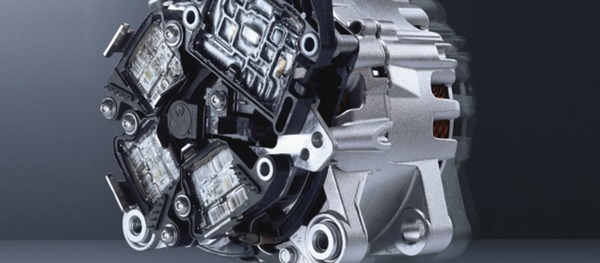
In the city, vehicles are stationary for almost 35% of the time, with their engine’s idling needlessly. The Stop-Start system automatically switches the engine off when the vehicle is at a standstill and restart the engine immediately, as soon as the driver lifts his foot off the brake or disengages the clutch, leading to a significant reduction in CO₂ emissions. Two Valeo systems, the i-StARS starter-alternator and the ReStart reinforced starter, make this automation possible. These systems are compatible with gasoline and diesel engines, and both manual and automatic gearboxes. The Stop-Start system provides fuel savings of up to 6% in European standard mixed cycle use, and savings of up to 15% in congested city driving.
According to List, its DeepManta “multi-task deep neural-network” algorithm is suitable for a wide range of applications including visual object recognition for smart cities, such as identifying vehicles, their type and position and counting them.
Car-sharing is rapidly becoming a way of life for millions of people worldwide. Though not a new practice, recent digital disruptions are making it a defining aspect of our mobility habits. Let’s take a look at the shape of the coming car-sharing boom, and how technologies and social habits will shape this “new normal” of urban mobility.
Discover Valeo's 360°Experience of Traveling cockpit, a new high tech interior and exterior lighting demonstrator which responds intuitively to the three phases of the road experience: driving, automation, and the transition between the two.
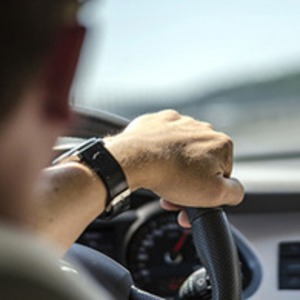
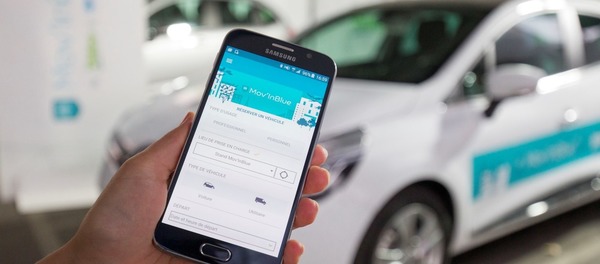
With Valeo InBlue, drivers can use their smartphone or connected watch to lock, unlock and start their car, control applications and remotely access useful vehicle data using Bluetooth.
Imagine you are driving down the street when two people — one child and one adult — step onto the road. Hitting one of them is unavoidable. You have a terrible choice. What do you do? Now imagine that the car is driverless. What happens then? Should the car decide?
Starting November 22, fans all over the world could use Snapchat's augmented reality (AR) technology to view and configure a realistic 3D model of the new addition, the carmaker said in a statement on Thursday.
BEEYOND is a consulting company in the field of disruptive innovation, accompanying established companies on out-of-the-core growth strategy, from creation of new concepts to product launch. Reach us at: contact@beeyond.fr.
To get content containing either thought or leadership enter:
To get content containing both thought and leadership enter:
To get content containing the expression thought leadership enter:
You can enter several keywords and you can refine them whenever you want. Our suggestion engine uses more signals but entering a few keywords here will rapidly give you great content to curate.

 Your new post is loading...