


Is peritoneal dialysis a painful treatment?...

 Your new post is loading... Your new post is loading...
 Scoop.it!
Is peritoneal dialysis a painful treatment?... 
No comment yet.
Sign up to comment
Scoop.it!
Doctor's visit for Alex Argumedo - after his tube somehow got dislodged in his stomach, Alex had to have surgery to permanently suture the tube.
Scoop.it!

The University of Alabama at Birmingham is starting a three-year study of a telehealth program for peritoneal dialysis patients. The program, which will be funded by Baxter International, will allow patients who live in other counties to have monthly checkups by video, with blood draws at local health departments, rather than traveling to UAB Medicine.
Scoop.it!

Nephrology insertion resulted in lower overall rates of PD nonuse, particularly due to death or remaining predialysis. Greater use may be related to insertion timing, technique or greater commitment on the part of nephrologists to the success of PD.
Scoop.it!

Key studies are reviewed in the present paper, and the results seem to indicate that compared with patients starting PD in a planned setting with peritoneal resting after PD catheter implantation, patients starting unplanned PD have an increased risk of mechanical complications but apparently no increased risk of infectious complications.
Scoop.it!

Our kidneys play several vital roles in the body – their key role is to filter and remove waste products and excess fluid from the blood. People with kidney failure can survive for longer periods of time with treatments such as dialysis and kidney transplants. Dialysis replaces kidney function and is a way of cleaning blood when kidneys can no longer do their job by getting rid of your body’s waste products and excess fluid.
Scoop.it!
Department of Internal Medicine Grand Rounds Lecture Series: Peritoneal Dialysis Essentials for the Non-Nephrologist Speaker: Dr. Hsiao Lai, MD Brought to yo...
Scoop.it!
Tego® Needlefree Hemodialysis Connector
Scoop.it!
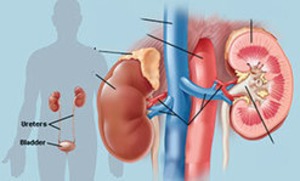
Non communicable diseases such as diabetes, hypertension and chronic kidney disease (CKD) are among the most common causes of death in Sri Lanka at present. Just a few years ago, diagnosis of ‘end stage renal failure’ was tantamount to receiving a death sentence. This is no longer the case. Advances in kidney transplant surgery have made it possible to virtually give ‘new life’ to such patients by transplanting a healthy kidney obtained from a living donor or a ‘brain dead’ person (cadaver- usually the victim of a road accident). The success rate of kidney transplants is almost 98 per cent. The Kidney transplant unit at Kandy General Hospital alone performs an average of 2-3 transplants per week at present.
Scoop.it!

In patients undergoing peritoneal dialysis (PD), PD-related infection is a major cause of PD failure and hospital admission. Good air quality is required when dialysate exchange or exit site wound care is performed. To our knowledge, investigation of air pollution as a factor for PD-related infection in patients undergoing dialysis is limited. This study aimed to assess the effect of environmental particulate matter (PM) and other important risk factors on 1-year PD-related infection in patients undergoing PD.
Scoop.it!
Will I have a greater chance of infection with peritoneal dialysis than with hemodialysis? If I do peritoneal dialysis will I get peritonitis? Hear from a doctor and nurse about dialysis infections and how an infection may be prevented.
Scoop.it!
Joanne M. Bargman, MD, conducts an overview of the infectious complications common in peritoneal dialysis (PD) patients, namely peritonitis. In this webinar, learn about how to identify signs of peritonitis, how to manage the infection and how to prevent it.
Scoop.it!
For people who are considering or who have already chosen peritoneal dialysis (PD), this training video provides a full, step-by-step explanation of the process involved for the two types of PD: continuous ambulatory PD and automated PD.
Scoop.it!

A PD (Peritoneal Dialysis) catheter is a plastic tube that is placed into the lining of the abdomen called the Peritoneum. It allows fluid into the abdominal cavity called the Peritoneum. The op to have the catheter inserted is considered minor. It can be performed under local or general anaesthesia and generally takes less than an hour. Some patients go home on the same day, others the next morning, depending upon how you feel after the anaesthetic.
Scoop.it!

It has been recognized that PD offers some advantages over hemodialysis (HD), and is non-inferior with respect to mortality. However, PD requires a multidisciplinary program and a team management that is difficult to achieve in many rural areas. It is well known that PD outcomes largely depend on the PD program, catheter-access center, and patient education. If PD is done in large and well-developed referral centers, it is efficient and has a higher impact on quality of life, lower cost, and allows patients adequate work and family adaptation. Unfortunately, most of the PD patients in rural China, Latin America, and other developing countries do not have access to these multidisciplinary facilities.
Scoop.it!

Patients with failing kidneys often choose to undergo dialysis treatments. New research suggests that the type of dialysis they choose may affect their chance of survival.
Scoop.it!

Can we identify modifiable risk factors for peritonitis in patients undergoing peritoneal dialysis (PD)? We aimed to determine whether housing standard, PD exchange technique or patient motivation might be modifiable risks for peritonitis. We also explored the relationship between lack of motivation and depression.
Scoop.it!

Using a 33-factor algorithm to match 4,460 frequent HHD patients with 4,460 PD patients, the results of the study showed that there was 13% lower risk of cardiovascular-related death and 20% lower risk of infection-related death with HHD therapy. Additionally, frequent HHD patients were 16% and 11% less likely to be hospitalized for cardiovascular or infection-related diagnoses, respectively.
Scoop.it!

“The task was to develop an agent that could eliminate many different toxic substances from the body as quickly as possible,”
Scoop.it!

This study showed that hyponatremia is an independent predictor of mortality in PD patients. Nevertheless, whether correcting hyponatremia improves patient survival is unknown. Future interventional studies should address this question more appropriately.
Scoop.it!
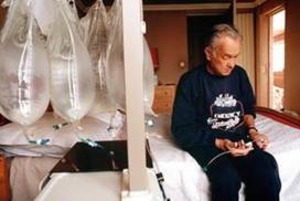
A new study confirms previous research showing an initial survival advantage with peritoneal dialysis (PD) versus hemodialysis (HD), even among patients who have received pre-dialysis care and those starting HD with an arteriovenous fistula or graft.
Scoop.it!

Hemodialysis and peritoneal dialysis are both used to treat kidney failure. Hemodialysis uses a man-made membrane (dialyzer) to filter wastes and remove extra fluid from the blood. Peritoneal dialysis uses the lining of the abdominal cavity (peritoneal membrane) and a solution (dialysate) to remove wastes and extra fluid from the body.
Scoop.it!
Portable Peritoneal Dialysis Is Taking The Chronic Kidney Disease Community By Storm. Are You Ready?
You may be surprised to learn that the current form of Peritoneal Dialysis "can be considered a Wearable Dialysis Therapy," according to a University College London (Center for Nephrology) study. Perhaps in theory, but according to feedback from our readers, most Peritoneal Dialysis as well as Hemodailysis patients would not consider the large, heavy contemporary Dialysis Machines "wearable" and certainly NOT portable. Would you agree?
|

Curated by Beeyond
BEEYOND is a consulting company in the field of disruptive innovation, accompanying established companies on out-of-the-core growth strategy, from creation of new concepts to product launch. Reach us at: contact@beeyond.fr.
Other Topics

#dotdot, the community internet

Aidants

Aston-Martin

Augmented & Virtual Reality

Blue Ocean Strategy

Brain Computer Interfaces & connected medical devices

Consumer Digital Health

Covid-19, SARS-Cov-2, vaccines, Remdesivir, Chloroquine...and all that Jazz

Critical Limb-Threatening Ischemia (CLTI)

Daily realities of diabetic patients

Fashion & technology

Healthcare: reloaded...

High level trending in...

In-Vitro Diagnostic

Innovating to what's next...

Instrumental cosmetics

Interventional Cardiology

Intra-Dermal drug delivery: Opportunities and Challenges?

Local delivery for Gene Directed Enzyme Prodrug Therapy
Engineered MSCs with suicide genes delivered intra-arterially to treat various cancers. Local delivery bypasses homing issues that plagued prior GDEPT programs.

Metabolic Activation Therapy

Multiple sclerosis

Neurovascular Intervention

Nudges

Peritoneal dialysis

Solid tumors: latest on treaments and research pathways
glioblastoma, craniopharyngioma...
Tailored Expertise Sourcing & Market Intelligence in Global Consulting

The future of e-cigarette

The Revolution Of The Car Industry

Track & Trace

Transcatheter Treatment of Mitral Regurgitation
|





