Your new post is loading...

|
Scooped by
Beeyond
July 5, 10:27 AM
|
BCI devices play an essential role in the medical field. This review briefly summarizes novel wearable EEG-based BCIs applied in the medical field and the latest progress in related technologies, emphasizing its potential to help doctors, patients, and caregivers better understand and utilize BCI devices.
|
|
Scooped by
Beeyond
July 5, 10:26 AM
|
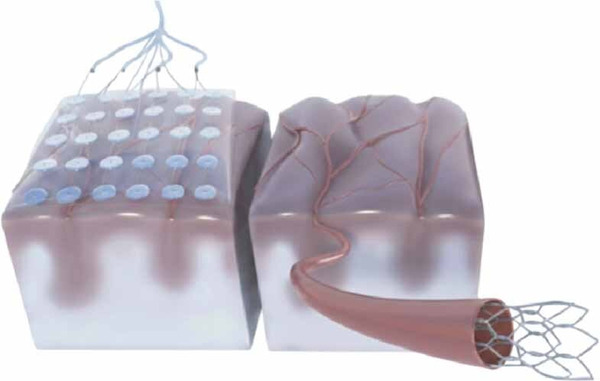
Endovascular neural interfaces (ENIs) offer a minimally invasive approach for neural stimulation and recording without the need for open brain surgery. However, current generation devices have long transvascular wires from the implant site to the chest. Eliminating these wires will unlock clinical usability, including lowering infection risk from transvascular wires, reducing the risk of thrombosis from altered hemodynamics, and improving mechanical reliability. However, removing these transvascular wires would require efficient power transfer across the skull and tissue while meeting specific absorption rate (SAR) limits, which is a significant challenge in the field.
|
|
Scooped by
Beeyond
July 5, 9:26 AM
|
Modern neuroprostheses can now restore communication in patients who have lost the ability to speak or move. However, implanting these invasive devices comes with risks inherent to neurosurgery. Here we introduce a noninvasive method to decode the production of sentences from brain activity and demonstrate its efficacy in a cohort of 35 healthy volunteers. For this, we present Brain2Qwerty, a new deep learning architecture trained to decode sentences from either electro- or magnetoencephalography, while participants typed briefly memorized sentences on a QWERTY keyboard. With magnetoencephalography, Brain2Qwerty reaches, on average, a character error rate of 29% and substantially outperforms electroencephalography (character error rate: 65%). For the best participants, the model achieves a character error rate of 18%, and can perfectly decode a variety of sentences outside of the training set. Overall, these results narrow the gap between invasive and noninvasive methods and thus open the path for developing safe brain–computer interfaces for noncommunicating patients.
|
|
Scooped by
Beeyond
July 5, 9:26 AM
|
The NeuroTech Company Directory represents a comprehensive database of over 563 companies operating across diverse sectors including brain-computer interfaces, cognitive health, neuromodulation, and psychedelic therapeutics. Updated weekly by an AI research agent, the directory profiles leading innovators such as COMPASS Pathways, advancing psilocybin therapy for treatment-resistant depression; Kernel, democratizing non-invasive neuroimaging technology; MindMed, developing psychedelic-derived therapeutics for psychiatric disorders; and BrainPatch, creating AI-powered brain-computer interfaces for neurological restoration. Additional companies including HABS focus on cognitive enhancement through neural interfaces. This curated resource serves as a critical intelligence tool for tracking developments in emerging neurotech sectors and identifying key players reshaping neuroscience and mental health innovation.
|
|
Scooped by
Beeyond
June 29, 8:47 AM
|
Brain–Computer Interfaces (BCIs) are systems that measure brain activity and translate it into meaningful outputs, enabling communication, control, assessment, rehabilitation, and interaction with external devices. Once considered a futuristic concept, BCIs are now used in neuroscience laboratories, hospitals, rehabilitation centers, neurosurgical operating rooms, and increasingly in real-world applications. This guide provides a comprehensive overview of the science, technology, applications, and future of Brain–Computer Interfaces.
|
|
Scooped by
Beeyond
June 29, 8:46 AM
|
A non-invasive brain-computer interface is a system that captures the brain's electrical, magnetic, or hemodynamic signals through sensors positioned on or near the scalp, processes those signals using AI-driven pipelines, and translates them into real-time digital outputs - device commands, communication, biometric data, or neurofeedback. The user walks in, puts on a headset, and the system begins listening to their brain.
|
|
Scooped by
Beeyond
June 29, 6:32 AM
|
The prevailing framework for understanding brain-computer interfaces positions Neuralink not as an isolated technological breakthrough but as a selection event within a broader convergent ecology—one that would exist and accelerate regardless of any single corporate actor’s trajectory. This ecology comprises three mature, independently funded pipelines whose handoffs are becoming mechanically plausible rather than metaphoric: first, connectomics and cell-type ontologies now producing reference-grade circuit ground truth at animal scales; second, BCI translation layers converging on stable, clinically tolerable signal capture across invasive, minimally invasive, and nonsurgical modalities; and third, edge-efficient neuromorphic inference hardware finally demonstrating sufficient performance envelopes to host closed-loop decoders locally, collapsing latency and data exfiltration pressures. The document that follows synthesizes these threads with explicit epistemic gradients—marking what is verified, what is heavily implied by documented trajectories, what remains possible but unconfirmed, and what belongs to the speculative frontier warranting continued tracking.
|
|
Scooped by
Beeyond
June 25, 4:59 PM
|
More and more individuals now have chronically implanted brain-computer interface (BCI) systems in their heads. Devices that can record and stimulate neural signals are increasingly moving from labs to real-world settings to test their potential to treat neurological disorders. At the same time, startups are emerging, investors are pouring money into the space and companies are accelerating their development programs. After decades of clinical research and false starts, are BCI systems finally here?
|
|
Scooped by
Beeyond
June 25, 10:51 AM
|
Invasive brain–computer interfaces (iBCIs) have expanded from single to thousands of channels, primarily driven by the goal to restore autonomy and social participation for people with severe neurological impairment. This article evaluates whether this increase in bandwidth (here, the aggregate neural data stream) aligns with clinical benefit or yields diminishing returns against rising challenges. The application landscape reveals that performance typically improves with rising channel count. However, the performance curve also depends on other factors such as task complexity, the evaluation metric, spatial redundancy, and decoder capacity. For today’s clinical goals (reliable communication and functional motor restoration), moderate bandwidth already suffices when coupled with model-based priors, structured output spaces, and shared-control architectures; next-horizon goals, e.g. unconstrained natural speech, embodied dexterity, and cognitive restoration, however, require abundant sampling but remain constrained by biological, technical, and ethical hurdles, with the engineering trilemma of bandwidth, power, and latency as the primary bottleneck for fully implantable systems.
|
|
Scooped by
Beeyond
June 22, 6:09 AM
|
Non-invasive brain stimulation offers therapeutic potential without surgery, yet existing electrical approaches lack spatial precision due to the long wavelengths of electric fields. Here we demonstrate acoustoelectric neuromodulation, a nonlinear interaction between applied acoustic and electric fields that generates spatially localised, low-frequency electric fields at the ultrasound focus. Using in vitro and in vivo mouse electrophysiology, we show motor-evoked responses that depend on both the amplitude and frequency of the acoustoelectric field, with controls excluding purely acoustic or electrical origins. In vivo measurements show acoustoelectric potentials of ≈9 mV, corresponding to estimated focal electric fields of ~6 V/m at 500 kHz and 1 MPa acoustic pressure, with ~1.5 mm extrema spacing demonstrated in phantom experiments.
|
|
Scooped by
Beeyond
June 21, 3:57 PM
|
Controlling a machine with your mind used to be science fiction. Now it is a regulated medical product, at least in China. Earlier this year, China’s National Medical Products Administration approved NEO, a coin-sized brain-computer interface developed by Shanghai-based NeuraMatrix and Tsinghua University researchers, for commercial use in patients with spinal cord injuries. It is the first time any national regulator has granted commercial approval to an invasive BCI device.
|
|
Scooped by
Beeyond
June 15, 4:01 AM
|
The potential applications and benefits of brain-computer interfaces go far beyond presence, but most of them do involve overlooking the role of technology in perception (at least over time). This abridged version of a clear and balanced story about BCIs is from Bloomberg via the Japan Times, where the original includes two more images. Note especially the last two sections, about uses beyond medicine (including allowing consumers “to question AI chatbots with their thoughts and receive the answers through their headphones,” and soldiers to pilot drones with their thoughts), and the barriers to successful widespread adoption of the technology.
|
|
Scooped by
Beeyond
June 15, 3:59 AM
|
A brain-computer interface, at its core, is a direct communication pathway between the electrical activity of the brain and an external computing device. These systems can be invasive - involving electrodes implanted in brain tissue - or non-invasive, relying on external sensors to detect signals through the skull. The application landscape spans medical restoration, cognitive augmentation, immersive computing, and mental health treatment. For a foundational overview of how these systems work, Neuroba's beginner's guide to brain-computer interfaces provides a thorough primer.
|
|
Scooped by
Beeyond
June 8, 5:30 AM
|
For today’s clinical goals (reliable communication and functional motor restoration), moderate bandwidth already suffices when coupled with model-based priors, structured output spaces, and shared-control architectures; next-horizon goals, e.g. unconstrained natural speech, embodied dexterity, and cognitive restoration, however, require abundant sampling but remain constrained by biological, technical, and ethical hurdles, with the engineering trilemma of bandwidth, power, and latency as the primary bottleneck for fully implantable systems. Solving this requires a shift towards low-power on-implant processing to handle increasing neural datastreams.
|
|
Scooped by
Beeyond
May 13, 10:19 AM
|
Glucotrack’s Continuous Blood Glucose Monitor (CBGM) is a long-term, implantable system that continually measures blood glucose levels with a sensor longevity of 3 years, no on-body wearable component and with minimal calibration. The Glucotrack CBGM is an Investigational Device and is limited by federal (or United States) law to investigational use.
|
|
Scooped by
Beeyond
April 18, 4:17 AM
|
CorTec’s Brain Interchange system combines neural signal recording with adaptive stimulation in a closed-loop architecture. Unlike BCIs focused solely on enabling communication through external devices, the system is designed to both interpret brain signals and deliver therapeutic stimulation aimed at restoring motor function.
The platform is currently being evaluated in an FDA-approved investigational device exemption (IDE) study at the University of Washington in Seattle. According to the company, this represents the first clinical investigation of a fully implantable, wireless BCI system for stroke rehabilitation in humans.
|
|
Scooped by
Beeyond
April 18, 4:16 AM
|
Elon Musk promised Neuralink would bring superhuman abilities and minds merged with AI. Then he fueled a runaway hype train for his brain implant technology, which ended up with a grisly record for implants in monkeys and some success with human subjects. But for all of the hype, he’s still further away than Mars from his goal. And that’s because his relentless ambition is once again hitting the wall of scientific reality.
|
|
Scooped by
Beeyond
April 18, 4:14 AM
|
L'interface cerveau-ordinateur (BCI) ne relève plus de la science-fiction, mais la course effrénée lancée par Elon Musk avec Neuralink a-t-elle sacrifié la prudence médicale sur l'autel du spectacle technologique ? Alors que les annonces médiatiques fascinent le grand public, la réalité clinique des implants révèle des défis structurels majeurs qui remettent en question la viabilité de l'approche « tout ou rien ». Neuralink a-t-il fait le mauvais pari en misant tout sur une technologie invasive et complexe au détriment de la sécurité et de la scalabilité ? Nous analysons ici les implications techniques, biologiques et éthiques de cette stratégie audacieuse à la lumière des récents résultats cliniques.
|
|
Scooped by
Beeyond
April 18, 4:11 AM
|
In 1985, Imbrie had woken up in the hospital after a car accident with a broken neck and a doctor telling him he’d never use his hands or legs again. His response was an expletive, he says—and a decision. “I’m not going to allow someone to tell me what I can and can’t do.” With the determination of a head-strong 22-year-old, Imbrie gradually regained the ability to walk and some limited arm movement. Aware of how unusual his recovery was, the Illinois-native wanted to help others in similar situations and began looking for research projects related to spinal cord injuries. For decades, though, he wasn’t the right fit, until in 2020 he was finally accepted into a University of Chicago trial.
|
|
Scooped by
Beeyond
April 18, 4:10 AM
|
In a groundbreaking convergence of neuroscience and robotics, researchers from the Keck School of Medicine of USC, the University of California, Irvine (UCI), and the California Institute of Technology (Caltech) have propelled the ambitious quest to restore walking and sensation in patients with paraplegia forward. Their innovative work harnesses the power of a fully implantable brain-computer interface (BCI) integrated with a wearable robotic exoskeleton, marking a significant leap towards reestablishing natural, bidirectional communication between the brain and limbs once paralyzed.
|
|
Scooped by
Beeyond
April 18, 4:09 AM
|
California-based startup Sabi is developing a noninvasive brain-computer interface (BCI) that converts a person’s internal speech into text displayed on a computer.
Unlike companies such as Neuralink that focus on surgically implanted devices, Sabi aims to make this technology accessible to the general public through wearable devices like a beanie and a baseball cap.
The device relies on electroencephalography (EEG) to detect brain activity, and Sabi plans to use 70,000 to 100,000 miniature sensors to improve signal accuracy. The initial typing speed is projected at around 30 words per minute, with improvements expected as users become accustomed to the device.
To handle the variability in individual thought patterns, Sabi is creating a large-scale AI model, called a brain foundation model, trained on extensive neural data from many volunteers. Consumer usability is a major focus, with an emphasis on comfort, ease of use, and out-of-the-box functionality.
|
|
Scooped by
Beeyond
April 8, 4:45 PM
|
Spinal cord injury (SCI) often causes long-term disability. But effective means to promote proper regeneration after SCI has so far failed to reach the clinic. Here, we report that fibrotic scar formation at injury sites prevents recovery after SCI and that the inhibition of fibrotic scar formation significantly improved SCI recovery in adult mice. We found that after SCI there is an elevation of macrophages, which are a primary source of activated transforming growth factor-β 1 (TGF-β1) that in turn recruits mesenchymal stromal/stem cells (MSCs) to induce their fibroblast differentiation, thus promoting scar formation.
|
|
Scooped by
Beeyond
April 8, 4:44 PM
|
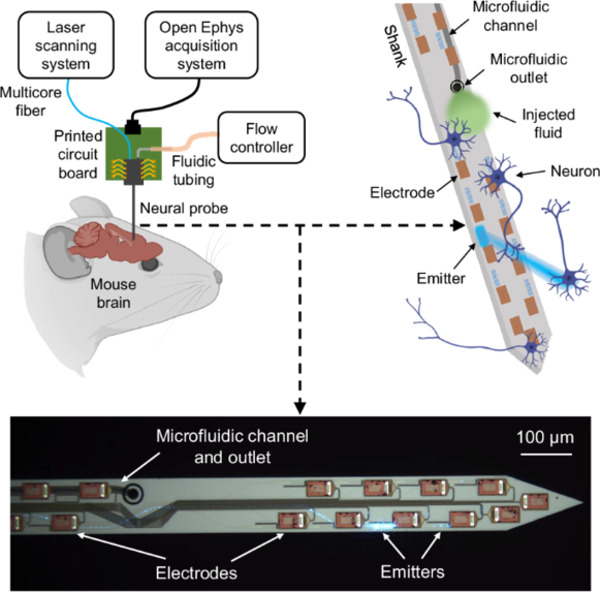
Implantable silicon neural probes with integrated optical emitters and electrodes are emerging tools for simultaneous optogenetic stimulation and electrophysiological recording in deep brain regions. In parallel, neural probes with microfluidic channels have been developed for localized drug delivery and neurochemical sampling. However, thus far, such fluidic probes have lacked optical and electrical functionalities or been limited to a low number of optical emitters and/or electrodes, constraining their utility in multimodal investigations of neural circuits. Here, we introduce foundry-fabricated silicon nanophotonic neural probes with monolithically integrated microfluidics. Each probe has 16 silicon nitride grating coupler emitters, 18 titanium nitride microelectrodes, and one embedded microfluidic channel.
|
|
Scooped by
Beeyond
April 8, 4:20 PM
|
China is placing high importance on Brain-Computer Interface (BCI) technology, officially included in the 2026 government work report, with Chongqing advancing it from research and development (R&D) to clinical trials and showing early signs of practical success. On March 26, at the Second Affiliated Hospital of Chongqing Medical University, Mr. Wang (pseudonym), a patient recovering from stroke sequelae, underwent rehabilitation training using BCI technology under medical supervision. Powered by brainwaves and wearable devices, Wang was able to move his limbs without exerting active physical effort.
|
|
Scooped by
Beeyond
April 8, 4:19 PM
|
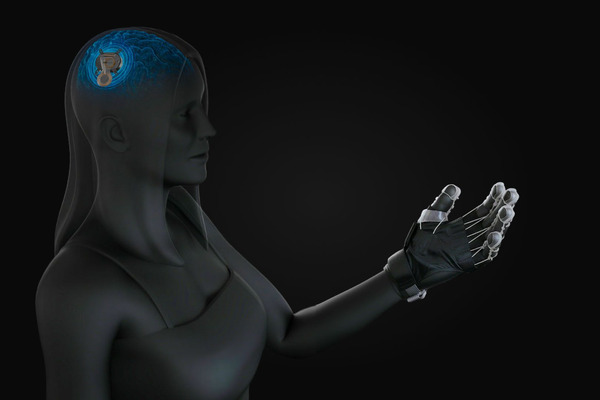
STROKE IS ONE of the leading causes of long-term disability, with roughly two-thirds of survivors experiencing significant impairments in their hands and arms. While some people eventually regain that function, many live with persistent paralysis or weakness. Epia Neuro, a newly launched startup out of San Francisco, wants to help more stroke patients regain hand function with a brain implant and motorized glove.
|

Curated by Beeyond
BEEYOND is a consulting company in the field of disruptive innovation, accompanying established companies on out-of-the-core growth strategy, from creation of new concepts to product launch. Reach us at: contact@beeyond.fr.
|