Tired of having to sacrifice tag size for read range? What happens when you design UHF RFID tags (http://www.impinj.com/Monza_5_RFID_Ta...) capable of adapting to the item which they are attached? You get ultra-small form factors capable of achieving the performance levels of tags twice, even three times its size! In fact the new MuTRAK tag is only 49mm2 and can achieve read distances of up to 14 meters --And that's why we'd like to introduce you to the latest RFID tags and inlays from our our partner TAGSYS RFID.
With more than 100 RFID apparel programs worldwide, and public validation from major retailers that tagging at the item level offers high ROI, the ramp-up has begun. Item-level RFID heralds a new data driven approach to optimizing on-shelf availability for customers by casting a spotlight on normally invisible parts of retail operations. But the decision to implement RFID remains challenging. In this session learn how retailers are using RFID at the source and in the store, how they are deploying across stores and categories, and a new method for determining the value of RFID for your business.
Sewing up the competition: You are a logistics leader for the highly competitive garment industry with customers in 35 countries on five continents. Your customers, many of them brand leaders, want to protect their profit margins from product diversion and counterfeiting while maximizing in-store product availability. How can you enhance your offering with a solution thats made to measure for your customers?
The investment will support track and trace capability for product movement as well as provide authentication, improved brand protection and increased consumer confidence.
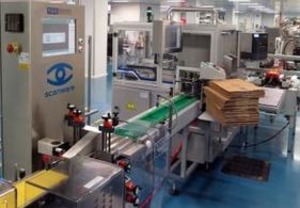
The finished cartons are fed into a coding stream that utilizes a print head and UV dryer allowing fast coding speeds, while the twin vericam camera data inspection system verifies application. This facilitates application, code verification to the master data and readability. An automated rejection process is also included.
Learn about the pharmaceutical Track & Trace requirements for the Chinese market and get a checklist of the most critical points when it comes to selecting the right serialization equipment manufacturer and service provider for your global roll-out.
Semi-automatic labeling machine, model YX-SL25 syringe labeling machine with date expiry code printing function semi automatic medical injection needles labeller equipment jeringa máquina de etiquetado, following is the basic information of the equipment, please have a look as below.
Pharmaceutical counterfeiting is a global challenge. Late last year it was announced that Barra Funda, Brazil-based Libbs Farmacêutica Ltda. was involved in a project aimed at addressing aggregation and track-and-trace requirements posed by the Agência National de Vigilância Sanitária Agency (ANVISA).
Manage Service is cloud based software system that has the ability to manage, maintain, and track products from sale to disposal and to use product data to operate more efficiently and make better business decisions.
One of the big challenges is not as much how to package products but how to apply track-and-trace on packaging lines at high rates and subsequently ensure integration with multiple IT systems. Legislators want a unique number on each product that must pass down the distribution chain to create a pedigree for that product. However, for serialized bar codes, because of the line-of-sight requirement, you have to create parent/child relationships, so that what's in the box is associated with the unique barcode on the case. This allows distributors to "infer" what is inside. HSA Systems provides item, case, and pallet serialization at the packaging line and site level. In deciding whether to use preprinted or coded tags, our preference is to print or code at the packaging line because it's more controllable, particularly in high-speed operations. The cost to code each individual item is a factor. With printed 2D codes the cost is relatively low compared to RFID tags.
Agency balances supply chain protections with concerns over supply chain disruptions in allowing drug companies until May 1, 2015 to meet new tracing standards; other Drug Supply Chain Security Act requirements still carry a Jan. 1 deadline.
Drug Counterfeiting is becoming a global issue. The United Nations have already established a Task Force to combat Drug Counterfeiting worldwide (WHO | International Medical Products Anti-Counterfeiting Taskforce — IMPACT) and more and more countries are establishing legislation to fight counterfeit drugs. Just recently (Nov. 18, 2013), the US Senate has voted for a US-wide law that ultimately will require serialization on the smallest sellable unit of pharmaceutical drugs. This blog is intended to provide some background and a brief overview on current and anticipated regulations.
Patient safety is a hot topic in the healthcare supply chain and needs to be addressed by life science companies, wholesalers, and healthcare providers. See in this video how secure Tracking and Tracing based on SAP software helps fighting drugs counterfeiting, reduces medication errors, and eases the handling of product recalls.
The overarching problem with tracking planes is the vast expanse of earth devoid of radar coverage: Most of the oceans, polar regions, and areas of Africa, Asia, and South Africa—as much as 80 percent of the world—are “a blind spot to surveillance,” the director of Nav Canada, the company that runs the country's air traffic control system, told the National Post last week. That means ubiquitous flight tracking via satellite is likely inevitable across the industry, and not just among major airlines with flights across the world.
Track & Trace technologies are starting to be used in pharmaceutical manufacturing to ensure the originality and authenticity of medications. Thermo Fisher's verification system mounted on the checkweigher saves valuable time and money during the addition of this new regulation.
The purpose of track-and-trace regulation in the pharmaceutical industry is to stem the flow of illegal and dangerous counterfeit medicines. These medicines represent a significant public health challenge. No central authority has all the information necessary to track and trace drugs across the global supply chain, much less quantify the extent of counterfeiting. This whitepaper summarizes the key regulations in play on both continents and suggests a compliance solution based on a combined process and technology approach to track-and-trace.
RFID is supplanting barcodes for many applications because it can be scanned much more quickly, a benefit initially felt by the retailers themselves. Distribution centers were the next to start seeing benefits because inventory controls and order fulfillment can be verified as shipments move through multiple gates.
Tired of having to sacrifice tag size for read range? What happens when you design UHF RFID tags (http://www.impinj.com/Monza_5_RFID_Ta...) capable of adapting to the item which they are attached? You get ultra-small form factors capable of achieving the performance levels of tags twice, even three times its size! In fact the new MuTRAK tag is only 49mm2 and can achieve read distances of up to 14 meters --And that's why we'd like to introduce you to the latest RFID tags and inlays from our our partner TAGSYS RFID.
WaveMark CIMS uses RFID and network technology to manage the flow of high value, consumable medical devices. Optimize inventory levels, increase charge capture, streamline clinical workflow, and manage expirations and recalls, all with real-time accurate, item-level tracking. Learn more at www.wavemark.net.
Thinfilm's temperature label is a low-cost integrated printed electronics smart label, which captures data on temperature thresholds and is ideal for item-level tracking for pharmaceuticals and perishable goods. In this video, hot and cold objects are respectively placed on a temperature sensor. When the temperature exceeds a pre-designed threshold, the fact is stored into the Thinfilm Memory through organic logic. An ultra-low-cost display is used to show whether the temperature threshold was exceeded.
Learn More: http://www.redlineforproduce.com PTI Milestone 2 This video explains why the PTI initially focused on tracking at the case level and not the item level.
Learn More: http://www.redlineforproduce.com PTI Milestone 2 This video explains why the PTI initially focused on tracking at the case level and not the item level.
Guest blog by Patrick Javick, GS1 USA. He talks about challenges omnichannel sales cause to retailers. How RFID could work to solve the challenges and how the GS1 US Item Level Readiness Program leads the discussions with US retailers over this issue.
It is important that each link in the tracking chain speaks the same language, regardless of whether it is hardware, such as labelling devices and inspection systems, or software, such as those used for production line management.
BEEYOND is a consulting company in the field of disruptive innovation, accompanying established companies on out-of-the-core growth strategy, from creation of new concepts to product launch. Reach us at: contact@beeyond.fr.
To get content containing either thought or leadership enter:
To get content containing both thought and leadership enter:
To get content containing the expression thought leadership enter:
You can enter several keywords and you can refine them whenever you want. Our suggestion engine uses more signals but entering a few keywords here will rapidly give you great content to curate.

 Your new post is loading...


 Scoop.it!