Your new post is loading...

|
Scooped by
Beeyond
July 5, 10:39 AM
|
Integration of social media (SM) with mobile health (mHealth) platforms presents significant potential to address the persistent challenge of disengagement in digital health interventions among young people. However, empirical evidence supporting this combined approach remains limited, as SM and mHealth are often examined in isolation. This systematic review aimed to identify and synthesise the determinants influencing the participation in SM and mHealth interventions for behaviour change among young people aged 14 to 35 years.
|
|
Scooped by
Beeyond
July 5, 10:38 AM
|
Health app onboarding differs fundamentally from fintech onboarding in one critical way: trust. In fintech, users trust the platform (bank, payment app) and your job is to minimize friction. In health, users are skeptical. They're sharing intimate medical information and betting their health on your platform's ability to connect them with qualified doctors.
This means health app onboarding must build trust early. Users need to see that you have real doctors, that their data is secure, and that they'll get a response quickly. Before they'll fill a health profile, they need confidence the system works.
|
|
Scooped by
Beeyond
July 5, 10:37 AM
|
Gamification has done some remarkable things. It taught hundreds of millions of people a second language (or at least to feel guilty about not practicing one). It made saving money feel like leveling up a character. It turned going to the gym into a competitive sport, complete with leaderboards and achievement badges. It has, arguably, made a lot of people brush their teeth longer than they otherwise would.
So why, after more than a decade of serious investment and serious effort, do health apps still struggle to move the needle on the things that actually matter?
|
|
Scooped by
Beeyond
June 14, 11:24 AM
|
In recent years the concepts of ‘nudge’ and ‘libertarian paternalism’ have become popular theoretical as well as practical concepts inside as well as outside academia. But in spite of the widespread interest, confusion reigns as to what exactly is to be regarded as a nudge and how the underlying approach to behaviour change relates to libertarian paternalism. This article sets out to improve the clarity and value of the definition of nudge by reconciling it with its theoretical foundations in behavioural economics. In doing so it not only explicates the relationship between nudges and libertarian paternalism, but also clarifies how nudges relate to incentives and information, and may even be consistent with the removal of certain types of choices.
|
|
Scooped by
Beeyond
June 14, 7:39 AM
|
Immersive technologies like Augmented Reality (AR), virtual reality, Artificial Intelligence are also entering the cosmetic industry and changing the retail shopping experience. Skincare and Cosmetic brands are increasingly adopting AR-based virtual try-on applications, AI-powered beauty filters, and interactive 3D visualization tools to improve customer engagement and influence consumer decision-making. This study attempts to explore the influence of the use of immersive technology especially AR on the purchase intention of the consumers in the cosmetic industry through qualitative analysis of the focus groups discussion held in Delhi. The study investigates consumer awareness, experience, motivation, emotional responses, and behavioral intentions in AR-based cosmetic shopping.
|
|
Scooped by
Beeyond
June 6, 9:24 AM
|
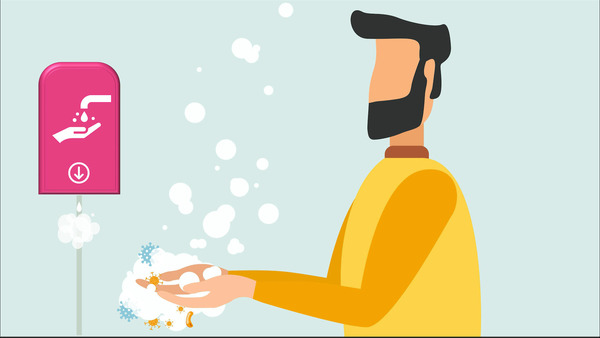
Nowadays, hand disinfection has become a must to limit the spread of germs and infections. However, the latest reports from 2021 still show that compliance levels with this type of hygiene practice are barely above 70%, which means extensive interventions are needed to address this problem (WHO, 2021). One of these is based on the nudge strategy.
|
|
Scooped by
Beeyond
May 9, 10:14 AM
|
An exploration of the ethical boundaries of behavioral science, examining how nudges can transition from helpful guidance into tools for psychological coercion and control.
|
|
Scooped by
Beeyond
March 23, 6:29 AM
|
Avec cette opération autour de Ready or Not 2: Here I Come, le studio mise sur une idée simple mais efficace : faire ressentir physiquement ce que les spectateurs voient à l’écran. Une stratégie qui s’inscrit dans une tendance plus large où le divertissement devient de plus en plus immersif.
Au-delà de l’effet spectaculaire, cette activation fonctionne aussi comme un puissant levier de visibilité. Filmée et relayée sur les réseaux sociaux, l’expérience prolonge la promotion du film bien après la séance. Et prouve qu’aujourd’hui, pour marquer les esprits, il ne suffit plus de montrer une histoire… il faut la faire vivre.
|
|
Scooped by
Beeyond
March 23, 6:23 AM
|
L’idée ne cherche pas à supprimer la peur du noir, mais à la détourner. En rendant l’obscurité indispensable à la lecture, le dispositif inverse complètement le réflexe habituel qui consiste à allumer la lumière pour se rassurer. C’est précisément cette contrainte qui fait la force du concept.
Le livre devient une expérience sensorielle et émotionnelle. Il ne raconte pas seulement une histoire, il crée une situation où l’enfant doit accepter le noir pour accéder au récit. Un insight simple, celui de la peur du noir, est ainsi transformé en levier pédagogique et comportemental, sans discours moralisateur.
|
|
Scooped by
Beeyond
January 21, 7:31 AM
|
A new preprint reports that in nearly one-third of studies on social media appearing in major interdisciplinary journals, the authors have ties to industry that should be disclosed but aren’t. Some received funding from a social media company, others previously co-authored work with industry employees. These ties may be skewing the research, the authors say. The industry-linked studies appear more likely to focus on topics such as why individuals share misinformation than on the role of the platforms and their algorithms.
|
|
Scooped by
Beeyond
January 17, 9:49 AM
|
Certaines expériences de psychologie ont acquis un statut quasiment mythique. Abondamment diffusées auprès du grand public, elles sont incontournables dans les cours d’introduction à cette discipline. C’est le cas de la « simulation de prison » menée par le psychologue américain Philip Zimbardo dans les locaux de l’université Stanford. Au début des années 1970, Zimbardo recrute des jeunes gens, qu’il distribue au hasard dans des groupes de « gardiens » et de « prisonniers ». L’expérience devait durer deux semaines, mais elle tourne mal : les gardiens deviennent sadiques et cruels, les prisonniers passifs et déprimés, et au bout de six jours il faut se décider à y mettre un terme. Conclusion : la seule attribution d’un rôle social peut transformer les individus, et le contexte exerce un pouvoir absolu sur les dispositions individuelles, expliquant notamment les phénomènes de violence sociale et carcérale. Voilà pour la légende. Car au terme d’une enquête approfondie sur cet épisode, pour laquelle il a compulsé nombre d’archives et interviewé quelques protagonistes de l’époque, le chercheur en sciences sociales Thibault Le Texier conclut à l’imposture.
|
|
Scooped by
Beeyond
November 17, 2025 9:01 AM
|
In Nudge (2008) Richard Thaler and Cass Sunstein suggested that public policy–makers arrange decision–making contexts in ways to promote behaviour change in the interest of individual citizens as well as that of society. However, in the public sphere and Academia alike widespread discussions have appeared concerning the public acceptability of nudgebased behavioural policy. Thaler and Sunstein's own position is that the anti–nudge position is a literal non–starter, because citizens are always influenced by the decision making context anyway, and nudging is liberty preserving and acceptable if guided by Libertarian Paternalism and Rawls’ publicity principle. A persistent and central tenet in the criticism disputing the acceptability of the approach is that nudging works by manipulating citizens’ choices. In this paper, we argue that both lines of argumentation are seriously flawed. We show how the anti–nudge position is not a literal non–starter due to the responsibilities that accrue on policy–makers by the intentional intervention in citizens’ life, how nudging is not essentially liberty preserving and why the approach is not necessarily acceptable even if satisfying Rawls’ publicity principle.
|
|
Scooped by
Beeyond
November 17, 2025 8:58 AM
|
With the onset of the COVID-19 pandemic, the importance of hand hygiene was thrust into the spotlight like never before. While basic hand cleansing has long been advocated as a means of illness prevention, achieving compliance, particularly in healthcare settings, remains a challenge. With baseline hand hygiene compliance often around 3% to 10% in healthcare settings, healthcare-associated infections (HCAIs) continue to pose a significant threat to patient safety, making the need for effective hand hygiene practices all the more critical.
|
|
Scooped by
Beeyond
July 11, 2025 7:07 AM
|
For decades, the Theory of Planned Behaviour has offered a map of human action that feels both intuitive and practical. It gives practitioners convenient variables to measure, neat intentions to track, and surface behaviours to predict.
But if we take seriously the deeper problems that run through folk psychology, economics, and social psychology alike, then the task is not to patch TPB. It is to recognise that the model was built on assumptions that never fully captured how behaviour unfolds — and that many entering Behavioural Insights still replicate, often unknowingly, despite nodding to newer ideas like dual- and triple-process theory.
|
|
Scooped by
Beeyond
April 19, 2025 12:30 PM
|
Duolingo set out to address these challenges by reimagining how languages are taught online. To clear blocked utilities in the existing online language learning offerings, Duolingo shifted its focus from the productive delivery of education service to an active, engaging, and even addictive learning experience.
|
|
Scooped by
Beeyond
April 19, 2025 11:58 AM
|
Baptisée “O Patrocínio Que Ninguém Viu” (Le sponsoring que personne n’a vu), cette opération a été imaginée par les agences End to End et Área 23, en partenariat avec l’Institut Melanoma Brasil. Son objectif : alerter sur les dangers du mélanome, un cancer de la peau aussi discret que mortel.
|
|
Scooped by
Beeyond
March 4, 2025 10:01 AM
|
For GLP-1 receptor agonists specifically, adherence challenges are a major concern, as these medications require long-term use to achieve meaningful health benefits in chronic conditions like diabetes and obesity.
|
|
Scooped by
Beeyond
November 25, 2024 8:57 AM
|
There was no difference in edoxaban adherence between the groups. However, the proportion of adequate medication adherence was higher in the intervention group, and the benefit of the smartphone app–based intervention on medication adherence was more pronounced among older patients than among younger patients. Given the low adherence to oral anticoagulants, especially among older adults, using a smartphone app may potentially improve medication adherence.
|
|
Scooped by
Beeyond
October 16, 2024 3:47 AM
|
Many of us are struggling to stay on the narrow path of healthy choices. At work, at meetings, and in the car on the way home we are constantly tempted to snack a little bit—to kill boredom, to have a good time, or to get some quick energy to stay awake and aware. Each single occurrence does obviously not make a difference, but over time one snack becomes more, and slowly but surely our waistline expands.
|
|
Scooped by
Beeyond
August 14, 2024 9:18 AM
|
What’s often overlooked is that employee resistance to change is most likely due to the emotions behind the change, not the change itself. And in examining those emotions, the late Carl Frost offered four key questions that people ask themselves when they’re being asked to change. The answers to these questions determine their excitement, or resistance, to change.
|
|
Scooped by
Beeyond
July 19, 2024 3:51 PM
|
Patients were assessed for their adherence to optimal medical therapy at the time of the index duplex scan, the first follow-up visit, and at each subsequent follow-up visit until the end of the study, ultimately leading to a median follow-up period of 2.7 years. In the study, optimal medical therapy was defined via three key tenets: abstinence from smoking; use of aspirin or other antiplatelets; and use of statins or other lipid-lowering therapies.
|
|
Scooped by
Beeyond
March 31, 2024 7:42 AM
|
Employee disengagement is a persistent problem, and attempts to inject excitement often fall flat. However, gamification — using elements of games to motivate — has serious potential when thoughtfully executed. This article explores the psychology behind gamification, successful examples, and how to leverage probabilistic rewards (like lotteries tied to performance) to increase employee motivation.
|
|
Scooped by
Beeyond
March 27, 2024 12:32 PM
|
Human beings are creatures of habit. Ours days have a particular rhythm to them, and behaviours we exhibit today are generally indicative of how we behaved yesterday and will behave tomorrow. Yet for how routine our lives can be, behavioural research conducted the last 50 years has found that people tend to struggle when asked to recall specific details about their day-to-day life.
|
|
Scooped by
Beeyond
March 27, 2024 11:50 AM
|
In recent years, it has been increasingly recognized that food choices are not only central to health, but also to global sustainability. In particular, production and consumption of meat have been linked to dying prematurely, as well as proven to be a central source of CO2 emissions responsible for ~15% of the total global CO2 emission. Thus, changing people’s diets from a meat-based to a vegetarian, may prove to be a necessary step in the battle against what has become a global food–health crisis as well as climate change.
|
|
Scooped by
Beeyond
March 27, 2024 11:49 AM
|
One aspect of COVID-19 prevention, however, was not something foreign to the general populace. Basic hand hygiene is preached from a young age as a means of illness prevention, and health organisations made sure to emphasise that the simple act of washing one’s hands or using an alcohol-based sanitiser may help curb the spread disease in this new context too. Yet for how important hand cleansing is in keeping individuals and the community safe, compliance can be difficult to achieve, and even harder to measure.
|

Curated by Beeyond
BEEYOND is a consulting company in the field of disruptive innovation, accompanying established companies on out-of-the-core growth strategy, from creation of new concepts to product launch. Reach us at: contact@beeyond.fr.
|