Why behavioural science? I would like to answer this question with another question: why (not) try something new? As development practitioners, we might have the feeling that our work does not always bring the results we had hoped for. Sometimes it also becomes too self-centered, and we can’t see forest for the trees.
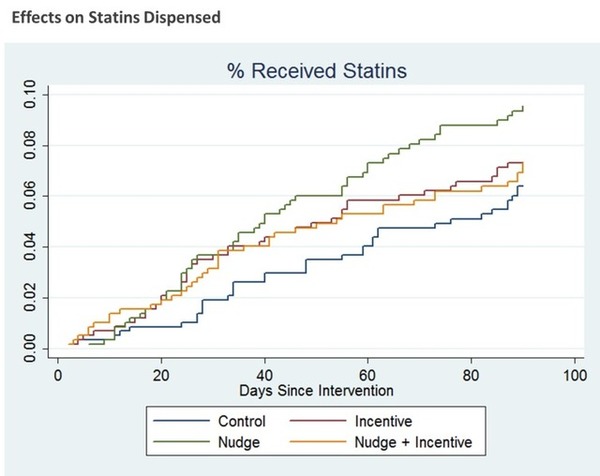
Heart disease is deadly. It caused one out of every three deaths in the United States in 2007. It is also expensive. The direct and indirect costs of cardiac disease and strokes are estimated to be over $400 billion. The good news is that cardiac disease can be managed using medication. Statins – widely available, immensely effective – are the leading treatment option. But here’s the thing: statins are only effective when used properly. Despite the enormous health benefits of statins, people do poorly at both getting onto statins and at using them as regularly as they need to.
If you believe that your clients actually give more than three seconds of thought to what you are selling, then ensure you read this article with your eyes wide open. [...] Marketers must realise that most shoppers operate on auto-pilot.
When it comes to healthy living, changing age-old habits is not always easy. Today in Canada, one in four children is overweight or obese, and less than 7% of children are physically active each day. In light of these daunting statistics, a business approach can offer an immense opportunity for sustainable change.
The future of financial apps may be in artificial intelligence. Not robots who follow you around and control your spending, but advanced computers that track and analyze the transactions you make throughout your day and make recommendations in real time.
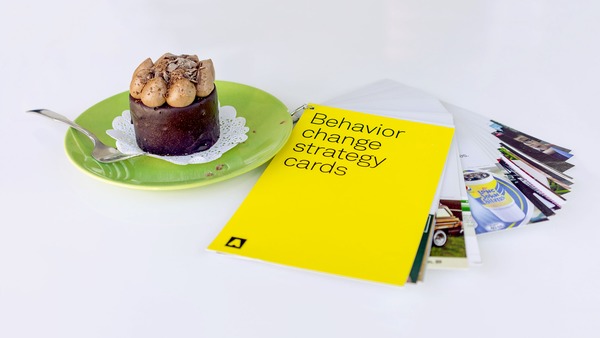
Artefact's set of 23 cards helps designers, researchers, and anyone facing a behavior change challenge nudge people toward positive behavioral outcomes.
You’re often manipulated to buy at the supermarket. Now hidden design tricks can sway you to pick healthier food without realising, says Veronique Greenwood.
Behavioural Exchange 2014 is the world’s first global public policy behavioural insights conference, bringing expert academics and practitioners from around the world to Sydney from 2-3 June 2014.
This is one of the sessions in the 32nd Annual Conference of Data Protection and Privacy Commissioners -- "Privacy: Generations" which was hosted by the the ...
Speaker: Professor Richard Thaler Chair: Professor David De Meza This event was recorded on 23 March 2009 in Old Theatre, Old Building Standard economic anal...
Featuring the coauthor Cass Sunstein, University of Chicago Law School, with comments by Terrence Chorvat, George Mason University Law School and Will Wilkinson, Cato Institute.
Tony Blair speechwriter Philip Collins examines concepts presented in the book Nudge, which advocates a "libertarian paternalism" based on the principles of behavioral economics. While the concept may sound like an oxymoron, Collins argues that such policies would guide people in the right direction while leaving them the ability to opt out.
Intel-GE Care Innovations™, a pioneer in connecting the care continuum to the home, in partnership with MIT Hacking Medicine, StartX, and Stanford Medical School hosted its first ever hackathon on the campus of Stanford University September 19-21. The event looked to create more effective and meaningful connections between patients, clinicians, and the data collected outside the walls of the clinical setting.
WebMD has announced new features and functionality for its Healthy Target behavior change program that connects seamlessly with Apple’s HealthKit and provides users with powerful new ways to capture, visualize and understand health information from a broad range of biometric devices.
The paper explores the theory of emotional accounting, or how emotions, good or bad, influence how people spend money. The research focused on windfalls, or unexpected sums of money, and the circumstances in which that windfall was received, such as an inheritance, an insurance settlement, a lottery winning, or a bonus from work. McGraw explains that emotional accounting is a complement to mental accounting, a 20-year old concept describing how people put mental labels on their money that designate its different uses. There are a different set of rules of how that money should be spent, McGraw explained. Money is your wallet is meant to be spent; money in your childrens college savings is not.
2013 Digital Health Conference You may have been hearing about the importance of 'good design.' But what does that really mean? How can better design make a ...
Bringing about behavioral change, especially in the space of health where the rewards are not imminent or overt, is an arduous task. But it is a task we must undertake if we are to successfully address pressing healthcare challenges. Such behavioral change is one of the key topics I will be discussing today at India’s 2nd National Non-Communicable Diseases Summit in Delhi. Our focus will largely be on diabetes, but the underlying principles of behavior change apply to all areas of health—and beyond.
BEEYOND is a consulting company in the field of disruptive innovation, accompanying established companies on out-of-the-core growth strategy, from creation of new concepts to product launch. Reach us at: contact@beeyond.fr.
To get content containing either thought or leadership enter:
To get content containing both thought and leadership enter:
To get content containing the expression thought leadership enter:
You can enter several keywords and you can refine them whenever you want. Our suggestion engine uses more signals but entering a few keywords here will rapidly give you great content to curate.

 Your new post is loading...