Your new post is loading...

|
Scooped by
Beeyond
December 29, 2023 9:12 AM
|
Synchron was the focus of a recent story on Semafor, which spoke with Rodney Gorham, who is one of the six patients who are currently using a device called a Synchron Switch, or node. While other patients have been using the technology with computers, Gorham is actually the first to use it with an Apple product, according to the company.
|
|
Scooped by
Beeyond
December 29, 2023 9:05 AM
|
Synchron, an implantable brain-computer interface (BCI) company, today announced the medical journal JAMA Neurology has published peer-reviewed, long-term safety results from a clinical study in four patients with severe paralysis implanted with Synchron’s first-generation Stentrode™, a neuroprosthesis device. The study found that it is possible to use the neuroprosthesis device to transmit neural signals from inside a blood vessel in the brain over a long-term period without any serious adverse events related to the device.
|
|
Scooped by
Beeyond
December 29, 2023 6:49 AM
|
This study suggests that PMN-MDSC activation is part of the innate immune response to coagulation which may have a protective role in inflammation. The cultured blood clot is an innovative thrombus model that can be used to study both sterile and nonsterile inflammatory states and could be used as a personalized medicine tool for drug screening.
|
|
Scooped by
Beeyond
December 29, 2023 6:48 AM
|
The proposed approach enables the determination of the thrombogenicity of materials to be performed in order to identify the most hemocompatible candidates. A study of materials’ thrombogenicity is crucial because one of the main limitations of cardiovascular prostheses is their tendency to induce thrombosis once in contact with blood. Hence, there is an urgent need for materials capable of delaying or avoiding coagulation to prevent patients from severe health problems such as ischemia, heart attack or embolism. Impedance blood characterization may, therefore, pave the way for a new generation of smart materials that could overcome the current technological lock of cardiovascular prostheses for which coagulation is a serious issue.
|
|
Scooped by
Beeyond
December 29, 2023 6:45 AM
|
Currently, there are no comprehensive “flow” models of thrombosis that adequately and fully describe all of the following: (1) coagulation reactions as “surface”-dependent reactions, (2) the temporal and spatial transport of coagulation products (eg, fIXa and fXa) from their site of activation to the site of their intended function, and (3) the propagation of thrombi from a few microns in thickness to occlusive diameters. Investigating how these processes come together in time and space in a dynamic flowing environment remains a continuing challenge in thrombosis research.
|
|
Scooped by
Beeyond
December 29, 2023 6:41 AM
|
Inflammation and coagulation are inextricably linked and contribute to the pathophysiology of sepsis. As thrombus formation is one component of essential host defense mechanisms, it represents a potential target for therapy. However, we still do not know when, in whom, to what degree or how to manage it. Approaches using various anticoagulants, regulators of cell activation and anti-DAMPs have revealed that some of these strategies are potentially effective; however, our knowledge remains extremely sparse in this field. Much attention should be directed worldwide to therapies that modulate coagulation and inflammation.
|
|
Scooped by
Beeyond
December 29, 2023 5:00 AM
|
First intracranial drug stent without neurotoxicity safety profile. 1-year restenosis of 6.66%, 73.4% lower compared to bare stent, resulting in 88.4% lower recurrent stroke. Endothelial healing oriented, with peak drug at 28 days and complete absorption at 60 days.
|
|
Scooped by
Beeyond
December 25, 2023 9:48 AM
|
The plaque characteristics based on 3D head&neck hr-VW-MRI may provide complementary values over traditional clinical features in predicting ischemic recurrence for ICAS and help risk stratification of patients at risk of recurrent stroke.
|
|
Scooped by
Beeyond
December 25, 2023 9:46 AM
|
Despite these therapies, the risk of recurrent stroke in patients presenting with stroke related to 70–99% ICAS exceeds 20% at 1 year; as such, better therapies are urgently needed. The optimal duration and combination of dual antiplatelet therapy in patients with ICAS is uncertain and is being investigated in addition to low-dose anticoagulation and aspirin. Other ongoing or planned studies will provide high-quality observational data on the role of transluminal angioplasty and stenting, submaximal balloon angioplasty alone, direct or indirect arterial bypass, and ischaemic conditioning for prevention of stroke in patients with ICAS.
|
|
Scooped by
Beeyond
December 24, 2023 1:27 PM
|
This study revealed that different branches of the carotid artery exhibit varying sensitivities to blood pressure variations. The M1 branch displayed high sensitivity, followed by the ACA branch, while the M2 branch exhibited minimal sensitivity. This differential response underscores the need for a nuanced approach when interpreting blood pressure variations as indicators of potential stenosis. The comparison of blood pressure variations between different arterial locations—internal carotid artery (ICA), middle cerebral artery (MCA), and anterior cerebral artery (ACA)—unveiled valuable insights into the likelihood of reverse flow. Analysing blood pressure variations between ICA and MCA emerged as a more sensitive indicator of reverse flow compared to analysing variations between ICA and ACA. This highlights the significance of MCA in reflecting potential reverse flow conditions.
|
|
Scooped by
Beeyond
December 24, 2023 1:24 PM
|
Angiogenesis and neurogenesis are functionally interconnected during brain development. However, the study of the vasculature has trailed other brain cell types because they are delicate and of low abundance. Here we describe a protocol extension to purify prenatal human brain endothelial and mural cells with FACS and utilize them in downstream applications, including transcriptomics, culture and organoid transplantation. This approach is simple, efficient and generates high yields from small amounts of tissue. When the experiment is completed within a 24 h postmortem interval, these healthy cells produce high-quality data in single-cell transcriptomics experiments.
|
|
Scooped by
Beeyond
December 24, 2023 1:17 PM
|
In INSPIRE-S, data are being collected on two key product families from Medtronic’s neurovascular portfolio: the company’s SolitaireTM revascularisation devices, and its ReactTM catheters, both of which are widely used in the treatment of acute ischaemic stroke patients. According to Ribó, these technologies are being evaluated as “standalone” mechanical thrombectomy solutions, but also in combination, whereby a stent retriever and an aspiration catheter are deployed simultaneously to maximise the likelihood of procedural success being achieved in the lowest possible number of attempts.
|
|
Scooped by
Beeyond
December 24, 2023 1:15 PM
|
DEFUSE 3 (Endovascular Therapy Following Imaging Evaluation for Ischemic Stroke 3) is a prospective randomised phase III multicentre controlled trial of patients with acute ischaemic anterior circulation strokes due to large artery occlusion treated between six and 16 hours of stroke onset with endovascular thrombectomy therapy plus standard medical therapy versus standard medical therapy. Following an interim analysis of data from the first 182 patients enrolled in DEFUSE 3, the trial has been terminated and is no longer actively enrolling patients. The interim analysis showed a high likelihood of benefit in the endovascular group of the study.
|
|
Scooped by
Beeyond
December 24, 2023 1:11 PM
|
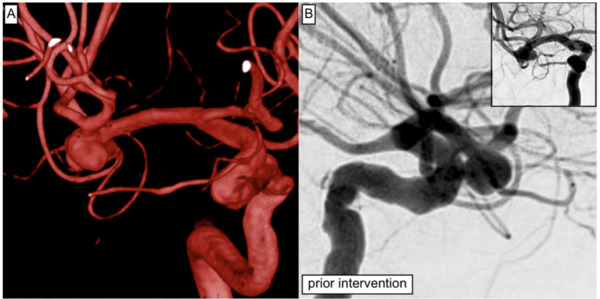
Cerebral aneurysms are abnormal focal outpouchings of large intracranial arteries that result from structural weakening in the arterial wall (see Figure 1). Aneurysm rupture causes severe intracranial hemorrhage and has substantial rates of morbidity and mortality. Roughly 500,000 people around the world die from aneurysm rupture annually, and 30 percent of survivors suffer from severe neurological disorders. The pathogenesis of aneurysm formation involves multiple factors, including hemodynamic stress, wear and tear on the arterial wall, and high-flow states. Hypertension, smoking, and connective tissue disease may contribute to this process [4].
|
|
Scooped by
Beeyond
December 24, 2023 10:27 AM
|
As the co-founder and chief executive officer of Chestnut Medical, Aaron Berez played a leading role in bringing flow diverters to market with the development of the Pipeline embolisation device (Medtronic) for intracranial aneurysm treatment. Today, his main focus is somewhat different, as he and his colleagues at Alembic seek to raise the bar in neurovascular catheter technology, but Berez ultimately remains in a similar position—attempting to drive innovation in the neurointerventional space forward once more.
|
|
Scooped by
Beeyond
December 24, 2023 10:26 AM
|
Millipede 070 Aspiration Catheter is designed for the safe and rapid removal of clots and addresses critical unmet needs in the treatment of stroke, while Millipede 088 Access Catheter is designed for the safe insertion and guidance of microcatheters during neurointerventional or diagnostic operations
|
|
Scooped by
Beeyond
December 18, 2023 8:12 AM
|
Despite the positive results demonstrated by all four published RCTs, they each had slightly different methodologies and selection criteria—differing in ethnicity of the patient population, imaging modality (CT vs. MRI), time windows (early vs. late), and whether or not perfusion imaging was used [40]. This has implications for how we should interpret the minor differences between each of the trials’ results, which should be considered in the context of each trial’s imaging and clinical inclusion and exclusion criteria. Perhaps, there may well be a demographic or clinical correlate that has yet to be identified in this cohort of patients.
|
|
Scooped by
Beeyond
December 16, 2023 4:43 PM
|
Route 92 claims to have “reimagined” neurovascular intervention through the development of a suite of reperfusion systems leveraging unique designs, including the Tenzing delivery catheter. These products are designed to work harmoniously as a system to improve the efficiency of endovascular thrombectomy procedures, enabling clinicians to quickly restore blood flow to a patient’s brain following acute ischaemic stroke.
|
|
Scooped by
Beeyond
December 16, 2023 4:42 PM
|
Endovascular therapy (EVT) is the standard treatment for ischemic stroke caused by a large vessel occlusion (LVO). The effectiveness of EVT for distal medium vessel occlusions (MDVOs) is still uncertain, but newer, smaller devices show potential for EVT in MDVOs. The new Solitaire X 3 mm device offers a treatment option for MDVOs. Our study encompassed consecutive cases of primary and secondary MDVOs treated with the Solitaire X 3 mm stent-retriever as first-line EVT device between January and December 2022 at 12 European stroke centers. The primary endpoint was a first-pass near-complete or complete reperfusion, defined as a modified treatment in cerebral infarction (mTICI) score of 2c/3.
|
|
Scooped by
Beeyond
December 16, 2023 4:33 PM
|
To investigate the incidence and impact of superior cerebellar artery (SCA) occlusion remaining after thrombectomy for acute basilar artery occlusion (BAO). We retrospectively analyzed data from 116 patients who underwent thrombectomy for BAO. The patency of SCA was assessed on final angiograms.
|
|
Scooped by
Beeyond
December 16, 2023 4:32 PM
|
Stroke remains the second leading cause of death worldwide, a common cause of which is intracranial atherosclerotic stenosis (ICAS). Medical treatment is recommended as first-line therapy for treating ICAS, but the recurrence rate remains high. Drug-coated balloon (DCB) angioplasty has been designed to lower the risk of recurrent stenosis, holding therapeutic promise in the treatment of ICAS. However, the benefits of DCB require further evaluation.
|
|
Scooped by
Beeyond
December 10, 2023 1:56 PM
|
Mechanical thrombectomy using an aspiration catheter (AC) is widely performed in patients with acute ischemic stroke due to large vessel occlusion. AC diameter directly impacts aspiration performance, which has led device companies to develop large bore ACs. The purpose of this study was to evaluate the in vitro performance of several commercially available large bore ACs.
|
|
Scooped by
Beeyond
December 10, 2023 1:53 PM
|
This study demonstrates a comparable safety profile of both FDS, the SVB and the p48MW HPC, for the endovascular therapy of peripheral intracranial aneurysms with differing early and late therapeutic outcomes when comparing both devices. While the SVB apparently achieved enhanced rates of early complete aneurysm occlusion, this may be influenced by its predominant use in the ACA territory in our study cohort. The rates of early aneurysm occlusion after treatment with the p48MW HPC were lower; however, the FDS was mostly deployed in the MCA territory, encountering different hemodynamic circumstances. With respect to the MCA perforators and the possible risk of thromboembolic events when covering side branches, the anti-thrombogenic coating of the p48MW HPC together with double anti-platelet therapy offers the advantage of prolonged occlusion times allowing for development of collateral vessels.
|
|
Scooped by
Beeyond
December 10, 2023 1:52 PM
|
Flow-diverting stents (FDs) for the treatment of cerebrovascular aneurysms are revolutionary. However, these devices require systemic dual antiplatelet therapy (DAPT) to reduce thromboembolic complications. Given the risk of ischemic complications as well as morbidity and contraindications associated with DAPT, demonstrating safety and efficacy for FDs either without DAPT or reducing the duration of DAPT is a priority. The former may be achieved by surface modifications that decrease device thrombogenicity, and the latter by using coatings that expedite endothelial growth. Biomimetics, commonly achieved by grafting hydrophilic and non-interacting polymers to surfaces, can mask the device surface with nature-derived coatings from circulating factors that normally activate coagulation and inflammation.
|
|
Scooped by
Beeyond
December 10, 2023 1:44 PM
|
While a minimally invasive thrombectomy procedure using a stent retriever device can be used to remove a clot and restore blood flow in a patient experiencing an acute ischaemic stroke, a neurointerventionist being unable to remove the entire blood clot at the first attempt due to clot fragmentation may mean multiple additional retrieval attempts are required—which, in turn, can lead to longer procedure times and worse clinical outcomes.
|

Curated by Beeyond
BEEYOND is a consulting company in the field of disruptive innovation, accompanying established companies on out-of-the-core growth strategy, from creation of new concepts to product launch. Reach us at: contact@beeyond.fr.
|