


In patients with suspected acute stroke, MethinksLVO software can rapidly and reliably predict LVO. MethinksLVO could reduce the need to perform CTA, generate alarms, and increase the efficiency of patient transfers in stroke networks.

 Your new post is loading...
 Scoop.it! In patients with suspected acute stroke, MethinksLVO software can rapidly and reliably predict LVO. MethinksLVO could reduce the need to perform CTA, generate alarms, and increase the efficiency of patient transfers in stroke networks. 
No comment yet.
Sign up to comment
Scoop.it!

Recent data have suggested that performing recanalizing therapies in ischemic stroke might lead to an increased risk of acute symptomatic seizures. This applies to both intravenous thrombolysis and mechanical thrombectomy. We therefore determined the frequency of acute symptomatic seizures attributable to these two recanalization therapies using a large, population-based stroke registry in Central Europe. We performed two matched 1:1 case–control analyses. In both analyses, patients were matched for age, stroke severity on admission and pre-stroke functional status.
Scoop.it!

Stryker Corporation announced today that the U.S. Food and Drug Administration has approved the Neuroform Atlas™ Stent System for marketing under a humanitarian device exemption (HDE). The device is to be utilized in conjunction with neurovascular embolic coils for the treatment of wide neck, intracranial, saccular aneurysms and allows the company to begin U.S. commercialization efforts immediately.
Scoop.it!

The World Health Organization defines stroke as “a clinical syndrome consisting of rapidly developing clinical signs of focal (or global) disturbance of cerebral function, lasting more than 24 hours or leading to death, with no apparent cause other than that of vascular origin”. Stroke can be further subdivided into ischaemic stroke (caused by vascular occlusion or stenosis) and haemorrhagic stroke (caused by vascular rupture, resulting in intraparenchymal and/or subarachnoid haemorrhage). Central venous sinus thrombosis is a rare form of stroke that occurs due to thrombosis of the dural venous sinuses. This topic focuses on the first 24 hours of acute care of patients with ischaemic stroke.
Scoop.it!

Thrombectomy was found to be safe in children with ischemic stroke and a mismatch between clinical deficit and infarct size up to 24 hours after symptom onset, according to a study results published in Neurology. Results indicated the procedure demonstrated generally good neurological outcomes when patients were selected by this mismatch as well.
Scoop.it!

Ischemic stroke (see the image below) is characterized by the sudden loss of blood circulation to an area of the brain, resulting in a corresponding loss of neurologic function. Acute ischemic stroke is caused by thrombotic or embolic occlusion of a cerebral artery and is more common than hemorrhagic stroke.
Scoop.it!

The minimally invasive brain surgery is the technique by which health workers safely remove brain and skull-base tumours through smaller and more precise openings that minimise collateral damage; that is, injury or other damage inflicted on an unintended target such as blood vessels and nerves.
Scoop.it!

A low Alberta stroke program early CT score (ASPECTS) of 4–5 has been deemed the threshold for mechanical thrombectomy, with no benefit elicited in those with ASPECTS 0-3. Moreover, the clinical outcome in low ASPECTS may be age dependent, with negligible benefit achieved in those above 75 years of age. These conclusions, presented by Osama Zaidat (Mercy Health, St Vincent Medical Center, Toledo, USA) at the Society of NeuroInterventional Surgery’s (SNIS) annual meeting (22–25 July, Miami, USA), are indicative of the low ASPECTS subgroup identified through the STRATIS registry.
Scoop.it!

Also known as cerebral cavernous malformations, these lesions which contain slow moving or stagnant blood, can often cause hemorrhagic strokes, seizures, or headaches. Current treatment involves surgical removal of lesions when it is safe to do so. Previous studies in mice and a small number of patients suggested a link between CA and gut bacteria. This study is the first to examine the role the gut microbiome may play in a larger population of CA patients.
Scoop.it!

Stroke is a complex medical issue. But there are ways to significantly reduce its impact. Recognizing the signs of stroke early, treating it as a medical emergency with admission to a specialized stroke unit, and access to the best professional care can substantially improve outcomes.
Scoop.it!

No difference in mortality between patients treated with Philips' Stellarex drug-coated balloon and those treated with percutaneous angioplasty.
Scoop.it!

MIST led to significantly faster initial door-to-recanalization times compared with DS, which was comparable to mothership. This decrease in time has translated into improved short-term outcomes and a trend towards improved long-term outcomes.
Scoop.it!
In national US practice, more than one-half of acute ischemic stroke hospitalizations had mild deficits, accounting for 4 of every 10 IVT and 1 of every 10 mechanical thrombectomy treatments, and IVT use was associated with increased discharge to home despite increased intracranial hemorrhage.
Scoop.it!

MIST led to significantly faster initial door-to-recanalization times compared with DS, which was comparable to mothership. This decrease in time has translated into improved short-term outcomes and a trend towards improved long-term outcomes.
Scoop.it!

Building on recent improvements in the prescription of indicated cardiovascular medication to patients, the next step is to improve adherence to prescribed medications. Nonadherence to medications is common and is associated with adverse outcomes. Nonadherence is not solely a patient problem but is impacted by both care providers and the healthcare system. As the first step toward improving adherence, there needs to be a broader recognition of the problem of nonadherence, and once identified, simple strategies should be implemented in daily practice to improve adherence.
Scoop.it!

L’accident vasculaire cérébral (AVC) survient lorsqu’une artère à destination cérébrale est bouchée (85 % des AVC sont des accidents ischémiques) ou lors de la rupture d’une artère intracérébrale qui provoque une hémorragie (AVC hémorragique ou hématome). En France, près de 800.000 personnes sont atteintes aujourd’hui par un AVC et plus de 500.000 gardent des séquelles. Pourtant, il est possible d’éviter nombre de ces accidents grâce à des mesures préventives. Le Pr Serge Timsit, président de la Société française neuro-vasculaire et chef de service de neurologie et unité neurovasculaire au CHRU de Brest, nous explique comment.

Yane-griffinn POUAHA's curator insight,
January 18, 2023 3:15 AM
J'ai beaucoup apprécié l'article, il parle de tous les moyens de prévention primaire pour éviter les AVC. On remarque que si on a une bonne alimentation , qu'on fait du sport, marche et si on évite de consommer du tabac , on a moins de chance d'avoir un AVC. Cet article parle aussi de la neurologie interventionnelle c'est à dire les thrombolyse qui doivent s'effectuer dans les 4H30. Il y a aussi à partir de 2015 les thrombectomie qui elles peuvent s'effectuer en 6H
Scoop.it!

The three devices are designed to aid physicians in performing mechanical thrombectomy procedures. The devices include the Cerebase DA Guide Sheath, Cerenovus Large Bore Catheter and Embotrap III Revascularization Device.
Scoop.it!

phenox has announced the full European launch of the pRESET 5–40 and pRESET LUX 4–20 thrombectomy devices after receiving CE mark approval last year. The pRESET device is a stentriever which is used for mechanical thrombectomy in patients with acute ischaemic stroke, due to large vessel occlusion.
Scoop.it!

To date, five randomised controlled trials have demonstrated the clinical benefit of endovascular therapy compared with intravenous (IV) tissue-type plasminogen activator (t-PA) in acute stroke. However, the economic evidence evaluating stent retrievers is limited. Kyriakos Lobotesis and others therefore set out to compare the cost-effectiveness of IV t-PA alone versus mechanical thrombectomy and IV t-PA in the context of the UK National Health Service.
Scoop.it!

Researchers found that mechanical thrombectomy with standard care led to greater health care costs but increased QALYs vs. standard care alone, resulting in an incremental cost-effectiveness ratio of $662 per QALY for the DAWN trial and $13,877 per QALY for DEFUSE 3.
Scoop.it!
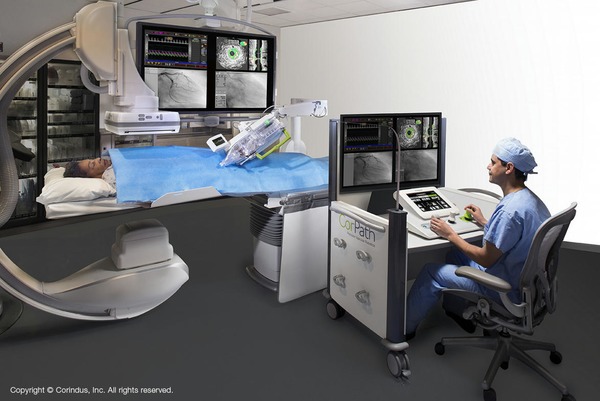
Using the company’s CorPath GRX robotic system—which helps control and navigate catheters, guidewires, balloons and stents for minimally invasive procedures—neuroradiologists and surgeons in Toronto performed an aneurysm coiling maneuver to help seal off a weakening blood vessel.
Scoop.it!

According to the authors, the rationale behind this investigation was driven by the previous association between GA during thrombectomy and poor neurological outcome in non-randomised studies. “Because mechanical thrombectomy has become the mainstay of therapy for patients with acute large vessel occlusion stroke, the need to clarify the optimal anaesthetic strategy is imperative,” they write.
Scoop.it!

NeuroVasc Technologies has entered into a strategic partnership with the Wego Group that includes US$34 million in funding to support the company’s product portfolio development and global clinical trial programme.
Scoop.it!

Skipping IV thrombolysis and using mechanical clot removal alone for stroke was not shown to be non-inferior compared to the combination of both treatments, but was associated with a lower risk of intracerebral haemorrhage, according to late-breaking data presented at the International Stroke Conference 2020 (ISC; 19–21 February, Los Angeles, USA).
Scoop.it!
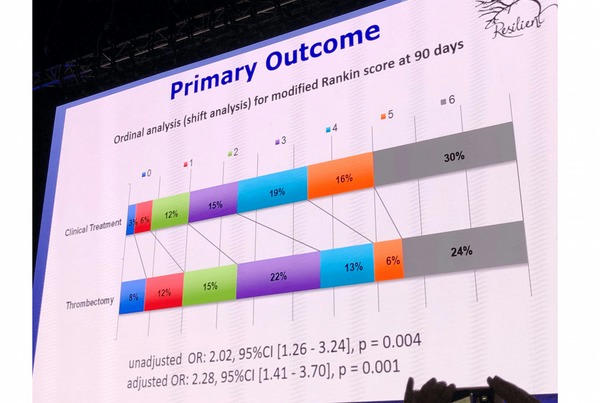
The final results of the first thrombectomy trial in a developing country convey the “overwhelming efficacy of mechanical thrombectomy”. Given that 35% of the treatment arm achieved a modified Rankin Scale (mRS) score of 0–2 compared to 20% of controls, Raul G Nogueira (Grady Memorial Hospital, Atlanta, USA) put forward: “We have overcome financial, logistical and political barriers [and], by doing so, we have had the opportunity to impact and influence many other countries that share our same reality.”
|

Curated by Beeyond
BEEYOND is a consulting company in the field of disruptive innovation, accompanying established companies on out-of-the-core growth strategy, from creation of new concepts to product launch. Reach us at: contact@beeyond.fr.
Other Topics

#dotdot, the community internet

Aidants

Aston-Martin

Augmented & Virtual Reality

Blue Ocean Strategy

Brain Computer Interfaces & connected medical devices

Consumer Digital Health

Covid-19, SARS-Cov-2, vaccines, Remdesivir, Chloroquine...and all that Jazz

Critical Limb-Threatening Ischemia (CLTI)

Daily realities of diabetic patients

Fashion & technology
Healthcare: reloaded...

High level trending in...

In-Vitro Diagnostic

Innovating to what's next...

Instrumental cosmetics
Interventional Cardiology

Intra-Dermal drug delivery: Opportunities and Challenges?

Local delivery for Gene Directed Enzyme Prodrug Therapy
Engineered MSCs with suicide genes delivered intra-arterially to treat various cancers. Local delivery bypasses homing issues that plagued prior GDEPT programs.

Metabolic Activation Therapy

Neurovascular Intervention

Nudges

Peritoneal dialysis

Sclérose en Plaques

Solid tumors: latest on treaments and research pathways
glioblastoma, craniopharyngioma...

Tailored Expertise Sourcing & Market Intelligence in Global Consulting

The future of e-cigarette

The Revolution Of The Car Industry

Track & Trace

Transcatheter Treatment of Mitral Regurgitation
|




