Covering the last 90 days

Science

Science is moving here through mechanisms, tools and systems. Recent selections range from cell death and sugar regulation to genome editors, mucosal vaccines, plant-microbe symbiosis, soil carbon models and artificial life. The common thread is not a single discipline, but the way researchers test how living and complex systems work.

The subject area brings together 102 topics, 69 curators and 240 posts from the last 90 days. Some topics follow primary research papers; others track conferences, online talks, teaching resources, fact checks or broad science-and-technology reporting. The most quoted sources include nature.com, linkedin.com, sciencedirect.com, youtube.com, link.springer.com and onlinelibrary.wiley.com.

What is alive now is the move from discovery to control. Genome editing is treated as a delivery and programming problem. Immunology is framed as therapy, vaccine design and biologics. Plant and soil biology are increasingly modeled and optimized. Complex systems coverage uses artificial life, networks and health complexity to ask how behavior emerges from interacting parts.

Key figures

  • 102 topics
  • 69 curators
  • 6357664 views
  • October 6, 2026 last activity

Cross-cutting issues

1

Genome editing is becoming infrastructure, not a single breakthrough

The next race is not only to edit genomes, but to deliver, time and measure biological programs across cells and systems.
Bigger than CRISPR? A guide to the latest genome editors | Nature nature.com

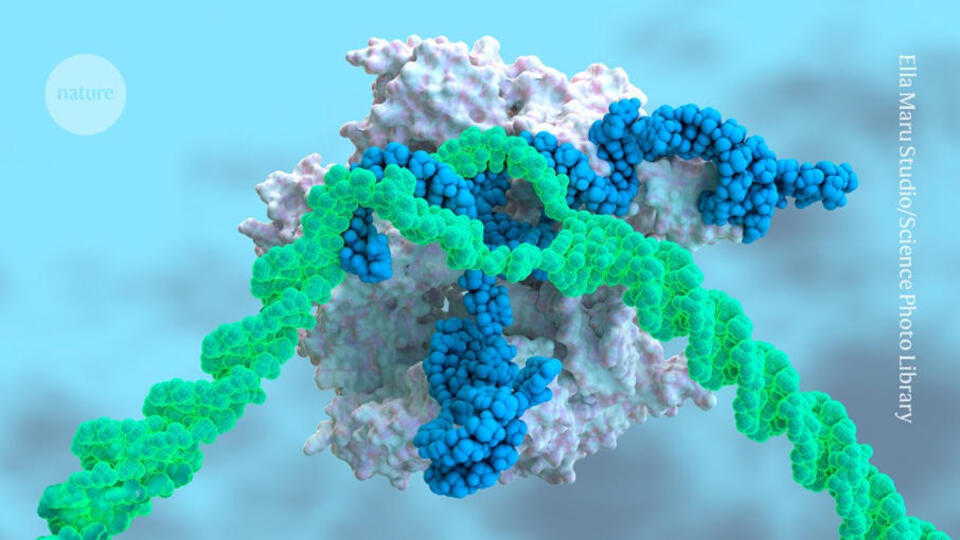
Genome editing coverage is no longer just about CRISPR as a technique. Genetic Engineering Publications - GEG Tech top picks frames the field as programmable medicine, with a Nature guide emphasizing newer editors and the delivery problem behind them: getting the right biological program into the right cell for the right duration.

The same topic follows the medical edge of that shift. One post points to in vivo base editing that partly rescues bone dysplasia in a mouse model of Hutchinson-Gilford progeria syndrome. Another follows an off-the-shelf lentiviral vector designed to generate CD19-targeted CAR T cells inside patients with refractory neurological autoimmune disorders.

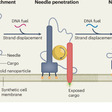
SynBioFromLeukipposInstitute adds the synthetic biology layer. Posts on bottom-up RNA transfer vehicles and nanosyringes for synthetic cells show that the field is building delivery, sensing and control systems, not only editing enzymes.

RMH brings the molecular readout. A bioRxiv post on a miniature bioluminescent platform for imaging structured RNAs shows the same platform logic at transcript scale, where engineered tags and split luciferase turn RNA behavior into something researchers can watch.

Further reading

2

Biology is being optimized from genes to fields

Across plant, soil and algal research, computation and engineering are moving from analysis tools to design principles.

Review in Curr Plant Biol • Michaud & Torkamaneh Labs 2026 • Plant intelligence in silico: Integrating hybrid artificial intelligence and synthetic biology to decode adaptive plant strategies sciencedirect.com

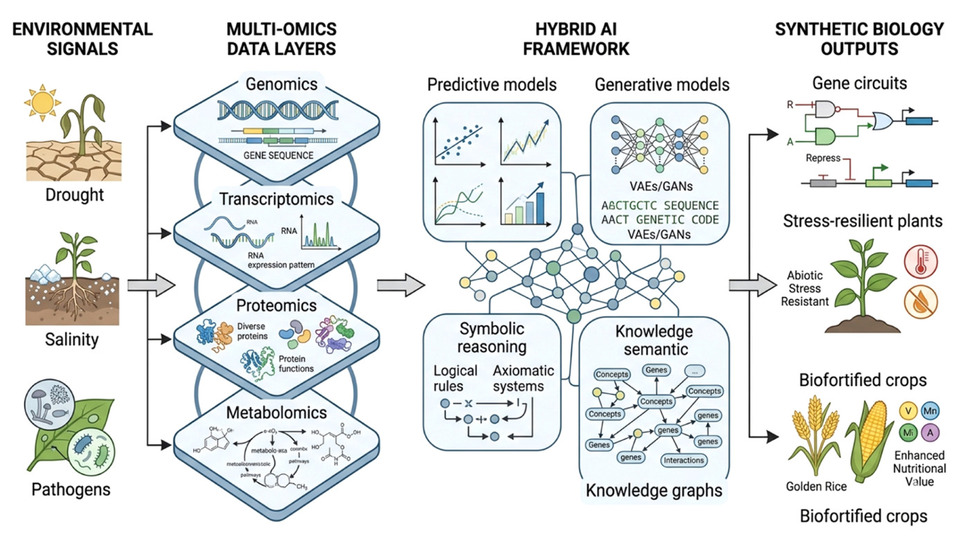
Reviews, Originals and Collaborations all treat applied biology as a design problem. A review on plant intelligence in silico links hybrid artificial intelligence and synthetic biology to adaptive plant strategies, setting the tone for research that models living systems before trying to change them.

The biofactory thread makes that idea concrete. Posts on Nicotiana benthamiana discuss the plant as a production platform, including gene editing of plant architecture for space-efficient recombinant protein production in closed environments.

The soil posts apply the same optimization logic to landscapes. One paper follows microbial contributions to soil organic carbon stabilization in lake floodplains, while another uses enhanced DNDC modeling to test tillage, residue burial and manure management against crop productivity and soil carbon.

The theme is not limited to plants as factories. AI for insect pest monitoring and technological advances in trait development connect sensing, breeding and precision genome editing. Algal protein production adds another production system, where cystatin overexpression is used to stabilize heterologous protein output.

Further reading

3

Complex systems is defining itself through artificial life

The field’s current center of gravity is the study of emergence across artificial life, health, networks and dynamical systems.

Artificial Life, Intelligence, Complexity & Evolution (ALICE) workshop.  aliceworkshop.org

Complex systems coverage is using meetings and talks to mark its frontier. CxConferences follows workshops such as Artificial Life, Intelligence, Complexity & Evolution and a Health Complexity Conference, placing artificial life and health inside the same systems vocabulary.

Talks adds the working ideas behind that vocabulary. A talk on artificial life in the wet lab brings emergence into experimental settings, while Hiroki Sayama’s talk links complexity growth to cellular automata and other discrete dynamical systems.

The overlap with Papers and CxBooks is conceptual even when the cited posts here are events and videos. The field is organized around networks, adaptation, self-organization and evolution, and the current selections show those ideas circulating through conference programs and public research talks.

This matters because complex systems is less a single discipline than a way of asking questions. The posts show researchers using artificial life, health systems and dynamical models to test how order, intelligence and function can arise from interacting parts.

Further reading

Curators to follow

  • Gilbert C FAURE

    This curator maintains seven topics in the subject area and is prominent in immunology, biotherapies, mucosal immunity and vaccine-related posts.

  • Complexity Digest

    This curator maintains four topics and follows complex systems through conferences, workshops and online talks, with activity on 2026-10-06.

  • BigField GEG Tech

    This curator maintains five topics and selects genome engineering material focused on editors, vectors, CAR-T approaches and programmable medicine.

  • Jean-Michel Ané

    This curator maintains Plant-Microbe Symbiosis and follows nodulation, Rhizobium metabolism, mycorrhizal fungi and root signaling research.

  • mhryu@live.com

    This curator maintains RMH and adds microbiology material including RNA reporter technology and plant-associated microbial research.

Frequently asked questions

What does the Science category cover on Scoop.it?

The science area spans 102 topics and 240 posts from the last 90 days. The strongest current threads include genome editing, immunology and biotherapies, plant-microbe systems, applied plant and soil biology, complex systems, virology, laboratory medicine, science teaching and science communication.

Who selects the science posts shown here?

The page is fed by 69 curators who maintain science topics across biology, medicine, complex systems, technology, education and environmental research. Some topics track peer-reviewed papers, while others follow talks, conferences, teaching resources, fact checks or science news from sources such as Nature, ScienceDirect and SpringerLink.

Why is genome editing a major thread here?

Recent posts show genome editing becoming a broader platform. The material covers newer editors, in vivo base editing, lentiviral vectors for generating CAR T cells inside patients, RNA transfer vehicles, synthetic-cell membrane breaching and RNA imaging tools. The emphasis is shifting from editing alone to delivery, timing and measurement.

How does this page treat immunology and vaccines?

Immunology appears through several linked topic areas, including Immunology, Immunology and Biotherapies, Mucosal Immunity, Autoimmunity, NeuroImmunology and Virology News. Recent posts focus on immunopharmacology, mucosal vaccines, cancer vaccines, antibodies, PI3K inhibitors, CAR-T immunotherapy and systems vaccinology.

Is plant science part of this category?

Plant science is covered through plant-microbe symbiosis, plant pathogens, soil systems, plant biotechnology and applied biofactories. Recent posts include work on soybean nodulation, Rhizobium metabolism, arbuscular mycorrhizal fungi, soil carbon stabilization, gene-edited Nicotiana benthamiana and AI for insect pest monitoring.

Where do complex systems fit within science?

Complex systems appears as research papers, books, conferences and talks. The recent material highlights artificial life, intelligence, evolution, health complexity, networks and dynamical systems. These posts show a field organized around emergence, adaptation and interactions rather than a single laboratory technique.

Most quoted sources

  • nature.com 15
  • linkedin.com 9
  • sciencedirect.com 8
  • youtube.com 6
  • link.springer.com 6
  • onlinelibrary.wiley.com 6
  • cell.com 5
  • academic.oup.com 4
  • journals.plos.org 4
  • journals.asm.org 3

This page was written by an AI from the public curation of Scoop.it topics. The posts, topics and curators it cites are real and linked directly.

Updated on October 6, 2026