 Your new post is loading...

|
Scooped by
Gilbert C FAURE
December 27, 2013 10:35 AM
|
|
|
Scooped by
Gilbert C FAURE
October 14, 8:36 AM
|
En tant que président du CNP EDN je souscris parfaitement aux constats du Pr Harry Sokol
Les demandes que l’on peut avoir dans les consultations sont nombreuses mais ne peuvent à ce jour, dans la très grande majorité des cas, que recevoir une réponse en partie empirique et pour le moins mal prédictible
CNP EDN
FHU PaCeMM
FHU GLIMMER "Gut, Liver & Microbiome Research"
SNFGE, Société Nationale Française de Gastro-Entérologie
Sabine Roman
|
|
Scooped by
Gilbert C FAURE
October 5, 9:46 AM
|
𝗛𝗼𝘄 𝗮 𝗦𝗰𝗶𝗲𝗻𝘁𝗶𝗳𝗶𝗰 𝗕𝗿𝗮𝗻𝗱 𝗞𝗲𝗲𝗽𝘀 𝗮 𝗩𝗮𝗰𝗰𝗶𝗻𝗲 𝗜𝗻𝗱𝘂𝘀𝘁𝗿𝘆 𝗔𝗹𝗶𝘃𝗲
✨ Innovation shines — even as time passes.
The global shift toward next‑generation mucosal vaccines has revealed a powerful truth:
𝗮 𝘀𝗰𝗶𝗲𝗻𝘁𝗶𝗳𝗶𝗰 𝗯𝗿𝗮𝗻𝗱 𝗶𝘀 𝗺𝗼𝗿𝗲 𝘁𝗵𝗮𝗻 𝗮 𝗽𝗿𝗼𝗱𝘂𝗰𝘁; 𝗶𝘁 𝗶𝘀 𝗮𝗻 𝗲𝗰𝗼𝘀𝘆𝘀𝘁𝗲𝗺.
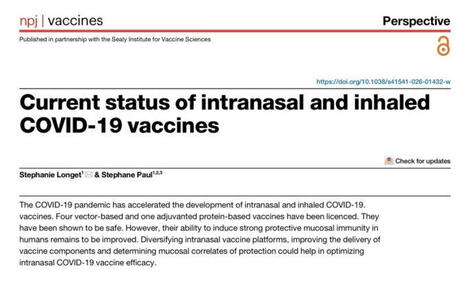
The recent npj Vaccines Perspective — “Current status of intranasal and inhaled COVID‑19 vaccines” — highlights a remarkable fact:
despite dozens of global attempts, only 𝗼𝗻𝗲 𝗮𝗱𝗷𝘂𝘃𝗮𝗻𝘁𝗲𝗱 𝗽𝗿𝗼𝘁𝗲𝗶𝗻‑𝗯𝗮𝘀𝗲𝗱 𝗶𝗻𝘁𝗿𝗮𝗻𝗮𝘀𝗮𝗹 𝘃𝗮𝗰𝗰𝗶𝗻𝗲 reached emergency authorization and entered high‑impact literature.
This single achievement proves something essential:
𝗮 𝘀𝘁𝗿𝗼𝗻𝗴 𝘀𝗰𝗶𝗲𝗻𝘁𝗶𝗳𝗶𝗰 𝗶𝗱𝗲𝗮, 𝘄𝗵𝗲𝗻 𝗯𝗿𝗮𝗻𝗱𝗲𝗱 𝗽𝗿𝗼𝗽𝗲𝗿𝗹𝘆, 𝗰𝗮𝗻 𝗸𝗲𝗲𝗽 𝗮𝗻 𝗲𝗻𝘁𝗶𝗿𝗲 𝗶𝗻𝗱𝘂𝘀𝘁𝗿𝘆 𝗮𝗹𝗶𝘃𝗲.
Across Nature Reviews Immunology, Signal Transduction and Targeted Therapy, and The Lancet Infectious Diseases, one message is clear:
𝗱𝗶𝘃𝗲𝗿𝘀𝗶𝗳𝗶𝗲𝗱 𝗽𝗹𝗮𝘁𝗳𝗼𝗿𝗺𝘀, 𝗺𝘂𝗰𝗼𝘀𝗮𝗹 𝗶𝗺𝗺𝘂𝗻𝗶𝘁𝘆, 𝗮𝗻𝗱 𝗶𝗻𝗻𝗼𝘃𝗮𝘁𝗶𝘃𝗲 𝗱𝗲𝗹𝗶𝘃𝗲𝗿𝘆 𝘀𝘆𝘀𝘁𝗲𝗺𝘀 𝗮𝗿𝗲 𝘁𝗵𝗲 𝗳𝘂𝘁𝘂𝗿𝗲.
This is exactly where 𝗥𝗮𝘇𝗶 𝗖𝗼𝘃 𝗣𝗮𝗿𝘀 stands as a compelling example.
🚀 Razi Cov Pars — When Innovation Becomes Legacy
🔹 𝗚𝗹𝗼𝗯𝗮𝗹 𝗿𝗲𝗰𝗼𝗴𝗻𝗶𝘁𝗶𝗼𝗻 𝗳𝗿𝗼𝗺 𝗮 𝗻𝗮𝘁𝗶𝗼𝗻𝗮𝗹 𝗶𝗻𝗻𝗼𝘃𝗮𝘁𝗶𝗼𝗻
Its presence in high‑impact literature transforms it from a domestic achievement into a scientific reference point.
🔹 𝗔 𝗽𝗿𝗼𝗽𝗿𝗶𝗲𝘁𝗮𝗿𝘆 𝗮𝗱𝗷𝘂𝘃𝗮𝗻𝘁 𝘁𝗵𝗮𝘁 𝘀𝗶𝗴𝗻𝗮𝗹𝘀 𝘁𝗲𝗰𝗵𝗻𝗼𝗹𝗼𝗴𝗶𝗰𝗮𝗹 𝗹𝗲𝗮𝗱𝗲𝗿𝘀𝗵𝗶𝗽
The RAS‑01 oil‑in‑water adjuvant has been repeatedly cited as a novel platform — proof that innovation can emerge anywhere.
🔹 𝗔 𝗯𝗿𝗮𝗻𝗱 𝘁𝗵𝗮𝘁 𝗱𝗼𝗲𝘀𝗻’𝘁 𝗳𝗮𝗱𝗲
When a scientific brand enters peer‑reviewed literature, it becomes part of the global narrative —
and science that enters the narrative never stops shining.
🌱 A Message to Young Scientists
𝗦𝗰𝗶𝗲𝗻𝗰𝗲 𝗶𝘀 𝗮 𝗹𝗼𝗻𝗴 𝗴𝗮𝗺𝗲.
Your work may take years to mature, but when it does, it becomes part of a legacy that outlives crises, trends, and headlines.
If one idea — born in a national institute — can reach global literature and influence future vaccine platforms,
then your idea can too.
Keep building.
Keep publishing.
Keep innovating.
✨ Because real science always finds its way to the light.
Stéphane Paul Stéphanie Longet
|
|
Scooped by
Gilbert C FAURE
October 2, 10:52 AM
|
🔬 New in Science Immunology from the Gaya lab at CIML!
Does our immune memory work the same way everywhere in the body? Not quite.
Mauro Gaya's team at CIML shows that after infection, B cell memory follows a different strategy depending on the mucosal tissue:
🫁 In the lungs, it favors memory B cells that stay on standby, ready to react quickly to new variants.
🦠 In the gut, it favors plasma cells that continuously produce large amounts of antibodies.
Strikingly, this choice is set by the tissue itself rather than by the pathogen. In the gut, microbiota-driven TGF-β promotes IgA class switching, and the IgA BCR pushes B cells toward plasma cell fate. Surprisingly, deleting the IgA BCR's short cytoplasmic tail enhanced this commitment by protecting cells from intracellular stress.
These findings could help design nasal and oral vaccines that trigger the most protective type of memory in each tissue. 💉
Congratulations to Pia HOLGADO, Samuel Origlio, Mauro Gaya and the whole team! 👏
📄 https://lnkd.in/evUZB3RN
Inserm PACA et Corse
INSERM
CNRS Provence et Corse
CNRS
Aix-Marseille University
|
|
Scooped by
Gilbert C FAURE
October 1, 4:01 AM
|
|
|
Scooped by
Gilbert C FAURE
September 18, 5:03 AM
|
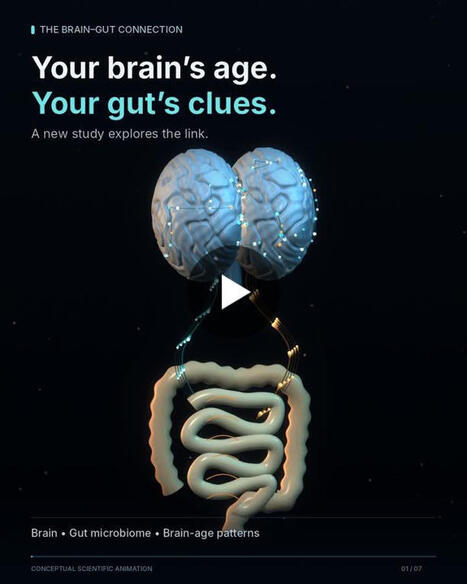
Your brain may appear older than it really is. And scientists at UCLA say that gap might have something to do with your gut. In a new paper published in eBioMedicine, researchers looked at brain images from about 1,500 men and women, both younger and middle aged.
Using a measure of how various areas of the brain talk to one another while resting, they calculated the brain’s age and then contrasted it with the individuals’ real ages.
Those whose brains appeared older than their years also scored lower on tests of memory and cognition, and exhibited more symptoms of depression.
This is when the gut enters the picture.
For a smaller group, researchers looked at fecal specimens. They discovered links between the brain-age gap, certain strains of gut bacteria, and metabolites in the stool.
Their results suggested mechanisms involving the immune system, blood vessels, neuronal communication, and energy metabolism.
I hope the dialogue around the microbiome can expand beyond a list of good and bad microbes. The presence of certain organisms is important. But linking them to a chemical landscape in the gut, as well as other parts of the body, seems like a far more intriguing topic.
This study was cross-sectional. It didn’t track patients into dementia. It can’t establish that a certain microbial composition leads to an older brain or that changing those bacteria would make the brain younger. Nor can it tell you if a colonoscopy would help identify someone at risk for dementia.
we should stop limiting the discussion of the gut to gas and defecation. Are we being too circumspect about the microbiome? Or are we jumping the gun? To me, that’s the conversation we should be having. | 12 comments on LinkedIn
|
|
Scooped by
Gilbert C FAURE
September 12, 11:11 AM
|
Airway epithelial cells as drivers of severe #asthma pathogenesis in this review from Bart Lambrecht, Gianni Marone and colleagues: https://lnkd.in/g9tZSgSV
|
|
Scooped by
Gilbert C FAURE
August 25, 9:14 AM
|
🫁 A respiratory vaccine can protect against severe disease — and still leave an important immunological gap at the place where infection begins.
What if one of the next major advances in vaccinology is not simply a stronger systemic response, but 𝒊𝒎𝒎𝒖𝒏𝒊𝒕𝒚 𝒑𝒓𝒐𝒈𝒓𝒂𝒎𝒎𝒆𝒅 𝒂𝒕 𝒕𝒉𝒆 𝒑𝒐𝒓𝒕𝒂𝒍 𝒐𝒇 𝒆𝒏𝒕𝒓𝒚?
A new Review in Immunity by Kazer and colleagues reframes the nose as far more than an anatomical gateway for respiratory viruses.
It presents the nasal mucosa as a coordinated immune ecosystem in which epithelial cells, innate immune populations, local lymphoid structures, IgA-producing plasma cells, and tissue-resident memory cells collectively influence infection, spread to the lower airways, and potentially onward transmission.
🧬 One of the most important concepts introduced is tissue-scale immunity.
Protection at the nasal surface is not reduced to a single antibody titre or immune-cell population. Instead, it may depend on several layers working together:
🔹 A poised antiviral epithelium — with appropriately timed type I and III interferon responses.
🔹 Rapid innate mobilisation — including recruited and locally activated immune cells.
🔹 Resident adaptive memory — particularly Trm cells, Brm cells and local IgA-producing plasma cells that can respond where the pathogen first arrives.
This also exposes an important distinction in respiratory vaccinology:
𝑺𝒚𝒔𝒕𝒆𝒎𝒊𝒄 𝒊𝒎𝒎𝒖𝒏𝒊𝒕𝒚 𝒂𝒏𝒅 𝒎𝒖𝒄𝒐𝒔𝒂𝒍 𝒊𝒎𝒎𝒖𝒏𝒊𝒕𝒚 𝒂𝒓𝒆 𝒏𝒐𝒕 𝒊𝒏𝒕𝒆𝒓𝒄𝒉𝒂𝒏𝒈𝒆𝒂𝒃𝒍𝒆.
Intramuscular vaccination remains highly important for systemic protection, but the Review highlights that establishing substantial local IgA and tissue-resident memory in the airway may require local mucosal stimulation. This is why strategies such as systemic prime + intranasal boost are scientifically so compelling.
⚖️ Yet the objective is not maximum inflammation.
Interferon signalling must be calibrated in time, magnitude and location: early local responses can restrict viral spread, whereas delayed or dysregulated inflammation may impair tissue integrity or memory formation.
That leads to what I see as the most important implication of this Review:
𝑻𝒉𝒆 𝒏𝒆𝒙𝒕 𝒈𝒆𝒏𝒆𝒓𝒂𝒕𝒊𝒐𝒏 𝒐𝒇 𝒓𝒆𝒔𝒑𝒊𝒓𝒂𝒕𝒐𝒓𝒚 𝒗𝒂𝒄𝒄𝒊𝒏𝒆𝒔 𝒎𝒂𝒚 𝒏𝒆𝒆𝒅 𝒕𝒐 𝒅𝒐 𝒎𝒐𝒓𝒆 𝒕𝒉𝒂𝒏 𝒕𝒆𝒂𝒄𝒉 𝒕𝒉𝒆 𝒊𝒎𝒎𝒖𝒏𝒆 𝒔𝒚𝒔𝒕𝒆𝒎 𝒘𝒉𝒂𝒕 𝒕𝒐 𝒓𝒆𝒄𝒐𝒈𝒏𝒊𝒔𝒆 — 𝒕𝒉𝒆𝒚 𝒎𝒂𝒚 𝒏𝒆𝒆𝒅 𝒕𝒐 𝒕𝒆𝒂𝒄𝒉 𝒕𝒉𝒆 𝒕𝒊𝒔𝒔𝒖𝒆 𝒉𝒐𝒘 𝒕𝒐 𝒓𝒆𝒔𝒑𝒐𝒏𝒅.
📖 Kazer SW, Walsh JML, Juttukonda LJ, Ordovas-Montanes J. Nasal immunity in respiratory viral infection, transmission, and protection. Immunity. 2026.
#MucosalImmunity #NasalVaccines #VaccineResearch #Immunology #VaccineDevelopment
|
|
Scooped by
Gilbert C FAURE
August 19, 10:31 AM
|
Read the latest #SMIMemberPaper by Monica Gestal and colleagues in STAR Protocols by Cell Press on how to prepare lungs from infected mice while preserving the immunological architecture. Read more here: https://lnkd.in/gD4RK2g6
|
|
Scooped by
Gilbert C FAURE
August 15, 11:29 AM
|
Learn all about the role of B cells beyond antibodies. Explore the emerging roles of B cells in gastrointestinal inflammation and disease in this review from Deanna Santer, Marina Costa Fujishima, Jing (Maggie) Ouyang, and Thomas Murooka: https://lnkd.in/gTXjgj9u
|
|
Scooped by
Gilbert C FAURE
August 14, 9:42 AM
|
🧬 Immunology Insights | Episode 29
Every vaccine you have ever received by injection did something specific: it protected your blood.
It may not have protected the surface the pathogen actually walks through to get there.
That gap is the reason a vaccinated person can still carry and transmit a virus even while being fully protected from severe disease. It comes down to one distinction most people never learn: the immune system at your body's entry points is a different system from the one circulating in your blood.
Your gut, lungs, nasal passages, and reproductive tract are where nearly every pathogen first makes contact. So the body maintains a dedicated mucosal immune system stationed exactly there. Its main weapon is secretory IgA (sIgA) - and here is the fact that surprises most people, including most biology graduates: sIgA is the most abundantly produced antibody in the entire human body. Not IgG. Not the antibody every vaccine textbook centres on. IgA.
This system has its own infrastructure. Mucosa-associated lymphoid tissue (MALT), Peyer's patches in the gut wall, and intraepithelial lymphocytes (IELs) sitting directly within the epithelial barrier - all positioned to intercept pathogens before they ever reach the bloodstream.
This is why injectable vaccines can be a partial answer. They train the blood-based immune system very effectively. But they often fail to establish strong mucosal immunity, because the injection site and the mucosal surface are, immunologically speaking, separate territories. The pathogen can still enter, replicate briefly at the surface, and pass to another person, even in someone whose blood is fully protected.
It is why the next generation of vaccine design is moving toward nasal and oral delivery - trying to train immunity exactly where the pathogen arrives, not just where the needle does.
Mucosal immunity does not get the attention IgG and blood-based immunity get. But it is standing guard at every single point where the outside world touches you.
I'm Sangeetha - Biotechnology Masters graduate (Gold Medalist) with a research background in biofilms, now building my foundation towards a PhD in Immunology in Melbourne.
Learning in public, one episode at a time.
📖 If injectable vaccines struggle to build mucosal immunity, what do you think is the biggest barrier to making nasal or oral vaccines mainstream - science, manufacturing, or public trust? 👇
Happy immunology!🔬🥼
#MucosalImmunity #IgA #MALT #Vaccines #ImmunologyInsights #GutImmunity
|
|
Scooped by
Gilbert C FAURE
August 8, 5:27 AM
|
If we want more effective vaccines against respiratory pathogens, we need more reliable ways to measure immunity where infection begins: in the airways.
We are very pleased to share that the Conference Report: Airway Mucosal Sampling and Immune Analysis, was recently published in Vaccine. This article captures the key discussions and recommendations that emerged from a workshop convened by Novo Nordisk Foundation and Wellcome Trust last year, held in connection with NIVI’s Harnessing Airway Immunity For Next-Gen Vaccines Cluster Conference.
Check out the full article here 👉: https://lnkd.in/dFzKHjHR
The report highlights several key challenges currently limiting progress towards developing airway targeting vaccines, including:
• A lack of standardized approaches for airway sampling and immune analysis
• Limited cross-study comparability and assay validation
• The need for better understanding of mucosal correlates of protection
• Regulatory and implementation barriers to incorporating mucosal endpoints into vaccine development
A major outcome of the workshop was the development of a recommendation framework aimed to strengthen coordination across research groups, improve standardization, build evidence for mucosal immune markers of protection, and ultimately support the next generation of respiratory vaccines.
At NIVI, we are proud to have contributed to these discussions and to be helping build the scientific foundations needed to advance mucosal vaccine development.
A big thank you to all workshop participants, collaborators, and those that helped shape this report and the roadmap it presents for the field.
With Joshua Rosenheim, Jens-Ulrik Stæhr Jensen, Deborah King, Henrik Kløverpris, Shane Crotty, Marianne H., Cecilia Lindestam Arlehamn, Hocine W. Mankouri, Rasmus Mortensen, Morten Ruhwald, MD, PhD, Tian Yun Wang, Helene Bæk Juel
Novo Nordisk Foundation Initiative for Vaccines and Immunity (NIVI), Department of Immunology and Microbiology (ISIM), University of Copenhagen Novo Nordisk Foundation Science Cluster
|
|
Scooped by
Gilbert C FAURE
August 1, 4:51 AM
|
|
|
|
Scooped by
Gilbert C FAURE
October 15, 11:49 AM
|
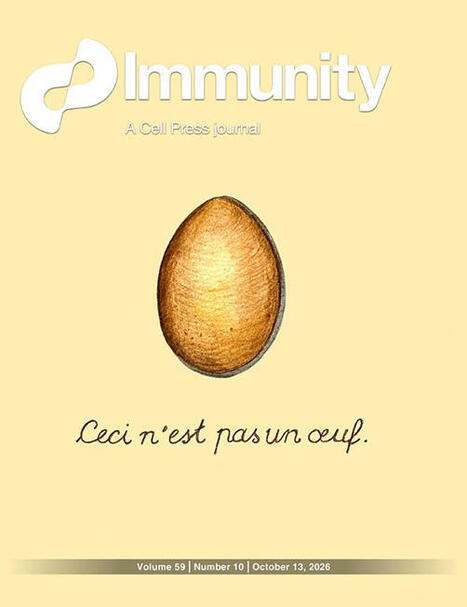
New issue online! Cover depicts work from Daria Esterházy, Yixuan D. Zhou & colleagues, who show that gut T cell responses to the same protein—chicken egg white ovalbumin (OVA)—differ depending on whether OVA is of dietary or epithelial origin, reflecting distinct antigen-presenting cell-subset dependencies. OVA, one of the most widely used model antigens, “is not (predictably) OVA”: its source and context can shape fundamentally different immune responses. This principle, which may extend to any antigen, is depicted as a version of Rene Magritte’s “The Treachery of Images.” Illustration by Daria Esterházy and Yixuan D. Zhou. https://lnkd.in/eveC4BT6
|
|
Scooped by
Gilbert C FAURE
October 8, 5:03 AM
|
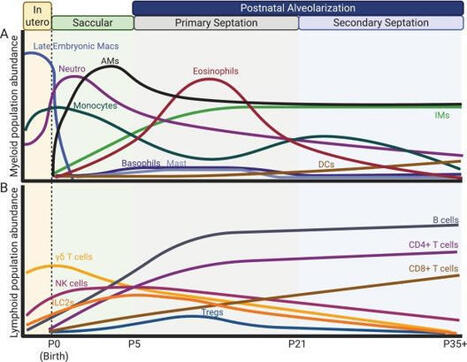
The immune system in postnatal lung development
|
|
Scooped by
Gilbert C FAURE
October 4, 11:38 AM
|
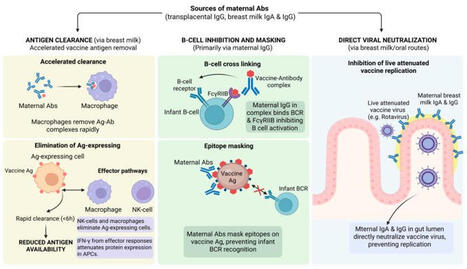
🧬 Title Story – A Double-Edged Sword: Breast Milk-Derived Maternal Antibodies and Infant Vaccine Responses: A Narrative Review
Authors: ALEXANDRA MPAKOSI, Rafaela Anna Moutsopoulou, Stamatios Cholevas, Alexandra Lianou, Andriana Samata, Foteini Tziraki, Ioannis Vogiatzis, Vasileios Cholevas, Zoi Iliodromiti, Theodora Boutsikou, Nicoletta Iacovidou, Andreas G. Tsantes and Rozeta Sokou
Neonatal defense relies on maternal antibodies transferred through the placenta (IgG) and breast milk (secretory IgA). While protective, these antibodies can also interfere with infant vaccine responses.
Key insights:
🧬 Placental transfer: Maternal IgG crosses via FcRn and can bind vaccine antigens (measles, tetanus, poliovirus), leading to rapid clearance through FcγRIIB-mediated inhibition and inadequate B cell activation
🍼 Breast milk antibodies: Vaccination during pregnancy or lactation induces protective IgA/IgG in breast milk, but these may accelerate vaccine antigen clearance and reduce plasma cell formation in breastfed infants
🌍 LMIC factors: Environmental enteric dysfunction, malnutrition, and co-infections may exacerbate interference
📊 Current evidence: Breastfeeding is associated with reduced immune response exclusively to the rotavirus vaccine
✅ Conclusion: Despite theoretical interference, the overall protective benefits of breastfeeding outweigh any potential reduction in vaccine responses
📖 Open access: 🔗 https://lnkd.in/dVRhpgGx
#MDPI #Vaccines #MaternalAntibodies #InfantVaccines #Immunology #TitleStory
|
|
Scooped by
Gilbert C FAURE
October 2, 4:07 AM
|
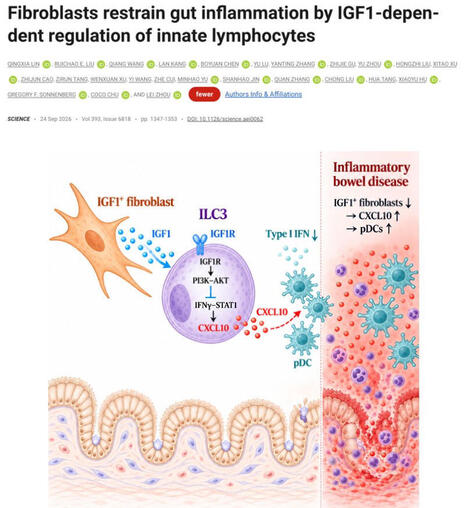
𝗙𝗶𝗯𝗿𝗼𝗯𝗹𝗮𝘀𝘁𝘀 𝗽𝘂𝘁 𝘁𝗵𝗲 𝗯𝗿𝗮𝗸𝗲𝘀 𝗼𝗻 𝗴𝘂𝘁 𝗶𝗻𝗳𝗹𝗮𝗺𝗺𝗮𝘁𝗶𝗼𝗻
𝘐𝘎𝘍1+ 𝘴𝘵𝘳𝘰𝘮𝘢𝘭 𝘤𝘦𝘭𝘭𝘴 𝘳𝘦𝘴𝘵𝘳𝘢𝘪𝘯 𝘢𝘯 𝘐𝘓𝘊3–𝘊𝘟𝘊𝘓10–𝘱𝘋𝘊 𝘪𝘯𝘧𝘭𝘢𝘮𝘮𝘢𝘵𝘰𝘳𝘺 𝘤𝘪𝘳𝘤𝘶𝘪𝘵
🧠 𝗔 𝗽𝗮𝗽𝗲𝗿 𝗮 𝗱𝗮𝘆 𝗸𝗲𝗲𝗽𝘀 𝗯𝗿𝗮𝗶𝗻 𝗱𝗲𝗰𝗮𝘆 𝗮𝘄𝗮𝘆 🧠
Wednesday, 30 September 2026
𝘐𝘯𝘧𝘭𝘢𝘮𝘮𝘢𝘵𝘰𝘳𝘺 𝘣𝘰𝘸𝘦𝘭 𝘥𝘪𝘴𝘦𝘢𝘴𝘦 𝘪𝘯𝘷𝘰𝘭𝘷𝘦𝘴 𝘮𝘢𝘫𝘰𝘳 𝘪𝘮𝘮𝘶𝘯𝘦–𝘮𝘦𝘴𝘦𝘯𝘤𝘩𝘺𝘮𝘢𝘭 𝘳𝘦𝘮𝘰𝘥𝘦𝘭𝘪𝘯𝘨, 𝘣𝘶𝘵 𝘩𝘰𝘸 𝘵𝘩𝘦 𝘭𝘰𝘴𝘴 𝘰𝘧 𝘴𝘱𝘦𝘤𝘪𝘧𝘪𝘤 𝘧𝘪𝘣𝘳𝘰𝘣𝘭𝘢𝘴𝘵 𝘴𝘵𝘢𝘵𝘦𝘴 𝘥𝘪𝘳𝘦𝘤𝘵𝘭𝘺 𝘢𝘭𝘵𝘦𝘳𝘴 𝘪𝘯𝘯𝘢𝘵𝘦 𝘮𝘶𝘤𝘰𝘴𝘢𝘭 𝘪𝘮𝘮𝘶𝘯𝘪𝘵𝘺 𝘳𝘦𝘮𝘢𝘪𝘯𝘴 𝘱𝘰𝘰𝘳𝘭𝘺 𝘶𝘯𝘥𝘦𝘳𝘴𝘵𝘰𝘰𝘥. 𝘓𝘪𝘯 𝘦𝘵 𝘢𝘭. 𝘪𝘥𝘦𝘯𝘵𝘪𝘧𝘺 𝘢 𝘱𝘳𝘰𝘵𝘦𝘤𝘵𝘪𝘷𝘦 𝘊3+ 𝘐𝘎𝘍1-𝘱𝘳𝘰𝘥𝘶𝘤𝘪𝘯𝘨 𝘧𝘪𝘣𝘳𝘰𝘣𝘭𝘢𝘴𝘵 𝘱𝘰𝘱𝘶𝘭𝘢𝘵𝘪𝘰𝘯 𝘵𝘩𝘢𝘵 𝘴𝘪𝘨𝘯𝘢𝘭𝘴 𝘵𝘩𝘳𝘰𝘶𝘨𝘩 𝘐𝘎𝘍1𝘙 𝘰𝘯 𝘨𝘳𝘰𝘶𝘱 3 𝘪𝘯𝘯𝘢𝘵𝘦 𝘭𝘺𝘮𝘱𝘩𝘰𝘪𝘥 𝘤𝘦𝘭𝘭𝘴 𝘵𝘰 𝘴𝘶𝘱𝘱𝘳𝘦𝘴𝘴 𝘪𝘯𝘵𝘦𝘳𝘧𝘦𝘳𝘰𝘯-γ-𝘥𝘳𝘪𝘷𝘦𝘯 𝘊𝘟𝘊𝘓10 𝘱𝘳𝘰𝘥𝘶𝘤𝘵𝘪𝘰𝘯 𝘢𝘯𝘥 𝘭𝘪𝘮𝘪𝘵 𝘱𝘭𝘢𝘴𝘮𝘢𝘤𝘺𝘵𝘰𝘪𝘥 𝘥𝘦𝘯𝘥𝘳𝘪𝘵𝘪𝘤-𝘤𝘦𝘭𝘭 𝘳𝘦𝘤𝘳𝘶𝘪𝘵𝘮𝘦𝘯𝘵.
💡 𝗧𝗮𝗸𝗲 𝗵𝗼𝗺𝗲 𝗺𝗲𝘀𝘀𝗮𝗴𝗲
• C3⁺ABCA8⁺ IGF1-producing fibroblasts are reduced in inflammatory bowel disease, while fibroblast-specific loss of Igf1 increases susceptibility to experimental intestinal inflammation.
• Stromal IGF1 signals through IGF1R on ILC3s, engaging PI3K–AKT and dampening interferon-γ–STAT1 signaling to suppress CXCL10 production.
• When this brake is lost, ILC3-derived CXCL10 recruits CXCR3⁺ plasmacytoid dendritic cells, promoting type I interferon-dependent intestinal inflammation.
🔥 𝗜𝗺𝗽𝗮𝗰𝘁
• The study shifts attention from pathogenic fibroblasts alone to the loss of protective stromal states, revealing a fibroblast–ILC3–pDC axis that could be explored therapeutically in inflammatory bowel disease.
❓ 𝗢𝗽𝗲𝗻 𝗾𝘂𝗲𝘀𝘁𝗶𝗼𝗻𝘀
• What signals drive the loss or reprogramming of protective C3⁺ IGF1-producing fibroblasts during chronic intestinal inflammation?
• Does systemic IGF1R blockade promote intestinal inflammation in susceptible patients through dysregulation of this ILC3–CXCL10 axis?
• Can this pathway be modulated locally without perturbing the broader physiological roles of IGF1–IGF1R signaling?
𝗙𝗶𝗯𝗿𝗼𝗯𝗹𝗮𝘀𝘁𝘀 𝗿𝗲𝘀𝘁𝗿𝗮𝗶𝗻 𝗴𝘂𝘁 𝗶𝗻𝗳𝗹𝗮𝗺𝗺𝗮𝘁𝗶𝗼𝗻 𝗯𝘆 𝗜𝗚𝗙𝟭-𝗱𝗲𝗽𝗲𝗻𝗱𝗲𝗻𝘁 𝗿𝗲𝗴𝘂𝗹𝗮𝘁𝗶𝗼𝗻 𝗼𝗳 𝗶𝗻𝗻𝗮𝘁𝗲 𝗹𝘆𝗺𝗽𝗵𝗼𝗰𝘆𝘁𝗲𝘀
Qingxia Lin, Ruichao E. Liu, Qiang Wang, Lan Kang et al.
Science, September 2026
Corresponding authors: Ruichao E. Liu, Gregory F. Sonnenberg, Coco Chu, Lei Zhou
🔗 𝘓𝘪𝘯𝘬 𝘵𝘰 𝘵𝘩𝘦 𝘱𝘶𝘣𝘭𝘪𝘤𝘢𝘵𝘪𝘰𝘯 𝘪𝘯 𝘤𝘰𝘮𝘮𝘦𝘯𝘵𝘴
𝘐𝘭𝘭𝘶𝘴𝘵𝘳𝘢𝘵𝘪𝘰𝘯 𝘨𝘦𝘯𝘦𝘳𝘢𝘵𝘦𝘥 𝘸𝘪𝘵𝘩 𝘊𝘩𝘢𝘵𝘎𝘗𝘛.
𝘛𝘩𝘦 𝘰𝘱𝘪𝘯𝘪𝘰𝘯𝘴 𝘴𝘩𝘢𝘳𝘦𝘥 𝘰𝘯 𝘓𝘪𝘯𝘬𝘦𝘥𝘐𝘯 𝘢𝘳𝘦 𝘮𝘺 𝘰𝘸𝘯.
|
|
Scooped by
Gilbert C FAURE
September 22, 8:06 AM
|
How durable is T cell memory in the human upper airway?
The nose and throat are major entry sites for respiratory viruses, yet surprisingly little is known about the longevity of antigen-specific memory T cells at these barrier tissues.
In our new preprint, we directly tracked virus-specific CD8 and CD4 T cells in the human upper airway for more than 18 months.
We collected nasal swabs monthly from healthy adults—nearly 900 samples in total—and used peptide–MHC multimers to track antigen-specific T cells with epitope-level specificity. We also followed corresponding T cell populations in blood for >12 months.
What did we find?
1. SARS-CoV-2- and influenza A-specific memory CD8 and CD4 T cells were remarkably common, detectable in nasal samples from >95% of individuals.
2. Upper-airway antigen-specific T cell memory was highly durable, persisting for 18+ months with no clear evidence of decline.
3. These virus-specific cells predominantly exhibited tissue-resident memory (TRM) phenotypes, consistent with long-term residence at this important barrier site.
4. During reported or suspected SARS-CoV-2 infections, SARS-CoV-2-specific T cell frequencies increased, providing evidence that these local memory populations can respond to renewed viral exposure.
Together, these data demonstrate remarkably durable antigen-specific CD8 and CD4 T cell memory in human upper-airway mucosal and lymphoid tissues.
The findings have implications for next-generation vaccines and T cell-based therapeutics designed to establish long-lived immunity directly at sites of pathogen entry.
Preprint: https://lnkd.in/dp43Nf2J
Huge congratulations to @Sydney Ramirez, Farhoud Faraji, La Jolla Institute for Immunology and the entire team!
|
|
Scooped by
Gilbert C FAURE
September 18, 4:46 AM
|
September issue online! Cover depicts work from Randy Longman, Wei Yang & colleagues identifying Bhlhe40 as a central regulator linking innate and adaptive intestinal immunity. Cover art designed by August Fireflies Studio. https://lnkd.in/e8g3cDqX
Maintaining tolerance at mucosal barrier surfaces, enabled by coordinated communication among immune cells, is critical for tissue health. Yang et al. report that the transcriptional regulator Bhlhe40 enables intestinal type 3 innate lymphoid cells and RORγt+ antigen-presenting cells to integrate inflammatory and microbial signals and promote regulatory T cell differentiation, thereby balancing tissue protection with tolerance in the intestine. This mechanism is relevant to inflammatory bowel disease. The impact of Bhlhe40 is depicted as the first light of dawn shining through a forest, illuminating a healthy landscape that symbolizes the activation of protective immune programs (blooming flowers) and the restoration of intestinal immune balance.
|
|
Scooped by
Gilbert C FAURE
September 12, 8:49 AM
|
In a new #SciencePerspective, researchers dig into the skin microbiome’s role in healthy skin aging and argue that microbial functions and metabolites may ultimately be more informative than microbial composition alone for understanding microbiome-linked skin aging.
Learn more: https://scim.ag/4xyajig
|
|
Scooped by
Gilbert C FAURE
August 25, 8:26 AM
|
Functional beverages are having a moment. But what’s really driving the conversation? 🥤
From prebiotic sodas to kombucha, the functional beverage category is becoming increasingly visible across social media.
But looking at mentions alone only tells part of the story.
We analysed functional beverage conversations across LinkedIn, TikTok and Instagram to understand the trends, communities and brands driving attention online.
Here’s what stood out:
🔎 Gut health is a major conversation driver
#GutHealth, #Prebiotics and #Probiotics are closely intertwined with functional beverage conversations.
📱 Products are becoming part of creator culture
Brands such as Poppi are appearing in shopping, lifestyle and entertainment content — with some posts generating millions of views.
📊 The category is fragmented
Consumers aren't talking about “functional beverages” as one category. They're entering the conversation through wellness, low sugar, fermentation, gut health and other interests.
💡 Context matters
The most useful insight isn't simply how many times a brand is mentioned, but who is talking about it, what they're talking about and where those conversations are happening.
👉 Read the full analysis:
https://lnkd.in/eugKNDdP
|
|
Scooped by
Gilbert C FAURE
August 17, 1:09 PM
|
A New Model of EBV Infection Using Tonsil Organoids –
A study published in PNAS and led by researchers at University of California Irvine, shows an alternative in vitro model using human tonsil organoids to study Epstein Barr Virus infection and to investigate key aspects of EBV immunity and pathogenesis.
The model utilizes tonsils from healthy individuals. After dissociation, and filtration, cell suspensions can be cryopreserved to minimize variation and facilitate processing. After thawing, tonsil cells can be infected with EBV-GFP viruses to generate EBV-infected tonsil organoids.
The approach allows researchers to investigate the changes in EBV-infected B cell biology and immunity under a physiological environment, and to evaluate antiviral responses and therapeutic strategies.
https://lnkd.in/gFAnruR4
#EBV #immunology #immunity #Epsteinbarrvirus #health #globalhealth #publichealth #medicine #biotechnology #pharmaceuticals #FDA #WHO #CDC #ECDC #NIH #NIAID
|
|
Scooped by
Gilbert C FAURE
August 15, 3:34 AM
|
Our new study with our PhD student Franck Zekre a great pediatrician and in collaboration with a smart company in US Vaxcyte. We developed a new vaccine againt P gingivalis to prevent inflammatory dosorders
|
|
Scooped by
Gilbert C FAURE
August 10, 10:21 AM
|
On accepte sans broncher une montre qui compte nos pas et notre sommeil.
Mais le meilleur indicateur digestif du quotidien, on le jette encore d’un coup de chasse d’eau.
TOTO a lancé en août 2025 ses cuvettes Neorest qui scannent les selles en chute. À côté du jet d’eau, un capteur optique, même principe qu’un lecteur de code-barres en caisse, s’ouvre dès qu’on s’assoit. Une LED éclaire, un passage suffit : forme, couleur, volume.
Sept formes tirées de l’échelle Bristol que les médecins utilisent déjà, des grumeaux durs au liquide. Trois couleurs. Trois volumes. Tout part tout seul dans l’appli : calendrier, tendances, conseils du type « mange plus de légumes » ou « dors sept heures ». Jusqu’à six personnes par maison. Autour de 3 300 à 3 650 dollars.
Avant, 76 % des gens jetaient un œil. Seulement 6 % notaient quoi que ce soit. Les concepts existaient depuis le CES 2021, Panasonic avait déjà des capteurs en maison de retraite. Ce qui coinçait : se souvenir, oser regarder, taper l’info. Là, le suivi devient aussi passif que de s’asseoir.
Ça m’agace un peu qu’on trouve ça bizarre. On colle des capteurs partout sur le corps, et le moment le plus riche en signal digestif reste tabou. Le système reste purement optique. Mais il comble enfin le trou entre l’observation vague et un vrai suivi quotidien. (Hâte de voir les commentaires)
D’ici deux ou trois ans, ignorer ce flux paraîtra aussi étrange que de ne pas se peser à l’hôpital.
La prévention avance vraiment quand elle regarde là où on préférait détourner les yeux. | 20 comments on LinkedIn
|
|
Scooped by
Gilbert C FAURE
August 8, 5:26 AM
|
Patients with recurrent respiratory tract infections receiving Broncho-Vaxom, a bacterial lysate-based therapy, had lower rates of infection at 12 months after vs. before treatment, according to preliminary results.
These data on Broncho-Vaxom (OM-85, OM Pharma) were presented at the 2026 European Academy of Allergy and Clinical Immunology - EAACI Annual Congress.
Read more on Healio ⬇️
https://lnkd.in/gaPVktbR
|
|
Scooped by
Gilbert C FAURE
July 30, 4:30 AM
|
Sexual transmission is the main route of human immunodeficiency virus 1 (HIV-1) infection, and novel interventions are needed to prevent this crucial first step.Mucosal dendritic cells play a key role by capturing HIV-1 via attachment receptors, leading to dendritic cell infection and subsequent ...
|














This topic complements the more general Immunology topic.
http://www.scoop.it/t/immunology
It includes reproductive immunology (#100posts) searchable on
http://www.scoop.it/t/mucosal-immunity?q=reproductive
https://www.scoop.it/t/mucosal-immunity/?&tag=REPRODUCTION
covers lung immunology (>350 posts)
http://www.scoop.it/t/mucosal-immunity?q=lung
and Ear Nose Throat system.
Covid (>200 posts) can be found on
https://www.scoop.it/topic/mucosal-immunity?q=covid
Vaccines (>250 posts) are available on
https://www.scoop.it/topic/mucosal-immunity?q=vaccines