Covering the last 90 days

Technology

Technology is moving through the feed as an operational issue, not just a product cycle. In the last 90 days, Scoop.it topics have followed AI agents in banks, smart glasses under privacy pressure, digital identity tests, document automation, broadband policy and the politics of data-center buildout.

The category is broad because the people selecting material come from many topic communities. Across 285 topics and 187 curators, the material connects enterprise software, consumer gadgets, public services, health IT, education technology, embedded systems, translation tools and infrastructure planning.

What is most alive now is the spread of AI into everyday systems. The accelerating terms point to AI and AI literacy, while the posts show a practical debate: how much automation can be trusted when it handles identity, work, documents, health decisions, customer service and public infrastructure.

Key figures

  • 285 topics
  • 187 curators
  • 22305184 views
  • October 6, 2026 last activity

Cross-cutting issues

1

Institutions want AI speed, but who keeps control?

Banks, airports and public services are putting AI into live operations, where faster decisions also raise sharper accountability questions.

Trust Bank cuts incident triage time to two minutes with AI agents | Computer Weekly computerweekly.com

Technology used in businesses brings the operational side of AI into view. Computer Weekly pieces on Trust Bank and Starling Bank show automation moving into incident triage and customer-facing support, where speed and consistency matter but errors are immediately public.

The same topic also tracks digital twins in airport operations. Munich Airport’s use of a digital twin points to a broader shift from AI as a desk tool to AI as part of live infrastructure management.

E-Government adds the public-accountability problem. The UK digital ID rollout for alcohol sales shows identity checks becoming software-mediated, while the Burnham government’s move to drop digital ID and a tech department shows how quickly political support can change.

Together, these posts show institutions testing automation at decision points that affect customers, travellers and citizens. The unresolved issue is not whether the tools work in a demo, but who remains answerable when automated systems shape access, response and service.

Further reading

2

Smart glasses are advancing into a privacy wall

Always-on vision devices are becoming capable enough for consumers, but their social license is now under active challenge.

Meta Pinky-Promises Its Smart Glasses Will Be Private Soon wired.com

Augmented & Virtual Reality is where the social limits of smart glasses are being tested most visibly. Wired’s coverage of Meta privacy promises, anti-glasses detection software and the question of whether glasses can avoid being creepy frames the product problem as a trust problem.

AI for All adds a design workaround. Gizmodo’s report on audio-only smart glasses shows one response to the backlash: remove or reduce the camera function that makes bystanders feel watched.

The topic also carries the legal and data side of the dispute. Wired’s report on Meta being sued over AI and face-recognition training data links wearable hardware to the datasets behind recognition systems, not just to the device on someone’s face.

Snap’s expensive Specs, as described by Wired, show that companies still see smart glasses as a serious platform. The posts together suggest that the next barrier is not optics or battery life alone, but public consent around always-on sensing.

Further reading

3

Everyday AI is useful until it crosses a line

As AI enters phones, hospitals and workplaces, the key issue is deciding where assistance becomes overreach or risk.

Siri AI will have deep integration with ChatGPT and Claude models, leaked build shows cnet.com

AI for All captures both the promise and the risk of everyday AI. MIT News’ safety-critical AI item points to systems designed for high-stakes use, while CNET’s leaked Siri integration with ChatGPT and Claude shows AI moving into familiar consumer interfaces.

The same topic also follows hostile uses. CNET’s report on RatHat, an AI-powered Android malware threat, makes clear that ordinary users encounter AI not only through assistants and apps, but also through new forms of attack.

IT in Health and hospitals sharpens the boundary problem. Wired’s piece on doctors asking what remains for them shows AI entering professional judgment, where usefulness depends on reliability, role design and patient safety.

Edumorfosis.Work brings in the labor market. Posts on uneven city-level displacement and worker disillusionment show that adoption does not land evenly; it changes expectations, costs and power within workplaces.

Across these topics, the pattern is not simple optimism or rejection. The live question is where automation improves access, speed or safety, and where it creates errors, insecurity or displacement that people cannot easily challenge.

Further reading

4

Business software is automating, but governance is the product

Agentic AI is changing documents and databases, but the strongest posts stress traceability, schema and approval rules.

FileMaker 2026 builds a full schema from plain SQL: tables, fields, relationships, indexes. No plugins. Hand an AI agent one .fmscript example and it builds Northwind in seconds - Resources the.fmsoup.org

Claris FileMaker Love shows AI entering the structure of business software itself. Posts on FileMaker 2026, the Patch Method and the Paste Method focus on schema, workflow and repeatable ways to use AI inside established database practices.

LogicalDOC - Document Management Software brings the governance layer. Its selected posts argue that agentic AI fails without document governance, and that document processing now includes object detection, metadata and traceability.

The Italian-language LogicalDOC post adds a crucial point: when AI becomes a co-author of business documents, organizations need to reconstruct how content was produced, what information was used and which versions led to the final result.

Together, these topics point to a more sober phase of enterprise AI. The valuable work is not only generating content or code; it is building approval rules, single sources of truth and audit trails so automation can be checked.

Further reading

5

Infrastructure buildout has become a local political fight

Broadband, data centers and utility mapping show that technology expansion now depends on planning, land use and public consent.

Good Enough Broadband | by Doug Dawson | POTs & PANs potsandpansbyccg.com

Surfing the Broadband Bit Stream frames connectivity as a policy and planning question. A post on good-enough broadband asks what standard communities should expect, while data-center items show digital infrastructure colliding with land use and local politics.

The Colleton County settlement and ban on data center development in much of the ACE Basin areas shows the environmental dimension of infrastructure buildout. The Pennsylvania data-center politics podcast extends the issue into electoral and regional planning debates.

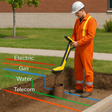
Insights to World approaches infrastructure from the ground up. Posts on private underground services and utility locating emphasize what has to be mapped before site work begins, making hidden networks part of any technology deployment story.

Taken together, broadband, data centers and underground utilities look less like separate engineering tasks and more like civic choices. The technology agenda now depends on siting, local consent, environmental limits and knowledge of existing assets.

Further reading

Curators to follow

  • Carol Hancox

    Maintains 10 topics and recently selects across business technology, e-government, smart glasses and health IT.

  • Chuck Sherwood, Former Senior Associate, TeleDimensions, Inc

    Maintains 2 topics and is active on broadband policy, data-center politics and infrastructure planning.

  • Leona Ungerer

    Maintains 4 topics and recently follows everyday AI, consumer assistants, malware risk and smart-glasses design choices.

  • Gust MEES

    Maintains 6 topics in the subject area and was active during the current 90-day window.

  • Charles Tiayon

    Maintains 2 topics in the subject area and was active on 2026-10-06.

Frequently asked questions

What does the Technology category cover on Scoop.it?

The Technology page follows 285 topics selected by 187 curators over the last 90 days. The material ranges from AI tools, business software and smart glasses to broadband, e-government, health IT, embedded systems, education technology and consumer operating-system guidance.

Why does AI dominate recent technology posts?

AI is the most active thread because it appears across many different topics, not only dedicated AI feeds. Recent posts connect AI to banking triage, chatbots, document management, health care, workplace skills, malware, smart assistants and government services. The accelerating terms also identify AI and AI literacy.

Is this category only about software and AI?

Yes. Recent selections include smart glasses, augmented and virtual reality, head-worn displays, embedded boards, consumer devices, operating systems and workstation upgrades. The smart-glasses coverage is especially active because product capability is colliding with privacy concerns, face-recognition disputes and attempts to redesign devices around social acceptance.

How are public-facing institutions using new technology?

The strongest institutional examples come from banking, airports and government services. Posts describe AI agents reducing bank incident triage time, AI-powered chatbot skills, a digital twin for Munich Airport, and UK digital ID tests for alcohol sales. The same material also shows political pushback against digital identity programs.

What infrastructure issues are being tracked?

Infrastructure posts treat technology buildout as a planning and governance issue. Broadband standards, data-center siting disputes, local bans, regional politics and private utility locating all appear in the recent material. The emphasis is on how networks, data centers and underground services affect communities before systems go live.

Most quoted sources

  • theconversation.com 8
  • linkedin.com 7
  • wired.com 6
  • techcrunch.com 5
  • bbc.com 5
  • fastcompany.com 5
  • futurism.com 4
  • nature.com 4
  • thenextweb.com 4
  • gizmodo.com 4

On the rise

  • ai 22
  • AI literacy 16
  • AI 13

This page was written by an AI from the public curation of Scoop.it topics. The posts, topics and curators it cites are real and linked directly.

Updated on October 6, 2026