Your new post is loading...

|
Scooped by
Beeyond
Today, 10:25 AM
|
For years, the autonomous vehicle industry was consumed by a debate: cameras versus lidar, lidar versus radar, vision-only versus sensor fusion. Few voices were louder than Elon Musk’s. In 2019, Musk famously referred to lidar as a “crutch” and a “fool’s errand”, arguing that camera-based systems alone would ultimately be sufficient for autonomous driving.
At the time, the comment sparked endless debate across the automotive and technology industries. Supporters of lidar argued that precise 3D measurements were essential for safe autonomy. Vision-only advocates countered that cameras, combined with increasingly powerful AI, could provide all the information a vehicle needed to navigate the world. Years later, however, the conversation has evolved.
The question is no longer whether vehicles should use lidar, radar, cameras, or some combination of sensors. Instead, the industry is increasingly focused on a more important challenge: how sensing, AI, and computers work together to help machines safely understand and interact with the physical world. The future is not about choosing a single sensor. It’s about building perception systems capable of delivering reliable, real-time understanding of complex environments.
|
|
Scooped by
Beeyond
Today, 10:24 AM
|
Self-driving technology is one of the most exciting advancements in the automotive industry. While it promises safer roads and greater convenience, the price of developing and implementing autonomous vehicles (AVs) is incredibly high. From advanced sensors to powerful computing platforms, every part of an AV comes with a hefty price tag. In this article, we will break down the costs of self-driving technology, component by component, so you can understand where the money goes and what this means for the future of transportation.
|
|
Scooped by
Beeyond
Today, 10:23 AM
|
Advanced end-to-end autonomous driving systems predict other vehicles' motions and plan ego vehicle's trajectory. The world model that can foresee the outcome of the trajectory has been used to evaluate the autonomous driving system. However, existing world models predominantly emphasize the trajectory of the ego vehicle and leave other vehicles uncontrollable. This limitation hinders their ability to realistically simulate the interaction between the ego vehicle and the driving scenario. In this paper, we propose a driving World Model named EOT-WM, unifying Ego-Other vehicle Trajectories in videos for driving simulation. Specifically, it remains a challenge to match multiple trajectories in the BEV space with each vehicle in the video to control the video generation. We first project ego-other vehicle trajectories in the BEV space into the image coordinate for vehicle-trajectory match via pixel positions.
|
|
Scooped by
Beeyond
June 22, 11:49 AM
|
Humans have a remarkable ability to learn to drive quickly and can obtain a licence to drive across a whole country after tens of hours of practice. But after 10 years of commercial self-driving car development, over 10 million autonomous miles and $5B per year spent, we still do not have commercial self-driving vehicles on our roads. To turn what is currently a fantasy into a reality, we need to take a different approach.
|
|
Scooped by
Beeyond
June 15, 4:52 AM
|
Autonomous driving in Europe faces a multifaceted array of challenges, but our review indicates that these challenges are well-understood and, with concerted effort, can be addressed. The implications of these findings are significant. In the short term, the persistence of regulatory uncertainty, technical limitations, and public scepticism means that fully self-driving vehicles will likely roll out slower in Europe than the most bullish predictions once suggested. Stakeholders must navigate a delicate balance between innovation and caution, since premature deployment could erode trust if incidents occur, whereas excessive delay could cause Europe to fall behind in a transformative industry. In the long term, overcoming these barriers is crucial because the potential benefits of AVs - from dramatically reduced traffic accidents and enhanced mobility for the elderly or disabled, to more efficient logistics and reduced congestion - are substantial. Failure to resolve the impediments could mean foregone benefits in safety and economic efficiency, not to mention Europe’s competitiveness in the global automotive arena.
|
|
Scooped by
Beeyond
June 15, 4:50 AM
|
The company announced earlier this month a deal with Dongfeng to build Jeep and Peugeot models for the Chinese market and increase cooperation on technology research and development.
Dongfeng and other Chinese carmakers meanwhile are looking to Europe and other export markets as their home market remains tough, with consumer spending slumping.
Brands such as BYD, Chery, Geely, Leapmotor, Jaecoo, and XPeng were virtually unknown three years ago in Europe.
|
|
Scooped by
Beeyond
June 15, 3:56 AM
|
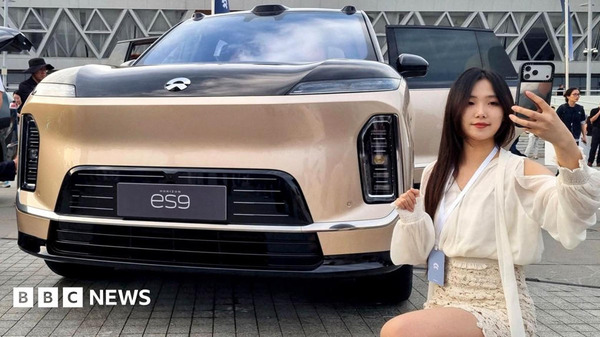
The BBC visited China’s EV factories and found they are dominating the ecosystems shaping the global auto industry.
|
|
Scooped by
Beeyond
June 15, 3:53 AM
|
Both the 19,000 and 28,000 figures sit within a broader group-wide target of 50,000 job cuts across Germany by 2030, covering the core Volkswagen brand, Audi, Porsche and software subsidiary Cariad. The scale of the cuts reflects the depth of VW’s financial deterioration: operating profit fell 53% to €8.9bn (US$10.3bn) in 2025, net profit dropped 44% to €6.9bn and the group’s operating margin compressed to 2.8%—its worst since the Dieselgate crisis.
|
|
Scooped by
Beeyond
June 10, 2:26 PM
|
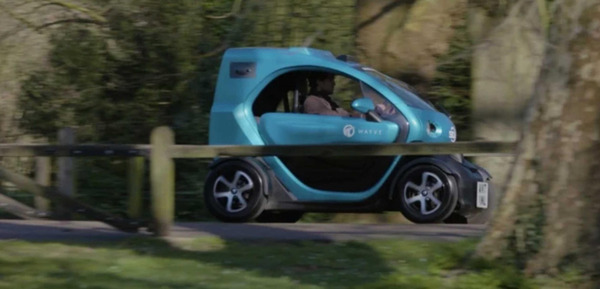
La Twingo sera produite en série dès ce mois-ci sur le site slovène de Novo Mesto. Elle sera disponible en mars 2026 dans ses versions les plus équipées et en juin pour sa déclinaison la moins chère, à moins de 20 000 euros. Un dérivé Nissan et une variante Dacia sous les 18 000 euros arriveront ensuite ! Au-delà du produit, cette nouvelle citadine marque une vraie révolution copernicienne pour Renault ! Car elle aura été conçue en « deux ans seulement, contre trois à quatre ans habituellement », affirme Olivier Laik, directeur du programme des petits véhicules chez Renault. Un temps de développement record, qui permet de réduire les coûts totaux de 20 à 30% par rapport à un projet conventionnel, selon les divers calculs de la firme de Boulogne-Billancourt.
|
|
Scooped by
Beeyond
June 8, 5:25 AM
|
The Bosch Center for Artificial Intelligence (BCAI) serves as Bosch’s center of excellence, dedicated to integrating cutting-edge AI technologies into the company's products and services to create solutions truly “Invented for life.” By leveraging Bosch's vast domain expertise and world-class AI methods, BCAI actively spearheads applied AI projects from initial concept to implementation, bridging the gap between fundamental research and real-world applications. With a strong focus on skills, agility, and openness, BCAI teams, comprising domain experts, data professionals, and software engineers from diverse international backgrounds, are at the forefront of AI research and application.
|
|
Scooped by
Beeyond
June 8, 5:09 AM
|
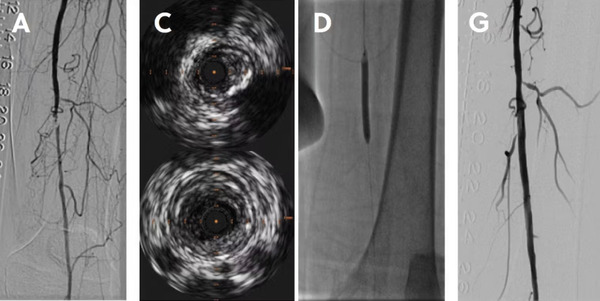
The 2026 revision of the Current Procedural Terminology (CPT) codes for lower extremity revascularization introduces important changes that are intended to better align code selection with contemporary endovascular practice.1 In this article, I highlight several key updates and illustrate how I applied the revised codes to a case of chronic limb-threatening ischemia (CLTI) in the setting of multilevel occlusive peripheral artery disease (PAD).
|
|
Scooped by
Beeyond
June 8, 2:27 AM
|
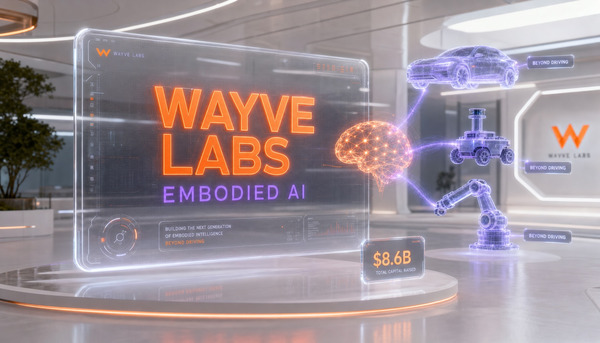
We believe intelligence that cannot act in the physical world is incomplete. The next frontier of AI is not only to understand information, but to operate safely and intuitively in the real world. It will be defined by systems that can perceive, reason, learn, and make decisions safely in dynamic physical environments. Systems that understand uncertainty, causality, motion, interaction, and consequence.
That requires a different set of problems to be solved: world models that support action, representations grounded in space and physics, policies that adapt under uncertainty, and learning systems that improve through interaction with reality rather than passive observation alone.
This is the challenge of embodied AI.
|
|
Scooped by
Beeyond
June 6, 9:18 AM
|
While they may not represent the revolution many predicted, autonomous taxi fleets are rolling out in more cities and becoming a promising urban mobility option. A BCG analysis estimates that the global robotaxi fleet could range between 700,000 to 3 million vehicles by 2035 and that fares in some markets will be lower than traditional ride-hailing services.
The speed of deployment will be influenced by the costs of entering new markets, the time needed to scale up, consumers’ willingness to embrace robotaxis, and the degree to which they capture share from other transportation modes. To win in this increasingly competitive market, operators will need patience and years of substantial investment. They’ll also need to navigate complex regulatory, operational, and technological challenges.
|
|
Scooped by
Beeyond
April 26, 1:58 PM
|
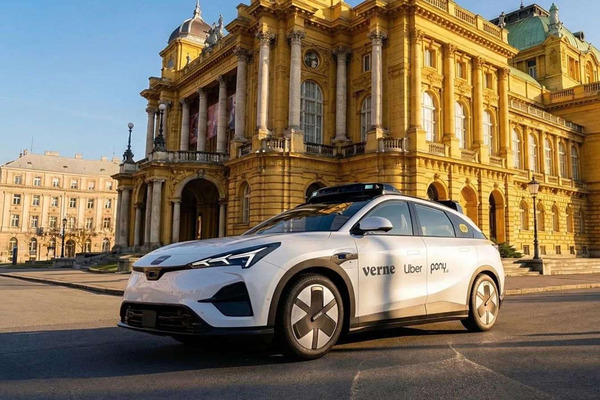
Uber et la start-up Pony.ai lancent des essais de voitures autonomes destinées au marché européen. Ce partenariat vise à explorer le potentiel des robotaxis sur le continent, une étape stratégique pour l’essor de la mobilité sans conducteur en Europe.
|
|
Scooped by
Beeyond
April 26, 1:56 PM
|
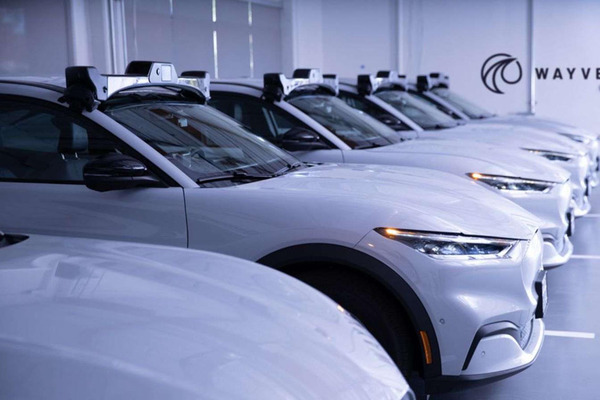
La singularité technologique de Wayve réside dans sa pile logicielle « AV2.0 », qui s’appuie sur un modèle d’IA généralisée end-to-end. Contrairement aux approches classiques (architecture « sense-plan-act »), l’algorithme de conduite autonome traite directement les données brutes des capteurs (caméras, radars, voire LiDAR) pour piloter le véhicule. Concrètement, cela permet à un robotaxi équipé du système Wayve d’apprendre à circuler dans des environnements urbains variés sans recourir systématiquement à des cartes HD ou à une phase d’entraînement longue et locale.
|
|
Scooped by
Beeyond
April 18, 5:29 AM
|
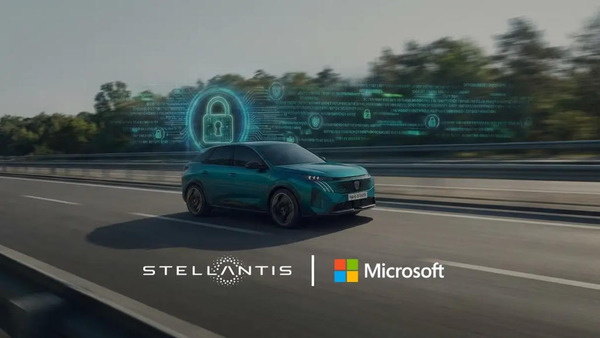
Stellantis et Microsoft annoncent une collaboration stratégique de cinq ans visant à accélérer la transformation numérique du groupe automobile. Co-développement de plus de 100 initiatives d’intelligence artificielle, renforcement de la cybersécurité, modernisation de l’infrastructure cloud avec un objectif de réduction de 60 % de l’empreinte des data centers d’ici 2029 : l’accord couvre l’ensemble de la chaîne de valeur du groupe, de l’ingénierie à l’expérience client.
|
|
Scooped by
Beeyond
April 18, 4:25 AM
|
Nissan has unveiled its ambitious future product strategy, as detailed by automotive journalist Alisa Priddle, on April 14, 2026. This plan highlights a transformative approach for the company, focusing on enhancing its global vehicle lineup with a greater emphasis on hybrid technology, reducing the number of models offered, and integrating advanced artificial intelligence (AI) solutions into its operations. These strategic shifts are designed to position Nissan favorably amid the evolving landscape of the automotive sector.
|
|
Scooped by
Beeyond
April 18, 4:23 AM
|
Trajectory prediction is critical for autonomous vehicles, allowing them to anticipate the future movements of other agents on the road to ensure safety and smooth navigation. Traditional methods operate under the assumption of zero latency—an idealized scenario where predictions are made instantaneously without delay. However, in practical autonomous driving systems, latency is unavoidable due to the time required for data sensing, processing, and prediction calculations. The conventional oversight of this latency leads to predictions that are already outdated the moment they are generated, resulting in reduced accuracy and potential safety risks.
|
|
Scooped by
Beeyond
April 18, 4:22 AM
|
Le 15 avril 2026, Le Journal de l’Automobile a remis le titre de Personnalité Automobile de l’Année 2025 au directeur général de Valeo. Cette cérémonie a rassemblé les grands acteurs de la filière à la Maison de la Chimie, à Paris, pour saluer le rôle central de Christophe Périllat dans la transformation de l’industrie européenne et son engagement en faveur d’une politique industrielle ambitieuse.
|
|
Scooped by
Beeyond
April 16, 5:13 AM
|
Sale temps pour les ingénieurs dans l'automobile. Alors que Stellantis a prévenu vendredi de son intention de supprimer 650 postes dans le centre de développement d'Opel à Rüsselsheim (Allemagne), Renault va dans le même temps sortir la serpe dans ses équipes, avec une réduction de 15 % à 20 % dans les deux ans à venir, ce qui représente de 1.600 à 2.400 postes en moins dans le monde. Deux annonces concomitantes qui soulignent à quel point les ingénieries du secteur, en particulier en Europe, sont sous pression. La tendance ne date pas d'hier. Il y a trois ans, Ford Europe a engagé une réduction de 3.600 postes dans sa R&D en Allemagne et au Royaume-Uni. L'année suivante, l'équipementier Forvia a enclenché un plan de restructuration portant sur 10.000 emplois dans le monde d'ici à 2028, en ciblant plus particulièrement les fonctions support et recherche-développement. Le groupe Volkswagen, de son côté, prévoit de supprimer 50.000 emplois en Allemagne d'ici à 2030, et si la direction n'a pas pour l'instant fourni de chiffres plus précis, l'ingénierie ne sera à coup sûr pas épargnée.
|
|
Scooped by
Beeyond
April 16, 5:07 AM
|
Un mois après la présentation du nouveau plan stratégique, c'est la soupe à la grimace pour les syndicats et les salariés de Renault. La direction du constructeur a annoncé vendredi à l'occasion d'un comité de groupe que 15 % à 20 % des postes de l'ingénierie seraient supprimés dans les deux ans à venir au niveau mondial.
Selon des chiffres fournis par l'entreprise, Renault compte aujourd'hui près de 12.000 ingénieurs dans ses effectifs, dont la moitié hors de France. Le groupe compte également des centres d'ingénierie (des RTX dans le langage interne) en Roumanie, en Corée du Sud, en Inde, ou encore au Brésil et au Maroc.
|
|
Scooped by
Beeyond
April 16, 5:06 AM
|
L'usine, ouverte en 1937 par Ford, fut le haut lieu de Simca avant d'être reprise par PSA à la fin des années 1970, lorsqu'elle employait près de 27.000 salariés. Elle ne fermera pas ses portes pour autant. D'une part car elle accueillera toujours le « Green Campus » dédié à la R&D, aux fonctions support et aux activités de siège de Stellantis en France. D'autre part car le groupe va y localiser une palette d'activités pour « se consacrer aux différentes vies des véhicules », a-t-il indiqué. Pour cela, une enveloppe approchant les 100 millions d'euros sera mobilisée.
|
|
Scooped by
Beeyond
April 8, 4:23 PM
|
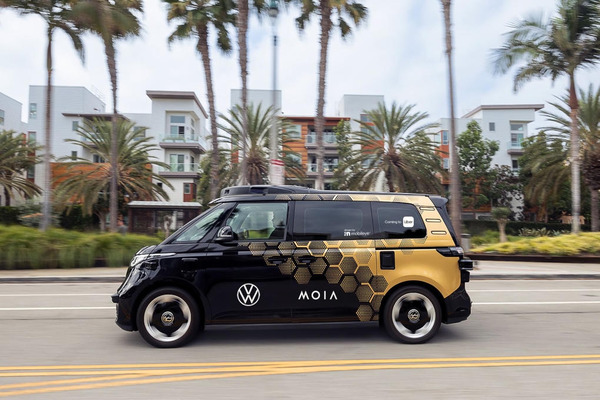
A year ago, MOIA America and Uber unveiled an ambitious plan to launch a commercial robotaxi service — using autonomous versions of Volkswagen’s electric ID. Buzz minivan — in multiple U.S. cities over the next decade. Los Angeles is the first city on that list.
Testing will start in the next few weeks with about 10 autonomous ID. Buzz vehicles in Los Angeles, according to the company. The production version of the driverless vehicle seats four people.
|
|
Scooped by
Beeyond
April 8, 4:22 PM
|
The catalyst is Waymo’s launch in Nashville, Tennessee, adding another city to a commercial robotaxi footprint that already includes San Francisco, Los Angeles, Phoenix, and Austin. For investors who have watched Alphabet pour billions into its self-driving bet for years, Nashville is more than a new pin on a map. It’s evidence that the commercial rollout is accelerating.
|
|
Scooped by
Beeyond
April 8, 4:22 PM
|
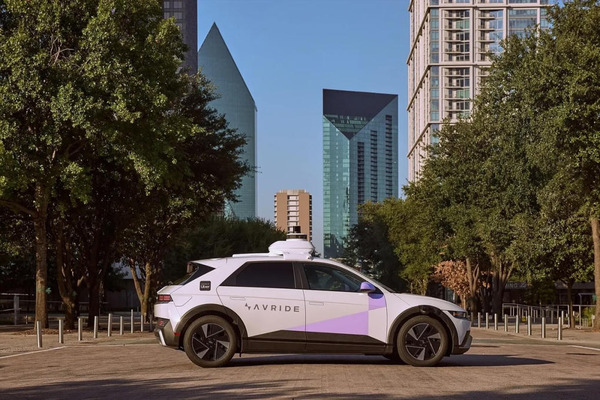
While humans are responsible for killing animals with their cars all the time, this incident has brought negative attention to the new technology. Local media picked up on the duck incident after a resident posted in a Mueller neighborhood Facebook group that an Avride autonomous vehicle (with a human safety operator behind the wheel) ran over and killed a duck, and did not stop afterwards. “It didn’t slow down or hesitate at all, just steamrolled through,” the post, which KXAN reported on, reads.
|

Curated by Beeyond
BEEYOND is a consulting company in the field of disruptive innovation, accompanying established companies on out-of-the-core growth strategy, from creation of new concepts to product launch. Reach us at: contact@beeyond.fr.
|