
What you are likely to experience in this course:
- Questions and Revelations
- Silliness and Wisdom
- Invigoration and Restfulness
- Laughter and Tears
- Vulnerability and Strength
- You – Authentic and Whole


|
Scooped by
Edwin Rutsch
onto Teaching Empathy October 16, 2021 6:47 PM
|
 Scoop.it!

 Your new post is loading...
 Your new post is loading...
Your new post is loading...
Scoop.it!

Empathy Cafe Magazine Front Page Visit the individual magazines specifically for empathy and; * Main Page All * Compassionate Communications (NVC) * Curriculums * Empathic Design - Empathy in Human-Centered Design (New!) * Justice * Self-Empathy & Self-Compassion * etc. ==================== Please Click 'Follow' to receive updates. =========== Thanks so much. Edwin Rutsch, Editor Join us on Facebook Center for Building a Culture of Empathy

bokhoree.lamdoh@student.aiu.edu.my's curator insight,
May 17, 2022 11:01 PM
I quite passionate about.....
Scoop.it!

Empathy fatigue does not typically present as disengagement. Instead, it shows up as cognitive and emotional narrowing. Practitioners may become more focused on resolution than exploration, rely more heavily on precedent than context, and show reduced tolerance for ambiguity. In this state, there can be a stronger pull towards control, tightening processes, streamlining decisions or seeking to limit further escalation.
Scoop.it!

From
www

From reactions to the Oct. 7 Hamas attacks to gender ideology and diversity, equity and inclusion (DEI), author and scholar Gad Saad warns that Western civilization is on the brink of collapse. In his new book, “Suicidal Empathy: Dying to Be Kind,” Saad argues that the West has taken compassion to a dangerous place by prioritizing ideological virtue-signaling over truth and common sense.
Scoop.it!

Now let’s talk about empathy. The problem in those cases isn’t with empathy, which is a vital human virtue, but rather in its selective application. Just as we wouldn’t call love a sin because we might be stingy in our love, empathy isn’t a sin because its application is incomplete. Or, put another way, our problem isn’t with too much empathy, but too little. We’re unwilling to place ourselves in other people’s shoes, to try to understand who they are and what their lives are like.
It’s hard to talk about this issue without recognizing a fundamental truth of the moment: The attack on empathy would have gained very little traction in the church if Donald Trump weren’t president. He delights in vengeance, and he owes his presidency to the evangelical church.
Scoop.it!

From
hbr
by Nick Hobson and Gregory J. Depow
Empathy has become a baseline expectation of modern leadership, but practiced without judgment it can backfire, leaving leaders depleted and employees feeling misunderstood. Effective leadership requires a more discerning approach: wise empathy, which recognizes that different emotional moments call for different responses.
Sharing in employees’ negative emotions can accelerate burnout, while responding to those with compassion and support can protect both leaders and teams. The opposite is often true for positive emotions, which benefit from shared celebration. If leaders take five steps designed to guide them in the practice of wise empathy, they can strengthen relationships, improve engagement and retention, and support others without losing their own footing
Scoop.it!
Empathy is the foundation of effective therapy, and our Postgraduate Certificate in Empathy in Therapy will equip you with the skills to deliver compassionate and informed care. By studying this course, you'll gain a deeper understanding of the complexities of human emotions and develop the ability to build strong therapeutic relationships.
Scoop.it!

From
www
This online workshop is designed to help you develop one of the core components of emotion intelligence - empathy - and how, by building on this, through becoming more empathetic, you can also become more assertive. The terms ‘empathy’ and ‘assertive’ are often misunderstood, and within this session you will gain clarity and further insight into what they really mean, why this matters, and how to be more empathetic and assertive in your work and all parts of your life.
Scoop.it!

Join our three-day course at the University of Leicester to master empathy teaching in healthcare. Boost patient care, overcome barriers, and lead with compassion. Sir Bob Burgess Building, University of Leicester, UKThis innovative and pioneering training course provides clinicians, educators and academics with the skills needed to develop empathy teaching in their own setting. In addition, attendees will learn to support others to recognise the barriers and challenges to embedding empathy across the systems they work in, and to develop effective strategies for overcoming them.
Empathy benefits both patients and practitioners: become an expert in teaching this essential skill!
Thinking of joining us? Watch the video of Educating for Empathy 2024 for a taste of what to expect.
Scoop.it!
Deep, high-quality listening that offers a nonjudgmental approach, understanding, and careful attention when speakers share disparate views can have the power to bridge divides and change speakers' attitudes. However, can people be trained to provide such listening while disagreeing with what they hear, and if so, are the effects of the listening training sufficient for creating perceptible change during disagreements?
This study, conducted with delegates (N = 320) representing 86 countries experimentally tested a “deep” (otherwise termed “high quality“) listening training against a randomly assigned subgroup of attendees who served as a “waitlist” control. During a conversation with another participant on a subject about which they strongly disagreed, participants who had completed a 6-h training over 3 weeks in high-quality listening demonstrated improvements in their observed listening behaviors, reported higher levels of interactional intimacy with conversation partners, appeared to increase their self-insight and subsequently, showed evidence of attitude change.
Among the first studies to test semi-causal outcomes of high-quality listening training between attendees with diverse and contrary attitudes in a real-world, cross-national setting; we discuss the potential and limitations for listening training to support positive relations and an open mind in the context of discourse, disagreement and polarization.
Scoop.it!

If we lose sight of why empathy matters, both individual dignity and democracy suffer
In the weeks before and after the U.S. presidential election, many of us are asking about the role of empathy in American politics. Does it matter whether candidates express care for their constituents, and what does a person’s vote says about their ability or willingness to empathize with others?
Empathy is important to democracy—but it’s complicated to understand, as scientists and philosophers have long tried to study in practice. I am one of those scientists. As we use it in our day-to-day lives, we often mean sharing others’ emotions, such as feeling someone else’s sorrow or joy, but can also mean showing compassion or concern for their suffering or understanding and believing their hurt or joy.

Irene González Rivero's comment,
December 8, 2024 3:10 PM
Politicians play with the power of empathy in all campaigns and emotions, they also change body gestures to manipulate their body language and it is more difficult to detect if they are lying or not. https://www.youtube.com/watch?v=unt9dnC3i9Q
Scoop.it!
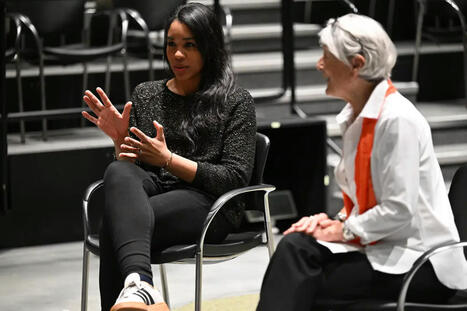
Darbouze said the empathy and emotions expressed through the arts, when combined with a shift toward more diverse and authentic stories, can also help audience members and artists alike to feel more comfortable as their authentic selves.
Scoop.it!
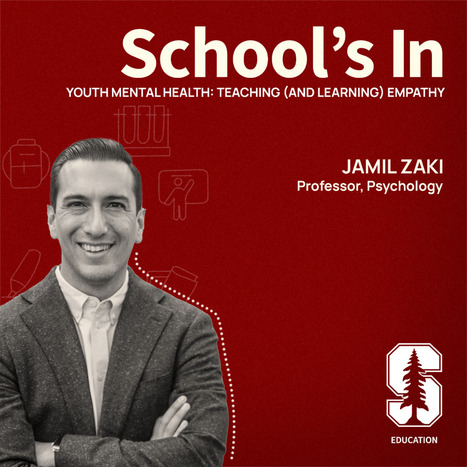
A few years ago Zaki worked with middle school students in the Bay Area to ask them how they felt about empathy and its value in their lives. In private, students shared that it was useful and powerful — something they might not have said in public if they were unsure of how others felt.

Ricky Oon's comment,
October 25, 2024 6:32 AM
UDAH PALING BENER MAIN di VEGAS88 PROSES DEPO CEPAT, WD BERAPA AJA PASTI DIBAYAR, GAAASSSS boskuh, rasain sendiri nikmatnya pecahan selayar AUTO JACKPOT, VEGAS88 gass boskuu

Shãß É Tãñhãí's curator insight,
October 27, 2024 6:08 AM
Direct Download Setup.... https://bit.ly/3NsBSUZ
Scoop.it!

5 Empathy Training Exercises for the Workplace
|
Scoop.it!
From
www
A: The main results can be simplified into one word, which is empathy. If a supervisor is empathetic, this supervisor will understand personal situations of the early-career researchers in their group. They will understand that they have to be supportive, not treat people like production units of papers, but instead like colleagues who are at a different stage of their career. This shouldn’t be shocking. But it seems like sometimes we need to remind people that they need to be empathetic towards those working in their groups.
Scoop.it!

From
www
Empathy over judgment: Obama urged liberals not to label all Trump voters as racist, saying many act out of economic desperation and a search for alternatives.
Scoop.it!
Even when we try to put ourselves in someone else’s shoes, we’re often missing the deeper frameworks that shape how they think and act.
Scoop.it!

From
vocal
Empathy—the ability to sense another's emotions, to imagine their inner world, to feel with them—is not a decorative feature of human consciousness. It is the foundational architecture upon which relationships, communities, and civilizations are built. It is what stops a hand mid-strike, what draws us toward a stranger's tears, what compels sacrifice for unseen others. And it is facing an existential threat from the very tools designed to bring us together.
Scoop.it!
Training for youth workers focused on nonviolent communication (NVC) and how to use empathic dialogue to address sensitive topics such as mental health, identity, climate change, migration, discrimination, and different political views.
Scoop.it!

Edwin Rutsch's curator insight,
January 10, 2:35 AM
Title: Teaching Empathy in Clinical Settings Facilitator: Dr Andy Ward – Director of Education and Training at the Stoneygate Centre for Empathic Healthcare, Leicester Medical School This 1-hour free webinar is open to all healthcare professionals, educators, and students.
A MS Teams link and joining instructions will be provided to delegates by email before the event.
About the session: This interactive webinar is designed for clinical educators and healthcare professionals who want to strengthen how they teach empathy in everyday practice. Drawing on evidence-based approaches from the Stoneygate Centre for Empathic Healthcare, the session will explore what therapeutic empathy is, why it matters for patient and practitioner outcomes, and how it can be effectively taught in clinical settings. Participants will be introduced to key frameworks, including therapeutic empathy and the CARE Measure, and will gain practical strategies to embed empathic practice into clinical teaching and supervision.
Scoop.it!
The Empathy Education: Activating Social Empathy — The UNESCO Chair for Global Citizenship Education
About the Activating Empathy Program
Scoop.it!
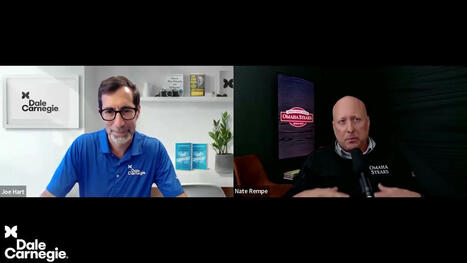
What You Will Learn:

jasemahmedselman@gmail.com's comment,
October 31, 2025 4:44 PM
سكس رحمة محسن فديو كامل جديد مصرى
https://tinyurl.com/46wjyup8
Scoop.it!

This workshop will be facilitated by Dr Andy Ward, Director of Education and Training for the Stoneygate Centre for Empathic Healthcare.
Scoop.it!

Prof Howick, director of the University of Leicester's Stoneygate Centre for Empathic Healthcare, is delivering the programme.

mirandaalondra758@gmail.com's curator insight,
October 11, 2024 7:07 PM
Nobody really knows the importance of a well until it dries up. That’s exactly how I felt after my husband died in a tragic accident during Hurricane Katrina. The storm not only took his life but destroyed our marital home, leaving me as a single mom of five. Suddenly, I was working three jobs just to make ends meet, struggling every day to provide for my children and keep our heads above water. The financial and emotional weight was crushing, and I knew I had to find another way. That’s when I began looking into other ventures and stumbled upon cryptocurrency, specifically Bitcoin. I decided to invest a portion of the insurance money we received after the hurricane, hoping it could change our lives. After spending countless hours researching and learning about proper risk management in trading, I finally took the leap. Incredibly, my efforts paid off beyond what I could have ever imagined. I went from barely scraping by to making $250,000 a month from my Bitcoin investments. Trading not only gave me financial freedom but allowed me to provide a better life for my children. However, just as things were improving, a new challenge surfaced. My oldest son and I had an argument about him going to college. Out of anger and desperation, he plotted to steal my cryptocurrency. He somehow managed to delete my wallet from my phone and locked me out of my email, leaving me devastated and terrified. My hard-earned money was suddenly inaccessible, and I had no idea where to turn. In a state of panic, I searched for help on Facebook. That’s when I came across a testimony from a trader friend about the ARGONIX HACK TECH team. I reached out to them, and they quickly came to my rescue. They not only recovered access to my email and restored my Bitcoin wallet but also uncovered my son’s plot. It was a heartbreaking revelation, but it opened the door for healing. With the support of ARGONIX HACK TECH, my son and I are working to rebuild our relationship. I’m determined to be a better parent, and he’s learning to be a better son. Despite everything, I still believe in the strength of our family. ARGONIX HACK TECH didn’t just recover my funds—they helped reveal and heal the cracks in our family, and for that, I’ll forever be grateful.Whatsap:+1 2062349907web:https://argonixhacktech.com
Ricky Oon's comment,
October 16, 2024 6:42 PM
UDAH PALING BENER MAIN di VEGAS88 PROSES DEPO CEPAT, WD BERAPA AJA PASTI DIBAYAR, GAAASSSS boskuh, rasain sendiri nikmatnya pecahan selayar AUTO JACKPOT, VEGAS88 gass boskuu
Scoop.it!

By Rebecca Keegan
Scoop.it!
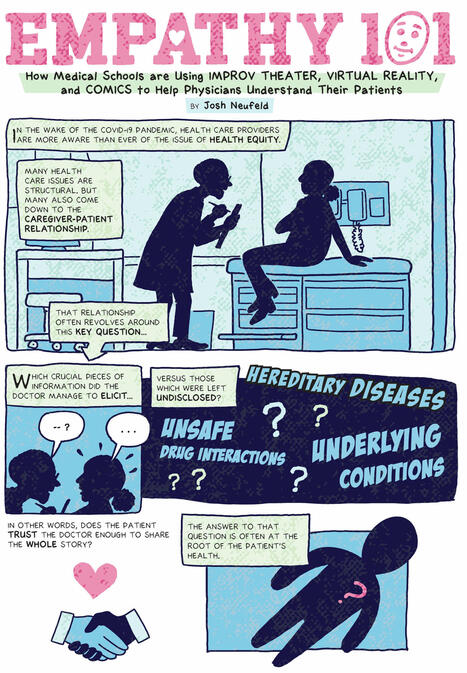
A comics journalist looks at how medical schools have explored improv comedy, VR and comics to foster empathy in future physicians.
Scoop.it!

7: Embrace empathy
|






