Radical empathy is the willingness to show love and understanding to people whose actions toward you—and others who share your identity or belief—are the opposite of love. It requires us to offer empathy to those who may choose hatred or indifference. While this may seem like an arduous challenge, it is also the pathway to true transformation.
As leaders, it is our responsibility to cultivate an environment where empathy is not just a value, but a practice. We must recognize that everyone, regardless of their background or beliefs, has the potential for growth and change. By showing empathy to those who need it most, we create the conditions for deeper, more authentic connections that can lead to lasting change.
https://vegas88.cariapakak.site UDAH PALING BENER MAIN di VEGAS88 PROSES DEPO CEPAT, WD BERAPA AJA PASTI DIBAYAR, GAAASSSS boskuh, rasain sendiri nikmatnya pecahan selayar AUTO JACKPOT, VEGAS88 gass boskuu
Teaching with empathy is now seen as a crucial approach in education, improving student engagement and creating a positive classroom environment. When educators connect with students emotionally and understand their struggles, they can better tailor their teaching methods to support individual learning.
Empathy goes beyond academic needs, focusing on each learner as a unique individual, making students feel valued, included, and respected.
Empathy allows educators to respond to students’ needs effectively, fostering a safe and inclusive atmosphere. This approach makes students more likely to participate actively, engage in discussions, and take intellectual risks without fear of judgment.
UDAH PALING BENER MAIN di VEGAS88 PROSES DEPO CEPAT, WD BERAPA AJA PASTI DIBAYAR, GAAASSSS boskuh, rasain sendiri nikmatnya pecahan selayar AUTO JACKPOT, VEGAS88 gass boskuu
El enfoque empático en la enseñanza permite una conexión profunda con los estudiantes, fomentando su bienestar emocional y confianza en el aprendizaje. Al ser valorados como individuos, los estudiantes se sienten más motivados y abiertos a participar activamente.
El enfoque de enseñar con empatía es clave para mejorar la experiencia educativa, ya que fomenta un ambiente seguro y respetuoso donde los estudiantes se sienten valorados. Al conectar emocionalmente con los alumnos, los docentes pueden ajustar sus métodos a las necesidades individuales, promoviendo una participación activa y sin miedo al juicio. Este enfoque no solo mejora el aprendizaje académico, sino que también fortalece la inclusión y el bienestar emocional, creando un espacio donde los estudiantes pueden arriesgarse y crecer tanto académica como personalmente.
Empathy is an important part of being a good person. We should all be able to understand how others are feeling and be sensitive to their issues.
However, as the idiom goes, too much of anything is never good, especially when it comes to kids. But most people think of that in terms of sugar, not empathy.
Teacher Sha Collier has a different perspective — one that is a bit controversial. In a TikTok video, she claimed that teachers have to give their students tough love in order to succeed, and he said it's a major factor in why teachers are leaving the profession in droves.
El comentario de la exmaestra Sha Collier sobre el exceso de empatía como un factor contribuyente al agotamiento docente y al fracaso estudiantil ofrece una perspectiva interesante, aunque controversial. Si bien la empatía es fundamental en la enseñanza y en la creación de un ambiente de apoyo, también es crucial que los educadores mantengan un equilibrio. La empatía no debe llevar a la complacencia, sino que debe ser un medio para motivar y guiar a los estudiantes hacia la autonomía, el esfuerzo y la resiliencia.
El concepto de “amor duro” que propone Collier subraya la necesidad de establecer límites claros y expectativas firmes, lo que puede ser igualmente importante para el éxito de los estudiantes. Sin embargo, esto no debe interpretarse como una renuncia al apoyo emocional; más bien, se trata de un enfoque que combine la comprensión con la disciplina. La clave podría estar en encontrar un balance entre empatizar con las dificultades de los estudiantes y, al mismo tiempo, alentarlos a enfrentar los retos con responsabilidad y determinación.
Ed Kirwan is high school teacher-turned-filmmaker and founder of Empathy Week. In this episode, he talks about his vision to empower a generation of young people to become empathic leaders through the power of films. This is a must-watch for educators everywhere.
As a behavioural scientist working on empathic social systems, and founder of an empathy diagnostic system called the School Empathy Audit Battery (SEAB) that uses artificial intelligence and machine learning, he believes psychological safety must be embedded in educational settings at a systems level.
His recent publication, Empathy Driven School Systems, positions empathy at the heart of effective educational design. It also outlines strategies to foster inclusion and emphasizes emotional intelligence.
The need for more empathic schools cannot be understated, especially in light of the mental health crisis and loneliness epidemic that young people face today. Consider these stats:
With the new school year underway, New Jersey-based nonprofit TEEEM (The Empathy Equality Entrepreneurship Mission) announces the rapid expansion of its mission to inspire humanitarianism in schools, including its first partnership with an international school this year, in Toronto, Canada.
‘Empathy’ and ‘Social Entrepreneurship’ classes and clubs are being added to 28 schools in Arizona, Colorado, Idaho, New Jersey, Rhode Island and Canada this school year, thanks to TEEEM, a nonprofit organization offering free educational programs and curriculum to educate youth on global issues and humanitarianism. This addition brings the total number of participating TEEEM schools to 51, with 45 more schools interested.
As reported by BBC News, a new study from the University of Cambridge suggests that empathy lessons in schools can lead to significant positive changes in students’ behaviour and emotional understanding About 900 pupils aged between five and 18 in six countries completed a video course and engaged in discussions about it afterwards.
Empathy – the ability to understand and share the feelings of others – is largely considered to be something we develop through childhood and our life experiences.
Pupils were rated by teachers on empathy, behaviour and other characteristics on a scale of 1-10 before the programme began, and again five and 10 weeks later, with the average empathy score rising from 5.55 to 7 during that period.
Their behaviour scores also increased, from 6.52 to 7.89.
One term of empathy lessons in schools could lead to positive changes in behaviour, a study supported by the University of Cambridge has suggested.
About 900 pupils aged between five and 18 in six countries completed a video course and engaged in discussions about it afterwards.
Empathy – the ability to understand and share the feelings of others – is largely considered to be something we develop through childhood and our life experiences.
Pupils were rated by teachers on empathy, behaviour and other characteristics on a scale of 1-10 before the programme began, and again five and 10 weeks later, with the average empathy score rising from 5.55 to 7 during that period.
Empathy with others is not only a natural ability, it can be taught in the classroom, an analysis has suggested.
Lessons in empathy improve kindness and boost positive behaviour in children, according to a report published on Wednesday.
Ed Kirwan is a former science teacher who founded Empathy Studios, a company that created a video-led course for schools. Analysis that the company conducted of its programme discovered that children became more emotionally literate within ten weeks. The children’s behaviour also improved over the same period.
Ed Kirwan, a former science teacher and the founder of Empathy Studios, advocates that kindness should be added to the school curriculum. After promising results from his video-led course teaching empathy over ten weeks to pupils aged 5 to 18, he states that empathy can be taught — and that increasing the emotional literacy of children could decrease social unrest in the long term.
He follows the precedent of Denmark, which teaches empathy in schools to children from pre-school up to the age of 16. This is based on neurological research that says we thrive when we know how to co-operate and build relationships with others, for which empathy is a core skill.
A study involving 900 students in six countries found that a short program of empathy lessons led to measurable, positive changes in their conduct, emotional awareness and curiosity about different cultures.
An analysis of a short program teaching empathy in schools has found it had a positive impact on students' behavior and increased their emotional literacy within 10 weeks.
The findings come from an evaluation of the Empathy Program: a term-long course developed by the UK-based Empathy Studios. The research was conducted with support from academics at the Faculty of Education, University of Cambridge.
Oprah Winfrey shares her personal battle with body shaming and weight management, advocating for empathy in the face of obesity challenges.
Changing the Narrative: A Call for Empathy
Winfrey's special concluded with a powerful message of empathy and inclusion. By sharing her journey, Oprah aims to shift the conversation from one of blame and shame to one of understanding and support. She stresses the importance of recognizing obesity as a complex, chronic disease that requires a multifaceted response, including medical, psychological, and societal support. Through her advocacy, Oprah calls for a collective effort to address weight stigma and promote a more inclusive and compassionate society.
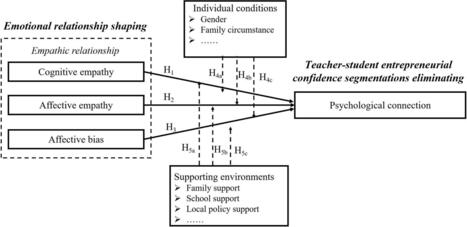
Objective From the perspective of empathy theory, this study focuses on the process of entrepreneurship education to explore the mechanism between teacher-student empathic relationship and psychological connection.
Background Entrepreneurship education aims to provide talent to support the innovative development of society. Previous studies have focused on the educational significance of the promoting entrepreneurial intention, and few have paid attention to the psychological differentiation caused by the incomprehension between teachers and students.
Radical empathy involves actively seeking to comprehend the root causes of individuals’ behaviours and emotions and responding with compassion and support. In the educational context, this means recognising the impact of trauma and socio-economic challenges on students and addressing these issues with sensitivity and care. This approach is particularly beneficial in working-class schools, where students often face significant barriers to their educational success.
UDAH PALING BENER MAIN di VEGAS88 PROSES DEPO CEPAT, WD BERAPA AJA PASTI DIBAYAR, GAAASSSS boskuh, rasain sendiri nikmatnya pecahan selayar AUTO JACKPOT, VEGAS88 gass boskuu
As a behavioural scientist working on empathic social systems, and founder of an empathy diagnostic system called the School Empathy Audit Battery (SEAB) that uses artificial intelligence and machine learning, he believes psychological safety must be embedded in educational settings at a systems level.
His recent publication, Empathy Driven School Systems, positions empathy at the heart of effective educational design. It also outlines strategies to foster inclusion and emphasizes emotional intelligence.
The need for more empathic schools cannot be understated, especially in light of the mental health crisis and loneliness epidemic that young people face today. Consider these stats:
Santa Barbara Middle School (SBMS) has embraced values like equity, empathy, and inclusivity as a central part of its educational mission, aiming to shape students into compassionate leaders and conscientious global citizens.
Equity and empathy are critical for developing students who understand and respect diversity, advocate for justice, and can act as agents of positive change. These values are particularly significant during the middle school years, a period of intense social, emotional, and intellectual growth. Teaching these principles equips students to interact thoughtfully within increasingly diverse and interconnected communities.
Empathy is an important part of being a good person. We should all be able to understand how others are feeling and be sensitive to their issues.
However, as the idiom goes, too much of anything is never good, especially when it comes to kids. But most people think of that in terms of sugar, not empathy.
Teacher Sha Collier has a different perspective — one that is a bit controversial. In a TikTok video, she claimed that teachers have to give their students tough love in order to succeed, and he said it's a major factor in why teachers are leaving the profession in droves.
El comentario de la exmaestra Sha Collier sobre el exceso de empatía como un factor contribuyente al agotamiento docente y al fracaso estudiantil ofrece una perspectiva interesante, aunque controversial. Si bien la empatía es fundamental en la enseñanza y en la creación de un ambiente de apoyo, también es crucial que los educadores mantengan un equilibrio. La empatía no debe llevar a la complacencia, sino que debe ser un medio para motivar y guiar a los estudiantes hacia la autonomía, el esfuerzo y la resiliencia.
El concepto de “amor duro” que propone Collier subraya la necesidad de establecer límites claros y expectativas firmes, lo que puede ser igualmente importante para el éxito de los estudiantes. Sin embargo, esto no debe interpretarse como una renuncia al apoyo emocional; más bien, se trata de un enfoque que combine la comprensión con la disciplina. La clave podría estar en encontrar un balance entre empatizar con las dificultades de los estudiantes y, al mismo tiempo, alentarlos a enfrentar los retos con responsabilidad y determinación.
As a behavioural scientist working on empathic social systems, and founder of an empathy diagnostic system called the School Empathy Audit Battery (SEAB) that uses artificial intelligence and machine learning, he believes psychological safety must be embedded in educational settings at a systems level.
His recent publication, Empathy Driven School Systems, positions empathy at the heart of effective educational design. It also outlines strategies to foster inclusion and emphasizes emotional intelligence.
The need for more empathic schools cannot be understated, especially in light of the mental health crisis and loneliness epidemic that young people face today. Consider these stats:
A study involving 900 students in six countries found that a short program of empathy lessons led to measurable, positive changes in their conduct, emotional awareness and curiosity about different cultures.
An analysis of a short program teaching empathy in schools has found it had a positive impact on students' behavior and increased their emotional literacy within 10 weeks.
The findings come from an evaluation of the Empathy Program: a term-long course developed by the UK-based Empathy Studios. The research was conducted with support from academics at the Faculty of Education, University of Cambridge.
A study involving 900 students in 6 countries found that a short programme of empathy lessons led to measurable, positive changes in their conduct, emotional awareness and curiosity about different cultures.
An analysis of a short programme teaching empathy in schools has found it had a positive impact on students’ behaviour and increased their emotional literacy within 10 weeks.
The findings come from an evaluation of the 'Empathy Programme': a term-long course developed by the UK-based Empathy Studios. The research was conducted with support from academics at the Faculty of Education, University of Cambridge.
How do you teach empathy? Richard Weissbourd, the co-faculty director of the Human Development Psychology Program at Harvard’s School of Education, studies that very question.
“When you look at the state of the country today, you can see the consequences of our having demoted kindness and concern for the common good,” says Weissbourd, who directs the university’s Making Caring Common Project, which centers on the moral and social development of children. So he and his team have set out to put kindness and concern for others “front and center in child raising.”
Weissbourd argues that kindness is a muscle like anything else, and parents need to lead by example. In his view, kids should be expected to do chores, contribute to their community and help out neighbors in need. “Kindness develops when we practice it all the time,” he explains.
As reported by BBC News, a new study from the University of Cambridge suggests that empathy lessons in schools can lead to significant positive changes in students’ behaviour and emotional understanding About 900 pupils aged between five and 18 in six countries completed a video course and engaged in discussions about it afterwards.
Empathy – the ability to understand and share the feelings of others – is largely considered to be something we develop through childhood and our life experiences.
Pupils were rated by teachers on empathy, behaviour and other characteristics on a scale of 1-10 before the programme began, and again five and 10 weeks later, with the average empathy score rising from 5.55 to 7 during that period.
Children's Health Scotland highlights the urgent need for educational reforms in Scotland to accommodate children with health conditions. Learn about the organization's advocacy for inclusivity and support.
The organization's plea for empathy and a shift in perspective towards school non-attendance issues marks a critical step toward ensuring that every child, regardless of their health condition, can access and benefit from education.
As Scotland stands on the cusp of educational reform, the collective efforts of organizations like Children's Health Scotland, educators, and the community at large could herald a new era of inclusivity and support within the educational system. This movement not only champions the rights of children and young people with health conditions but also paves the way for a more empathetic and understanding approach to tackling the complex challenges of school non-attendance.
To get content containing either thought or leadership enter:
To get content containing both thought and leadership enter:
To get content containing the expression thought leadership enter:
You can enter several keywords and you can refine them whenever you want. Our suggestion engine uses more signals but entering a few keywords here will rapidly give you great content to curate.


 Your new post is loading...