These one-to-one empathy sessions support; well-being, healing, practicing to be a better listener and supporting you in creating empathic environments in your relationships, family, school, work, communities and beyond.
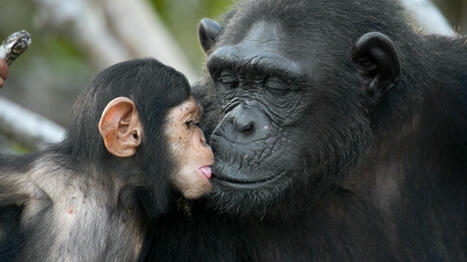
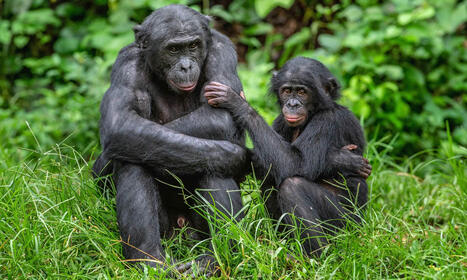
New research has provided insight into how bonobos and chimpanzees demonstrate empathy, challenging previous beliefs about their social behaviors. Scientists have long known that comforting distressed peers is a key marker of empathy; however, a direct comparison between these two ape species had never been conducted—until now.
los animales son almas puras en este plano terrenal, pero los bonobos son una especie total empatica, se dice que son la especie más cercana a los simios y demuestra mucho afecta al ver aquellos cercanos en una situación afectiva
Senior author of the study, Professor Zanna Clay of Durham University’s Department of Psychology, added: “Although empathy is very important for our own species, our findings show that empathic behaviours, like consolation, appear to be a common trait we also share with our two closest ape relatives.
“Finding these overlaps between our two close cousins suggests our last common ancestor likely showed these empathic capacities too.
“A next step will be to see how much these patterns are also observed in other settings, particularly in the wild.”
New research has provided insight into how bonobos and chimpanzees demonstrate empathy, challenging previous beliefs about their social behaviors. Scientists have long known that comforting distressed peers is a key marker of empathy; however, a direct comparison between these two ape species had never been conducted—until now.
los animales son almas puras en este plano terrenal, pero los bonobos son una especie total empatica, se dice que son la especie más cercana a los simios y demuestra mucho afecta al ver aquellos cercanos en una situación afectiva
Woodland Park Zoo is pleased to announce a $7.15 million grant from Margaret A. Cargill Philanthropies (MACP) to advance and expand the zoo's Advancing Empathy Initiative that fosters empathy for animals in Association of Zoos and Aquariums (AZA)-accredited organizations.
This three-year grant continues the zoo's long-term partnership with MACP and organizations across the country to build strong empathic connections between humans and animals through research-based effective empathy practices while also amplifying the zoo's mission to save wildlife and inspire everyone to make conservation a priority in their lives.
Over the past four years, I’ve interviewed nearly 200 guests on my podcast to discuss the power of empathy - between humans. This week’s episode took me in a new direction.
Lori Gruen, PhD is a philosopher, ecofeminist, and leading voice in critical animal studies at Wesleyan University. Her groundbreaking work invites us to reconsider our relationships with the “more-than-human” world and advocates for a radical transformation in how we interact with animals.
In her book, Entangled Empathy: An Alternative Ethic for Our Relationships with Animals, she argues that “rather than focusing on animal rights, we ought to work to make our relationships with animals right by empathetically responding to their needs, interests, desires, vulnerabilities, hopes, and unique perspectives.”
Pets are truly a member of one’s family, and when we lose a pet, it is truly a heartbreaking time. We brought in an author who is pushing for more workplace empathy concerning our pets. Pets aren’t just an animal, they’re a member of the family. Be sure to get your copy of “Pets Are Family” today, and for more information, please visit petsarefamily.info
Pets are truly family, and losing one can be heartbreaking. Technology can make a big difference in keeping them safe. Platforms like **ReachTag** help pet parents attach smart tags to their pets, making it easier to identify and reconnect if they ever get lost. Because when pets are family, their safety and quick return home matters the most https://reachtag.app/
“When this scared dog needed help, he was met by young people who shot at him and made him even more terrified,” says PETA Senior Director of Youth Programs Marta Holmberg. “Compassion can be cultivated, and TeachKind stands ready to help Etowah County schools teach their students that every sentient being, whether a pup or a peer, deserves empathy and respect.”
Sandy Hook Promise includes cruelty to animals on its “10 Critical Warning Signs of Violence” list, and research shows that approximately 43% of school shooters first committed acts of cruelty against animals—so animal abusers potentially pose a serious threat to communities at large. TeachKind resources are easy to integrate into schools’ existing curricula to help prevent future violence.
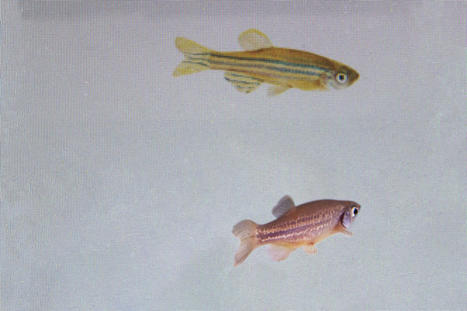
A new study led by researchers from the Instituto Gulbenkian de Ciência in Portugal has provided evidence of the chemical mechanisms behind the spreading of fear among zebrafish, hinting that human empathy could have originated in our aquatic ancestors hundreds of millions of years ago.
Seeing other members of a social group react in fear is handy for anticipating danger. With numerous eyes keeping watch, you have a better chance of getting out alive if you can detect another's panic at a glance.
#EmpathyCircles: A highly effective #Empathy building practice. http://EmpathyCircle.com #EmpathyTraining: http://BestEmpathyTraining.com
Science X’s Department of Biology recently conducted a study alongside Agroscope and ETH Zurich (two Swiss institutions), in which researchers looked for “traces of a so-called common emotional system among mammals.”
#EmpathyCircles: A highly effective #Empathy building practice. http://EmpathyCircle.com #EmpathyTraining: http://BestEmpathyTraining.com
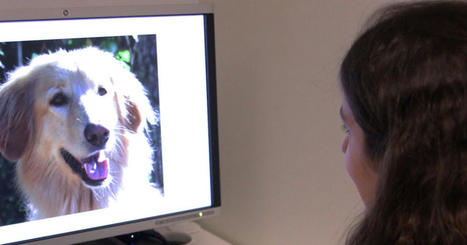
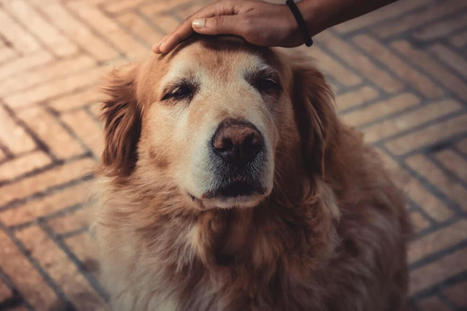
The beauty is in the eye of beholder. Empathic humans evaluate both dog and human facial expressions quicker and as more intense than less empathic humans. (Image: Miiamaaria Kujala ja Sanni Somppi) A study by the University of Helsinki and Aalto University explored how empathy and other psychological factors affect people’s assessments of the facial images of dogs and humans.
The results show for the first time that human empathy, or the ability to share someone else’s feelings or experiences, also affects perceptions of the facial expressions of pet dogs.
“Empathy affected assessments of dogs’ facial expressions even more than previous experience of dogs, probably because the face is a biologically important stimulus for humans. Our earlier studies have showed, however, that when considering the entire body language of dogs, previous experience of dogs increases in importance,” explains postdoctoral researcher Miiamaaria Kujala.
Empathy for animals is an important research area for conservation groups. Aquariums, zoos, sanctuaries and other nature centers strive to build a connection between visitors and the animals on location that might extend to empathy for those in the wild.
Social scientists identify various types of empathy that translate to different real-life scenarios. Affective empathy, for example, is the ability to feel the perceived emotions or feelings of others, while cognitive empathy involves understanding the experiences of others and imagining their reality. Both affective and cognitive empathy are considered distinct neurological processes.
Empathic concern, on the other hand, is the motivation to end another’s suffering. Neuroscientists say empathic concern is supported by several regions of the brain associated with social attachment and caregiving — the ventral tegmental area, caudate nucleus and subgenual anterior cingulate cortex. Empathic concern sparks action, and can be motivated by either negative or positive stimuli.
Empathy for animals is an important research area for conservation groups. Aquariums, zoos, sanctuaries and other nature centers strive to build a connection between visitors and the animals on location that might extend to empathy for those in the wild.
Social scientists identify various types of empathy that translate to different real-life scenarios. Affective empathy, for example, is the ability to feel the perceived emotions or feelings of others, while cognitive empathy involves understanding the experiences of others and imagining their reality. Both affective and cognitive empathy are considered distinct neurological processes.
Empathic concern, on the other hand, is the motivation to end another’s suffering. Neuroscientists say empathic concern is supported by several regions of the brain associated with social attachment and caregiving — the ventral tegmental area, caudate nucleus and subgenual anterior cingulate cortex. Empathic concern sparks action, and can be motivated by either negative or positive stimuli.
Biologist and primatologist Frans de Waal reminds us that empathy is not uniquely human—it’s a mammalian trait.
Empathy is the emotional bridge that binds us—not only to each other but to the animals we care for. And it’s this very quality that forms the roots of human morality.
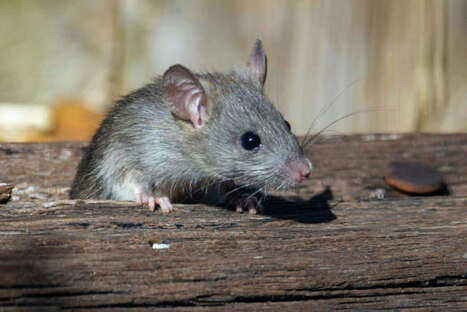
To further test the boundaries of rat empathy, researchers designed experiments pitting altruism against self-interest. In one particularly revealing study, rats were given a choice: they could either eat chocolate all by themselves or free a distressed companion and share the chocolate.
Consistently, rats chose to free their companions first and then share the treats. This behavior persisted even when researchers modified the experiment to make helping more "costly"—requiring more effort or resulting in less reward for the helper.
The rats' willingness to sacrifice immediate gratification to aid others challenges long-held assumptions about animal behavior being driven purely by self-interest. Some rats even demonstrated what appeared to be consolation behavior, staying close to the previously trapped rat and engaging in increased physical contact, similar to how humans might comfort someone in distress. These findings suggest that prosocial behavior—actions benefiting others—may be more deeply rooted in mammalian evolution than previously thought.
By Sanjana Gajbhiye Earth.com staff writer Empathy is often seen as a defining human trait, woven into the fabric of our societies. It helps people cooperate, build friendships, and resolve conflicts. But empathy is not unique to humans. Across the animal kingdom, from elephants to the bonobos, behaviors hint at emotional connections that transcend species boundaries.
Dewacasino mempunyai permainan casino online yang menyediakan permainan yang digemari antaranya Baccarat, Blackjack, Roulette, Sic Bo, BURUAN DAFTAR SEKARANG !
Creating and sharing effective practices to foster empathy for animals and people.
The ACE for Wildlife™ Network provides a variety of ways for its participants to share and learn about promoting empathy for animals and people, including events, resource libraries, and more. Discover how we can help you make a difference in conservation.
Over the past four years, I’ve interviewed nearly 200 guests on my podcast to discuss the power of empathy - between humans. This week’s episode took me in a new direction.
Lori Gruen, PhD is a philosopher, ecofeminist, and leading voice in critical animal studies at Wesleyan University. Her groundbreaking work invites us to reconsider our relationships with the “more-than-human” world and advocates for a radical transformation in how we interact with animals.
In her book, Entangled Empathy: An Alternative Ethic for Our Relationships with Animals, she argues that “rather than focusing on animal rights, we ought to work to make our relationships with animals right by empathetically responding to their needs, interests, desires, vulnerabilities, hopes, and unique perspectives.”
James Cook University researchers investigating men's empathy towards animals have found higher levels in men who own pets versus farmers and non-pet owners. The study is published in Animal Welfare.
Dr. Jessica Oliva is a senior lecturer in psychology at JCU. She said it was well established that women felt more animal empathy (AE) than men.
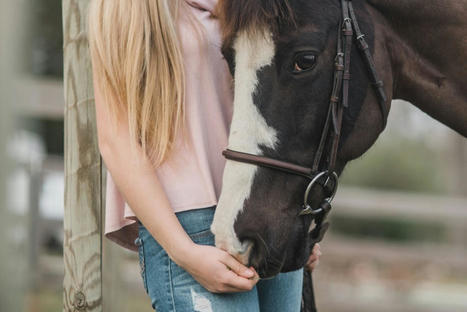
That’s why equine-assisted therapy and coaching can have a transformative impact on individuals. Outcomes include: overcoming trauma and PTSD, enhancing self-esteem, strengthening interpersonal relationships, improving communication and leadership skills, and empowering people to make healthier decisions for balance and well-being in their lives.
Equine coaching has also been shown to invoke the same psycho-physiological state as when we're on the receiving end of compassion, kindness or empathy from others. Equine-assisted services are also revolutionizing physical therapy, psychotherapy, and trauma treatment. Ultimately, the presence of horses can contribute significantly to an individual’s mental health and quality of life.
#EmpathyCircles: A highly effective #Empathy building practice. http://EmpathyCircle.com #EmpathyTraining: http://BestEmpathyTraining.com
“The most basic form of empathy is contagious fear – that’s a very valuable thing to have to stay alive, if any member of your group spots a predator or some other danger.”
#EmpathyCircles: A highly effective #Empathy building practice. http://EmpathyCircle.com #EmpathyTraining: http://BestEmpathyTraining.com
A study led by ethologist Elodie Briefer from the University of Copenhagen in Denmark found that people who had higher empathy scores were better at identifying animal emotions from sound alone.
The study follows a similar investigation published by Briefer earlier this year, which supported speculations that animals hear and respond to the emotion in our own voices.
Briefer and her team collected recordings of vocalizations from domestic animals (including pigs, horses, goats and cattle) and wild animals (including wild boars and wild Przewalski's horses).
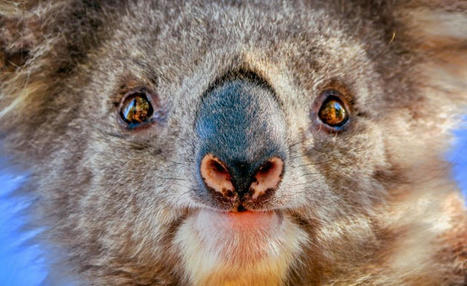
The researchers found that when people had to choose between empathizing with a human stranger or an animal—in this case, a koala bear—participants were more likely to choose empathizing with a fellow human.
In a second pair of studies, however, the researchers had participants take part in two separate tasks: one in which they could choose whether or not they wanted to empathize with a person, and one in which they could choose whether or not they wanted to empathize with an animal.
What can we do? One solution, my research team has found, is empathy. After teachers completed a 30-minute empathy exercise, their students (especially those from stigmatized groups) were less likely to get suspended for years.
Here’s how you, too, can develop an empathic mindset.
First, think about why you care about young people. If you’re an educator, remember why you chose to work with children in the first place—to help them learn and grow and become their best possible selves, especially kids who may not receive as much care and support as others do.
Who are people more likely to empathize with, an innocent animal or another human being? Although you might think people tend to gravitate towards lovable animals, researchers from Penn State say context matters when multiple things are pulling at our heartstrings.
One experiment found that when people have to choose between empathizing with a stranger or an animal (a koala bear), they’re actually more likely to empathize with the human. However, a second experiment asked people to participate in two separate tasks. During the first task, participants could choose whether or not to empathize with a person, while the second task asked them if they wanted to empathize with an animal. This time around, people were much more likely to show empathy towards animals over other humans.
To get content containing either thought or leadership enter:
To get content containing both thought and leadership enter:
To get content containing the expression thought leadership enter:
You can enter several keywords and you can refine them whenever you want. Our suggestion engine uses more signals but entering a few keywords here will rapidly give you great content to curate.


 Your new post is loading...
































https://cialisprezzo.com https://steroidify.shop/ https://coldfirecartss.com/