SophiaTX and parent company Equidato Technologies have joined forces with KITA Logistics to design and develop a blockchain solution for pharmaceutical logistics and transport. The partnership intend to facilitate a holistic ‘track and trace’ solution for the transportations of products and medicines, that enables multi-party collaboration across value chains.
Industry 4.0′ stands for the fourth industrial revolution. The rise of new digital industrial technology is referred to Industry 4.0. Industry 4.0 is the grouping of numerous major innovations in digital technology. These technologies include Industrial Robotics, Cyber Security, Internet of Things (IoT), 3D Printing, Advanced Human–Machine Interface (HMI), Big Data, Augmented Reality & Virtual Reality, Artificial Intelligence. However, lack of cost-benefit analysis and a shortage of skilled workforce are key factors limiting the growth of this market.
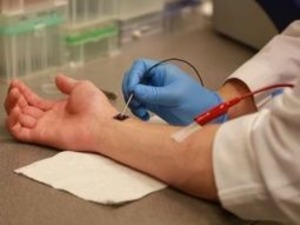
“In the mid-2000s, Myanmar saw between 500,000 and 600,000 cases of malaria every year. So it wasn’t surprising when, in February 2005, a 23-year-old man in Myanmar came down with a fever, nausea, chills and a headache so severe he had to be taken to the local hospital. His doctors quickly determined he was, in fact, stricken with malaria. They prescribed him artesunate, an inexpensive anti-malarial regularly used by Myanmar’s health care professionals to treat the infectious disease.
The process of Nano Medical Device Industry is analysed thoroughly with respect three points, viz. raw material and equipment suppliers, various manufacturing associated costs (material cost, labour cost, etc.) and the actual process.
Intelligent Packaging by Stora Enso drives digital transformation by providing real-time connectivity to retail, packaged products and delivery operations. It allows data capture, service integration and vast advantages in customer communications. End user sees this as improved customer experience, while companies benefit from better control, leaner operations and sales acceleration.
Supported by mass adoption in industries including retail, where clothing manufacturers such as Zara and Macy's are placing RAIN tags in garment labels, thus enabling the tracking of the item from the manufacturer to distributor to retail store and eventually to the rack on the sales floor; and transportation, where airlines are enabling luggage tracking thus reducing the incidences of lost luggage; RFID has crossed the threshold from a developing technology into one with established standards and best practices, setting the stage for inter-operability, collaboration and tremendous growth.
The BlockRx Pharma Ecosystem ties together five subsystems which are involved in the pharmaceutical supply chain: Manufacturers, Distributors, Clinical Trials, Patients, and Regulators. The diagram below shows how the subsystems interact with each other through the Blockchain and ADLT™.
Anti-counterfeit pharmaceutical packaging has comparatively high demand, attributed to increasing demand for safe packaging to combat the illicit drug market. The Mass Encoding Technology segment [was] estimated to account for a market share of 32.2% in the global anti-counterfeit pharmaceutical packaging market by 2016 end and is expected to witness a further rise of 40 basis points to account for 32.4% by 2026.
Procrastination is human nature. All of us hem, haw, and actively avoid responsibilities at times. This is especially true for things we are told to do, rather than those we choose to do. And when there’s plenty of time to do something, it’s easy to justify putting it off another day.
Ever since Congress enacted the Drug Supply Chain Security Act in 2013, the pharmaceutical industry has been preparing to adopt an interoperable system by 2023.
Some millennia ago, an enterprising soul affixed a mark to his clay pots, and branded consumer goods were born. A day later, a rival potter copied the mark, launching the counterfeit products industry.
Smart manufacturing and the IoT is driving the next industrial revolution. Manufacturing is on the cusp of a revolution – the Internet of Things (IoT) revolution! In 2016, IDC estimates the manufacturing segment invested $178 billion(€152.89 billion) in IoT spending, twice as much as the transportation segment, the second largest IoT vertical market.
Businesses have been focusing on the Internet of Things as an enabler of growth and increased operational efficiency, as well as the means to provide a better experience to customers and partners, according to the State of the Market: Internet of Things 2017 report Verizon released this week.
The counterfeit drug market is growing rapidly, and Deloitte accountants currently value it between $75 billion to $200 billion according to data culled from Pharmaceutical & Medical Devices Trends & Opportunities in Packaging Operations.
Organizations that place purchase orders (PO) for their suppliers or manufacturers have a very real need to make sure that the product arrives at the intended destination on the date that it was requested and promised. Scheduling receiving resources and ability to meet customer demand, all rely on the product getting to the warehouse when it was scheduled to be there.
Most organizations deal with the shipment of goods in to and out of their premises. With the increasing demand for a better customer experience it is a challenge to provide a high level of customer service when parts of your supply chain fall somewhat out of your “sphere of influence”.
The question of who can host the data generated when serialized pharmaceutical packs move through the supply chain in the US has just become a legal one. In one corner is serialization and supply chain network provider TraceLink, and in the other the Healthcare Distribution Alliance (HDA), which represents wholesalers and distributors of medicinal products in the US.
For the pharmaceutical industry, the cost of developing new and innovative therapies will continue to rise (the cost of developing a drug is now estimated to be between $1.5 billion to more than $1.8 billion1).
What is blockchain? For those not in the know, think of it as a digital record, much like a traditional ledger but encrypted to a level not even Robert Langdon of The Da Vinci Code fame could solve. Data is entered and shared with other computers in the network. It is time stamped and filed with other transactions until a block is complete (think of your traditional archiving box and archive room but in a virtual environment), and then linked to a chain. The blockchain is transparent, so everyone on the network has an up-to-date version and can see if any data is being tampered with.
Manufacturers, wholesalers, re-packagers and pharmacies have been required to implement lot-level management since 2015. Starting in November 2017, phase II of the DSCSA implementation requires manufacturers and re-packagers to serialize packages of drug products using a GS1 product identifier (either GTIN or NDC), serial number, lot number and expiration date, and embed this information into a 2D Datamatrix barcode. In November 2019, wholesalers must accept only serialized products and must verify unique product identifiers. By November 2020, pharmacists must meet the same requirements. Lastly, by November 2023, all information will be required to be made available that would allow supply chain partners to trace the ownership back to the initial manufacturer or re-packager.
If you look at some of the largest companies in the world - Apple, Walmart, Amazon - supply chain technology is core to their business, and to their success. They have near-total visibility into all aspects of their chain, from manufacturing to final delivery. Do you?
In the context of Industry 4.0, industry expectations are high; especially in the field of manufacturing processes. Fast innovations with immediate ROI are in high demand. In reality, the picture is more diverse. To make your project a success many obstacles need to be overcome. Sustainable success requires careful planning and also structural changes.
What is a blockchain? fintec.gifBlockchain is a transparent, open distributed ledger system that can keep track of financial, data, and material transactions.
In an age where millennials are constantly checking the tag for the right size and price, they’re also looking for a values match; high-quality, sustainable items that match their budget, as well as where it came from and how it was made.
3D printing on glass is a cutting-edge development in the field of customizable glass products. From panels, windows, to fiction control floors, the possibilities of 3D printing directly to glass is endless. To learn more about digital decorative glass, visit the resources below!
BEEYOND is a consulting company in the field of disruptive innovation, accompanying established companies on out-of-the-core growth strategy, from creation of new concepts to product launch. Reach us at: contact@beeyond.fr.
To get content containing either thought or leadership enter:
To get content containing both thought and leadership enter:
To get content containing the expression thought leadership enter:
You can enter several keywords and you can refine them whenever you want. Our suggestion engine uses more signals but entering a few keywords here will rapidly give you great content to curate.

 Your new post is loading...