Under the MOU, Applied DNA and Everledger will collaboratively integrate their respective technology platforms and pursue various market opportunities, including leather. The two companies have identified several prospects for the combined platform and are actively developing the system for the demonstration of tagging and in-field authentication data posting to the digital transactions, thereby reinforcing molecular certification with immutable transactions.
NeuroTags is the one-stop solution for counterfeits and fake. It can save customers from buying the fake product by scanning the tag placed on the product which also gives them referral and loyalty points. These points can then be used for getting discounts on further purchases.
La forte médiatisation et la multiplication des usages et des projets autour des registres distribués de la blockchain nous feraient presque oublier que celle-ci n’est pas universelle, et qu'elle présente des limites.
Imagine a world where you could sell your medical information to a drug company on your terms for a specific purpose like a drug trial. Then imagine you could restrict the company from using that data for anything else, including selling it to other medical data brokers, and enforcing those ownership rules on the blockchain.
“I think government officials responsible for collecting tax stamp revenue in every country will sit up and take notice of what Verity is doing, and this may cause them to get warmer and friendlier with the crypto community. In the future, as more federal and state revenues are collected using Distributed Ledger Technology, I think governments will fall in love with the Blockchain. This Verity contract is a big win for the whole crypto community,” said Alex Lightman, Chief Legitimacy Officer at Verity and author of ‘Brave New Unwired World’, the first book on 4G Wireless.
For pharmaceutical manufacturers, counterfeit drugs pose a financial risk, as they eat away market share for the real medications. The new identifiers will help drug distributors distinguish between authentic drugs and fakes. While there is a definite benefit for both pharma and patients from using the identifiers, their use will introduce integration complexity and cost. Particularly for smaller companies, including generic drug manufacturers and contract manufacturing organizations, whose margins are extremely tight, traceability initiatives will be a challenge.
As blockchain gains traction amongst businesses, many tech-savvy retailers and consumer-facing businesses are scrambling to find the benefits. However, as with most early stage technologies, the hype around the technology is blurring what is important. Before jumping in with two feet and investing heavily in blockchain, business leaders need to consider the fundamentals: what is blockchain and how can it benefit my existing business strategy?
The 2017 ‘Made Smarter Review’ outlined a roadmap for Britain to lead the world in a new industrial revolution that promises to transform society and industry. The ambitious review, based on consultations with leading universities and industrial leaders, proposed creating innovation hubs and a national organisation tasked with turning Britain into a global Industry 4.0 brand. The Government’s Industrial Strategy also announced the creation of an industry-led AI Council to support rapid adoption of Artificial Intelligence in industries including manufacturing.
Digitization will require significant investment but will pay off in protection from counterfeits, cheaper recalls and improved production and inventory management.
Track and Trace—Enhanced transparency for global supply chains with near real-time track and trace along a digital chain of custody, enabling all stakeholders to manage goods on a shared ledger from registration to delivery of finished products.
Given the fact that half of a company's costs lie in the supply chain or cost of goods sold (COGS), reducing supply chain costs is a major focus. They achieve three to four percent in category reductions year after year, yet, most never make a sustainable bottom line impact on COGS that would foster true competitive agility.
Blockchain is a distributed (decentralized) digital network that enables the exchange of value or the ability to confidently share data—including financial assets and contracts—in a secure and trusted environment. By design, blockchain builds trust into every transaction and shared data source, enabling greater security, better transparency and tracking, and optimized reconciliation processes.1
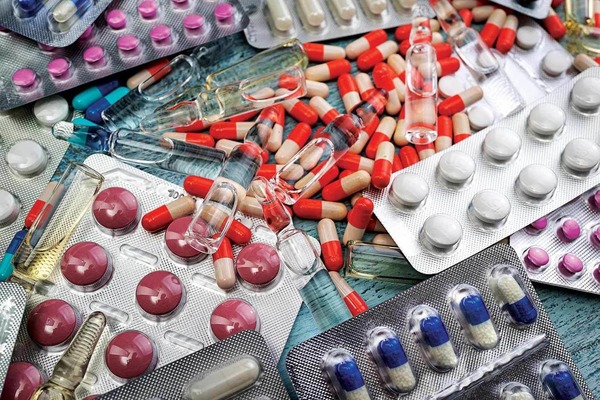
According to the CDC, about 1% of the drugs sold in industrialized nations, such as the United States and European countries, is fake. But in developing countries, it’s estimated to be as high as 30%. The World Health Organization (WHO) found that over 50% of the prescription medicines bought from illegal sites was counterfeit.
Multinational pharmaceutical companies have for decades manufactured drugs for global distribution. Nevertheless, the task of labeling is becoming increasingly difficult and time-consuming. With new labeling requirements that can vary by country and region, drug companies are forced to either develop systems themselves to accommodate global requirements or to outsource labeling and packaging to specialists.
DHL Supply Chain, a of Deutsche Post DHL Group, recently announced the availability of its latest customer technology platform, MySupplyChainExternal Link / New Window. The secure and easy-to-use platform integrates data from DHL Supply Chain applications, providing customers with complete supply chain visibility, accessible online anytime, anywhere, through a single login. MySupplyChain will be available to applicable customers in North America in June, with further regional rollouts to follow.
Machine learning makes it possible to discover patterns in supply chain data by relying on algorithms that quickly pinpoint the most influential factors to a supply networks’ success, while constantly learning in the process.
Supply chain risks typically fall into two main categories, unplanned events and brand reputation damage. Unplanned events like natural disasters are difficult to prevent, but a supply chain management tool can identify and automate responses and keep your goods moving on time
Industrial IoT solutions are transforming manufacturing and processing around the world. Track-and-trace of hand-held tools, flexible operator workstations, material handling with Automated Guided Vehicles (AGVs), and drones for testing and surveillance—these wireless solutions are helping users overcome long-standing operational challenges.
With a digital foundation in place, companies can capture, analyze, integrate, easily access, and interpret high quality, real-time data — data that fuels process automation, predictive analytics, artificial intelligence, and robotics, the technologies that will soon take over supply chain management. Leading companies are already exploring the possibilities. Many have used robotics or artificial intelligence to digitize and automate labor-intensive, repetitive tasks and processes such as purchasing, invoicing, accounts payable, and parts of customer service. Predictive analytics are helping companies improve demand forecasting, so they can reduce or better manage volatility, increase asset utilization, and provide customer convenience at optimized cost.
According to a recent PWC report, up to 30% of all drugs in circulation are fake, leading to around a million deaths annually, including 450,000, preventable deaths from malaria alone. Tragically, unjustly, the counterfeit drugs industry has to a degree, been able to go unchallenged and is now said to be worth $200 Billion pa. Whilst some of those 450,000 deaths can be attributed directly to the toxic ingredients (such as rat poison, floor wax, industrial chemicals and the like) used to produce counterfeit drugs.
We’ve already looked at the emerging applications of RFID technology which effectively combat the endless flow of international product counterfeiting—from foreign-made “knockoffs” of trusted luxury brand merchandise to the potentially lethal importation of counterfeit prescription drugs. Today we’d like to delve deeper into the technical aspects of how the advanced miniaturization of RFID tags themselves make them an extremely valuable tool for delivering tamper-proof product authentication—and consumer peace-of-mind.
Machine learning makes it possible to discover patterns in supply chain data by relying on algorithms that quickly pinpoint the most influential factors to a supply networks’ success, while constantly learning in the process.
“Too many services are ‘me too’ services, where you just copy-cat what others are doing,” Dr. Ulaga said, right off the bat. “Then you get into this negative spiral of not having a clear, differentiated offer, which leaves you with one remaining differentiator – price.”
When blockchain first started to capture global attention, everyone predicted it would take the world by storm, disrupting major industries starting with finance. Since then, we’ve come to realize that progress has been slower than we initially anticipated, not to say there hasn’t been any.
This also raises the question of data ownership and sharing. In his key note Mr. Bob Carpenter, the President and CEO of GS1 USA, explained how everything will be connected, and how for businesses protecting the product identity is equally important as protecting our personal identity.
BEEYOND is a consulting company in the field of disruptive innovation, accompanying established companies on out-of-the-core growth strategy, from creation of new concepts to product launch. Reach us at: contact@beeyond.fr.
To get content containing either thought or leadership enter:
To get content containing both thought and leadership enter:
To get content containing the expression thought leadership enter:
You can enter several keywords and you can refine them whenever you want. Our suggestion engine uses more signals but entering a few keywords here will rapidly give you great content to curate.

 Your new post is loading...