

Control Medical Technology has announced that the US Food and Drug Administration (FDA) has cleared its Aspire MAX 7 – 11F mechanical thrombectomy platform to remove blood clots from peripheral vessels.

 Your new post is loading...
 Scoop.it! Control Medical Technology has announced that the US Food and Drug Administration (FDA) has cleared its Aspire MAX 7 – 11F mechanical thrombectomy platform to remove blood clots from peripheral vessels. 
No comment yet.
Sign up to comment
Scoop.it!

My head exploded on the same day Luke Perry had a fatal stroke, at the exact moment that Rep. Elijah Cummings was making his closing comments after Michael Cohen’s testimony before the Oversight committee. I don’t mean that in an entirely figurative way. One minute, I was typing and clipping and monitoring the hearing, and the next I felt like I had left my body and was looking down on myself. Thinking perhaps there was a carbon monoxide problem, I ran upstairs, opened the windows, and turned to check on Violet who was asleep on the bed.
Scoop.it!

Perflow Medical has announced the first successful clinical use of its Stream17 Dynamic Neurothrombectomy Net—a lower profile device designed to effectively treat haemorrhagic and ischaemic stroke patients with more tortuous anatomies. The first clinical procedures using the device were completed by Kārlis Kupčs, head of radiology at Pauls Stradiņš Clinical University Hospital in Riga, Latvia.
Scoop.it!

From
www

Could a difference in stroke symptoms cause individuals, particularly women, to ignore their stroke symptoms? Although most people are familiar with the symptoms noted in the acronym F.A.S.T., there are other important symptoms to recognize. What’s more, men and women may experience stroke symptoms differently.
Scoop.it!

Sheth set out with Luca Giancardo, PhD, assistant professor with the Center for Precision Health at UTHealth School of Biomedical Informatics, to develop a quicker way to assess patients. The result was a novel deep neural network architecture that leverages brain symmetry. Using CTAs (CT Angiography), which are more widely available, the system can determine the presence or absence of a large vessel occlusion and whether the amount of “at-risk” tissue is above or below the thresholds seen in those patients who benefitted from EST in the clinical trials.
Scoop.it!

Millipede 088 has a 0.088 in. inner diameter with a distal tip surface area increase of up to 50% over existing devices with an equivalent increase in aspiration power and distal flow control that could prevent distal emboli, according to the company. “Our super bore aspiration technology has the potential to increase the rate of first-pass TICI 3 thrombectomies while saving time, both of which may translate into better clinical outcomes for stroke patients,” CEO Wayne Allen said.
Scoop.it!

In both abdominal aorta and iliac artery of porcine, cBRS was entirely endothelialized within 1 month and maintained target vessels with good patency in the 12-month follow-up. The in vivo degradation profile of the cBRS is consistent with static degradation results in vitro. It is also demonstrated that there is minimal impact of pulsatile pressure of blood flow and variation of radial force on the degradation rate of the cBRS. Moreover, the lumen of cBRS implanted vessels were enlarged after 6 months, and significantly larger than the vessels implanted with metallic stent in 12 months.
Scoop.it!

From
www
Study demonstrates the effectiveness of non-contrast resting-state functional MRI
Scoop.it!

Prolonged episodes of intraprocedural MAP lowering were more likely to have poor outcomes in LVO patients following MT with general anesthesia, which might be helpful in guiding intraprocedural hemodynamic management of patients under general anesthesia.
Scoop.it!

Evaluation of preoperative clopidogrel response in addition to clinical variables improves the prediction accuracy of thromboembolic event occurrence during/after coil embolization of unruptured intracranial aneurysm.
Scoop.it!
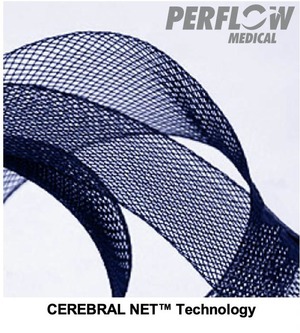
Perflow Medical, a private, Israeli-based innovator for neurovascular treatments, today announced the first successful clinical use of the Stream™17 Dynamic Neuro-Thrombectomy Net, a lower profile device designed for more tortuous anatomy, to effectively treat hemorrhagic and ischemic stroke patients. Built on the proprietary CEREBRAL NET™ technology, the Stream17 device is the latest product portfolio addition that also includes the recently commercialized Cascade™17 Dynamic Non-Occlusive Remodeling Net for coil embolization of intracranial aneurysms. These low-profile product offerings further expand the range of brain vessels that can now be treated with Perflow’s unique CEREBRAL NET technology. The first clinical procedures were successfully completed by Prof. Karlis Kupcs, head of Radiology at the Pauls Stradins Clinical University Hospital in Riga, Latvia.
Scoop.it!

Both devices had similar efficacy and caused minimal arterial wall damage in our dog models. SR was more likely to cause endothelium denudation, while CA had a greater risk of vasospasm.
Scoop.it!

Viz.ai: The company’s software cross-references CT images of a patient’s brain with its database of scans and can alert specialists in minutes to early signs of large vessel occlusion strokes that they may have otherwise missed or taken too long to spot.
Scoop.it!

The first‐pass reperfusion was associated with a trend toward favorable clinical outcome and lower rates of ICH. These data suggest that the first‐pass effect should be the mechanical thrombectomy procedure goal.
Scoop.it!

For millennia, humans were powerless to do anything about a stroke. Indeed, effective treatments didn’t emerge until the 1990s. Discover how rapid advances over recent decades have transformed the diagnosis and treatment of strokes.
Scoop.it!

A study published in the journal Neurology concludes that despite the reported stroke-related complications of COVID-19, there has been a global decline in the volume of stroke hospitalisations, the administration of intravenous thrombolysis (IVT), and inter-facility IVT transfers between primary and comprehensive stroke centres. Additionally, researchers report medical centres with higher COVID-19 inpatient volumes experienced steeper declines.
Scoop.it!

Oxford Endovascular has announced that it has raised US$10 million in a series A funding round for the development of its OxiFlow micro stent, an “origami” engineered medical device intended for the prevention of brain haemorrhage. According to the company, the OxiFlow is a minimally invasive device inserted via the groin access. It lies across the base of the aneurysm and causes it to shrink and heal. Spun out of the University of Oxford and developed by professors of neuroradiology and engineering, this novel, next-generation flow-diverter can be placed more accurately and safely than existing treatments, reducing the risk of complications and having to use multiple devices, Oxford Endovascular claims.
Scoop.it!

The significant independent risk factors associated with clipping OphA aneurysms are age (>60) and size (>10mm).
Scoop.it!

In a late-breaking presentation given on the final day of the International Stroke Conference (ISC) virtual meeting (17–19 March), researchers presented a “promising” new thrombectomy device that is reported to achieve a successful reperfusion in 84.6% of patients. Jeffrey Saver (University of California, Los Angeles, Los Angeles, USA) and Rishi Gupta (Wellstar Health System, Marietta, USA) presented their findings from the TIGER (Treatment with the intent to generate endovascular reperfusion) trial.
Scoop.it!

Four current stroke studies show the benefits of mechanical therapy in stroke – not only in terms of increased quality of life for the patients but also in terms of cost efficiency.
Scoop.it!

A literature review of recent studies describing early treatment options like intravenous tissue plasminogen activator to the latest mechanical thrombectomy (MT) techniques was performed. We described in a chronological order the evolution of LVO treatment.
Scoop.it!

NovaSignal has announced the launch of the NovaGuide 2 platform, which provides clinical teams with real-time information about cerebral blood flow to guide diagnosis and improve patient outcomes. According to a company press release, NovaGuide 2 is designed to seamlessly integrate into existing clinical practice, including intelligent ultrasound which autonomously captures blood flow data to identify brain illnesses and disease.
Scoop.it!

To the casual observer, the rapid adoption of radial access in the field of neurointervention may seem to have materialised out
Scoop.it!

Every year, more than 795,000 people in the United States have a stroke. Of these, approximately 80% lose arm function and as many as 50-60% of this population still experience problems six months later. Traditionally, stroke patients try to regain motor function through physical rehabilitation, where patients re-learn pre-stroke skills, such as eating motions and grasping. However, most patients eventually plateau and stop improving over time. Now, results of a clinical trial published in The Lancet gives patients new hope in their recovery.
Scoop.it!
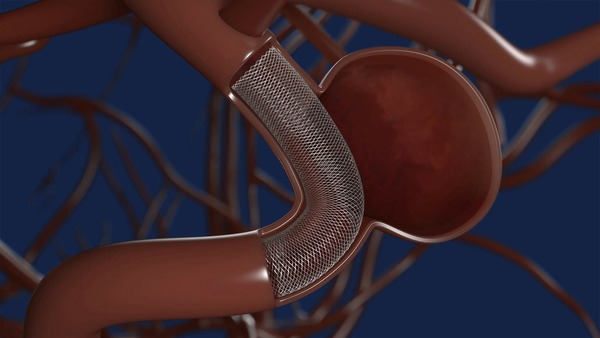
Medtronic’s Shield Technology was developed to advance flow diversion therapy by introducing a surface-modified implant device to reduce thrombogenicity of the device material.
|

Curated by Beeyond
BEEYOND is a consulting company in the field of disruptive innovation, accompanying established companies on out-of-the-core growth strategy, from creation of new concepts to product launch. Reach us at: contact@beeyond.fr.
Other Topics

#dotdot, the community internet

Aidants

Aston-Martin

Augmented & Virtual Reality

Blue Ocean Strategy

Brain Computer Interfaces & connected medical devices

Consumer Digital Health

Covid-19, SARS-Cov-2, vaccines, Remdesivir, Chloroquine...and all that Jazz

Critical Limb-Threatening Ischemia (CLTI)

Daily realities of diabetic patients

Fashion & technology
Healthcare: reloaded...

High level trending in...

In-Vitro Diagnostic

Innovating to what's next...

Instrumental cosmetics
Interventional Cardiology

Intra-Dermal drug delivery: Opportunities and Challenges?

Local delivery for Gene Directed Enzyme Prodrug Therapy
Engineered MSCs with suicide genes delivered intra-arterially to treat various cancers. Local delivery bypasses homing issues that plagued prior GDEPT programs.

Metabolic Activation Therapy

Neurovascular Intervention

Nudges

Peritoneal dialysis

Sclérose en Plaques

Solid tumors: latest on treaments and research pathways
glioblastoma, craniopharyngioma...

Tailored Expertise Sourcing & Market Intelligence in Global Consulting

The future of e-cigarette

The Revolution Of The Car Industry

Track & Trace

Transcatheter Treatment of Mitral Regurgitation
|




