


Results from this case series investigating flow-diverter placement for recurrent aneurysms after stent-assisted coiling suggested that the procedure is safe and effective. Further study in a larger population may be warranted.

 Your new post is loading...
 Scoop.it! Results from this case series investigating flow-diverter placement for recurrent aneurysms after stent-assisted coiling suggested that the procedure is safe and effective. Further study in a larger population may be warranted. 
No comment yet.
Sign up to comment
Scoop.it!

A systems-based approach aimed at improving the process of care in the prehospital setting may result in the reduction of treatment delays and potentially improve clinical outcomes. In this article, we present an overview of the current prehospital acute stroke pathway. Areas to reduce treatment delays are identified and optimisations to the prehospital workflow addressing the identified gaps in acute stroke settings are proposed. Improving process and system gaps would translate to improved post-stroke outcomes following reperfusion therapy.
Scoop.it!

For this we access with a minimal incision in the femoral artery, and, by catheterization, we reach the affected cerebral artery to remove the thrombus with extraction devices, said Dr. Arul, Consultant from the Stroke Unit of Rela hospital.After the procedure, the patient was managed in the multidisciplinary Intensive Care Unit under the guidance of Dr. Shubha Subramanian, a neurologist, and a team of intensivist led by Dr. Sathya.
Scoop.it!

The risk of epilepsy after ischemic stroke in children is increased, especially after perinatal ischemic stroke. The risk of epilepsy was highest during the first 6 months but remained elevated even 20 years after stroke which should be taken into account in future planning for children affected by stroke.
Scoop.it!

Penumbra’s Indigo Aspiration System can be used to remove emboli and thrombi from vessels of the peripheral arterial and venous systems, and for treatment of pulmonary embolism. A minimally-invasive device, Indigo enables the restoration of blood flow in such cases as acute limb ischemia and venous thrombus. The Indigo System utilizes the Penumbra ENGINE® aspiration source capable of delivering nearly pure, continuous vacuum (-29 inHg or 98.2 kPa) to our catheters, enabling thrombus removal in vessels of various sizes.
Scoop.it!

Cardiovascular Systems, Inc. (CSI ® ) (CSII) - Get Cardiovascular Systems, Inc. Report, a medical device company developing and commercializing innovative interventional treatment systems for patients with peripheral and coronary artery disease, announced today the start of enrollment in a first in-human trial of the coronary everolimus drug-coated balloon (DCB) being developed by Chansu Vascular Technologies, LLC (CVT).
Scoop.it!

“冠脉雷帕霉素药物球囊导管是一款采用独特的无涂层技术、无聚合物/辅料设计的药物球囊导管,组织浓度可维持在28天以上,输送时间可长达15分钟,对患者而言,可避免聚合物导致冠脉病变局部炎症反应的可能性,对医生而言,长输送时间有助于医生在术中从容操作。”
Scoop.it!
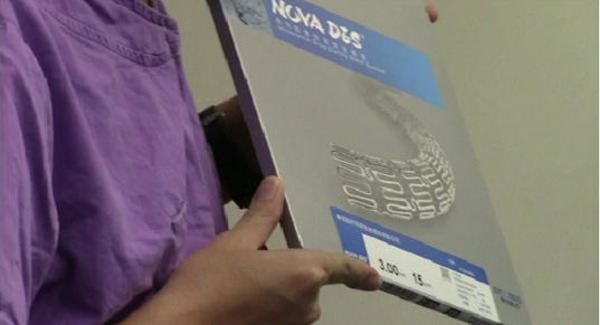
Intracranial drug stent deliverability and passability are good, posterior circulation generally does not require intermediate catheter assistance, stainless steel stent development is weaker than self-expanding stent with more development points, preoperative accurate positioning based on balloon mark points at both ends of the stent is required. For the V4 segment site, it is best to pre-expand the score first and then perform drug stent shaping to prevent the stent from retracting and shifting afterwards. The pressure during stent expansion and shaping is not great, and there is no difference with the previous intracranial balloon expansion stent use. The expectation is that late drug coating will reduce restenosis.
Scoop.it!

This study demonstrated that human placenta mesenchymal stem cell (hPMSC)-derived angiotensin converting enzyme-2 (ACE-2) is required to protect against progressive loss of cerebral blood perfusion following ischemic stroke. This effect is also mediated through vascular endothelial Mas receptor but not angiotensin type-2 receptor. Consequently, the results of the authors' experimental stroke studies with human derived stem cells describe new paracrine function of hPMSC in which ACE2 and Mas receptor are critical, therefore, providing a novel therapeutic strategy for stroke in near future.
Scoop.it!

NeuroVasc Technologies has announced that the first patient has been treated in a pivotal randomised controlled trial (RCT) in China, which will evaluate the safety and efficacy of the ENVI-SR mechanical thrombectomy system (ENVI-SR)—a stent retriever for the removal of blood clots in patients with acute ischaemic stroke due to large vessel occlusion.
Scoop.it!

NeuroVasc Technologies, Inc. today announced that the first patient has been treated in a Chinese Pivotal Randomized Controlled Trial to evaluate the safety and efficacy of the ENVI™-SR Mechanical Thrombectomy System (ENVI™-SR), a stent-retriever for the removal of blood clots in patients with acute ischemic stroke due to large vessel occlusion. The procedure was performed by Dr. Zhaoshuo Li, associate professor of Stroke Center led by professor Li Tianxiao, at the HeNan Province People’s Hospital, China.
Scoop.it!

In the SKIP trial, mechanical thrombectomy alone did not meet noninferiority criteria for favorable functional outcome compared with mechanical thrombectomy plus IV thrombolysis, but in the DEVT trial, it did. However, the SKIP researchers could not conclude inferiority, either.
Scoop.it!

The new device is classified as a flow diverter, with a leaf density of 35%, which is 60% higher than the existing eCLIPs devices. As a result, the new eCLIPs bifurcation flow diverter does not require coiling and provides for the same unique neck bridging delivery. The new eCLIPs bifurcation flow diverter can cover up to a 6mm neck length. The eCLIPs bifurcation flow diverter also simplifies deployment with greatly reduced delivery times.
Scoop.it!

Biomodex, a company specialising in biorealistic haptic simulators for physician training and rehearsals, has announced the launch of Thrombotech—a new, hydrogel-based synthetic clot product that can be used for neurovascular training with the company’s EVIAS Plus training solution for the treatment of ischaemic stroke.
Scoop.it!

Mechanical thrombectomy (MT) for large vessel acute ischemic stroke (AIS) has enabled biologic analyses of resected clots. While clot histology has been well-studied, little is known about gene expression within the tissue, which could shed light on stroke pathophysiology. In this methodological study, we develop a pipeline for obtaining useful RNA from AIS clots.
Scoop.it!

Here is the list of the most popular content on the Diagnostic and Interventional Cardiology (DAIC) magazine website from the month of September 2021. This is based on the website’s 200,902 pageviews for the month.
Scoop.it!

Cigarette smoking is a well-established risk factor for all forms of stroke. While both the general public and the global healthcare system are aware of the vascular risks associated with smoking, the prevalence of tobacco use has remained largely unchanged over the last quarter of a century. Approximately one in five US adults are classified as regular smokers, with the initiation of smoking typically occurring during the teenage years. Although the increased risk of stroke associated with smoking is generally acknowledged, it is less well recognized that considerable scientific evidence implicates a strong dose–response relationship between smoking and stroke risk.
Scoop.it!

Electromagnetic imaging is an emerging technology which promises to provide a mobile, and rapid neuroimaging modality for pre-hospital and bedside evaluation of stroke patients based on the dielectric properties of the tissue. It is now possible due to technological advancements in materials, antennae design and manufacture, rapid portable computing power and network analyses and development of processing algorithms for image reconstruction
Scoop.it!

Information about thrombus and stent length is more valuable when combined. High thrombus length/stent retriever length ratios, which may raise the risk of unsuccessful recanalization and embolization in new territories, should be avoided by adapting stent retriever selection to thrombus length whenever possible.
Scoop.it!

The QuickClear mechanical thrombectomy system is a simple solution that provides an all-in-one, single-use aspiration pump and catheter for peripheral arterial and venous cases. Its powerfully simple design requires no capital equipment, maximizes aspiration power and supports faster set-up and procedure times. Delivering exactly what you need when you need it—that’s powerfully simple.
Scoop.it!

For patients with acute ischemic stroke due to large vessel occlusion, contact aspiration and stent retriever therapy did not improve the rate of near-total or total reperfusion compared with stent retriever alone, concluded new results.
Scoop.it!

Tissue plasminogen activator, also known as tPA, is the lone pharmacological treatment for stroke, and while it is considered to be highly effective, it comes with one important, and often hard-to-meet caveat: it must be administered to the patient within 3-5 hours of stroke onset. Though many other significant efforts have been undertaken to discover and develop new drugs, there have been no new therapeutics approved to treat stroke since tPA was approved in 1996.
Scoop.it!

The catheters are the first designed specifically for use in accessing the neurovasculature by way of the radial artery in the wrist rather than the groin’s femoral artery. The radial artery is now the entry point of choice for cardiologists aiming for the heart’s veins and arteries, after studies have proven this method not only results in less bleeding, fewer complications and a faster recovery time but is also preferred by patients and reduces clinical costs.
Scoop.it!

Most clots retrieved from patients with acute ischemic stroke are ‘red’ in color. ‘White’ clots represent a less common entity and their histological composition is less known. Our aim was to investigate the composition, imaging and procedural characteristics of ‘white’ clots retrieved by mechanical thrombectomy.
Scoop.it!

The term "theranostic nanomaterials" refers to a multifunctional agent with both therapeutic and diagnostic abilities. Theranostic nanoparticles can provide imaging contrast for a diversity of techniques such as magnetic resonance imaging (MRI), positron emission tomography (PET) and computed tomography (CT). In addition, they can treat CVD using photothermal ablation and/or medication by the drugs in nanoparticles. This review discusses the latest advances in theranostic nanomaterials for the diagnosis and treatment of CVDs according to the order of disease development. MRI, CT, near-infrared spectroscopy (NIR), and fluorescence are the most widely used strategies on theranostics for CVDs detection. Different treatment methods for CVDs based on theranostic nanoparticles have also been discussed.
|

Curated by Beeyond
BEEYOND is a consulting company in the field of disruptive innovation, accompanying established companies on out-of-the-core growth strategy, from creation of new concepts to product launch. Reach us at: contact@beeyond.fr.
Other Topics

#dotdot, the community internet

Aidants

Aston-Martin

Augmented & Virtual Reality

Blue Ocean Strategy

Brain Computer Interfaces & connected medical devices

Consumer Digital Health

Covid-19, SARS-Cov-2, vaccines, Remdesivir, Chloroquine...and all that Jazz

Critical Limb-Threatening Ischemia (CLTI)

Daily realities of diabetic patients

Fashion & technology
Healthcare: reloaded...

High level trending in...

In-Vitro Diagnostic

Innovating to what's next...

Instrumental cosmetics
Interventional Cardiology

Intra-Dermal drug delivery: Opportunities and Challenges?

Local delivery for Gene Directed Enzyme Prodrug Therapy
Engineered MSCs with suicide genes delivered intra-arterially to treat various cancers. Local delivery bypasses homing issues that plagued prior GDEPT programs.

Metabolic Activation Therapy

Neurovascular Intervention

Nudges

Peritoneal dialysis

Sclérose en Plaques

Solid tumors: latest on treaments and research pathways
glioblastoma, craniopharyngioma...

Tailored Expertise Sourcing & Market Intelligence in Global Consulting

The future of e-cigarette

The Revolution Of The Car Industry

Track & Trace

Transcatheter Treatment of Mitral Regurgitation
|




