Your new post is loading...

|
Scooped by
Beeyond
December 19, 2021 6:08 PM
|
Preclinical testing platforms have been instrumental in the research and development of thrombectomy devices. However, there is no single model which fully captures the complexity of cerebrovascular anatomy, physiology, and the dynamic artery-clot-device interaction. This article provides a critical review of phantoms, in-vivo animal, and human cadaveric models used for thrombectomy testing and provides insights into the strengths and limitations of each platform. Articles published in the past 10 years that reported thrombectomy testing platforms were identified.
|
|
Scooped by
Beeyond
December 19, 2021 5:58 PM
|
Achieving complete revascularization after a single pass of a mechanical thrombectomy device (first pass effect [FPE]) is associated with good clinical outcomes in patients with acute ischemic stroke due to large vessel occlusion. We assessed patient characteristics, outcomes, and predictors of FPE among a large real-world cohort of patients (Systematic Evaluation of Patients Treated with Stroke Devices for Acute Ischemic Stroke registry).
|
|
Scooped by
Beeyond
December 19, 2021 5:56 PM
|
However, researchers reported no statistically significant difference between the two regimens for the primary outcome of a composite of recurrent stroke or death up to 90 days.
|
|
Scooped by
Beeyond
December 19, 2021 5:55 PM
|
In the last two decades, we have seen tremendous advances in cerebrovascular neurosurgery, with new noninvasive imaging techniques, medical devices and treatment options. Randomized clinical trials (RCTs) provided evidence on the safety and efficacy of these new interventions. However, RCT populations are not always representative of the broader patient population encountered in clinical practice. Factors like time constraints, lack of resources, costs, and regulatory requirements, often lead to narrow and strict inclusion criteria in RCTs.
|
|
Scooped by
Beeyond
December 19, 2021 5:50 PM
|
New research suggests that the Mediterranean diet may reduce an individual’s risk of ischemic stroke. The Mediterranean diet includes fruits and vegetables, whole grains, legumes, nuts, fish, poultry, and olive oil, with limits on red meat, sweets, saturated fats, butter, and full-fat dairy products. Study author Dr. Paul Wright writes, “Overall, there is strong evidence, based on this study, that strict adherence to a Mediterranean diet significantly reduces stroke risk.”
|
|
Scooped by
Beeyond
December 19, 2021 5:48 PM
|
Elevated levels of PPBP, THBS1, and CDH1, circulatory proteins suggested as biomarkers of AIS due to LVO, may, in T2D patients, be prognostically indicative of a cohort of T2D patients at increased risk of ischaemic stroke. Prospective studies are needed to determine if this reflects future clinical risk.
|
|
Scooped by
Beeyond
December 19, 2021 5:46 PM
|
Results from a large registry study reveals patients who experienced a severe intracerebral hemorrhage (ICH) had an almost 10% chance of developing epilepsy or status epilepticus in the first year after the event. The same risk was 8% for patients with severe acute ischemic stroke (AIS) and 5% for those with mild ICH.
|
|
Scooped by
Beeyond
December 19, 2021 5:45 PM
|
Endovascular treatment (EVT) for posterior large vessel occlusion (LVO) stroke was associated with high rates of successful reperfusion and favorable clinical outcome despite high mortality in this patient population, according to study findings published in Stroke.
|
|
Scooped by
Beeyond
December 19, 2021 5:44 PM
|
When considered separately from cardiovascular disease, stroke is the third leading cause of death in the U.S. and is the leading cause of long-term disability in adults. New approaches that can be offered to the majority of ischemic stroke patients, can be continued throughout post-stroke care, can limit stroke severity, and can complement or even enhance rehabilitation, would transform ischemic stroke recovery. The treatment of obstructive sleep apnea (OSA) in patients with acute ischemic stroke may represent one such approach.
|
|
Scooped by
Beeyond
December 19, 2021 5:39 PM
|
Anticoagulation with heparin is the current mainstay treatment for Cerebral Venous Sinus Thrombosis (CVST). Endovascular treatment is increasingly being used to treat patients with CVST who are non-responsive to anticoagulation. These more aggressive interventions include catheter-based local chemical thrombolysis, balloon angioplasty and mechanical thrombectomy with uncertain safety and efficacy. Here we describe the first reported clinical experience using the INARI FlowTriever system to treat a patient presented with focal weakness and found to have diffuse CVST.
|
|
Scooped by
Beeyond
December 19, 2021 5:37 PM
|
Administering tPA prior to MT may improve the rates of recanalization compared to MT alone in tPA-eligible patients being treated for AIS, but a corresponding improvement in functional and safety outcomes was not present in this review. Further studies looking at the role of tPA before mechanical thrombectomy in different cohorts of patients could better clarify the role of tPA in the treatment protocol for AIS.
|
|
Scooped by
Beeyond
December 19, 2021 5:35 PM
|
To put the work into context, stroke is the second leading cause of death and adult disability worldwide. Furthermore, stroke in young adults, usually defined as less than 50-years-old, has increased by ~50% over the past 10 years. This is especially devastating as strokes in young adults lead to greater loss of productivity and economic potential and a higher number of years lived with disability than strokes occurring at older ages, thus significantly impacting adults with stroke, their families and communities.
|
|
Scooped by
Beeyond
December 19, 2021 5:33 PM
|
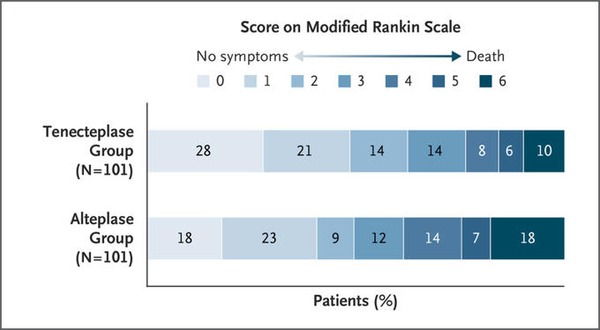
Intravenous infusion of alteplase is used for thrombolysis before endovascular thrombectomy for ischemic stroke. Tenecteplase, which is more fibrin-specific and has longer activity than alteplase, is given as a bolus and may increase the incidence of vascular reperfusion.
|
|
Scooped by
Beeyond
December 19, 2021 5:27 PM
|
Neurological disorders are diseases of the central nervous system (CNS), characterized by a progressive degeneration of cells and deficiencies in neural functions. Mesenchymal stem cells (MSCs) are a promising therapy for diseases and disorders of the CNS. Increasing evidence suggests that their beneficial abilities can be attributed to their paracrine secretion of extracellular vesicles (EVs). Administration of EVs that contain a mixture of proteins, lipids, and nucleic acids, resembling the secretome of MSCs, has been shown to mimic most of the effects of the parental cells.
|
|
Scooped by
Beeyond
December 18, 2021 10:05 AM
|
“Route 92 Medical is laser-focused on becoming the first neurovascular company to launch an FDA-cleared 088 Aspiration Catheter for the treatment of acute ischemic stroke. We believe that our catheter technology featuring the Monopoint operating system will ultimately serve as a platform to revolutionize neurovascular aspiration thrombectomy for large vessel occlusions. This financing provides sufficient capital to carry out our US Pivotal trial and a limited commercial release of our products, the next critical steps in our company’s evolution,” CEO and cofounder Tony Chou said in a news release.
|
|
Scooped by
Beeyond
December 7, 2021 6:04 AM
|
- The first intracranial drug stent without neurotoxic safety issue (首个无神经毒性安全性的颅内药物支架);
- 6.66% restenosis at 1 year, a 73.4% reduction compared to bare stent, resulting in 88.4% reduction in recurrent strokes (1年再狭窄6.66%,同裸支架比降低73.4%,从而降低再发卒中88.4%);
- Endothelial healing oriented, with peak drug in 28 days and complete absorption in 60 days (血管内皮愈合导向,28天药物峰值,60天吸收完毕).
|
|
Scooped by
Beeyond
December 5, 2021 7:09 AM
|
Coffee and tea consumption separately and in combination are associated with a reduced risk for developing stroke and dementia, according to a study published online Nov. 16 in PLOS Medicine.
Yuan Zhang, from Tianjin Medical University in China, and colleagues examined the correlations of coffee and tea consumption with the risk for developing stroke and dementia in a study involving 365,682 participants aged 50 to 74 years from the U.K. Biobank.
|
|
Scooped by
Beeyond
December 5, 2021 7:05 AM
|
Combined intravenous thrombolysis and mechanical thrombectomy (IVT-MT) is a common treatment in acute ischaemic stroke, however the interaction between IVT and MT from a physiological standpoint is poorly understood. In this pilot study, we conduct numerical simulations of combined IVT-MT with various idealised stent retriever configurations to evaluate performance in terms of complete recanalisation times and lysis patterns.
|
|
Scooped by
Beeyond
December 5, 2021 7:02 AM
|
This study did not provide evidence for a causal association between dietary‐derived antioxidant levels and ischemic stroke. Therefore, antioxidant supplements to increase circulating levels are unlikely to be of clinical benefit to prevent ischemic stroke.
|
|
Scooped by
Beeyond
December 5, 2021 7:00 AM
|
Stroke is the major cause of disability and the second leading cause of death worldwide. Acute ischemic stroke is responsible for ∼85% of all strokes, with 24% to 46% attributable to large‐vessel occlusion, which are typically associated with worse outcomes. Although the initial efforts to develop endovascular treatment for acute ischemic stroke took place over 6 decades ago, critical gaps in device technology and treatment selection existed, resulting in 3 failed randomized clinical trials published in 2013. Fortunately, devices and techniques have dramatically evolved over the past decade, leading to significant improvements in the safety, speed, and completeness of reperfusion.
|
|
Scooped by
Beeyond
December 5, 2021 6:59 AM
|
Early recanalization of occluded vessels in acute ischemic stroke (AIS) either by intravenous thrombolysis or endovascular revascularization has been shown to be associated with improved clinical outcome and reduced mortality.1 Initial works on endovascular treatment (EVT) of AIS was published in the 1980s.2,3 Since then, the endovascular techniques for AIS treatment have tremendously improved, advancing from intra-arterial administration of thrombolytic drugs to first-generation mechanical thrombectomy devices (Merci clot retriever and Penumbra clot aspiration) and more recently to second-generation mechanical thrombectomy devices (stent-retrievers; Figure 1). Introduction of various tools and techniques in EVT for AIS will, for obvious reasons, affect the efficacy and safety.
|
|
Scooped by
Beeyond
December 5, 2021 6:56 AM
|
The hyperdense sign is a marker of thrombus in non-contrast computed tomography (NCCT) datasets. The aim of this work was to determine optimal Hounsfield unit (HU) thresholds for thrombus segmentation in thin-slice non-contrast CT (NCCT) and use these thresholds to generate 3D thrombus models.
|
|
Scooped by
Beeyond
December 5, 2021 6:53 AM
|
Large vessel occlusions (LVOs) are occlusions of the major arteries to the brain typically caused by a blood clot coming from outside the head, usually the heart. After occlusion, a part of the brain dies, and this is called the ischemic core. The core will grow if the clot is not removed. Around a third of all ischemic strokes are due to LVOs, but they cause the majority of deaths and severe disability due to stroke.
|
|
Scooped by
Beeyond
December 5, 2021 6:52 AM
|
Previously documented ethnic stroke incidence disparities have ended as a result of declining rates in Mexican Americans and increasing rates in non-Hispanic Whites, most notably in midlife.
|
|
Scooped by
Beeyond
December 5, 2021 6:48 AM
|
The lifetime cost of stroke varies considerably by type of stroke and entails considerable costs beyond the first 2 years after a stroke.
|

Curated by Beeyond
BEEYOND is a consulting company in the field of disruptive innovation, accompanying established companies on out-of-the-core growth strategy, from creation of new concepts to product launch. Reach us at: contact@beeyond.fr.
|