This crisis also reveals a deeper moral rot at the heart of Trump’s MAGA movement. Whatever you think about immigration policy, how can a person of conscience justify the lack of compassion and empathy for the victims in Minnesota, and for the families torn apart or hiding in fear, for the children separated from their parents or afraid to go to school?
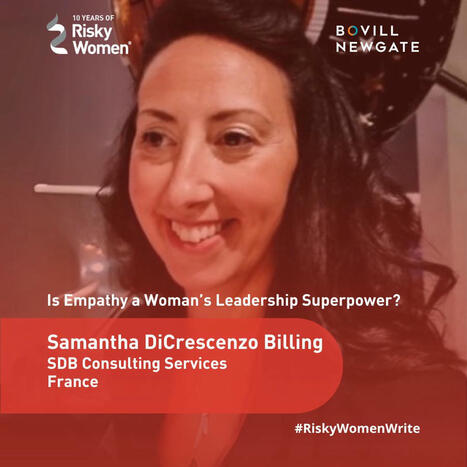
Empathy has become a baseline expectation of modern leadership, but practiced without judgment it can backfire, leaving leaders depleted and employees feeling misunderstood.
Effective leadership requires a more discerning approach: wise empathy, which recognizes that different emotional moments call for different responses. Sharing in employees’ negative emotions can accelerate burnout, while responding to those with compassion and support can protect both leaders and teams.
The opposite is often true for positive emotions, which benefit from shared celebration. If leaders take five steps designed to guide them in the practice of wise empathy, they can strengthen relationships, improve engagement and retention, and support others without losing their own footing.
Empathic Leadership During the 90’s and noughties it felt to me that some progress had been made. People started to openly talk about caring and listening to their teams. Even mindfulness became a bit of a buzzword. However in the last decade we seem to have reached a new plateau with corporate messaging about welfare and wellbeing being ubiquitous, whilst the pressure on teams, in particular leaders, has increased.
Many organisations claim that they are only as good as their people. If that is true and if your organisation relies on the people in it to thrive, make money and grow it is vital to understand and be aware of what your people are going through.
1. Make Empathy A Core Value Empathy is at the core of leadership. This means it is not to be integrated, but innate. If you’re an effective leader, your team knows how much you lead in line with your values and how these have impacted every team member. When times get difficult, they trust you enough to make a decision that is for the good of everyone, even when it doesn’t favor everyone! Empathy is your strength, not a tool to be integrated! - Jennifer Orode, Ingenium Concepts Limited
Constant change, distributed teams, and increasing complexity mark today’s workplace. In such an environment, people can feel vulnerable. They worry about being judged, making mistakes, or being left behind. Without a foundation of empathy, these concerns can quickly turn into fear, defensiveness, and disengagement.
Empathy prompts us to see situations through others’ eyes, recognize their ideas and emotions, and validate their experiences. When leaders and peers consistently practice empathy, they send a powerful message: “You matter.” Once people believe they matter, it lays the groundwork for a healthy culture rooted in collaboration and accountability.
Empathy is a business imperative. Teams that feel psychologically safe outperform those that don’t. Studies from Google’s Project Aristotle and others have shown that psychological safety is the single most important predictor of team effectiveness. And empathy is the gateway to achieving it.
In today's complex work environment, constant change can breed vulnerability and fear. Empathy is the critical antidote, allowing leaders to see situations through their team's eyes and validate their experiences. This isn't just a "soft skill"—it's a business imperative. As proven by studies like Google's Project Aristotle, psychological safety, built on a foundation of empathy, is the single greatest predictor of team effectiveness and performance.
How are you actively fostering empathy and psychological safety within your team? Share your strategies in the comments below.
“When someone feels thoroughly understood, you release potent forces for change within them. Not agreed with, but understood. When you feel thoroughly heard, you’re less adversarial. And the demonstration of understanding, the articulation of the other side’s point of view — purely that, no agreement at all — that’s the application of empathy…. [Also] the act of trying to articulate how the other side is feeling calms you down. It kicks in a certain amount of reason in you. It broadens your perspective.”
- Chris Voss, former F.B.I. lead international kidnapping and hostage negotiator, author of “Never Split the Difference”
Culture in Sports' webinar series continues with industry experts (Dr. Chris Barnhill, Dr. Amy Rundio, Dr. Peter Sear, and Cara Hawkins-Jedlicka) diving into the importance and immense impact of #empathy and creating a new generation of empathetic #leaders. This #webinar is introduced by Dr. Jeremy Piasecki.
Many leaders dismiss empathy as an optional, “touchy-feely” skill. But failing to demonstrate it can lead to low morale, poor retention, and a culture where people withhold ideas and concerns. If you want to drive better results, use these strategies to make empathy part of how you lead—consistently and clearly.
Start with a shared definition. Without agreement on what empathy actually is, your team will default to assumptions. Collectively define empathetic behaviors—for example, perspective-taking and respectful disagreement—and be specific about how they show up in your culture.
Be other-focused. Empathy means making space for others to feel heard, not filling the silence with your own experiences. Be present. Listen deeply. Ask open-ended questions. Resist the urge to rescue or relate.
The business case: How empathy affects KPIs. Empathic leadership isn’t just a soft skill—it’s a key driver of business success. When you lead with empathy, the improvements are measurable, including employee engagement, customer satisfaction, and even retention rates. Ross’s research proves that.
In fact, organizations with high empathy scores tend to experience lower turnover, higher customer loyalty, and increased profits. Empathy creates an environment in which employees feel connected and valued, and customers can sense the difference.
We're reflecting on a powerful question: What if the key to lowering turnover and boosting profits is empathetic leadership? This idea, highlighted by Moshe Engelberg, is backed by compelling data.
It aligns perfectly with the research of Maria Ross, who identifies curiosity and five key pillars—self-awareness, self-care, clarity, decisiveness, and joy—as the foundation of leaders who drive measurable business success.
At CCM Consultancy, our culture transformation and capability-building solutions are designed to help leaders embed these exact principles, creating environments where people feel valued and performance soars.
Which of the five pillars could you focus on to most improve your team's results?
Empathy is often mistaken for a mere emotional trait, but it encompasses far more depth than typically perceived. Dr. Judith Orloff, a renowned psychiatrist and author, delves into the profound impact empathy can have on various facets of life, including business and leadership. Her recent book, The Genius of Empathy, enriches this understanding by offering practical insights and skills to harness empathy effectively. This chapter expounds on the key themes from her enlightening discussion with Kwame Christian, Esq., M.A., on the Negotiate Anything podcast.
Defining Empathy: A Holistic Approach Empathy, as Dr. Orloff contends, is the ability to step into another’s shoes and perceive their world through their lens. It’s a fusion of intuition, compassion, and intellectual understanding, enabling one to resonate with others irrespective of differing viewpoints. Dr. Orloff asserts that empathy starts with self-empathy—an essential practice in maintaining mental and emotional well-being. This foundational skill is paramount for engaging in authentic, non-polarizing interactions with others.
Empathetic leadership is a way in which GRC leaders can utilise the power of being aware of others feelings, needs and concerns to drive teams towards strategic goals and regulatory requirements.
Empathy can be described as “the ability to understand and share the feelings of others”.
Leaders with high levels of EQ are afforded the great opportunity to enhance performance in any setting they are present within. They can understand wider perspectives which ultimately leads to better decision making and more inclusive approaches to bring teams together towards a common goal. They can consider the needs of stakeholders and develop long lasting relationships. They can create environments where team members feel appreciated, understood, heard, and ultimately, will be trusted to lead teams to success.
slot gacor ����� terbaru ter panas ��� tergokil � ANTI RUNGKATTTTT JAMIN GACOR 98 PERSEN !!!! GAS KAN KE landslot88 PALING GACOR ��� �rebrand.ly/landslott
In a previous column we explored empathy as a behavior that’s important in all relationships and is particularly useful as a leadership skill. We gained insights from Maria Ross, an empathy researcher who’s written widely on the subject. Her most recent book is The Empathy Dilemma: How Successful Leaders Balance Performance, People, and Personal Boundaries.
We asked about “empathy myths.” What are they, and how do they get in the way of effective relationships?
“Empathy is not just about being nice,” Ross says. “Being nice is often something we do from our own lens that may or may not be what that person needs.” She says you can be a very nice office mate and bake really delicious cookies for your work colleagues, but that doesn’t mean you see their perspectives.
The Power Of Empathy In Leadership Empathy isn't a feel-good, kumbaya moment that has no place in business; it's an essential skill, especially during times of crisis. Neuroscience backs this up, as I know from my education in psychiatry. Empathy activates the same brain regions involved in social bonding and trust. When leaders show empathy, they engage the parts of their teams' brains that build human connection. This fosters not just a healthier environment but also a motivated, resilient team.
When leaders use empathy, they manipulate the masses better, since they use emotion to achieve their goal, example from Michel Obama's speech. https://www.youtube.com/watch?v=sjaiEEz0CFk
This crisis also reveals a deeper moral rot at the heart of Trump’s MAGA movement. Whatever you think about immigration policy, how can a person of conscience justify the lack of compassion and empathy for the victims in Minnesota, and for the families torn apart or hiding in fear, for the children separated from their parents or afraid to go to school?
In a post-pandemic world, empathy is no longer a "soft skill" but a strategic imperative for high-performance leaders and organizations. In an era of rapid change and empowered workforces, empathy has evolved from a "soft skill" to the ultimate competitive edge. The Empathy Advantage is a deep-dive seminar designed for leaders and others who want to move beyond traditional management and unlock the full potential of their people they lead and influence.
The session will begin by exploring the fundamental shift from managing people to cultivating success—viewing the leader not as a taskmaster, but as an expedition leader responsible for the team's psychological safety and growth. Participants will learn how to dismantle silos by moving from competition to collaboration, replacing internal rivalry with a culture of radical support and shared wins.
Understanding why empathy is important in leadership reveals its powerful role in driving success within organizations. Empathy fosters strong team relationships by enabling leaders to genuinely connect with employees, thus creating an environment where people feel valued and understood. This, in turn, increases employee engagement, which studies consistently link to higher productivity and lower turnover rates. Furthermore, empathy shapes a positive work environment by encouraging open communication and mutual respect among team members. According to The Center for Creative Leadership, empathetic leadership can transform workplace culture, making it more adaptive and resilient.
The divisiveness in our world has left us isolated. We have lost much of our ability to work together which we know achieves far more than working alone. Empathy is the pivot point in building our connections, in building our trust in each other, in building a better world. As a leader in the world of work, Johnny has seen first-hand how empathetic workplaces are better workplaces. Whether you lead in an office or volunteer in a homeless shelter, in this talk, explore the powerful role empathy plays in every human relationship and every collective endeavor.
Chris Voss, a former F.B.I. hostage negotiator and author, spoke with David Marchese, co-host of "The Interview" at The New York Times, about President Trump’s negotiation tactics.
“The Interview” features conversations with the world’s most fascinating people. Each week, co-hosts David Marchese and Lulu Garcia-Navarro talk to compelling, influential figures in culture, politics, business, sports and beyond — illuminating who they are, why they do what they do and how they impact the rest of us.
Chapters:
00:01 - Introduction 01:20 - How Voss became an FBI negotiator 05:47 - Tactical empathy 10:41 - How to identify people you can’t negotiate with 13:13 - Empathy and Elon Musk 14:45 - Chris Voss on Trump’s negotiation skills 20:37 - Does Trump have empathy? 23:30 - Conflict versus collaboration 27:20 - How to talk to your boss 29:11 - The illusion of control 31:09 - Negotiations Voss has lost 34:58 - Why compromise isn’t a good thing 37:18 - Should we always be goal-oriented?
by Jaclyn Morse I often find that I come across the most profound pieces of wisdom seemingly at random (which can also be viewed as synchronistic events — delivering information I need to hear at the exact time I am open to hearing it). A few weeks ago, I stumbled upon a podcast episode on an airplane, “The Empathy Edge with Maria Ross” from the Wisdom From The Top podcast with Guy Raz. She spoke about how empathy is excellent for business and gave an example in the context of leadership:
Empathy is not just sitting around and crying with your employees on the floor, right, that’s not empathy. But it’s, “I can totally understand your point of view, and I know I need to make a really tough decision, and I don’t really want to make this decision, but how can I make this as smooth of a decision for you as possible?”
Nadella also highlighted empathy as a driving force behind meaningful innovation. Understanding the end-user experience, he said, is critical to anticipating needs that aren’t always visible on the surface. Even technical data, he added, can offer human insights: if one is willing to look beyond the numbers.
On the topic of rapid technological advancement, Nadella encouraged openness to change and continuous learning. As new tools reshape industries, he urged professionals to focus on how they can use these tools to amplify their own impact rather than resist them.
Empathy is a powerful force that shapes workplace culture and leadership effectiveness. Yet, under pressure, it often takes a backseat. That’s where leaders come in. The real effort is in finding ways to make empathy a natural part of how they lead—both in big-picture decisions and everyday conversations.
While many leaders equate empathy with kindness, employees seek tangible expressions such as flexible work arrangements, career development opportunities, and meaningful diversity, equity, inclusion, and belonging (DEIB) initiatives. A Businessolver survey highlights a gap—while 86% of employees consider flexible work hours an essential demonstration of empathy, only 42% have experienced it. It’s time to move past surface-level gestures and build a culture where empathy is lived, and an integral part of leadership’s way of work!
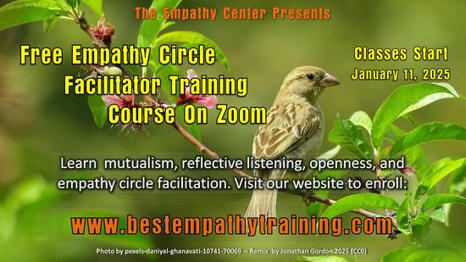
On January 11, 2025 the Empathy Center will be conducting a Facilitator training course on Zoom. The intent of this training is to teach the participant how to organize and conduct Empathy Circles.
The course is experiential and consists of 4 classes taught over 4 consecutive Saturdays. Each class lasts about two and half hours. In addition to attending 4 sessions of 2.5 hours each, there are weekly assignments to complete that may take 1-2 hours. We will also pair you weekly with an empathy buddy to practice empathy.
The only prerequisite is to attend at least two Empathy Circles prior to attending a training. We have recently started a drop-in Empathy Cafe on Thursdays at 6 PM, Pacific Time at https://zoom.us/j/3521266686. By attending this Empathy Cafe one can fulfill the two circle prerequisite.
The Empathy Circle and Facilitator Training fit into a larger vision of a Culture of Empathy: A vision and dream of building a culture based on mutual empathy among all people around the world. The Empathy Circle is a wonderful first step to practice, develop, and increase your deep listening and empathy skills. To sign up or get more information visit: www.bestempathytraining.com
As a father of three, I’ve seen firsthand that people are naturally empathetic – my kids, for example, can’t help but get upset when they see someone hurt or in trouble. But as we grow up, empathy becomes trickier to navigate, especially at work. In a fast-paced world where staying ahead of the competition is critical, empathy often takes a backseat. And even when we try to show it, truly authentic empathy can feel like it’s in short supply.
A recent survey of 1,000 U.S. workers found that 52 percent felt their company’s efforts to be empathetic weren’t genuine. That’s a big disconnect between what leaders think they’re doing and how employees actually feel.
As a father of three, I’ve seen firsthand that people are naturally empathetic – my kids, for example, can’t help but get upset when they see someone hurt or in trouble. But as we grow up, empathy becomes trickier to navigate, especially at work. In a fast-paced world where staying ahead of the competition is critical, empathy often takes a backseat. And even when we try to show it, truly authentic empathy can feel like it’s in short supply.
A recent survey of 1,000 U.S. workers found that 52 percent felt their company’s efforts to be empathetic weren’t genuine. That’s a big disconnect between what leaders think they’re doing and how employees actually feel.
The Importance Of Empathy But what exactly is empathy? In effect, it’s the ability to understand the feelings or viewpoints of someone else. It’s much more than sympathy.
Jamil Zaki, a research psychologist at Stanford University who works with business leaders and authored The War for Kindness: Building Empathy in a Fractured World, says, "One of the first hurdles I need to get over is this stereotype that empathy is too soft and squishy for the work environment." This stereotype is easy to disprove, and there are decades of evidence proving that empathy is a powerful asset in the workplace, what Zaki calls a "superpower."
Empathy is often hailed as a cornerstone of effective leadership, and for good reason. It’s not just about understanding the needs of others; it’s about stepping into their shoes, seeing the world through their eyes, and making decisions that benefit the collective rather than the individual. In a rapidly diversifying and evolving Malaysia, where socio-economic, racial, and religious differences sometimes create divides, future leaders must possess this quality if they are to guide the nation toward unity and inclusivity. And one of the most powerful ways to develop empathy is through volunteering.
Volunteering exposes individuals, especially youth, to the lived realities of others. It introduces them to communities they may have never interacted with otherwise—people from different social strata, races, and religious backgrounds. In doing so, it encourages them to listen, to learn, and ultimately, to care deeply about the struggles and aspirations of fellow Malaysians. This process of gaining empathy is not only essential for nurturing compassionate leaders but also critical for shaping a more inclusive Malaysia where all voices are heard.
UDAH PALING BENER MAIN di VEGAS88 PROSES DEPO CEPAT, WD BERAPA AJA PASTI DIBAYAR, GAAASSSS boskuh, rasain sendiri nikmatnya pecahan selayar AUTO JACKPOT, VEGAS88 gass boskuu
To get content containing either thought or leadership enter:
To get content containing both thought and leadership enter:
To get content containing the expression thought leadership enter:
You can enter several keywords and you can refine them whenever you want. Our suggestion engine uses more signals but entering a few keywords here will rapidly give you great content to curate.





 Your new post is loading...