
Reinvention, like innovation, is a word thrown around by people who don’t stand for it. My blog is all about transformation, mine.

|
Scooped by
Beeyond
onto Innovating to what's next... March 31, 2016 8:20 AM
|
 Scoop.it!
Reinvention, like innovation, is a word thrown around by people who don’t stand for it. My blog is all about transformation, mine.

 Your new post is loading... Your new post is loading...
Scoop.it!
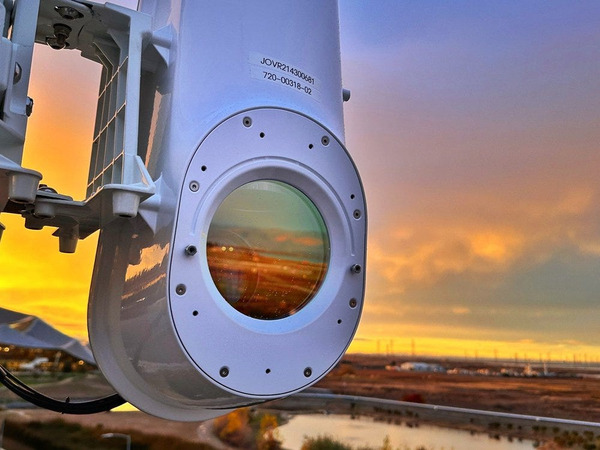
Yes, Laser is the ultimate communications medium. Physics dictates that transmitting photons through a vacuum offers near-infinite bandwidth with zero latency constraints. But deploying naked lasers on Earth has historically been an exercise in frustration. Atmospheric turbulence, fog, rain, and physical interference forced the industry to wrap light in glass cables or default to the reliable, albeit slower, medium of radio frequencies.
Scoop.it!

The way we transport food is undergoing a profound transformation as sustainable alternatives step into the spotlight. For decades, the global supply chain has relied heavily on single-use plastics to keep items fresh and safe. However, the environmental toll of this convenience has sparked a frantic search for better solutions. Enter edible packaging, an innovative approach that eliminates waste by ensuring the wrapper itself can be consumed or composted. This breakthrough technology represents a significant shift in manufacturing, offering a practical method to reduce our reliance on synthetic polymers. By reimagining how we protect groceries, researchers are creating a system where nothing is left behind.
Scoop.it!
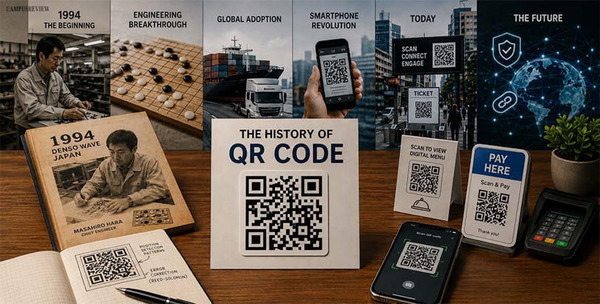
Explore the history of QR code systems, from 1990s auto plants to global fintech ubiquity. Discover how this elegant grid changed the world.
Scoop.it!

From
semiwiki

In a major bid to bypass crippling U.S. technology sanctions, China’s Huawei Technologies has unveiled an ambitious semiconductor roadmap, projecting the design of high-end chips with a transistor density equivalent to a 1.4-nanometer (1.4-nm) process node by 2031.
Scoop.it!

The U.S. sanctions banned Huawei from buying the machines required to physically print transistors that small on a flat piece of silicon.
Scoop.it!
From
www
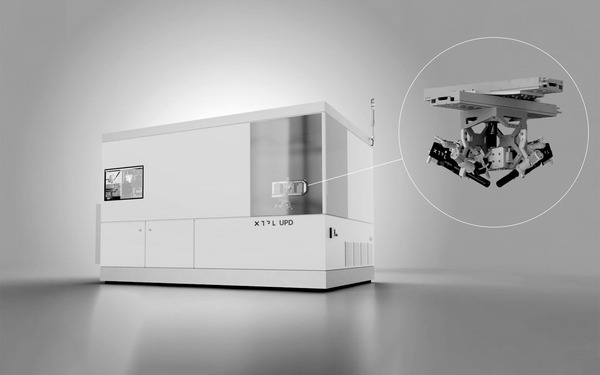
XTPL (WSE:XTP), a global provider of breakthrough microprinting solutions for the advanced electronics market, closed 2025 with its record-high revenues: PLN 15.6 million in total revenue, including PLN 13.7 million from the sale of products and services – up 14% and 12% year-on-year, respectively. During this period, the Company delivered a record number of products to the market: 13 Delta Printing System (DPS) devices and 8 Ultra-Precise Dispensing (UPD) modules. A key milestone was the launch, in January 2025, of the first-ever industrial implementation of XTPL’s technology with one of the world’s largest flat panel display (FPD) manufacturers in China. Following the balance sheet date, the Company completed a public offering, raising gross proceeds of PLN 19.5 million. Together with additional grant funding of approximately PLN 10.1 million from the National Centre for Research and Development (NCBR), this strengthens XTPL’s financial position and supports the execution of its updated 2026–2028 Strategy. The Company’s priority for 2026 is to achieve further industrial implementations and to advance the commercialization of its new ODRA system business line, for which the first client was acquired in March.
Scoop.it!

The data center industry is hitting a massive physical wall: the power grid simply cannot keep up with the exploding demand for AI compute. Expanding traditional, centralized server farms is slow and expensive, currently hampered by a staggering 2,600 GW backlog of projects awaiting utility connections. To bypass this gridlock, NVIDIA has partnered with smart-panel maker SPAN and homebuilder PulteGroup to launch XFRA. In plain English, they are bypassing the commercial utility queue entirely by deploying enterprise-grade AI data centers directly in residential backyards, running on the spare electricity from everyday homes.
Scoop.it!

From
creapills
VisitPortugal lance “Pairing Portugal”, une campagne qui transforme des bouchons de vin en points d’accès NFC pour découvrir les régions du pays. Chaque bouteille connecte dégustation et voyage avec 100 vins, 100 poèmes et 100 destinations, mêlant contenu culturel et inspiration touristique. Une activation qui détourne une technologie d’authentification pour créer un dispositif de storytelling immersif reliant produit, territoire et expérience de marque.
Scoop.it!

From
innovapi
Le Pass Export est un mécanisme spécifique proposé par Bpifrance, avec pour objectif de simplifier et sécuriser les démarches liées à l’export. Il permet notamment de bénéficier :
Il s’agit d’un partenariat sur mesure entre l’État et l’entreprise exportatrice Le Pass PI, lui, permet de financer des prestations variées, telles qu’un dépôt de brevet en France, ou, dans le cadre d’un Pass PI Export, un dépôt européen ou même international (PCT).
Scoop.it!

From
hbr
As organizations experiment with placing AI agents on org charts as “employees,” new research shows this framing has unintended consequences. In a large-scale experiment, anthropomorphizing AI reduced individual accountability, increased unnecessary escalation, lowered review quality, and heightened employee uncertainty about their roles—without improving adoption. The findings suggest the core challenge is not whether to deploy agentic AI, but how to redesign workflows, roles, and governance so humans remain clearly accountable while effectively supervising increasingly capable systems.
Scoop.it!

From
techcrunch
Microsoft CEO Satya Nadella is far less vocal about his worldviews than Palantir’s Alex Karp. And yet, France is taking steps to reduce its reliance on Windows, while its domestic intelligence agency recently renewed its contract with the increasingly controversial data analytics company.
Scoop.it!

From
tuta
Avec sa récente annonce, la France rejoint la liste des pays qui visent à devenir numériquement souverains. Cette démarche s'inscrit dans un mouvement plus large, appelé "souveraineté numérique", qui vise à réduire la dépendance des grandes entreprises technologiques américaines, telles que Microsoft, Meta ou Google, et à s'affranchir du verrouillage des fournisseurs.
Scoop.it!

As a micro- and nanofabrication technique, maskless photolithography (MPL) eliminates static physical masks and instead utilizes computer-controlled light sources and optical systems to directly generate patterns. This significantly enhances process flexibility and design freedom and reduces production costs. It is an important technology that supports the field of advanced micro- and nanofabrication. This review systematically elaborates on the principles and equipment systems of MPL technology, introduces the development history and photoreaction mechanisms of different types of photoresponsive materials, and summarizes the application of MPL technology in micro- and nanofabrication. Finally, the prospects and future directions for the development of MPL technology are presented.
Scoop.it!
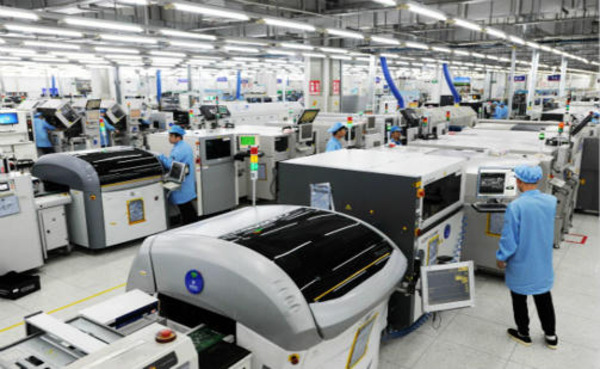
The electronics manufacturing landscape is undergoing a profound transformation. As device form factors shrink and the demand for unconventional, non-planar electronics grows, engineers are constantly seeking innovative fabrication methods. At the forefront of this evolution is the 3D Printed Circuit Board. Unlike traditional subtractive manufacturing—which relies on etching away copper from rigid FR4 substrates—the 3D Printed Circuit Board process utilizes additive manufacturing technologies to build dielectric structures and conductive traces layer by layer simultaneously.
Scoop.it!
From
woodsidecap
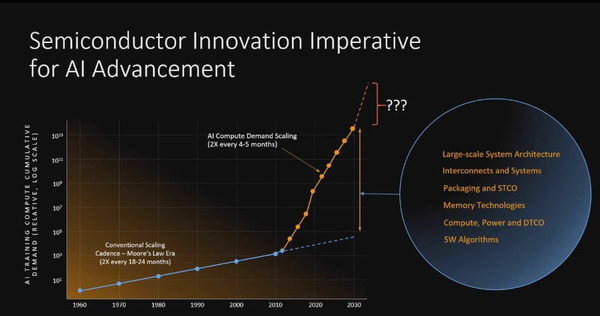
AI infrastructure has reached a limit powered by interconnects, and silicon photonics is how the industry overcomes it. The bottleneck isn’t just about “compute” in a broad sense; it’s about transferring data between GPUs, memory, and switches quickly, reliably, and cheaply (in watts and dollars) to keep large clusters efficient.
Scoop.it!

From
simpleflying
The era of frustratingly slow, high-latency inflight internet is rapidly coming to an end as low-earth orbit (LEO) satellite constellations fundamentally reshape the passenger experience. Travelers have long struggled with connection speeds that barely support text messaging, let alone high-definition streaming or real-time gaming. This guide examines the aggressive rollout of Starlink and similar technologies across the global aviation sector, highlighting the carriers that are prioritizing seamless connectivity as a core part of their brand identity.
Scoop.it!
How AI for telecommunications is reshaping operators: mature tech, documented ROI, and a 90-day roadmap to drive measurable opex and customer wins.
Scoop.it!

From
www
XTPL (WSE:XTP), a global provider of breakthrough microprinting solutions for the advanced electronics market, closed 2025 with its record-high revenues: PLN 15.6 million in total revenue, including PLN 13.7 million from the sale of products and services – up 14% and 12% year-on-year, respectively. During this period, the Company delivered a record number of products to the market: 13 Delta Printing System (DPS) devices and 8 Ultra-Precise Dispensing (UPD) modules. A key milestone was the launch, in January 2025, of the first-ever industrial implementation of XTPL’s technology with one of the world’s largest flat panel display (FPD) manufacturers in China. Following the balance sheet date, the Company completed a public offering, raising gross proceeds of PLN 19.5 million. Together with additional grant funding of approximately PLN 10.1 million from the National Centre for Research and Development (NCBR), this strengthens XTPL’s financial position and supports the execution of its updated 2026–2028 Strategy. The Company’s priority for 2026 is to achieve further industrial implementations and to advance the commercialization of its new ODRA system business line, for which the first client was acquired in March.
Scoop.it!

Face à la domination asiatique sur la production de cartes électroniques, Lprint produit une machine installable dans les usines des industriels européens pour leur permettre une production sur place et de meilleure qualité. Cette start-up fait partie de la sélection « 100 start-up où investir en 2026 » de Challenges.
Scoop.it!
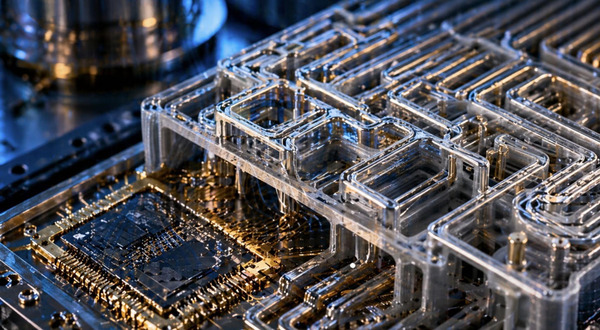
Superconducting quantum processors have crossed an uncomfortable threshold. The physics of the qubit is no longer the binding constraint on scaling; the hardware surrounding it is. That bundle is now widely described in the engineering literature as the I/O wall of solid-state quantum computing,
Scoop.it!

Du code morse à la 5G, la logique d’encodage traverse deux siècles d’innovations. Fiabilité, souveraineté et transmission restent au cœur des réseaux modernes.
Scoop.it!

From
creapills
KitKat lance “Break Mode”, une innovation packaging qui transforme l’emballage en boîte anti-notifications capable de bloquer tous les signaux du smartphone. Inspiré de la cage de Faraday, le dispositif coupe appels, internet et Bluetooth pour créer une vraie pause sans distraction, alignée avec le slogan de la marque. Une activation pensée pour les usages des jeunes générations, qui transforme un simple emballage en outil de déconnexion et en expérience de bien-être digital.
Scoop.it!

Le raccourci est courant : quitter Gmail pour Proton Mail, héberger ses fichiers ailleurs qu’en Californie, adopter un logiciel estampillé « européen »… Tout cela a sa valeur. Mais réduire la question à celle des outils entretient une confusion majeure. La dépendance n’est souvent que déplacée. Dès lors qu’on confond outil et véritable indépendance, on oublie l’essentiel : la souveraineté ne s’acquiert pas par un simple transfert technique.
Scoop.it!

Derrière cette correction rapide, plusieurs facteurs s’entrecroisent. D’abord, le retrait partiel d’OpenAI, autrefois pressenti pour absorber jusqu’à 40 % de la production mondiale de RAM, a rebattu les cartes. Les intentions d’achat évoquées n’ayant finalement pas abouti, la demande anticipée n’a pas eu lieu, entraînant une chute des valorisations boursières chez des géants comme Micron, Samsung ou SK Hynix.
Scoop.it!

Avec son expertise unique dans le domaine du calcul hybride optique-électronique, Lightelligence a récemment franchi une étape décisive : l’entreprise vient d’obtenir le feu vert pour sa cotation à Hong Kong, après avoir réussi son passage devant la commission d’audition locale ce lundi. L’introduction en Bourse, attendue dans les prochains mois, pourrait permettre de lever entre 300 et 400 millions de dollars américains. Si tout se déroule comme prévu, il s’agirait du tout premier fabricant de puces d’IA photonique à intégrer la place financière hongkongaise, un signal fort pour l’ensemble du secteur.
|

Curated by Beeyond
BEEYOND is a consulting company in the field of disruptive innovation, accompanying established companies on out-of-the-core growth strategy, from creation of new concepts to product launch. Reach us at: contact@beeyond.fr.
Other Topics

#dotdot, the community internet

Aidants

Aston-Martin

Augmented & Virtual Reality

Blue Ocean Strategy

Brain Computer Interfaces & connected medical devices
Consumer Digital Health

Covid-19, SARS-Cov-2, vaccines, Remdesivir, Chloroquine...and all that Jazz

Critical Limb-Threatening Ischemia (CLTI)
Daily realities of diabetic patients

Fashion & technology

Healthcare: reloaded...

High level trending in...
In-Vitro Diagnostic
Innovating to what's next...

Instrumental cosmetics

Interventional Cardiology

Intra-Dermal drug delivery: Opportunities and Challenges?

Local delivery for Gene Directed Enzyme Prodrug Therapy
Engineered MSCs with suicide genes delivered intra-arterially to treat various cancers. Local delivery bypasses homing issues that plagued prior GDEPT programs.

Metabolic Activation Therapy

Multiple sclerosis

Neurovascular Intervention

Nudges

Peritoneal dialysis

Solid tumors: latest on treaments and research pathways
glioblastoma, craniopharyngioma...
Tailored Expertise Sourcing & Market Intelligence in Global Consulting

The future of e-cigarette

The Revolution Of The Car Industry

Track & Trace

Transcatheter Treatment of Mitral Regurgitation
|





