Your new post is loading...

|
Scooped by
Beeyond
July 5, 5:34 AM
|
Les satellites artificiels vont ils être trop nombreux et nous poser plus de problèmes qu’ils nous apportent de services ? Actuellement, les lancements de fusées relarguent dans l’atmosphère près 1 000 tonnes de suie par an. Dans la stratosphère (20-50km d’altitude) cette suie, constituée de particule de carbone aussi appelées carbone noir absorbe l’énergie solaire et provoque une augmentation des températures. D’après les recherches menées en 2022 par la National Oceanographic and Atmospheric Administration américaine (NOAA) le décuplement des lancements de fusées est attendu au cours des 20 prochaines années injecterait dans la stratosphère assez de carbone noir pour accroître les températures stratosphériques mondiales de 0,5 à 2 °C.
|
|
Scooped by
Beeyond
June 29, 9:12 AM
|
China Telecom is testing a new approach to packaging artificial intelligence services alongside its network offerings, reflecting a broader shift in how telecom operators are experimenting with AI-driven infrastructure and monetisation models. MEF CEO Dario Betti explores the implications for operators and how this development may reshape telecom business models.
|
|
Scooped by
Beeyond
June 29, 7:10 AM
|
LEGO a construit une Koenigsegg Sadair's Spear grandeur nature en briques qui a battu un record à 111 km/h à Goodwood.
|
|
Scooped by
Beeyond
June 22, 11:57 AM
|
This research addresses absorptive capacity in maintaining technological advantage amidst Emerging and Disruptive Technologies (EDTs). While traditional models focus on incremental integration, this study introduces the construct of transformative capability to account for the systemic reconfiguration necessitated by Artificial Intelligence and Big Data as two out of nine EDTs. Utilizing a structured policy research methodology, the study evaluates a purposive sample of 56 NATO policy documents, triangulated with semi-structured stakeholder interviews to identify high-priority catalysts for adoption. Findings identify four interconnected factors—technological, human, organizational, and societal—functioning as a recursive, systemic feedback loop. A distinctive contribution is the identification of the psychological unimaginability of EDTs as a primary barrier to diffusion, necessitating cognitive anchors through robust standardization, ethical governance and social institutionalization. By positioning ethics and societal assimilation as functional prerequisites, this research offers a multidimensional framework for fostering double-loop learning and organizational resilience in 21st-century defense ecosystems.
|
|
Scooped by
Beeyond
June 18, 8:41 AM
|
In 1932, American industrialist Eben Byers died after his jaw physically collapsed from drinking “Radithor”, an over-the-counter energy drink infused with raw radium. In the early 20th century, society was so mesmerized by the superficial “glow” of radiation that brands blindly put thorium and radium into cosmetics, toothpaste, and water. It wasn’t until 1938, when the lethal, cellular-level destruction of radiation became undeniable, that governments stepped in, stripped radioactive elements from consumer shelves, and locked nuclear energy behind strict regulatory walls.
Today, we are repeating that exact historical error.
|
|
Scooped by
Beeyond
June 13, 5:24 AM
|
C'est du jamais vu dans l'histoire de l'intelligence artificielle et un immense séisme pour la tech. Lancé lundi, désactivé jeudi soir : le gouvernement américain a ordonné à Anthropic de couper l'accès à Fable 5 et Mythos 5, ses deux modèles d'IA les plus avancés, pour l'ensemble de ses clients dans le monde entier, sur fond de faille de sécurité contestée.
|
|
Scooped by
Beeyond
June 11, 6:36 AM
|
Faced with an exhausted terrestrial power grid, Elon Musk is moving hyperscale AI data centers directly into Low Earth Orbit.
|
|
Scooped by
Beeyond
June 8, 5:19 AM
|
Medical catheters face certain challenges in clinical treatment, such as bacterial biofilm adhesion and thrombus formation. Antifouling and antibacterial coatings have been proven to be an effective solution to diminish these undesirable events. Herein, we developed a facile and environmentally friendly strategy for constructing a dual-functional coating by grafting an antibacterial-zwitterionic copolymer onto polyurethane (PU) surfaces. The copolymer was designed and synthesized via a one-pot polymerization in an aqueous system by integrating 2-methacryloyloxyethyl phosphorylcholine (MPC), dimethyl diallyl ammonium chloride (DADMAC), and glycidyl methacrylate (GMA) as a functional monomer to enable surface immobilization.
|
|
Scooped by
Beeyond
June 8, 5:12 AM
|
The Chinese tech giant says its new stacked-chip architecture can deliver transistor density equivalent to 1.4nm processes by 2031, without access to advanced lithography tools
|
|
Scooped by
Beeyond
June 7, 6:22 AM
|
You are defintely looking beyond the balance sheet when assessing long-term viability, so we need to define the scope: understanding how various business models interact with and influence societal well-being, whether that means their impact on labor markets, resource consumption, or community stability. In a globalized world, responsible business practices are no longer a niche concern but a core requirement for capital allocation; we're seeing this reflected in the market where assets under management adhering to ESG (Environmental, Social, and Governance) criteria are projected to surpass $40 trillion globally by the end of 2025. This growing importance means we must set the stage for a comprehensive assessment that rigorously analyzes both the positive externalities-like innovative solutions to climate change-and the negative impacts, such as supply chain risks or digital exclusion, ensuring our analysis is grounded in actionable data, not just good intentions.
|
|
Scooped by
Beeyond
June 3, 11:02 AM
|
When China published its 15th Five-Year Plan (FYP, 2026–2030) in March 2026, many assumed that the display industry had been handed another wave of state-level support. The assumption was understandable — but it requires a more careful reading.
|
|
Scooped by
Beeyond
June 1, 11:34 AM
|
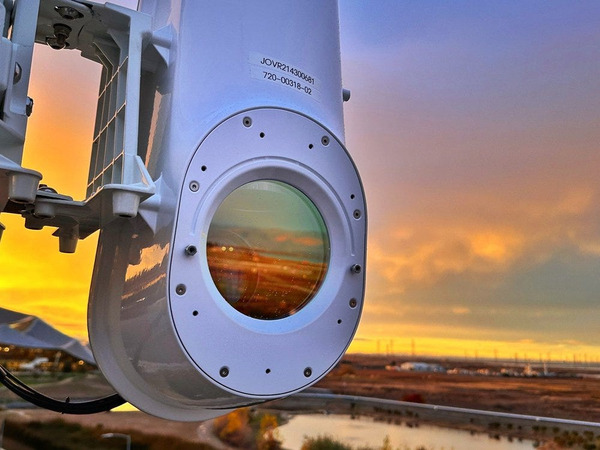
Yes, Laser is the ultimate communications medium. Physics dictates that transmitting photons through a vacuum offers near-infinite bandwidth with zero latency constraints. But deploying naked lasers on Earth has historically been an exercise in frustration. Atmospheric turbulence, fog, rain, and physical interference forced the industry to wrap light in glass cables or default to the reliable, albeit slower, medium of radio frequencies.
For decades, Free Space Optics, or FSO, was dismissed as a fragile science experiment, and, to some extent, the case was officially closed.
Laser communications are back, driven by an explosion of technology developments and critical infrastructure needs that were once far from mainstream. Today, lasers are taking over every single layer of the network topology simultaneously, building a seamless architecture from space down to the terrestrial core. In orbit, optical inter-satellite links are creating massive mesh networks in a vacuum to route data globally.
|
|
Scooped by
Beeyond
June 1, 9:49 AM
|
The way we transport food is undergoing a profound transformation as sustainable alternatives step into the spotlight. For decades, the global supply chain has relied heavily on single-use plastics to keep items fresh and safe. However, the environmental toll of this convenience has sparked a frantic search for better solutions. Enter edible packaging, an innovative approach that eliminates waste by ensuring the wrapper itself can be consumed or composted. This breakthrough technology represents a significant shift in manufacturing, offering a practical method to reduce our reliance on synthetic polymers. By reimagining how we protect groceries, researchers are creating a system where nothing is left behind.
|
|
Scooped by
Beeyond
June 1, 6:14 AM
|
Explore the history of QR code systems, from 1990s auto plants to global fintech ubiquity. Discover how this elegant grid changed the world.
|
|
Scooped by
Beeyond
June 1, 5:10 AM
|
In a major bid to bypass crippling U.S. technology sanctions, China’s Huawei Technologies has unveiled an ambitious semiconductor roadmap, projecting the design of high-end chips with a transistor density equivalent to a 1.4-nanometer (1.4-nm) process node by 2031.
The announcement was made on Monday, May 25, 2026, by He Tingbo—President of Huawei’s HiSilicon semiconductor division and chair of the company’s Scientist Committee—during a keynote speech at the 2026 IEEE International Symposium on Circuits and Systems (ISCAS) in Shanghai.
|
|
Scooped by
Beeyond
May 26, 7:27 AM
|
The U.S. sanctions banned Huawei from buying the machines required to physically print transistors that small on a flat piece of silicon.
Huawei’s response was to abandon the 2D plane. Instead of shrinking the physical transistor down to 1.4nm, they are taking larger, older transistors and stacking them vertically using a 3D architecture called LogicFolding. They shrink the distance the signal travels by going up, delivering the exact same 1.4nm processing speed without needing the restricted U.S. technology.
|
|
Scooped by
Beeyond
May 15, 8:29 AM
|
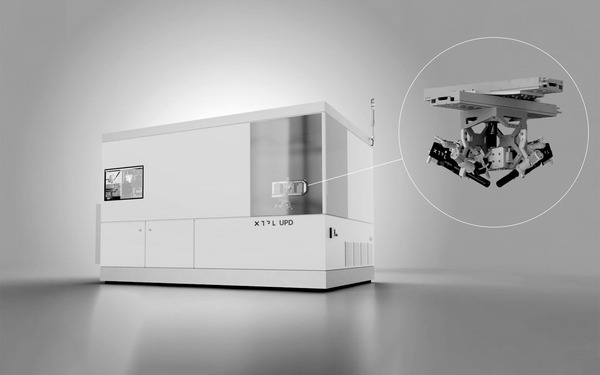
XTPL (WSE:XTP), a global provider of breakthrough microprinting solutions for the advanced electronics market, closed 2025 with its record-high revenues: PLN 15.6 million in total revenue, including PLN 13.7 million from the sale of products and services – up 14% and 12% year-on-year, respectively. During this period, the Company delivered a record number of products to the market: 13 Delta Printing System (DPS) devices and 8 Ultra-Precise Dispensing (UPD) modules. A key milestone was the launch, in January 2025, of the first-ever industrial implementation of XTPL’s technology with one of the world’s largest flat panel display (FPD) manufacturers in China. Following the balance sheet date, the Company completed a public offering, raising gross proceeds of PLN 19.5 million. Together with additional grant funding of approximately PLN 10.1 million from the National Centre for Research and Development (NCBR), this strengthens XTPL’s financial position and supports the execution of its updated 2026–2028 Strategy. The Company’s priority for 2026 is to achieve further industrial implementations and to advance the commercialization of its new ODRA system business line, for which the first client was acquired in March.
|
|
Scooped by
Beeyond
May 11, 5:26 AM
|
The data center industry is hitting a massive physical wall: the power grid simply cannot keep up with the exploding demand for AI compute. Expanding traditional, centralized server farms is slow and expensive, currently hampered by a staggering 2,600 GW backlog of projects awaiting utility connections. To bypass this gridlock, NVIDIA has partnered with smart-panel maker SPAN and homebuilder PulteGroup to launch XFRA. In plain English, they are bypassing the commercial utility queue entirely by deploying enterprise-grade AI data centers directly in residential backyards, running on the spare electricity from everyday homes.
|
|
Scooped by
Beeyond
May 11, 2:58 AM
|
VisitPortugal lance “Pairing Portugal”, une campagne qui transforme des bouchons de vin en points d’accès NFC pour découvrir les régions du pays. Chaque bouteille connecte dégustation et voyage avec 100 vins, 100 poèmes et 100 destinations, mêlant contenu culturel et inspiration touristique. Une activation qui détourne une technologie d’authentification pour créer un dispositif de storytelling immersif reliant produit, territoire et expérience de marque.
|
|
Scooped by
Beeyond
May 10, 5:37 AM
|
Le Pass Export est un mécanisme spécifique proposé par Bpifrance, avec pour objectif de simplifier et sécuriser les démarches liées à l’export. Il permet notamment de bénéficier : - d'assurance-crédit
- d' assurance change
- de financement des opérations internationales
Il s’agit d’un partenariat sur mesure entre l’État et l’entreprise exportatrice Le Pass PI, lui, permet de financer des prestations variées, telles qu’un dépôt de brevet en France, ou, dans le cadre d’un Pass PI Export, un dépôt européen ou même international (PCT).
|
|
Scooped by
Beeyond
May 8, 10:43 AM
|
As organizations experiment with placing AI agents on org charts as “employees,” new research shows this framing has unintended consequences. In a large-scale experiment, anthropomorphizing AI reduced individual accountability, increased unnecessary escalation, lowered review quality, and heightened employee uncertainty about their roles—without improving adoption. The findings suggest the core challenge is not whether to deploy agentic AI, but how to redesign workflows, roles, and governance so humans remain clearly accountable while effectively supervising increasingly capable systems.
|
|
Scooped by
Beeyond
May 8, 10:27 AM
|
Microsoft CEO Satya Nadella is far less vocal about his worldviews than Palantir’s Alex Karp. And yet, France is taking steps to reduce its reliance on Windows, while its domestic intelligence agency recently renewed its contract with the increasingly controversial data analytics company.
This paradox is representative of Europe’s messy breakup with U.S. tech. After painful realizations that it comes with strings attached, governments across the region are looking to rely less on American providers. But the steps taken so far have been uneven and often reactive.
|
|
Scooped by
Beeyond
May 8, 10:26 AM
|
Avec sa récente annonce, la France rejoint la liste des pays qui visent à devenir numériquement souverains. Cette démarche s'inscrit dans un mouvement plus large, appelé "souveraineté numérique", qui vise à réduire la dépendance des grandes entreprises technologiques américaines, telles que Microsoft, Meta ou Google, et à s'affranchir du verrouillage des fournisseurs.
|
|
Scooped by
Beeyond
May 8, 10:25 AM
|
As a micro- and nanofabrication technique, maskless photolithography (MPL) eliminates static physical masks and instead utilizes computer-controlled light sources and optical systems to directly generate patterns. This significantly enhances process flexibility and design freedom and reduces production costs. It is an important technology that supports the field of advanced micro- and nanofabrication. This review systematically elaborates on the principles and equipment systems of MPL technology, introduces the development history and photoreaction mechanisms of different types of photoresponsive materials, and summarizes the application of MPL technology in micro- and nanofabrication. Finally, the prospects and future directions for the development of MPL technology are presented.
|
|
Scooped by
Beeyond
May 8, 10:23 AM
|
The electronics manufacturing landscape is undergoing a profound transformation. As device form factors shrink and the demand for unconventional, non-planar electronics grows, engineers are constantly seeking innovative fabrication methods. At the forefront of this evolution is the 3D Printed Circuit Board. Unlike traditional subtractive manufacturing—which relies on etching away copper from rigid FR4 substrates—the 3D Printed Circuit Board process utilizes additive manufacturing technologies to build dielectric structures and conductive traces layer by layer simultaneously.
|

Curated by Beeyond
BEEYOND is a consulting company in the field of disruptive innovation, accompanying established companies on out-of-the-core growth strategy, from creation of new concepts to product launch. Reach us at: contact@beeyond.fr.
|