1. Find common ground. Look for similarities, rather than differences when it comes to challenging relationships. This automatically calms your nervous system and assists with feelings of contentment.
2. Listen. Often when we are listening to someone speak we are formulating a response, waiting for our opportunity to offer some advice. Instead just listen. Suspend your judgment and let them express themselves freely - respond to the sentiment not just the words, as many people have trouble communicating their thoughts clearly.
3. Drop the judgment. Remember that everyone is on a journey in life, just as you are on your own. Instead of judging other people's decisions or opinions learn from them.
I am really enjoying reading your blog. If you want to buy villa in Noida Extension then call on the given number-8375000707 as we give you the best offers for buying villa in Noida Extension. https://www.villasinnoida.com/villas-in-noida-extension.php
Title: Empathy in Action: Strengthening the Patient-Provider Connection - Part I Runtime: 5 min 57 sec Speaker: Tara Harding, DNP Empathy in Healthcare: A new educational initiative,"Empathy in Action," launched this week focusing on how healthcare providers can use specific "active listening" techniques to prevent patient "un-hearing," which is a leading cause of delayed diagnoses in 2026.
Background Therapeutic empathy improves patient and practitioner outcomes, yet existing measures are often lengthy, conceptually inconsistent, and cannot be easily compared across respondent groups. Brief, universal measures (usable by patients, practitioners, students, and observers) are lacking. We therefore developed a universal single-item scale and conducted psychometric testing of the patient-reported version.
Methods Following best-practice, we used a three-phase approach:
(1) item development;
(2) pre-testing the scale by obtaining expert panel feedback (n=9) and conducting cognitive interviews with stakeholders (n=35); and
(3) scale validation in an international patient sample (n=521) assessing convergent, discriminant, and known-groups validity.
Validation involved assessing correlations with the Consultation and Relational Empathy (CARE) measure and clinical neutrality measure, and by assessing differences in scores by patient ethnicity.
This article seeks to clarify and distinguish how phenomenological definitions of empathy may be applied in psychotherapy. It argues that effective therapeutic practice relies not only on narrative engagement but also on embodied attunement, often referred to as empathic resonance. Rather than viewing the therapist’s feelings as passive emotional mirroring of the client, the authors propose a critical and situated perspective in which these feelings are understood as embodied responses that emerge within the therapeutic relationship. In doing so, the authors aim to contribute to the enhancement of clinical training in psychotherapy.
They specifically advocate for a stepwise approach to training, in which narrative tracking and bodily self-awareness are developed and cultivated as separate skills in the early phases of psychotherapy training. The progressive integration of these skills eventually enables therapists to use their feelings as instruments of empathy rather than sources of interference. Thus, empathic therapists do not limit themselves to a purely cognitive, intellectual understanding of a client’s story. Instead, they cultivate a comprehensive form of empathy, allowing themselves to resonate with the client’s experience at a bodily, prereflexive level.
A listening that goes beyond words Highly empathetic people don't just listen to what is said. They also perceive what is not expressed. They pay attention to nonverbal communication, silences, micro-expressions, and subtle changes in attitude. This observational ability often allows them to understand a situation in its entirety, even without hearing everything explicitly.
Background Reduced empathy is a hallmark of individuals with high (i.e., clinical) levels of psychopathy, who are overrepresented among incarcerated men. However, a comprehensive, well-powered mapping of cortical structure in relation to empathy and psychopathy is still lacking.
Conclusions Men with high psychopathy had reduced empathic concern, increased SA, and a compressed macroscale organization of CT, indicating selective co-alterations in empathy and cortical structure. Future work should build on these novel insights in both the general and incarcerated populations to inform the treatment of psychopathy.
si estás en el mundo académico o de la investigación, esta plataforma es como esa biblioteca inmensa y elegante a la que te da un poco de miedo entrar, pero donde sabes que está la respuesta a todo.
You love the people around you and desire to support them — but your soul is also drained. It’s common for those of us who are tender-hearted, sensitive, and attuned to others’ needs to struggle with compassion fatigue. Thankfully we can learn to steward the gift of empathy Jesus has given us by setting boundaries and practicing soul care.
Join us for this episode of Soul Talks for part three of a teaching Bill and Kristi shared at the American Association of Christian Counselors. It’s impossible to overflow with empathy for others unless it’s a wellspring in your own soul. You’ll learn when and how to offer empathy and get equipped with practices (like Calming Touch Prayer and Empathy Prayer) so that your care remains healthy and fruitful.
Resources for this Episode:
The Bible studies, research, diagrams, and practices referenced in this episode can be found in our book Deeply Loved: Receiving and Reflecting God’s Great Empathy for You
Robert Bortins We have been told a lie so often and so convincingly that most Christians have absorbed it without question: empathy is the highest virtue. To be a good person, a good parent, a good neighbor, you must feel what others feel, affirm what they affirm, and follow wherever their emotions lead.
But what if this version of empathy is not a virtue at all? What if it is, in fact, a sin?
I recently sat down with Dr. Joe Rigney on Refining Rhetoric to discuss his new book, The Sin of Empathy: Compassion and Its Counterfeits (Canon Press, 2025). Joe is a fellow of theology at New Saint Andrews College in Idaho, a pastor at Christ Church, and the author of eight books. He has spent over a decade studying how compassion gets corrupted, and his conclusions should challenge every Christian parent, pastor, and leader who cares about raising children who can think clearly in a morally confused age.
noticeable shift is taking place across entrepreneurship, and it is being driven by women who are building companies grounded in lived experience, emotional intelligence, and practical problem-solving. These founders are not waiting for permission or perfect conditions. Instead, they use empathy and identify gaps in everyday life to create businesses that respond directly to them.
A new theory by Dr. Damian Milton (2012) suggests that both the neurodivergent and neurotypical person in a social interaction are involved equally in the “miscommunication” within the interaction — and the “empathy problem [is] a two-way street” (Milton, 2012)
. A double empathy means that in the interaction, both the autistic and neurotypical person are attempting to understand and empathise with the other; however, a disjoint occurs since the way each experiences the world, as well as their personal understandings, is vastly different.
The problem then is not that Autistic people lack the ability to empathise or socialise, but rather that the way in which they do so is not what a neurotypical person is expecting, and vice versa. This theory presents a shift in the way interactions between neurodivergent and neurotypical people are viewed, and the difficulty of social interactions are not to be blamed on the Autistic person’s cognition alone.
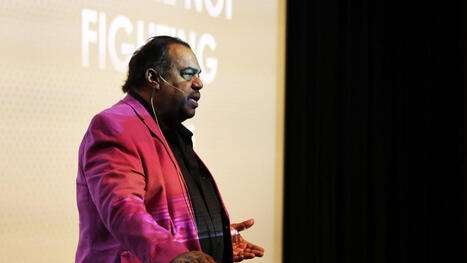
"What we know from folks like Daryl Davis, but also the historical civil rights movements, is that it's joy, it's music, it's dreams, it's sermons, all those things are the things that really bring us together," Grumach said.
Grumbach said speakers like Davis demonstrate that listening is just as important as other types of political activism, including civil disobedience.
"We need to start with care, start with listening to each other, and then from there, we'll know where to point the compass," Grumbach said.
Empathy can be simulated, but compassion depends on motive and care.
Compassion involves not only sensitivity to suffering but also a motive to alleviate and prevent it.
The difference between feeling understood and being cared for matters more, not less.
Empathy without compassion can be persuasive and effective while still lacking safety.
Why would it matter whether the empathy you receive is real or synthetic? If it feels emotionally supportive, what is the difference between empathy coming from a human being or a chatbot? Isn’t the experience of empathy what matters?
What happens when a society elevates victimhood to a virtue and decides that punishment is cruel? You get the disease Dr. Gad Saad calls suicidal empathy. And the West may be terminally infected.
Saad says "maladaptively irrational altruism" has gripped our culture. He calls it a mind parasite that has hijacked the empathy module of our progressive elite, leading to a catastrophic miscalibration of moral priorities. The results are everywhere: from coddling violent criminals to protecting rapists to branding self-defense as toxic behavior. He says we are witnessing a civilization in rapid decline, with bad policies instituted because we prioritize the feelings of ostensibly marginalized groups over the truth, criminals over victims, and squatters over homeowners. Saad says this is not only not humane—it’s an active dismantling of the pillars that keep us safe and free.
In this episode of The Empathy Edge, people and culture strategist Julia Armet — a workplace facilitator and proud neurodivergent leader — joins Maria Ross to explore how empathy transforms work and inclusion. Julia shares her personal journey navigating neurodivergence and introduces the double-empathy problem — a powerful lens for understanding communication across differences.
This empathy deficit—whether it stems as in Trump’s case from contempt, or as in Democrats’ case from the desire to reduce politics to statistical probabilities—is endemic. An inability to capture the loyalty of skeptics or redirect their ire by understanding what inspires, soothes, scares, and repulses human beings explains Trump's military failures.
It also explains his domestic political failures, the broader authoritarian turn in Republican politics, and even certain technocratic tendencies among Democrats. Whenever leaders treat civilians principally as instruments, they misjudge how those people will respond to events and appeals and affronts. This, unsurprisingly, makes it hard to win any contest in which the masses have a say. Wars, yes. But elections, too.
The Trump administration and the MAGA movement have embraced overt anti-empathy as its defining stance, and the Christian nationalists, eugenicists, business leaders, and proud bigots who have the president’s ear now rail against empathy as a sin and a cancer. Elon Musk believes that “The fundamental weakness of Western Civilization is empathy,” and the idea that Democrats and progressives have made empathy “toxic” has become one of the right’s favorite talking points.
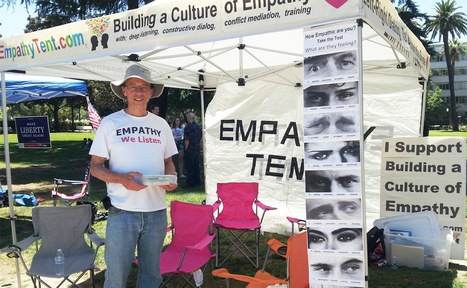
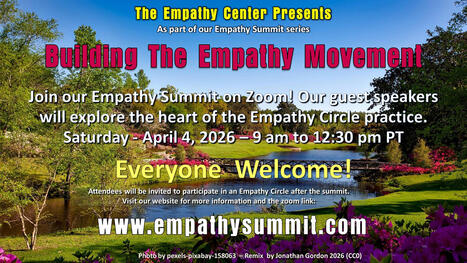
Our summits are comprised of a number of 15 minute presentations on the chosen theme for the quarterly summits. After the presentations the attendees are invited to participate in an Empathy Circle. Past summits have been on conflict resolution, training programs from around the world, and empathy book authors.
In addition the summit is reunion and re-connection of circle trainers, trainees, facilitators, practitioners and supporters.
Our theme for April, 2026, is How Might We Build the Empathy Movement?
Do you struggle with empathy when conversations are tough? Wonder how to use empathy to reduce tensions? Need more tools to help clients? You are warmly invited to join us for a practical and interactive introduction to Deep Listening and Empathy based in the model of Nonviolent Communication.
Learn three powerful strategies to grow your empathy muscles and reduce tensions in challenging interactions.
For: Coaches, therapists, educators, human service providers, intimate partners
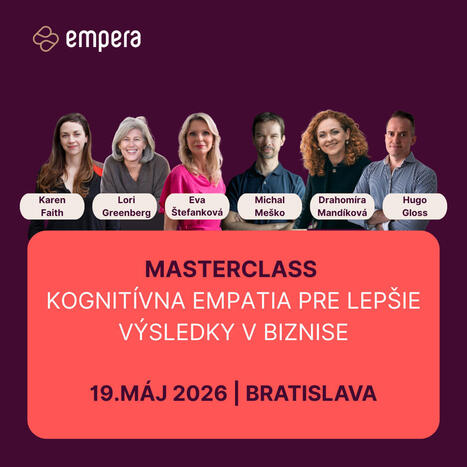
Accelerate hiring, improve business performance, and reduce costs by applying cognitive empathy – a skill that can be learned.
This masterclass introduces a practical approach to cognitive empathy and its application in a business environment.
Participants will gain concrete tools and know-how that can be immediately applied in practice – particularly in hiring, leadership, and team collaboration.
What you will learn
How to apply cognitive empathy in the hiring process
How to improve decision-making about candidates and teams
How to increase collaboration efficiency and team performance
How to connect empathy with real business outcomes
Introducing The American Empathy Project On May 2nd, 2026, we are hosting a nationwide counter-offensive of defiant joy through service. The American Empathy Project is putting $100,000 directly into the hands of humanists and our allies to fund 100 community service projects across the country. You can learn more about the project and apply for a grant at americanempathyproject.org.
We’re looking for 100 people who are as angry as we are to take a stand for goodness. We will give you a $1,000 grant, a toolkit and the support you need to organize an event in your zip code.
Defiant joy means helping our neighbors and friends who this corrupt administration is otherwise trying to leave behind.
Empathy is a human mechanism, like attention. It's part of our ability to understand the emotions of others. The problem is that it's heavily biased by our environment.
This biased selection of empathy makes it easy for specialists to dehumanize groups by attributing negative or even animal characteristics to them. Take, for example, the discourse surrounding the presence of Arabs in France, Canada or the United States. They are seen as a problem, and their suffering is systematically denied. This sometimes even serves as a way for groups to victimize themselves over minor or even non-existent phenomena, such as those crying "anti-white" racism as soon as a criticism is made of the white population or an actor of color is cast in a role.
Six thematic papers, each standing alone — plus a seventh that sets out the complete academic foundation. Together they make the case that the empathy deficit in UK organisations is not a funding problem, a commitment problem, or a culture problem. It is a method problem. And the method has a solution.
Structural racism has impacted the lives of African Americans in the United States since before the country's founding. Although the country has made some progress towards a more equal society, political developments in the 21st century have shown that deep divides remain. The persistence of inequality is an indicator of the stubborn resilience of the institutions that maintain white supremacy.
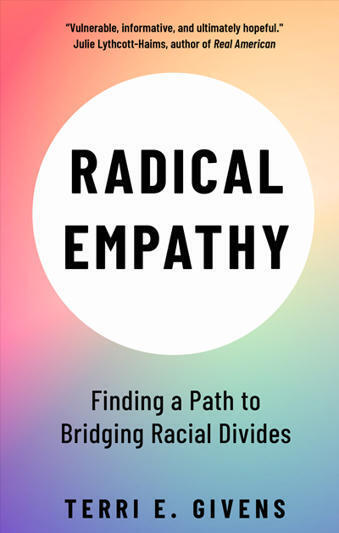
To bridge our divides, renowned political scientist Terri Givens calls for 'radical empathy' – moving beyond an understanding of others' lives and pain to understand the origins of our biases, including internalized oppression. Deftly weaving together her own experiences with the political, she offers practical steps to call out racism and bring about radical social change.
by Robert C. Koehler She calls this worldwide awakening “Radical Empathy,” a term in widespread use, which means a deeply rooted sense of connection among people, well beyond merely sympathy and shared feelings. We are one planet, one people, and we will survive together or not at all....
Radical Empathy, or at least one example of it – our complex force of hope even as the world’s leaders continue bleeding away the planet’s resources in order to play war. Radical Empathy transcends war. It’s who we are – when we find ourselves.
To get content containing either thought or leadership enter:
To get content containing both thought and leadership enter:
To get content containing the expression thought leadership enter:
You can enter several keywords and you can refine them whenever you want. Our suggestion engine uses more signals but entering a few keywords here will rapidly give you great content to curate.





 Your new post is loading...