I am really enjoying reading your blog. If you want to buy villa in Noida Extension then call on the given number-8375000707 as we give you the best offers for buying villa in Noida Extension. https://www.villasinnoida.com/villas-in-noida-extension.php
Empathy is one of the most important lessons you can teach the next generation. When someone is struggling, it isn’t always easy to know the right thing to say or do, and sometimes it’s even harder to recognize when support is needed. Children are still learning how to navigate those moments. In today’s digital world, where interactions often happen through screens, developing the ability to understand another person’s feelings, perspective, and experiences becomes even more essential. By teaching empathy early, you can help children build stronger relationships, show compassion for others, and contribute to a kinder world.
Aflac explains five different ways that parents can teach their children to show compassion and empathy during World Kindness Week (Nov. 9-13, 2026) and every day, and why the words you choose in daily conversations matter.
by Sheryl Anjanette Empathy is more complex than we think, more consequential than we realize, and more learnable than we have been led to believe.
I’ve spent years studying empathy, teaching it, and working to build artificial intelligence capable of practicing it. When I stood on a TEDx stage to talk about How Empathetic AI Can Change the World, I was making an argument about technology. But the years I’ve spent pursuing that possibility have also changed the way I think about human empathy.
Along the way, I’ve come to question much of what we assume about this distinctly human capacity, including whether it is as uniquely human as we believe.
Empathy includes sharing someone's joy and embarrassment. In a new study, sad stories prompted the strongest wish to help.
A friend gets good news, and you feel happy too. Someone tells you about an awkward moment, and you cringe as though you were there.
Both experiences involve empathy, but researchers have spent much more time studying how we share another person’s pain. Most lab tests focus on sad stories.
O'Reilly concludes that the central failing of the Republican Party was an inability to demonstrate genuine empathy for voters burdened by these rising living costs, which he points to as the primary reason for their election losses.
Ardern’s leadership became internationally associated with compassion following the terrorist attacks on two Christchurch mosques in March 2019.
She recalled how the attacker had deliberately sought to provoke hatred and division within New Zealand’s multicultural society. The country’s response, she argued, demonstrated that solidarity could defeat attempts to fracture communities.
As Prime Minister, she was described as the nation’s “chief mourner”, a responsibility she accepted while recognising that sympathy alone was insufficient.
“If I’m in charge of acting on behalf of others, it’s not enough just to bring empathy. Empathy is nothing without action.”
Within days of the attacks, her government moved to prohibit military-style semi-automatic firearms and introduced a weapons buyback programme.
PRNewswire/ -- The two executives most responsible for shaping workplace culture expect to pay a price for leading with empathy. In new Businessolver research, 59% of CEOs and 51% of CHROs (or Chief People Officers) say their decisions will be challenged if they lead with empathy. Yet 99% of CEOs and 88% of CHROs believe empathy contributes to business results.
The findings come from Part 2 of Businessolver's 2026 State of Workplace Empathy C-Suite Special Report, "Inside America's C-suite: What happens when executives don't feel safe?" The study of 1,000 employees and 300 C-suite executives, including CEOs, CFOs, CIOs/CTOs, and CHROs/CPOs, is part of the company's 11th annual study on empathy at work.
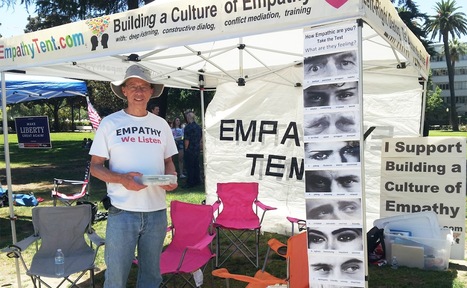
DEEP. NOURISHING. IN THE PRESENT. RIGHT WHERE YOU ARE!
Learn to listen deeply and respond with empathy instead of fixing, advising, telling your own story and pulling the other person away from their experience.
Learn how to be more fully present with others in a way that feels good for both people.
Discover two powerful keys to connect deeply with others
This workshop will nurture your aching mind and heart.
Discover compassionate communication using the model of Nonviolent Communication and also learn about upcoming in depth training opportunities to support you in living your values authentically.
Join Kathy Ziola, Author of "Live Compassion" and Certified Trainer with the international Center for Nonviolent Communication and receive a practical introduction to a powerful way of listening and responding that can change your life and relationships in every arena. Kathy has 21 years teaching this model and as a communication and life coach and psychotherapist.
What empathy activities for kids should practice Emotion researchers generally define empathy as the ability to sense other people's emotions, together with the ability to imagine what someone else might be thinking or feeling (Greater Good Science Center).
The same page says the second part, "cognitive empathy," is sometimes called "perspective taking." Sympathy is feeling for someone ("I am so sorry you are hurting"), and empathy is feeling with them ("I feel your disappointment") (Greater Good Magazine). Harvard's Making Caring Common project adds that empathy also means caring about and valuing the other person, and that children have the capacity for empathy but don't develop it on their own (Making Caring Common).
I came across a phrase recently that stopped me in my tracks: toxic empathy. I found myself wondering, how can empathy be toxic?
Apparently, the phrase describes caring so much about others that our judgment becomes clouded. I understand that compassion requires wisdom and discernment. But I wonder if, in our efforts to protect ourselves from caring too much, we are in danger of losing something essential to being human.
Empathy means "to feel with." It is about drawing close, listening, and allowing ourselves to be touched by another person's experience. Sympathy is often about feeling for someone, while empathy invites us to stand alongside them. It asks us to move beyond observation and into connection.
by Robert P. Jones If you don’t live within or adjacent to the white evangelical Protestant cultural world, you might be astonished to learn that the moral sentiment of empathy is under attack.
This well-coordinated assault was mounted by Christian nationalist theologians and influencers, and it has now been mainstreamed by established evangelical leaders.
The new “empathy gap” is not only influencing the midterm elections but is also reshaping the larger partisan fault lines in our politics.
As a Christian, I’m certainly paying attention to the arguments about empathy—particularly those in faith circles. As evangelical leaders like Southern Baptist Theological Seminary president R. Albert Mohler Jr. and conservative commentator Allie Beth Stuckey have criticized the value of empathy, PRRI’s poll is meant to help understand the impact of those arguments. But as I began covering the survey, I started to have some questions.
Respondents could choose either “empathy is a foundational moral value that helps build a healthy society” or that “empathy can become dangerous when it leads people away from building a society guided by God’s truth.” They were asked which statement came closest to their views and were asked to rate on a scale of “strongly,” or “not strongly.” But why did PRRI’s survey frame these two options about empathy as polar opposites?
An important subtheme of the book is the destructiveness of emotionalism, the doctrine and practice of placing emotions above facts, logic, and reason. “Our emotions,” Saad writes, “can lead us astray when they are deployed in contexts when it would serve us best to invoke our reasoning faculty” (10). When people succumb to suicidal empathy, he explains, viewing the world through “the prism of maximizing empathy now,” they focus only on “first-order effects” while ignoring the “disastrous long-term consequences” (158–59).
Beyond the primary empathy scales, the researchers tracked engagement with the training tasks across 16 time points. The data showed that empathic engagement and mindful engagement in doing the training tasks increased over the duration of the study. Conversely, the difficulty associated with empathetic task engagement decreased. These changes in engagement were most marked around the half-way mark.
The authors concluded that self-effacing empathy training may strengthen empathy among adolescents and their parents. However, they emphasized the need for further investigation into the duration of this effect after the studied eight-week period. It remains unclear whether the improvements in empathy persist once the training has ended. Additionally, the researchers noted that the findings should be replicated in other contexts and with different control conditions to confirm the robustness of the results and to determine the generalizability of the intervention.
The pendulum has started to swing back. It has become an article of faith for MAGA and, in particular, evangelical Christians, to view empathy as not a virtue but as a weak-kneed disease of the “woke” Democrats.
As David French documented in the New York Times: “Books like ‘Toxic Empathy,’ by the popular Christian podcaster Allie Beth Stuckey, and ‘The Sin of Empathy,’ by an evangelical pastor and theologian named Joe Rigney, have warned Christians against allowing their hearts to be influenced by progressive appeals to empathy.”
Empathy is your new leadership edge. Grounded in neuroscience and real-world stories, Empathy Leadership teaches leaders how to navigate conflict, build trust, and lead with clarity and confidence.
In today's workplace, empathy isn't a soft skill--it's the competitive edge that distinguishes great leaders and thriving organizations. Drawing from neuroscience, psychology, and real-world narratives, Douglas E. Noll reveals how calm authority, emotional intelligence, and compassionate communication are strategic advantages in effective leadership. Empathy Leadership is a revolutionary framework that prioritizes emotional connection as the foundation for success.
Through practices like reflective listening and affect labeling, leaders learn to recognize emotions in real time, diffuse tension, and strengthen trust and collaboration in the workplace. For leaders at every level, Empathy Leadership provides the actionable insights and tools to lead with both head and heart--demonstrating how empathy leverages emotional connection to build and maintain high-performing teams and authentic human connection.
In a newly published investigation examining sociocognitive processing in the general population, researchers have discovered that borderline personality symptom severity is significantly associated with reduced mentalization and affective empathy, alongside a counterintuitive reduction in the willingness to accept fair monetary proposals during social exchanges.
The investigation, led by Pascal Louis and colleagues and published in Borderline Personality Disorder and Emotion Dysregulation, evaluated how subclinical variations in borderline traits shape social decision-making when individuals face economic choices paired with varying emotional cues.
Anew survey from the Public Religion Research Institute, released October 20, has found a “partisan empathy gap” dividing Americans ahead of the midterm elections. Democrats (84%) and Independents (70%) see empathy as a benefit to society; Republicans are split, with 43% describing it as a danger — specifically, a danger “if it leads society away from God.”
The religious breakdown is equally revealing. Among white evangelicals, only 42% name empathy a “foundational moral value for a healthy society,” while 54% say it “can become dangerous when it leads people away from building a society guided by God’s truth.” White Catholics (66%) and white mainline Protestants (73%) still see it as important. PRRI president Robert Jones traces the shift to a 2019 blog post by conservative author Joe Rigney, which spread through evangelical media and eventually produced books like Allie Beth Stuckey’s Toxic Empathy and Gad Saad’s Suicidal Empathy. “They really are on an island by themselves on this question,” Jones said of white evangelicals.
The findings also highlight a disconnect between executives and employees over who is responsible for shaping workplace empathy.
A majority of CEOs and chief human resources officers (CHROs) believe that demonstrating empathy at work could undermine their authority, despite overwhelmingly recognising its contribution to business performance, according to new research by Businessolver.
How do ideas about right and wrong vary across cultures? What do researchers mean when they talk about empathy? And what questions should guide the next generation of scholars studying these subjects?
Those questions will shape "Expanding Empathy 2026," a series of four discussions in November and December bringing together researchers from psychology, philosophy and other disciplines to examine morality, human behavior and the future of empathy research.
Now in its eighth year, the series is hosted through Penn State's Consortium on Moral Decision-Making and combines in-person programs with virtual conversations among established and early-career researchers.
"I think these topics are increasingly important as people publicly debate whether empathy is a sign of strength or weakness," said C. Daryl Cameron, Rock Ethics Institute senior research associate and director of the consortium.
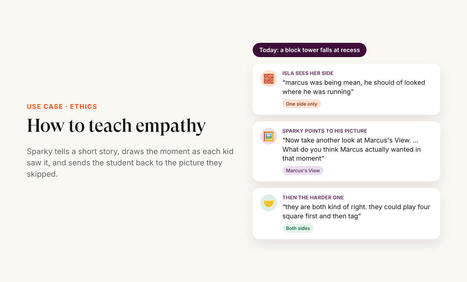
What if technology could help children become more empathic? That question sits at the heart of Dr. Ekaterina Muravevskaia's work.
What if technology could help children become more empathic? That question sits at the heart of Dr. Ekaterina Muravevskaia's work.
Growing up, Ekaterina was an intensely sensitive and emotional child, fascinated by something many of us rarely stop to consider: What does it actually feel like to be another person? She remembers looking at the people around her and wondering why they seemed so calm and rational when she had so much happening inside.
by Jenni Ogden Ph.D. Experiencing empathy is one of the best reasons for reading a novel.
The brain's empathy systems are a part of the concept of "theory of mind."
Mind reading is another way of thinking about theory of mind.
Our brains are wired to respond to other people’s emotions almost as if we are experiencing them ourselves; for example, studies have shown that when we observe someone else doing something or showing an emotion that engages us, the same neurons fire in our brains as would fire if we were feeling a similar emotion. These have been called mirror neurons.
byJohn Pentland Empathy does not mean agreeing with everyone or abandoning our convictions. It means refusing to forget the humanity of the person before us.
Article content I keep coming back to this simple truth: we are made for connection. We need one another, and we are called to care for one another.
Article content Empathy is the way forward because it has always been at the heart of the way of Jesus. In a disconnected world, it invites us to draw near. In a fearful world, it calls us to love. And when the world tempts us to look away, it reminds us to see.
by David French I’m highlighting Sey’s story for two reasons. First, it’s directly relevant to a debate about empathy that has long been spreading across the Christian right. Second, it demonstrates the foolishness of mass deportation. Mass deportation doesn’t put America first; it puts vengeance first, and vengeance is a poor substitute for a moral and rational immigration policy.
Let’s begin by talking about empathy. As I’ve written before, one of the most striking aspects of the Trump era has been the evangelical attack on empathy as a virtue.
Books like “Toxic Empathy,” by the popular Christian podcaster Allie Beth Stuckey, and “The Sin of Empathy,” by an evangelical pastor and theologian named Joe Rigney, have warned Christians against allowing their hearts to be influenced by progressive appeals to empathy.
In this lecture, we explore the concept of empathy and examine why it is such an important part of emotional wellness, emotional intelligence, and healthy relationships.
Students are introduced to empathy as the ability to understand, recognize, and connect with another person's emotional experience. Rather than simply feeling sorry for someone, empathy involves trying to see the situation from their perspective and appreciating what they may be thinking or feeling.
To get content containing either thought or leadership enter:
To get content containing both thought and leadership enter:
To get content containing the expression thought leadership enter:
You can enter several keywords and you can refine them whenever you want. Our suggestion engine uses more signals but entering a few keywords here will rapidly give you great content to curate.


 Your new post is loading...