I have long opposed therapy’s worship of the great god Empathy.
Freud had Eros and Thanatos, gods of love and death. Known for his will to eroticize everything, Freud seems to have been on more intimate terms with the god of death.
Today’s therapist has gotten beyond love and death; he believes in Empathy. He doles it out like a panacea. He assumes that if we could feel everyone’s feelings we would have better relationships, more love in our lives, and more success in our careers.
Since psychopaths notoriously lack empathy, therapists assume that people who have empathy will naturally behave more morally.
ABOUT the only thing tanking faster than consumer confidence and the Greek economy would be the global compassion index, if such a measure existed...
Are people today — are societies — really becoming somehow more callous?
The answer is no, of course not — at least not in any fundamental sense. But compassion is a limited resource, a system rooted in cognitive networks that tire and need refueling. And it’s not always rational.... “In particular, listening to people who are suffering and not being able to do enough for them puts a tremendous weight” on caregivers, said Dr. Charles Figley, a psychologist at Tulane University.
"This video is about how to do empathy... technically we don't give empathy, we give our full attention and presence. So we are completely, completely present with our whole being, and as a result, the other persons need for empathy is met."
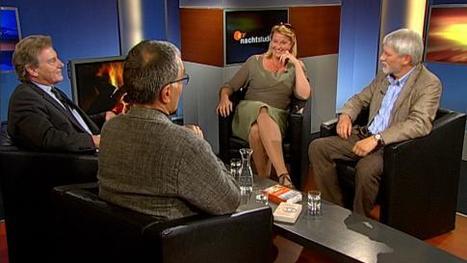
Can neuroscience and psychology explain cruelty? In his new book, The Science of Evil, Cambridge University professor Simon Baron-Cohen explains the empathy spectrum we all lie on and that an erosion of empathy can explain why some commit cruel acts.
We are happy to announce the publication of our new book, Practicing the Art of Compassionate Listening, by Andrea Cohen, with Leah Green and Susan Partnow. This practical “how to” book provides a step-by-step approach to help you implement our practices into your daily life.
It will surely become a primary source for learning and practicing Compassionate Listening skills, as it contains much of the curriculum from our highly acclaimed introductory trainings.
Compassionate Listening℠ is a skill set that calls for ongoing practice, integration, and embodiment. Our Advanced Training courses consist of two trainings that may be taken individually or in any sequence. Both courses are offered at least once per year.
Each course is designed to strengthen Compassionate Listening skills, catalyze personal growth, and offer direction and support in an intimate learning community of compassionate listeners, exploring what it means to be a skilled practitioner. The Advanced Training courses are open to everyone who has taken an introductory training or participated in a training delegation.
East Coast: November 10-13, 2011 in Hamden, CT. Pacific Northwest: March 22-25, 2012
The distinction between “empathy” and “sympathy” in the context of ethics is a dynamic and challenging one. The eighteenth century texts of David Hume and Adam Smith used the word “sympathy,” but not “empathy,” although the conceptual distinction marked by empathy was doing essential work in their writings. After discussing the early uses of these terms, this article is organized historically. Two traditions are distinguished.
The first is the Anglo-American tradition, and it extends from Hume and Smith to the twenty-first century work of Michael Slote. Stephen Darwall’s contribution is applied in engaging Hume and Smith. Finally, the interrelation of empathy, sympathy and altruism is explored in the work of John Rawls and Thomas Nagel. The second tradition is the Continental one. It extends from the spirituality of Johann Herder to the phenomenological movement of Edmund Husserl, Martin Heidegger, Max Scheler, and Edith Stein.
LeftyMathProf's comment September 22, 2011 10:14 AM
As I understand it, the word "empathy" did not enter our language until the early 20th century. So I'd guess any philosophers before that time are unlikely to tell us much about empathy, though they may have something much like it in mind.
Empathy is an important element within all relationships. It is to emotionally put your self in the place of another. When we demonstrate it we identify with another's feelings. The ability to empathize is directly dependent on your ability to feel your own feelings and identify them.
While a lack of empathy means not understanding the feelings and emotions of a person with whom we are in a relationship. Such behaviour is responsible for relationship break ups.
To master empathy you need to have self -awareness, non judgement, listening skills and self-confidence.
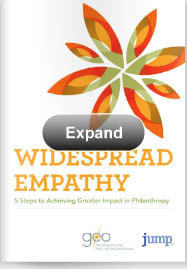
The newest publication from GEO and Jump Associates argues that having an organizational commitment to widespread empathy allows grantmakers to base their decisions on an authentic, firsthand understanding of the perspectives of grantees, community members and other stakeholders.
The guide also shares the stories of grantmakers that are moving from compassion to connection as they bring more empathy to their day-to-day work.
Jump Associates collaborated with Grantmakers for Effective Organizations (GEO) to publish a new whitepaper titled Widespread Empathy: 5 Steps to Achieving Greater Impact in Philanthropy.
The newest publication from GEO and Jump Associates argues that having an organizational commitment to widespread empathy allows grantmakers to base their decisions on an authentic, firsthand understanding of the perspectives of grantees, community members and other stakeholders.
The paper outlines how foundations can be more effective when they embrace empathy within the whole organization.
Dev Patnaik, author of Wired to Care, created a buzz at GEO’s 2010 National Conference when he introduced the concept of empathy, the ability to reach outside of ourselves and connect with other people, and told the story of how organizations of all kinds are tapping the power of empathy to develop a shared sense of how best to meet stakeholders needs and increase effectiveness. Watch the video of Dev Patnaik's plenary address:
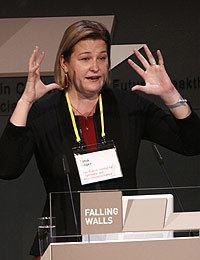
Die Fähigkeit zur Empathie gehört zu den grundlegendsten menschlichen Eigenschaften. Doch was passiert dabei eigentlich in unserem Gehirn und kann man diese Fähigkeit trainieren? Fragen, denen die Neuropsychologin Tania Singer auf der Spur ist.
Lou Agosta: The commitment of the Chicago Empathy Project (CEP) is to expand the application of empathy in human relatedness. In particular, the commitment is to provide an opening for the exchange of ideas in a context of empathic human relations by delivering motivational presentations, inspirational conversations, training, workshops, and psychotherapy services to the professionals in the mental health, education, and business communities.
This post is a call for participation and an invitation to provide leadership in designing and implementing the Chicago Empathy Project (CEP).
Of these, the trend that Pinker calls the "Humanitarian Revolution," is close behind government as a civilizing force. He cites the argument of the Australian philosopher Peter Singer, who in "The Expanding Circle," argues that people have expanded the range of humans "whose interest they value as they value their own." In other words, the snippet of empathy bestowed upon us by evolution is growing.
Today, many of us feel kinship not only with members of our own family or clan but also with people from other nations and other races. Pinker makes a strong case that inflating circles of empathy may be playing a crucial role in reducing violence.
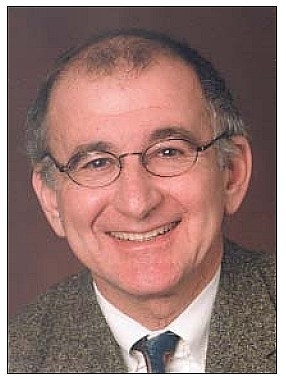
Bill Drayton of Ashoka talks about their latest initiative on empathy, a new approach with collaborative entrepreneurship, and the growing influence of social enterprise.
Empathy has become a subject of much interest. It's of interest in fiction as we feel for characters in stories, in politicsas we wonder what to feel for people in different social groups, and in history as we wonder about the emotions of people living in societies of the past.
The word "empathy" only entered European languages about a hundred years ago. Before that--in English at least--it was contained within the wider concept of sympathy.
Once again, David Brooks leaves me no choice but to rant against one of his disgraceful columns. Once again, Mr. "Reasonable" Conservative" runs together a few sentences, interspersed with dropping the names of a few "scholars" and "social experiments" to opine about the Limits of Empathy.
This one is so incoherent and rambling that, on one level, it barely merits any attention. But on the other hand, it does have a thoroughly noxious message. Shorter Brooks:
Q: What do world hunger and bad customer service have in common?
A: The secret to solving them both is empathy and innovation. Empathy and innovation seem like an unlikely pairing, but together, they're the secret to solving just about everything. Here's why. You have to care about a problem before you're motivated to solve it.
Alexander Graham Bell invented the telephone because his wife was deaf and he wanted to help those who couldn't hear. Empathy for his wife ignited the innovation....
Michel Koopman, Chief Executive Officer of getAbstract Inc. says, "Empathy and innovation are the two most important qualities that can help us solve many of our economic and political problems."
The Compassionate Listening Project warmly welcomes you to our Eighth Annual Gathering. No prior experience with the Compassionate Listening Project is necessary to attend this event.The Gathering offers the chance to slow down and connect with ourselves and others in an intimate-sized, open-hearted, compassionate community.
This year our facilitators will offer a selection of experiential sessions to deepen our practices. Topics include the role of grief, transforming victim-perpetrator dynamics, grounding meditations and embodiment practices, CL fundamentals, and nature constellations – receiving support, love and strength from earth and our abundant natural world. Several sessions will also be offered in open space, led by Gathering attendees. (We have space for about 50 participants. Please see the updated registration list below.)
each side has legitimate aspirations -- and that’s part of what makes peace so hard. And the deadlock will only be broken when each side learns to stand in the other’s shoes; each side can see the world through the other’s eyes. That’s what we should be encouraging. That’s what we should be promoting. ... And we will only succeed in that effort if we can encourage the parties to sit down, to listen to each other, and to understand each other’s hopes and each other’s fears.
Conflict and repression will endure so long as some people refuse to do unto others as we would have them do unto us. Yet that is precisely why we have built institutions like this -- to bind our fates together, to help us recognize ourselves in each other -- because those who came before us believed that peace is preferable to war, and freedom is preferable to suppression, and prosperity is preferable to poverty. That’s the message that comes not from capitals, but from citizens, from our people.
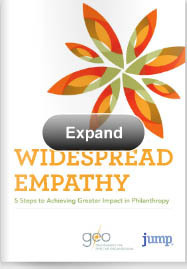
A new report from Grantmakers for Effective Organizations (GEO) asserts that by making "empathy a core driver of their grantmaking," grantmakers can combat prevailing notions that they are "disconnected from their communities and from the organizations they support, as well as the people whom those organizations serve."
The report stresses the importance of every staff person - not just program officers - having "an immediate sense of the true needs, concerns and priorities of grantees and communities" and outlines five steps to "high-empathy grantmaking:"
-Make it about others, not about you: remain "behind the scenes" while grantees and community members are "out front"
- Get out of the office: get face-to-face with grantees, through site visits, volunteering and board service
The newest publication from GEO and Jump Associates argues that having an organizational commitment to widespread empathy allows grantmakers to base their decisions on an authentic, firsthand understanding of the perspectives of grantees, community members and other stakeholders.
The guide also shares the stories of grantmakers that are moving from compassion to connection as they bring more empathy to their day-to-day work.
The economic downturn has caused many people in the nonprofit world to re-examine the way they work, but too little effort has focused on one of the keys to success: empathy.
We know what you are thinking: Nonprofit groups are all about empathy. Soup kitchens, after-school programs, affordable-housing groups—the people who provide those services as well as the foundations that support them are always focused on helping others.
But empathy—real empathy—is more than good intentions. Empathy is the ability to reach outside of yourself and walk in someone else’s shoes. Over time, empathy grows into an informed intuition for how other people see the world. We rely on this intuition to help us make better decisions that affect the folks around us.
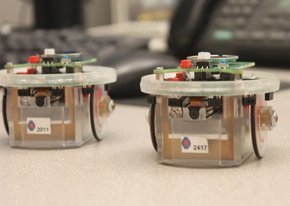
Robots may one day learn to care for and nurture one another, according to research by an University of Oklahoma professor.
Computer science professor Dean Hougen studies robotics in the OU Robotic Intelligence and Machine Learning Lab, founded by him in 2001.
Hougen’s most recent project investigates whether robots can learn to care for one another and, eventually, humans.
“I am hoping one of the things we will evolve is the capacity for empathy, to look at another individual and say, ‘I see what this person needs. I am going to respond to it,’” Hougen said. “There are people who try to write code to make a robot empathetic, but it’s hard to sit down and say, ‘OK, this is what it means.’”
To get content containing either thought or leadership enter:
To get content containing both thought and leadership enter:
To get content containing the expression thought leadership enter:
You can enter several keywords and you can refine them whenever you want. Our suggestion engine uses more signals but entering a few keywords here will rapidly give you great content to curate.


 Your new post is loading...








![Empathy and Sympathy in Ethics [Internet Encyclopedia of Philosophy] | Empathy Movement Magazine | Scoop.it](https://img.scoop.it/T-OwYWJeUPCWr9xE9ZTT5Dl72eJkfbmt4t8yenImKBVvK0kTmF0xjctABnaLJIm9)