Are engineering students less empathetic than students in the caring professions? Yes, the findings from a study performed at Linköping University indicate that this is the case. The study comprises more than 200 students from six different study programs and was carried out by Chato Rasoal, a researcher in psychology, together with two colleagues.
The researchers measured empathy with a well-established questionnaire that shows, for example, the degree of imagination, the ability to assume the perspective of others, and whether the subject cares about others, along with the subject´s own worries and anxiety.
– Empathy can have both a cognitive and an emotional aspect, explains Chato Rasoal. The capacity to see things from the point of view of others is primarily cognitive, while caring about others is a more emotional component.
I am really enjoying reading your blog. If you want to buy villa in Noida Extension then call on the given number-8375000707 as we give you the best offers for buying villa in Noida Extension. https://www.villasinnoida.com/villas-in-noida-extension.php
I sat down with Gad Saad, author of "Suicidal Empathy," to discuss the evolutionary psychology behind why the West is self-destructing in the name of tolerance.
Empathy is a perfectly adaptive human trait, but like any biological mechanism, it can misfire. When ideological parasites like gender ideology and critical race theory are the basis for empathy, it stops being a virtue and becomes a civilizational death wish.
We also get into why intelligent people are paradoxically the most vulnerable to bad ideas, why communism keeps coming back no matter how many times history buries it, and what it will actually take for the West to rediscover its survival instinct.
Outline: [0:00] A Canadian trying to save America [2:17] What happens when empathy misfires? [8:29] Even victims of crimes feel guilty now [17:18] The evolution of the parasitic mind [31:51] Christian ethics and self-sacrifice [36:14] Can we trust evolutionary psychology? [46:29] There are different kinds of truth [54:36] Why don’t bad ideals die out? [1:05:16] Is comfort driving us crazy? [1:08:45] How to protect your kids from the mind virus
The $180 Billion Business Case for Empathy Empathy pays—and companies that don’t recognize its value are paying the price.
Empathy isn’t just good in theory. Our 10th annual report reveals how U.S. organizations viewed as unempathetic are risking billions through employee turnover, mental health issues, workplace toxicity, and more—yet nearly 60% of CEOs still say empathy is a perk.
Join Monica Harris, John Wood, Jr. and Ilana Redstone as we discuss the need to develop emotional intelligence and perspective-taking skills and how deep listening strengthens democratic participation and community bonds. This theme also supports FAIR's commitment to respectful civil discourse, which is a foundational element of our Many Stories, One Nation curriculum: https://manystoriesonenation.com/
When researchers asked people whether they’d rather get an empathetic response from a human or from AI, human responses won by a wide margin. When the same researchers actually showed them the responses, AI won by a wider one. People who said they preferred human responses rated the AI replies as more empathetic, more validating, and even better at making them feel heard.
That gap between what customers say they want and what actually satisfies them is nothing new for marketers. But it's now showing up in two of the most important domains a CMO oversees: service and support.
In the strange case of Gad Saad, we have a public intellectual and cultural firebrand whose most intelligent haters tend to half-agree with him. Saad is a Canadian professor of marketing with a background in evolutionary psychology, originally of Lebanese Jewish origin, whose new book Suicidal Empathy: Dying to Be Kind, was Amazon’s no. 16 best-seller in books on its May 12 debut. This book, like Saad’s 2021 best-seller, The Parasitic Mind: How Infectious Ideas Are Killing Common Sense, promotes a big, catchy idea that seems to explain a broad cultural problem.
The Parasitic Mind purported to explain why so many people were able to believe obviously bonkers stuff during peak woke. Suicidal Empathy addresses how “misguided” concern for certain categories of people — criminals, victims, Muslims, the homeless, immigrants, trans athletes — has prompted Western elites to act against their own self-interest and endanger Western civilization.
This idea is so apropos that it has grabbed very well-timed headlines, thanks to a New York Post story on a young woman who declined to prosecute a man who attacked her on the subway — because of empathy; she didn’t want to send another black man to jail — only to regret it after her attacker allegedly killed an elderly man.
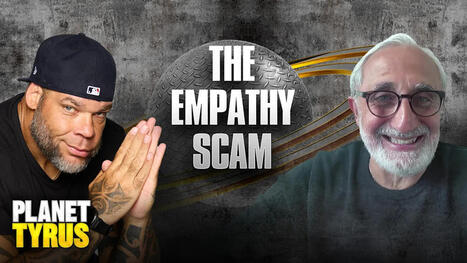
Is modern empathy actually a form of social suicide? Dr. Gad Saad joins Tyrus to expose how "Luxury Beliefs" and parasitic ideas are dismantling Western civilization.Evolutionary psychologist Dr. Gad Saad breaks down the core thesis of his new book, "Suicidal Empathy."
Tyrus and Gad explore the "GoverneMeHarder" mindset comparing the empathy-based appeals of historical tyrants to modern moral busybodies. They discuss the biological necessity of reciprocity, why the "Blank Slate" theory is dangerous, and how the West’s magnanimity is often mistaken for weakness.
Homeowner Jane invites the homeless James to live with her. “I’d hate to be homeless,” she tells herself. James starts to exploit and abuse her. She accepts it. “I would not exploit and abuse someone unless something truly terrible had happened to me,” she thinks. This is what Gad Saad would call “suicidal empathy.” In his book of the same name, the Canadian commentator rails against “the orgiastic misfiring of one of our most noble virtues, empathy.”
“Empathy is the starting point for creating a community and taking action. It’s the impetus for creating change.” – Max Carver
We think Max Carver got it right and that if we truly care about community building and making positive changes in the world, we have to invest in learning about how to become even more empathic as empathy is at the heart of true understanding. We asked some deeply empathic leaders to share their perspectives below.
Professor and bestselling author Dr. Gad Saad joins the Chicks on the Right podcast to discuss his explosive new book, Suicidal Empathy: Dying to Be Kind. From the rise of anti-Semitism and open borders to equity, taxation, DEI, political correctness, and the collapse of Western values, Gad Saad delivers an unfiltered conversation packed with satire, sharp analysis, and controversial takes.
The discussion dives into Islam and Western freedoms, Canada’s crushing tax system, Kamala Harris’ focus on equity, Mark Cuban drama, woke language manipulation, and whether the West still has the courage to defend its foundational principles.
If you’re interested in politics, culture wars, free speech, anti-woke commentary, and fearless debates, this episode is for you!
00:00 Intro 01:05 Gad Saad’s legendary sarcasm and satire 02:50 “Suicidal Empathy” explained 03:00 Islam and compatibility with Western values 05:45 Rise of anti-Semitism in the West 08:20 Moderate Muslims & reforming Islam debate 12:00 Canada’s extreme taxation system 18:10 Kamala Harris, equity vs equality 22:00 Mark Cuban unfollows Gad Saad 24:00 Pronouns, performative politics & “phonies” 25:15 Woke language manipulation explained 27:30 “Minor attracted person” & linguistic empathy 30:00 How “Suicidal Empathy” hijacks thinking 33:00 Trump, women’s sports & cultural battles 33:50 “The West lacks testicular fortitude”
Evolutionary psychologist Dr. Gad Saad warned that escalating political rhetoric, including a social media post by actor Mark Hamill showing a headstone for President Donald Trump, reflects a "suicidal" shift in American values.
Speaking on "Jesse Watters Primetime," Saad said the country is being overtaken by a "hyperactive" form of empathy, which in some cases has led to political violence. He said this mindset has "clobbered" reason.
Swap draining affective empathy for cognitive empathy to understand others without losing your perspective.
Avoid empathic tunnel vision to prevent unfair biases and emotional burnout.
Adopt rational compassion over emotional "quick fixes."
That is where the second form of empathy helps. Cognitive empathy is about perspective-taking. It allows you the intellectual understanding of the situation, but doesn't let you be absorbed by feelings and forget the bigger picture. When you utilize cognitive empathy, you are gathering information and creating a mental map of the situation.
Empathy Shadowing Speaking with end users in their own environment during their normal routines is a process called empathic design. This approach sparked the design thinking movement, which puts the user at the center of the design. Research has shown repeatedly in nearly every industry, including healthcare, technology, hospitality, and the financial sector, that observing and experiencing the user’s experience builds empathy.
Empathy shadowing helps leaders understand the full ecosystem—customers, employees, and the processes connecting them. By visiting employees where they actually work, leaders can wrap their head around problems in real time and see them, and their response, as they unfold. Following a patient through the care journey reveals both patient frustrations and the systemic hurdles clinicians and staff face. Listening to customer support calls shows engineers how customers feel and where internal tools create friction. Acting as an anonymous hotel guest exposes service issues and the constraints causing them. Leaders make better decisions when they understand the experience from every perspective.
This webinar focuses on the potential for reading to support young people’s empathy
There is growing interest in the relationship between reading and empathy, specifically understanding whether, how, and for whom, book reading fosters empathy. This webinar explores the potentially enriching effects of books, and other texts, to support empathy. The speakers will provide examples of contemporary research studies to exemplify the relationship between fiction book reading and empathy, and provide book recommendations for secondary school pupils, to nurture empathy among adolescent readers.
Author Gad Saad presents his new book, "Suicidal Empathy: Dying to Be Kind," arguing that misguided kindness leads to catastrophic policy decisions. Saad connects this to the controversy surrounding Fairfax County, Virginia's sanctuary policies, where dangerous illegal migrants were released despite prior offenses.
Empathy is an emotion that stems from understanding what another person might be feeling, and then feeling that same thing (or something similar). The first requirement—the ability to understand what another person might be thinking or feeling—is something that develops slowly; it starts in infancy and continues into the preschool years. First, babies gain the ability to understand that people have intentions that typically guide their actions. We see evidence that infants can act based on inferring another’s intention by about 14 to 18 months.
Empathy is more than a feeling; it’s a discipline that allows us to humanize those who disagree with us.
Empathy is an ancient moral instinct that is relatively new to the English language. From the Greek word Empatheia (meaning passion or emotion) and the Greek Pathos (meaning suffering and profound feeling), the German language produced the term Einfühlung somewhere in the late 19th century — a term describing the projection of one’s own feelings onto other human beings and even onto objects.
As language evolved, the English term “empathy” came to signify the capacity to understand the feelings of another person as if they were one’s own. Yet this new term reflected a very ancient bit of moral wisdom. It is strange that in today’s polarized discourse we sometimes discard empathy as if it were the product of experimental social science and not something that in substance echoes all the way back to the gospels and beyond.
“Research shows that when physicians engage with the arts—as observers or as artists or performers—empathy increases. According to the National Institutes of Health, ‘empathy is a fundamental driver of high-quality clinical care, acting as a crucial component of clinical competence that directly correlates with better patient outcomes, increased satisfaction, and lower litigation rates.
It bridges the gap between technical expertise and human connection, enhancing patient compliance and diagnostic accuracy, often acting as a key component of effective care.’ Ultimately, if we want to be successful in clinical care, we should consider the arts as a tool for cultivating empathy. I encourage everyone to explore art, music, theatre, dance, poetry, or prose as a way to connect with their own sense of empathy.”
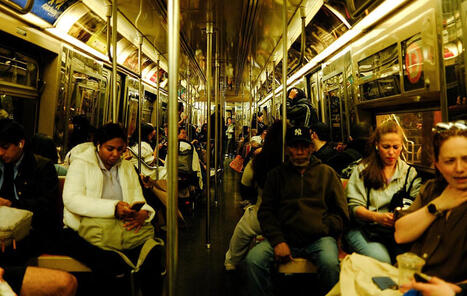
Rhamell Burke, a repeat criminal, attacked and later stalked two women on the New York City subway last April.
Though police stopped Burke from harassing the women any further, the victims ultimately decided not to cooperate with prosecutors, with one woman telling the New York Post later, “maybe a part of me was just like, I don’t want to put another black man in jail.” It was a decision she ultimately regretted after Burke, about one month later, allegedly pushed a retired school teacher onto the subway tracks, leading to the 76-year-old’s death.
“ Well, I mean, it's toxic empathy, isn't it—that it gets people killed. It serves the ego of the so-called enlightened, but the consequences fall on people that can't defend themselves,” argues Victor Davis Hanson on today’s edition of Victor Davis Hanson: In His Own Words.
Pope Leo XIV said today that for Christians and Muslims, “human compassion and empathy are not something additional or optional, but are a call from God to reflect his goodness in our daily lives.”
The Pontiff made his remarks to participants in a colloquium organized by the Dicastery for Interreligious Dialogue and Jordan’s Royal Institute for Inter-Faith Studies. The theme of the colloquium is “Human Compassion and Empathy in Modern Times.”
And for more on suicidal empathy, be sure to catch Rafaela Siewert’s conversation with the man who coined the phrase, Gad Saad. He explains to Rafaela why he thinks the West is on a suicide mission.
There is something unique about the West’s feverish desire to commit collective suicide by misguided empathy. Interestingly, in his mammoth twelve-volume A Study of History, the British historian Arnold J. Toynbee explained why civilizations die. This has since been summarized by the following maxim: “Civilizations die from suicide, not by murder.”
The general argument is that societies decay because of the self-inflicted failures of their elites in a myriad of ways. The American philosopher James Burnham echoed that sentiment in his 1964 book Suicide of the West, wherein he proclaimed: “It may be added that suicide is probably more frequent than murder as the end phase of a civilization” and added that “[L]iberalism is the ideology of Western suicide.”
I posit that in the current zeitgeist, the collective suicide of the West is occurring via the orgiastic misfiring of one of our most noble virtues, empathy, which of course is deeply anchored within the ethos of progressive liberals.
Empathy is an admirable virtue; as a social species, we have evolved the capacity for empathy. We seek prospective spouses and close friends who exhibit this trait.
We look for empathetic health care providers be they physicians, therapists, or veterinarians.
But as Aristotle explained millennia ago via his golden mean, all good things in moderation. Too little or too much of anything is often worse than some optimal sweet spot.
This insight applies to empathy as well. Little or no empathy is a hallmark of psychopaths. Too much of it is a telltale sign of the suicidally empathetic, which also includes invoking empathy in the wrong situations toward the wrong targets.
Background: Numerous definitions of empathy exist, making it difficult to understand the concept and teach others how to develop the skill. There is no one definition of empathy all healthcare disciplines accept, creating an obstacle to a constructive debate over the role and importance of empathy in nursing practice. The American Association of Colleges of Nursing developed the Essentials to address the education-practice gap. This included meeting the physical, psychological, emotional, social, cultural, and spiritual needs of individuals requiring palliative/supportive care.
Were you consoled by these expressions of empathy? Did you believe them? Did they make your situation any better, or did they become the replacement for what you really needed: patient listening, ongoing caring, practical help and lasting companionship? Were they ultimately no more than your conversation partner’s gateway to escape from the duty of really hearing you and going through sorrow with you?
Homeowner Jane invites the homeless James to live with her. “I’d hate to be homeless,” she tells herself. James starts to exploit and abuse her. She accepts it. “I would not exploit and abuse someone unless something truly terrible had happened to me,” she thinks. This is what Gad Saad would call “suicidal empathy.” In his book of the same name, the Canadian commentator rails against “the orgiastic misfiring of one of our most noble virtues, empathy.”
There is merit to Saad’s critique. He is correct that empathy is problematic when people exaggerate the similarities between individuals. In all likelihood, James is not exploiting and abusing Jane because he has been maddened by trauma. He is, fundamentally, a less conscientious person.
To get content containing either thought or leadership enter:
To get content containing both thought and leadership enter:
To get content containing the expression thought leadership enter:
You can enter several keywords and you can refine them whenever you want. Our suggestion engine uses more signals but entering a few keywords here will rapidly give you great content to curate.




 Your new post is loading...