One of the main drivers of the current excitement around artificial intelligence is its uncanny ability to act almost human. Unlike the stiff chatbots of the past, recent models can more effectively respond to a user’s emotions with nuance and understanding. The effect is convincing enough that some people attribute complex human abilities such as empathy to these computerized companions.
I am really enjoying reading your blog. If you want to buy villa in Noida Extension then call on the given number-8375000707 as we give you the best offers for buying villa in Noida Extension. https://www.villasinnoida.com/villas-in-noida-extension.php
One of the main drivers of the current excitement around artificial intelligence is its uncanny ability to act almost human. Unlike the stiff chatbots of the past, recent models can more effectively respond to a user’s emotions with nuance and understanding. The effect is convincing enough that some people attribute complex human abilities such as empathy to these computerized companions.
Local governments across the United States are the most trusted level of government — 67 percent of residents trust them to handle local problems and 62 percent feel their local elected officials represent them or their community’s interest very and somewhat well.*
City, town and village leaders interact daily with their residents on main streets, in schools and throughout their communities, actively listening, discussing key issues and solving issues. NLC is working to support local leaders as they serve their residents – to improve civic discourse, public engagement and building communities where everyone is treated with dignity and respect.
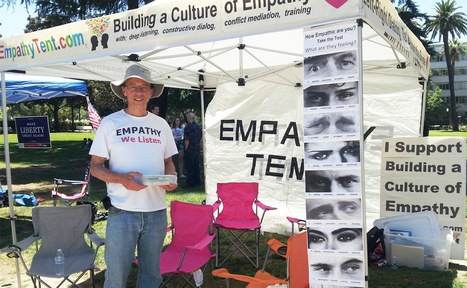
Although the white “Christian” nationalists are insisting that empathy is a sin, the voices of our Carlisle, Cumberland Valley and Boiling Spring High School students are a call for empathy, kindness, concern for others, and working together for the common good.
Offenses to common decency, the rule of law, and to our deeply held faith are appallingly common. There are those who profess that empathy and kindness to those in need, which is the heart of all major faith traditions, are dead. Or worse yet, that empathy is a sin.
Psilocybin is a serotonergic psychedelic shown to have enduring antidepressant effects. Currently, the mechanism for its enduring effects is not well understood. Empathy and prosocial behavior may be important for understanding the therapeutic benefit of psilocybin. In this article we review the effect of psilocybin on empathy and prosocial behavior. Moreover, we propose that psilocybin may induce a positive feedback loop involving empathy and prosocial behavior which helps explain the observed, enduring antidepressant effects.
Empathy in governance means the capacity of leaders and institutions to understand, feel, and respond to the lived realities of citizens which is rapidly emerging as a powerful currency for nation-building. In parallel, empathy is not a soft virtue reserved for private relationships; it is a strategic leadership capability. Nations that succeed in building resilient institutions and inclusive economies often do so because their governance structures are designed with a deep awareness of the human consequences of policy decisions. Empathy bridges the distance between policymakers and the people they serve, ensuring that governance is not merely about authority but about stewardship.
At a time when global politics is defined by confrontation and “strongman” leadership, former New Zealand Prime Minister Jacinda Ardern believes something different belongs at the centre of power: empathy. Speaking at the All About Women event at the Sydney Opera House on Sunday, Ardern reflected on the values that shaped her six years in office — and why empathy, often dismissed as soft or overly emotional, is in fact a crucial political value.
Central to that philosophy was empathy — something she believes politics has historically glossed over. “Empathy is a political value,” Ardern said, reflecting on the approach she tried to bring to government.
Her empathy-led leadership, she continued, wasn’t just about rhetoric or symbolic gestures.
The study, a systematic review published in the Journal of Adolescence, analyzed data from 13 studies involving more than 10,000 adolescents with an average age of about 16. It found a small positive association between social media use and overall empathy.
“While the association between social media use and total empathy was small, I was a bit surprised that it was positive given the mixed findings among the individual studies,” said Erin McDonald (Ph.D. ’25), the study’s lead author.
McDonald conducted the research as a doctoral student in psychology at Georgia State. She is now a postdoctoral fellow at McLean Hospital in Belmont, Mass., and Harvard Medical School.
Not all types of social media use showed the same relationship with empathy.
Studies that measured how often teens engaged with social media — checking feeds, posting or messaging — showed stronger associations with empathy than studies that measured total time spent online.
Empathy is understanding and feeling what someone is going through. Compassion is empathy, then action. And strong leadership in a startup community is an action sport. If you’re only empathic, you can become the community equivalent of a “thoughts and prayers” tweet: heartfelt, sincere… and ultimately not very useful when the building’s on fire.
A practical application of this thought exercise is easy to appreciate. Many of us treat others far better than we treat ourselves. By seeing your future self as another person, you can start showing empathy for a separate individual. You can begin to look at your short-term-oriented choices not just for their immediate consequences, but also for their impact on this future character. Imagine your future self as a close friend or family member, and it is harder to make choices that disadvantage this person or put them at risk for suffering or failure.
Empathy Before you come up with a 'How might we...?' question to solve or any ideas, you first need to figure out what exactly the user wants in the first place. You also want to make sure that you do this without any judgement, bias fallasies or assumptions and make sure to keep an open mind with curiosity and respect.
Empathy is all about understanding the user; their wants, needs, background, emotions, pain points and more. This can be done in many ways, both by meeting and interviewing the user in person or conduction online surveys and rearch.
The problem in those cases isn’t with empathy, which is a vital human virtue, but rather in its selective application. Just as we wouldn’t call love a sin because we might be stingy in our love, empathy isn’t a sin because its application is incomplete.
Or, put another way, our problem isn’t with too much empathy, but too little. We’re unwilling to place ourselves in other people’s shoes, to try to understand who they are and what their lives are like.
It’s hard to talk about this issue without recognizing a fundamental truth of the moment: The attack on empathy would have gained very little traction in the church if Donald Trump weren’t president. He delights in vengeance, and he owes his presidency to the evangelical church.
Radical has often been interpreted simply as extreme, but that does not do the concept justice. Radical means rooted, grounded, solid, strong.
Combine these two, and see here a powerful concept to help us resist the cruelty and evil now dominating our airwaves, threatening the future of all human and other life on our beautiful planet, threatening the planet itself.
Radical Empathy must be fierce, stubborn, creative, persistent. We must hold on to each other, build community, be willing to take risks and accept consequences. Seek alternatives. Stand in solidarity with all who resist oppression and the violence of power and greed.
by Alex Therrien It helps us to make close connections with people, and influences how we behave in a range of situations, from the workplace to a party.
Now scientists say empathy is not just something we develop through our upbringing and life experiences - it is also partly inherited. A study of 46,000 people found evidence for the first time that genes have a role in how empathetic we are.
And it also found that women are generally more empathetic than men.
'Important step' Empathy has an important role in our relationships.
In Suicidal Empathy: Dying to be Kind (2026), professor of marketing Gad Saad, who poses as an evolutionary psychologist and rubs shoulders with eugenics, follows up on his The Parasitic Mind (2021) in which he explicated the “woke mind virus.” He sounds the alarm that empathy has become a “cancer” because it allegedly has no “stopping mechanism” and will eventually kill its host — the human race. The image on the front cover of Suicidal Empathy is a sheep holding up a protest sign demanding “Free the Wolves.”
While we are still catching our breaths from the disaster averted in Michigan, this may come across as an unusual sentiment, but hear me out. Sometimes, not always, but sometimes, there is an overabundance of empathy, an almost toxic level of empathy emanating from Jewish voices, Jewish organizations, and Jewish sources aimed at comforting everyone but our own. To be clear: empathy, in general, is important. Jews should, and do, care about others deeply. However, this is meant as a wake up call. Just as we are instructed to do on planes, we must put our own oxygen masks on first.
The matching or mimicry of the emotional behavior of others is prevalent in many species, including humans and non-human primates. Emotional mimicry is considered to be an important facet of human empathy.
Previous studies have shown that infant and juvenile non-human primates spontaneously mimic human facial gestures, such as tongue protrusion and lip smacking. In addition, humans and chimpanzees voluntarily imitate each other's behavior. However, it has not been clear whether humans spontaneously mimic the perceived emotional expressions of non-human primates.
When we feel hurt, irritated, or caught in conflict with other people, it’s easy to get stuck in resentment, reactivity, or stress. But empathy is not only something we offer others — it can also be a gift to ourselves. In this talk, I explore the personal benefits of having empathy for others, including how it can soften the heart, reduce inner burden, and help us respond more skillfully while still honoring justice and clear boundaries.
00:00 – Concentration meditation and inner peacefulness 02:53 – Why concentration supports deeper mindfulness 07:21 – The three core elements of compassion 10:39 – Why empathy matters in a divided world 21:30 – The personal benefit of empathy for difficult people 28:18 – Three ways to widen the circle of “us” 32:32 – Empathy, justice, and skillful action
Former New Zealand prime minister Jacinda Ardern has warned that the rise of “strongman” leadership across global politics is worsening political division and weakening democracy.
Ardern, who served as New Zealand’s Prime Minister from 2017 to 2023, has often been associated with an empathetic leadership style that prioritised compassion, transparency and values-driven decision-making. But during her conversation in Sydney, she pushed back on the notion that empathy should be viewed as a softer or less effective approach to power.
When executives were asked which skills will be essential in the next two to three years to compete in an AI-driven world, 52% championed critical thinking, while only 17% rated empathy as essential. That ratio should worry anyone building a product.
To be clear: when we talk about empathy in AI strategy, we don’t mean being nice. We mean cognitive empathy, the strategic ability to model how your users actually think, decide and behave. It’s what helps you spot patterns in genuine human behaviour that your data hasn’t captured yet. Without it, you’re not just building blind; you’re building something expensive that nobody wants.
In The Empathy Paradox, Rachel McCabe analyzes the evolving role of empathy in contemporary media, film, literature, and culture. She advocates for a critical understanding of it, asking what happens when readers and viewers directly consider the complex ways that empathy guides their understanding and assessment of the culture they consume. By developing an awareness of our assumptions, she adds, we can avoid the pitfalls of self-interest and overidentification and develop more constructive applications of empathy that will help us become better readers and writers.
Empathy, our capacity to feel the inner experience of another, underlies much of our behavior and the choices and decisions we make. It is a more powerful teacher than its cousins, sympathy and compassion, in which we feel deeply for rather than with another, because the feelings it generates are so strong.
The neuroscientific exploration of empathy has taught us that it involves multiple emotional and cognitive processes, some of which rely on ancient subcortical structures in the brain (Marsh, 2018). In the 1990s, studies of monkeys led to the discovery of “mirror neurons”—specialized cells that fire whether the monkey is itself performing an activity or simply observing another performing it. Thirty years of research strongly suggests that humans also have mirror neurons, and they may be the basis for empathic responses when we see another person’s emotion or action (Bonini, Rotunno et al., 2022).
Many of us grew up in an empathy desert and missed out on being seen, known, and loved. Sadly, a lack of being understood and accepted often unintentionally creates emotional distance in our churches, friendships, and even our relationship with God. We might fail to realize that we can’t become more loving and healthy like Jesus without the grace of empathy.
Tune in for this episode of Soul Talks to listen to part one of a talk that Bill and Kristi shared at the American Association of Christian Counselors Conference. You’ll see that empathy is more than just a listening skill — it’s an expression of love that helps us cultivate the secure attachment necessary to persevere through trials and grow in Christlikeness.
Seeing Animals: The Evolving Role of Animal Photojournalism in Advocacy and Culture Change” In this presentation, Jo-Anne McArthur explores the emerging genre of Animal Photojournalism (APJ)—a field that documents the lives of animals living in the shadows of human industry. While photography of animals has historically focused on wildlife, conservation, and companion animals, APJ centers on the animals used in our food systems, for entertainment, research, and labor. In other words, the animals whose lives are inextricably linked to ours.
McArthur discusses how compelling, rigorous visual storytelling can act as a catalyst for ethical and cultural shifts. By bringing these "invisible" animals into the light of the public eye, animal photojournalism challenges the anthropocentric gaze and provides the evidence-based media necessary to accelerate systemic change. The talk examines the power, the challenges, and the limitations of APJ to spark change at the personal and the political level.
The Business Case for Empathy in Corporate Learning The data is unambiguous. A landmark study by Catalyst found that employees with highly empathetic managers report greater innovation, engagement, and retention — and are far less likely to experience burnout. A separate Deloitte report on human capital trends identified empathy as a foundational capability for the future of work, noting that organizations with high-empathy cultures significantly outperform their peers on multiple business metrics.
Despite this, a 2022 survey by Businessolver found that while 91% of CEOs believe empathy is directly linked to financial performance, only 48% of employees feel empathy is meaningfully demonstrated in their workplaces. That gap — between executive belief and daily employee experience — is a corporate learning failure.
Dentro de este sector se seleccionaron las siguientes herramientas digitales: Google Analytics Hootsuite Shopify Mailchimp 2. Curación de Contenido Mediante Scoop.it se recopilaron artículos, blogs y recursos digitales relacionados con el uso de estas herramientas en el marketing digital y el comercio electrónico. Los contenidos seleccionados incluyen: Google Analytics Artículos sobre análisis del comportamiento de los usuarios en sitios web. Blogs sobre cómo interpretar métricas de tráfico y conversión. Hootsuite Recursos sobre gestión de redes sociales. Guías para programar publicaciones y analizar el rendimiento en diferentes plataformas. Shopify Contenidos que explican cómo crear tiendas virtuales. Estrategias para aumentar ventas en comercio electrónico. Mailchimp Artículos sobre campañas de email marketing. Recursos para segmentar audiencias y mejorar la comunicación con clientes. Esta curación de contenido permite tener información confiable y actualizada sobre cada herramienta digital. 3. Evaluación Crítica de las Herramientas Google Analytics Google Analytics permite analizar el comportamiento de los usuarios en un sitio web. Esta herramienta es importante porque ayuda a las empresas a entender qué contenidos funcionan mejor y qué estrategias generan más tráfico. Impacto en el entorno productivo: Mejora la toma de decisiones basadas en datos. Optimiza estrategias de marketing digital. Aumenta la eficiencia en la gestión de campañas online. Hootsuite Hootsuite facilita la gestión de múltiples redes sociales desde un solo lugar. Impacto en el entorno productivo: Ahorra tiempo al programar publicaciones. Permite monitorear la interacción con los clientes. Mejora la productividad del equipo de marketing. Shopify Shopify es una plataforma que permite crear y administrar tiendas virtuales. Impacto en el entorno productivo: Facilita la venta de productos en línea. Permite gestionar pagos, inventario y pedidos. Aumenta la competitividad de las empresas en el comercio digital. Mailchimp Mailchimp es una herramienta especializada en campañas de correo electrónico. Impacto en el entorno productivo: Permite crear campañas automatizadas. Mejora la comunicación con clientes. Incrementa la fidelización y las ventas. 4. Discusión Reflexiva Las herramientas digitales analizadas muestran cómo la tecnología se ha convertido en un elemento fundamental para el desarrollo de las empresas. En el mercado laboral actual, las habilidades relacionadas con el manejo de plataformas como Google Analytics, Hootsuite, Shopify y Mailchimp son altamente valoradas. Los profesionales que dominan estas herramientas tienen mayores oportunidades laborales, ya que pueden: Analizar datos para mejorar estrategias empresariales. Gestionar campañas digitales de forma eficiente. Implementar soluciones tecnológicas que aumenten la competitividad de las organizaciones. Para desarrollar estas habilidades digitales es importante: Realizar cursos en línea. Practicar con versiones gratuitas de las herramientas. Mantenerse actualizado sobre nuevas tecnologías digitales. ✅ Conclusión El uso de herramientas digitales en sectores como el marketing digital y el comercio electrónico permite mejorar la eficiencia, la productividad y la competitividad de las empresas. Además, el desarrollo de habilidades digitales relacionadas con estas herramientas representa una ventaja importante para los profesionales en el mercado laboral actual.
To get content containing either thought or leadership enter:
To get content containing both thought and leadership enter:
To get content containing the expression thought leadership enter:
You can enter several keywords and you can refine them whenever you want. Our suggestion engine uses more signals but entering a few keywords here will rapidly give you great content to curate.


 Your new post is loading...