Free Online Empathy Curriculum Project http://bit.ly/kwZ1Go Empathy and compassion are in such critical need in our society. We need to do all we can to promote these values in our world culture. To do this, let's create a free, publicly available, online Empathy and Compassion Curriculum which brings together the many different models, approaches and ways of learning about empathy.
OMG - Ilene you gave me goose bumps. We can facilitate kids cultivate empathy and compassion. Hopefully adults too. YES!!! Thank you for sharing your story and adding to the awareness of cognitive and neurodiversity.
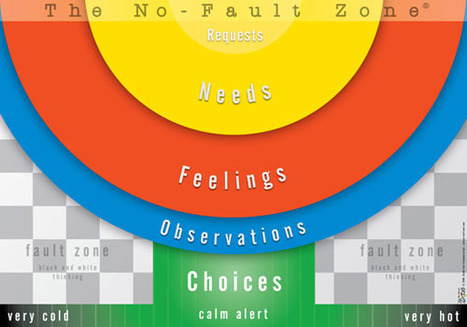
The No-Fault Classroom is a quantum leap for classroom management! Offering far more than discipline techniques that move aggressive behavior out of the classroom to the playground or sidewalk.
The No-Fault Classroom leads students ages 7-12 to develop skills in problem solving, empathic listening and conflict resolution that will last a lifetime.
This course is sponsored by Stanford¿s Center for Compassion and Altruism Research and Education (CCARE).
The intent is to cultivate self-care, resilience and the strength to make a difference in the world based on a systematic approach to compassion meditation practices.
Meditation, group discussions, real world applications and current research will be explored.
Director of Jefferson Longitudinal Study of Medical Education,
Empathy is defined as a predominantly cognitive attribute that involves an understanding of experiences, concerns and perspectives of another person, combined with a capacity to communicate this understanding. Empathy in the context of clinical care can lead to positive patient outcomes including greater patient satisfaction and compliance, lower rates of malpractice litigation, lower cost of medical care, and lower rate of medical errors.
Also, health professionals' well-being is associated with higher empathy. Enhancing empathic engagement in patient care is one of the important tasks of medical education. In this article, I briefly describe 10 approaches for enhancing empathy in the health care environment:
The curriculum is comprehensive and attuned to the development and interests of the children. The 639-page curriculum is divided into nine themes, with three classroom visits supporting each theme
(a pre-family visit,family visit and post-family visit) for a total of 27 visits.
Each of the nine themes is further broken down into four age ranges:
This training is intended to support and inspire participants in breaking through and having a deeper integration of empathy than ever before.
In a supportive, community environment, we experience challenge, guidance, nurturing and support in the practices of empathy and seeing our world empathically.
Topics:
-Defining Empathy -Your Personal Relationship to Feelings and Needs -Distinguishing Needs from Strategies -Working with "Non-feelings" -Self-Empathy -Distinguishing and Translating "should/shouldn't" Thinking -Understanding and Practicing Focus -Understanding and Practicing Presence and Intention -Understanding and Practicing Focus
Compassionate Wellbeing facilitate events that aim to help you on your way to a more compassionate relationship with your self and others, by introducing you to a range of different techniques formulated by some of the leading researchers in compassion and health today. We believe that practising compassion can indeed make you happy, and have a range of associated on our team, who have international reputations specialising in the compassionate mind (or compassion focused therapy) or compassionate mindfulness approach.
1) Getting To Know Our Inner Cast Of Characters • Deepening And Expanding The Inner Map By Using Parts Psychology • Becoming Aware Of The Particular Way You Connect With Your Parts • Gaining An Experiential Understanding Of Empathetic Awareness • Contrasting “Empathetic Awareness” And “Responding From Our Parts”
Fortunately, victim empathy is growing in popularity and practice. What Have I Done? gives an excellent understanding of how to deliver a course in victim empathy to both individuals and to groups, and comes complete with handouts, diagrams, visual aids and a very enlightening DVD.
All of which can be used to complete the successful delivery of such a course or even an ongoing and more intensive 1 to 1 course with individuals where it is decided that the most effective route is that of a 1 to 1 format.
Tolerance and Empathy in Today's Classroom is an activity-based teacher's guide to fostering positive group interaction through imagined experience and discussion at Key Stages 2 and 3 (age 7 to 14).
In a series of interactive workshops, each one providing a context, a scenario and a list of characters, pupils are invited to engage in discussion, debate and negotiation to solve problems and meet challenges.
CNVC is a steward of the integrity of the NVC process and a nexus point of NVC-related information and resources, including training, conflict resolution, and organizational consulting services.
NVC Trainings are a great way to learn and exchange experiences with other NVC supporters. Trainings range from daytime or evening introductions, half-day workshops, 1-8 day trainings and on-going practice sessions to residential trainings and special trainings designed for specific groups or topics. Search our global schedule of NVC trainings.
OFNR 1. Observations as to what happened, 2. Feelings evoked, sometimes guessing what feelings might be, if the other is (for example) in blame mode, 3. Needs both met and unmet, although the unmet needs are most likely to be provoking the feelings involved 4. Requests
One of the most original thinkers on the role of religion in the modern world-author of such acclaimed books as "A History of God, Islam, "and "Buddha"--nowgives us an impassioned and practical book that can help us make the world a more...
It has 12 Steps for deepening Compassion.
1. Learn about compassion
2. Look at your World
3. Compassion for Yourself
4. Empathy
5. Mindfulness
6. Action
7. How Little We Know
8. How Should We Speak to One Another
9. Concern for Everybody
10. Knowledge
11. Recognition: To see oneness in yourself, your community and the world.
Here’s a tool that will help you do that. It’s called a “User Empathy Maps”. Empathy mapping exposes user needs, offers community insights and reveals opportunities to reach out and connect with your end users which will help make sure you’re creating a meaningful solution.
The goal of this map is to identify the true needs of your user and to eliminate your assumptions so it’s best to do the exercise before engaging your user in order to pinpoint what you don’t know, and what you need to know and again after to see the difference between your assumptions and what you’ve learned...
Madelyn Burley-Allen offers these guidelines for empathic listening:
Be attentive. Be interested. Be alert and not distracted. Create a positive atmosphere through nonverbal behavior.
Be a sounding board -- allow the speaker to bounce ideas and feelings off you while assuming a nonjudgmental, non-critical manner.
Don't ask a lot of questions. They can give the impression you are "grilling" the speaker.
Act like a mirror -- reflect back what you think the speaker is saying and feeling.
Don't discount the speaker's feelings by using stock phrases like "It's not that bad," or "You'll feel better tomorrow."
Don't let the speaker "hook" you. This can happen if you get angry or upset, allow yourself to get involved in an argument, or pass judgment on the other person.
Indicate you are listening byProviding brief, noncommittal acknowledging responses, e.g.,
"Uh-huh,"
"I see."
Giving nonverbal acknowledgements, e.g., head nodding, facial expressions matching the speaker, open and relaxed body expression, eye contact.Invitations to say more, e.g.,
That empathy education should be afforded a higher priority in the New Zealand Curriculum at primary level.
empathy education in schools is expected to lead to pro-socialoutcomes, with potentially a cost-benefit ratio in terms of societal benefits for effort expended which is very good indeed, outweighing objections relating toschools being used, at their cost, to address all of society’s ills. The consciousinfusion of empathy education material into the existing curriculum, use of thewealth of material already available and a policy of the adoption of empathyeducation programmes being voluntary, are considered to make theforeseeable practical difficulties inherent in implementation of empathyeducation surmountable.
We propose that a targeted and structured explication of empathy is a useful, if not essential, foundation for social work theory and practice. We outline a social work framework for empathy, one that is rooted in an interdisciplinary context, emphasizes recent findings in the field of social cognitive neuroscience, and yet is embedded in a social work context.
..., students can learn to use their knowledge, values, and skills, informed by empathy, to take empathic action consciously.
What Does It Take to Cultivate Empathy?
1. Read recollections of abuse survivors such as I Know Why the Caged Bird Sings by Maya Angelou. They were required to underline passages where they became sexually aroused and identify instances in which their own victimization was similar.
2. Watch videotapes of survivors discussing their victimization.
3. Write narratives from the perspectives of their victims. Without reading from the narrative they had written, they were required to verbally deliver as much of the narrative as they could.
4. Role-play both the parts of their victims and their own parts as the abusers. The role-plays were videotaped and the participants watched themselves afterward.
5. Disclose offenses in great detail.
Psychodrama, Gestalt Techniques, Role-Playing, and Imitative Play
Elizabeth A. Segal, Karen E. Gerdes, Kelly F. Jackson, Jennifer L. Mullins,
Robert Gonzales received a Ph.D. in Clinical Psychology in 1989. He met Marshall Rosenberg and Nonviolent Communication in 1985, and has been offering Nonviolent Communication training in some form since 1986
Why develop compassion in your life? Well, there are scientific studies that suggest there are physical benefits to practicing compassion — people who practice it produce 100 percent more DHEA, which is a hormone that counteracts the aging process, and 23 percent less cortisol — the “stress hormone.”
7 Compassion Practices
- Morning ritual. Greet each morning with a ritual. Try this one, suggest by the Dalai Lama: “Today I am fortunate to have woken up, I am alive, I have a precious human life..
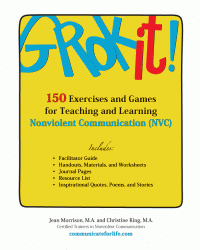
A 280-page illustrated manual for teachers, group leaders, facilitators, counselors, and all those who are working with groups to improve communication, learn NVC, or just to connect with each other in fun and engaging activities. (see below for detailed description of contents)
GROK it! contains a facilitators guide, 150 NVC games & exercises, handouts, worksheets, and more! (click on sample pages to see table of content and a few pages).
A Teleseminar with Sarah is a 1-1/2 hour exploration of current research into the brain and how it behaves in relationship.. How can we update and augment the field of healing and support that addresses grief with our new knowledge about what happens to body and brain in grief? - What kinds of emotions live within grief? - What is the difference between grief and suffering? - How can empathy support us in the grieving process? - Lively, interactive presentation with visuals.
This class will cover:
1. Brief Review of the Brain and the Way Emotion Affects us
Stanford University is conducting a study to examine the differential effects a Compassion Cultivation Training (CCT) meditation program.
Developed by a team at Stanford University headed by Geshe Thupten Jinpa, PhD, scholar and personal translator of HH Dalai Lama, this 9-week compassion cultivation training program will consist of a sequence of exercises that progressively cultivate:
(1) mental stability through present-focused attention,
(2) compassion for friends and family,
(3) self-focused compassion, and
(4) compassion for strangers and for disliked people.
The goal of this training is to provide a practical framework for developing compassion for one's self and others. The courses will
Let's collaboratively create; the biggest, most comprehensive, easiest to use, most useful, continually expanding, improving and deepening, empathy and compassion curriculum! Everyone is invited to contribute, especially; educators, researchers, writers, technophiles, etc. etc, that would like to work on this project.
Search the internet and add any empathy & compassion lesson plans, activities and curriculum that you find to this page. Just clink on the POST button above and fill out the questions.
Peacemaking Circles are used in neighborhoods to provide support for those harmed by crime and to decide sentences for those who commit crime, in schools to create positive classroom climates and resolve behavior problems, in the workplace to deal..
Circle Processes pdf http://bit.ly/pVn3Nf 'The circle process creates a distinctive kind of space for restorative dialogue. Circles are fashioned in such a way that interconnectedness, interdependence, and equality within the community are highlighted. Participants are encouraged to share a sense of mutual responsibility for the well being of the community and the individuals within it, and an understanding that what happens to one person affects all.' Circle Process p2 - Circle Process a way for creating deeper empathic connection between participants.
I. THE INITIATION PHASE: contacting potential participants
II. THE PLANNING & PREPARATION PHASE: meeting with potential
To get content containing either thought or leadership enter:
To get content containing both thought and leadership enter:
To get content containing the expression thought leadership enter:
You can enter several keywords and you can refine them whenever you want. Our suggestion engine uses more signals but entering a few keywords here will rapidly give you great content to curate.


 Your new post is loading...


 Scoop.it!