Your new post is loading...

|
Rescooped by
Edwin Rutsch
from Compassion
September 28, 2024 3:35 PM
|
|
|
Scooped by
Edwin Rutsch
September 1, 3:13 PM
|
Empathic Leadership and Culture Change
The New Drivers of Patient Experience Excellence
Healthcare organizations are under growing pressure from workforce burnout, staffing shortages, rising patient expectations, technology overload, and increasing complexity across care delivery. In this timely panel discussion, leaders from across Mass General Brigham will explore why empathic leadership and culture transformation have become critical drivers of both workforce well-being and patient experience.
Moderated by empathy researcher Helen Riess, this panel brings together senior clinical, quality, patient experience, and operational leaders from Mass General Brigham to share practical lessons and measurable strategies for leading through today’s healthcare challenges. Attendees will leave with actionable insights to strengthen leadership communication, supporting clinical teams, and creating more sustainable cultures that improve both the workforce and patient experience.
Strengthen organizational resilience, trust, retention, and patient outcomes through empathic leadership
Address burnout, communication breakdowns, workforce fatigue, and technology burden across care environments
Implement culture change strategies drawn from real-world frontline experience and operational leadership
Connect patient experience, quality, safety, and workforce well-being as part of a unified organizational strategy
Build accountable, compassionate, and engaged cultures during periods of ongoing stress and transformation
|
|
Scooped by
Edwin Rutsch
August 29, 6:22 PM
|
Nowhere is this clearer than in Saad’s signature contribution to far-right discourse: “suicidal empathy,” his theory that Western civilization is engineering its own collapse by being too compassionate. It’s a concept with no basis in psychological research, evolutionary or otherwise. Saad has never conducted a study on it, and it appears nowhere in peer-reviewed literature.
That hasn’t stopped it from becoming the latest trend in far-right discourse. Senator Mike Lee (R-Utah) invoked it to describe a mother on trial for killing her children. Representative Randy Fine (R-Fla.) cited it to argue Americans must “deal with the barbarians inside the gates.” Elon Musk, one of Saad’s earliest and loudest boosters, put his own endorsement on the cover of Saad’s book. What started as a marketing professor’s pet theory is now providing an excuse for far-right influencers and politicians to justify anti-immigrant and anti-Muslim hostility.
|
|
Scooped by
Edwin Rutsch
August 29, 6:18 PM
|
by Lu Liu In the rush to adapt to artificial intelligence, higher education may overlook something critical in the process: the human capacities that technology cannot replace. In my experience as a designer, educator and academic leader, meaningful innovation does not begin with technology; it begins with empathy.
This is not always how universities approach innovation education. We often emphasise technical expertise, analytical rigour and productivity. Those qualities matter deeply. But innovation that improves human lives requires something more difficult – and profound: the ability to understand people whose experiences differ from our own. That ability deserves far greater attention in higher education.
Empathy allows us to ask better and deeper questions, recognise unmet needs and undiscovered aspirations, and create solutions that genuinely improve human experiences and quality of life.
|
|
Scooped by
Edwin Rutsch
August 28, 1:43 AM
|
Teaching: In this activity, students will discuss how responses of empathy are perceived when they originate from humans versus machines. People increasingly turn to artificial intelligence for emotional support, with research showing that AI-generated responses are often rated as more empathetic than human responses in blind evaluations. However, a paradox emerges when the source is revealed: individuals rate the exact same messages as significantly less empathetic once they know an AI wrote them, driven by mistrust and the belief that machines lack genuine feelings. To address this, the article outlines classroom activities and discussions designed to help students critically evaluate both human-AI relational dynamics and the methodological limitations of current empathy research.
|
|
Scooped by
Edwin Rutsch
August 28, 1:34 AM
|
Empathy explained
This article is about empathy. But what do we actually mean when we talk about it?
Krijnen: 'Empathy is not always clearly defined. Does it mean understanding what other people think, do and feel? Or is it mainly about sharing in other people's emotions? Or does it refer to how you respond, for example when someone sitting next to you starts to cry?'
'The first two aspects are generally regarded as forms of empathy: understanding another person's thoughts and feelings is known as cognitive empathy, while sharing their emotions is referred to as affective empathy. How someone responds, in other words their social skills and behaviour, is sometimes included as part of empathy and sometimes considered a separate concept.'
|
|
Scooped by
Edwin Rutsch
August 28, 1:30 AM
|
Key Insights - What is empathy and why does it matter for business performance?
- How does leader empathy directly affect employee retention and engagement?
- What does Dale Carnegie's global research reveal about the empathy gap in organizations today?
- How do generational differences shape the way employees perceive empathy at work?
- What eight practical actions can leaders take to build more empathy right now?
- How can organizations embed empathy into their culture, not just their training?
- Is someone else's emotional response your responsibility as a leader?
|
|
Scooped by
Edwin Rutsch
August 27, 6:38 PM
|
by Eugene Sepulveda Empathy as a source of inspiration. Empathy as a strategic asset. Empathy as toxic to our selfish ambitions.
It's been a long while since I've written more than a facebook posting for public consumption. I can get too much in my head and feel the need to cite all my sources when writing. Don't worry, I'll chill as I develop a regular cadence for these postings. Following last week's issue: Is empathy toxic?, a few readers wrote recommending other perspectives on empathy.
When I think about empathy I remember the old adage about walking a mile in someone else's shoes. And, this reminds me of one of my chief tenets of interpersonal communication - you can't persuade or convince someone until they feel heard and understood.
|
|
Scooped by
Edwin Rutsch
August 27, 5:31 PM
|
Why "Just Care More" Isn't the Fix
It's tempting to hear all this and conclude the answer is to do better; feel more, care more, in every interaction. It isn't. And the research on empathy is specific about why. Understanding someone else's experience while still knowing exactly where you end and they begin (what researchers call cognitive empathy) is different from a self-focused flooding where that boundary dissolves and their distress becomes indistinguishable from yours (personal distress). The second one isn't a deeper form of caring. Left unchecked, it produces compassion fatigue, withdrawal, and, over time, less empathy - not more.
So, the goal isn't maximum feeling. It's a specific, trainable skill: staying steady enough in your own
|
|
Scooped by
Edwin Rutsch
August 27, 12:21 AM
|
By Vriti Shah
Even through opposing opinions and conflicts, the way that we talk to one another is crucial for the nation to come together in making a difference. But change is not possible without actually listening to one another with empathy, understanding and solidarity, even during disagreement.
I urge you to have a conversation with your neighbors and listen to their perspectives with empathy — even if the subject ranges from best politician to best burger joint. Empathy drives us through hard and turbulent conversations; empathy drives humanity to progress to a better reality.
|
|
Scooped by
Edwin Rutsch
August 25, 11:32 PM
|
From healthcare providers in the UK, Europe and the US, evidence is mounting that empathy is more than a bedside virtue.
by Jeremy Howick
Organisations that support their staff and build compassionate cultures achieve better patient outcomes, lower costs and stronger performance, argues Professor Jeremy Howick at the University of Leicester.
A hospital that treats its staff well, maintains manageable workloads, fosters empathic leadership and creates an environment where people feel heard and valued: is that good management, or good medicine? The answer, it turns out, is both. And we can now measure it.
Research from England, Europe and the United States points to the same trend: empathy is not just a quality of individual clinicians. It is a characteristic of high-performing healthcare organisations.
To test whether empathy could be measured, we analysed data from 104 NHS hospital trusts in England, drawing on regulator (Care Quality Commission) ratings, staff surveys, workforce records and financial accounts.[1]
|
|
Scooped by
Edwin Rutsch
August 21, 2:31 PM
|
THE COMPONENTS OF ACTIVE LISTENING
The components of good listening go much deeper than simply hearing words.
Be present with genuine concern
Turn towards the person who wants to be heard. Maintain eye contact, nod and lean in slightly. Every verbal and non-verbal gesture should communicate: “I am with you.” The attitude must be geared towards listening, not talking. Avoid all distractions, including using a mobile phone.
Use open questions
“What was that like for you?” is an example of a question that invites more sharing.
|
|
Scooped by
Edwin Rutsch
August 21, 1:50 PM
|
Parents and guardians are a child’s first teachers because they shape early brain growth, language and core values.
From playgrounds to sports fields to beach cleanups. Some of life’s biggest lessons happen outside the home.
“Community plays a huge role in creating opportunities for kids to get out, explore, like in sports coaches as mentors, to really role model how to navigate relationships,” said Tia Hartstock, Office of Wellness and Resilience.
|
|
|
Scooped by
Edwin Rutsch
September 3, 6:35 PM
|
AI therapy provides a kind of "pretend empathy." Millions of people find it genuinely helpful.
The most clinically rigorous AI therapy chatbot shut down in 2025. The unregulated ones are thriving.
Healing requires friction: mutual vulnerability, the risk of being misunderstood, and sustained presence.
A chatbot will never misunderstand you or ask for anything. That frictionlessness is the problem.
|
|
Scooped by
Edwin Rutsch
September 1, 2:44 PM
|
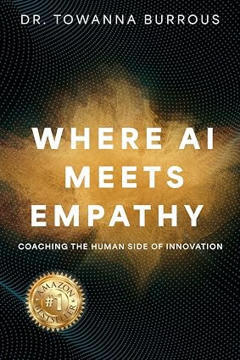
WHERE AI MEETS EMPATHY(TM) Coaching the Human Side of Innovation
AI is no longer theoretical; it's operational. It drafts your critical documents, optimizes supply chains, schedules high-level meetings, and processes data at unimaginable speed-yet, for all its power, it leaves the organization's internal world untouched. Leaders are equipped with sophisticated tools, but increasingly struggle with the fundamental human demands of clarity, compassion, and courage. This is the central paradox of our time: the very efficiency that drives success simultaneously creates a widening empathy gap in the workforce.
The greatest risk today is not technological failure, but losing our essential humanity in the pursuit of automation.
Dr. Towanna Burrous, founder of the Institute for Coaching Innovation, delivers the definitive blueprint for intentional leadership in this new era. This book is a strategic imperative, redefining coaching not merely as a beneficial soft skill, but as the non-negotiable human infrastructure required to guide your people through profound organizational change.
|
|
Scooped by
Edwin Rutsch
August 29, 6:20 PM
|
More power, less empathy
Powerful people are more likely to be self-centred in general, not just in romantic relationships. Research has shown that high-power individuals are less empathetic and compassionate, with some displaying less distress at the suffering of others.
In one of Galinsky’s studies, he showed that high-power individuals literally struggle to see the world from other people’s perspectives. He and his colleagues asked people to draw the letter E on their foreheads.
|
|
Scooped by
Edwin Rutsch
August 28, 8:06 PM
|
I can’t help but think this is a symptom of a broader “lack of empathy” in our society today, something we have heard about repeatedly over the last decade. Modern advertising often feels less empathetic because brands rely heavily on data algorithms and aggressive sales pitches rather than deep cultural understanding. Research used to tell us that empathetic ads perform much better, yet fewer campaigns today successfully connect real human feeling with a winning creative strategy. Recently, I listened to an episode of the podcast Speaking of Psychology titled «The Decline of Empathy and the Rise of Narcissism,» featuring Sara Konrath, PhD. In the episode, she discusses how concern and care for others’ feelings, virtues we strive to instill in our children, are sorely lacking among many American adults today. Scientific research supports the idea that Americans are caring less about others and more about themselves. Dr. Konrath, an associate professor of philanthropic studies at Indiana University and director of the Interdisciplinary Program on Empathy and Altruism Research, and she explores these shifts in depth.
|
|
Scooped by
Edwin Rutsch
August 28, 1:36 AM
|
Right-wing extremist ways of bringing religion and ethics into politics seem to be gaining ground. Reform's recent attempt to redefine empathy is a further example. They are all interlinked so this gambit is particularly dangerous. If they weren't connected, Catholic Social Teaching would be all good intentions and no action.
Gad Saad invented the term 'suicidal empathy'. He spent a decade in Concordia - formerly a Canadian Jesuit University - becoming Research Chair in Evolutionary Behavioural Sciences and Darwinian Consumption (be reassured Darwinian Consumption is not the fittest eating the unfit). Saad's expertise is in consumer behaviour and marketing, food for Reform. His book Suicidal Empathy: Dying to be Kind was published in May this year and provided the main fodder for attacking the value of empathy. Lebanese born, Jewish, atheist, and polemicist, he recently left Canada. He felt threatened by, and had himself experienced, antisemitism (6,800 incidents in 2025 up 9% on 2024). He didn't like their immigration policy, 'wokeism' and the tax system. Saad currently does research in one of the most conservative US States, at the University of Mississippi.
|
|
Scooped by
Edwin Rutsch
August 28, 1:32 AM
|
In the rush to adapt to artificial intelligence, higher education may overlook something critical in the process: the human capacities that technology cannot replace. In my experience as a designer, educator and academic leader, meaningful innovation does not begin with technology; it begins with empathy.
This is not always how universities approach innovation education. We often emphasise technical expertise, analytical rigour and productivity. Those qualities matter deeply. But innovation that improves human lives requires something more difficult – and profound: the ability to understand people whose experiences differ from our own. That ability deserves far greater attention in higher education.
|
|
Scooped by
Edwin Rutsch
August 28, 1:29 AM
|
A new report reveals that workplace empathy is crucial for successful AI adoption. Businessolver's 2026 State of Workplace Empathy AI Special Report found that nearly nine in ten employees in empathetic cultures feel adequately trained and positive about AI, a stark contrast to only 33% in toxic environments. This optimism extends to job security and agency. The study emphasizes that AI adoption is less about technology and more about emotional intelligence and a high-empathy culture. Research suggests "perspective-getting"—directly asking employees about their concerns—is far more effective than leaders guessing. Managers are advised to implement a four-step strategy: privately guess fears, ask concrete questions, compare notes, and act quickly on feedback to build trust and address anxieties. This approach fosters an environment where employees feel heard, boosting AI integration.
|
|
Scooped by
Edwin Rutsch
August 27, 5:50 PM
|
Do you sometimes feel like you’ve run out of empathy? Is your empathy feeling more like a burden or an obligation but you’re not feeling it? Could there be such a thing as ‘empathy burnout’?
So many of my clients tell me that all the disasters and painful events they see on screens daily can be just too much and they start to tune out. Many also tell me they feel this way in their personal or professional lives, when they have been empathising with others and their troubles all day or over a lengthy period, and now they feel numb. Does this resonate with you? Have you ever felt empathy for a long time but eventually you find yourself feeling 'done'?
|
|
Scooped by
Edwin Rutsch
August 27, 5:29 PM
|
by Deborah Goldstein
Cognitive empathy and personal distress can look identical from the outside. They are not the same thing, and only one of them is sustainable. Cognitive empathy: understanding someone else's experience while still knowing exactly where you end and they begin. Personal distress: a self-focused flooding where that boundary dissolves, until their pain becomes indistinguishable from yours. e same thing, and only one of them is sustainable.
|
|
Scooped by
Edwin Rutsch
August 27, 12:18 AM
|
by Leiden University
There is a widespread belief that people with autism are less empathetic. In other words, that they are less able to put themselves in someone else's shoes. But is that actually true? Autism researcher Dr. Lisa Krijnen is investigating this question. The research is published in the journal Autism.
Where does this idea come from? Both research and popular opinion have long portrayed people with autism as being less empathetic. But why is this the case? Krijnen explains, "Partly, it may stem from the way empathy has been measured in previous studies. It is often assessed using questionnaires in which people are asked to evaluate for themselves how well they understand or relate to what someone else is thinking or feeling. Autistic people regularly report finding these kinds of questions difficult to answer."
|
|
Scooped by
Edwin Rutsch
August 25, 5:07 PM
|
Understanding Empathy and Universal Emotions
Introduction:
Empathy is the most critical soft skill and has been for a century. And more recently, with the Covid-19 pandemic, empathy has reinforced the enormous awareness of this vital skill.
In this eModule, you will learn the foundations of what empathy is and its importance in customer relationships. You will also interactively explore the 7 universal human emotions and corresponding facial expressions.
|
|
Scooped by
Edwin Rutsch
August 21, 2:30 PM
|
Compassionate Geek's empathy training programs equip IT professionals and teams with essential emotional intelligence, active listening, and interpersonal skills to transform technical support interactions. Our evidence-based curriculum combines real-world scenarios, structured video modules, and practical exercises to help IT teams reduce customer effort scores, improve satisfaction, and build lasting client relationships through compassionate, human-centered service delivery.
|
|
Scooped by
Edwin Rutsch
August 21, 1:48 PM
|
Instead, take the time to develop a strong empathy map of the other person. Begin by describing who you are empathizing with, including factual details such as approximate age and job role. It’s okay to include assumptions and even bias so long as you phrase them such (“I sometimes think” or “It seems to me” or “In my experience”). Continue your factual context with examples of things you have heard them say and behaviors you have observed.
Now, dive deeper by placing yourself in their position. To the best of your ability, answer questions from their perspective:
What are they trying to achieve?
What are they trying to avoid?
What are they seeing and hearing?
What are their underlying needs and wants?
What don’t I know?
What should I ask them about?
What would I want to know if I were in their situation?
|