by Robert P. Jones If you don’t live within or adjacent to the white evangelical Protestant cultural world, you might be astonished to learn that the moral sentiment of empathy is under attack.
This well-coordinated assault was mounted by Christian nationalist theologians and influencers, and it has now been mainstreamed by established evangelical leaders.
The new “empathy gap” is not only influencing the midterm elections but is also reshaping the larger partisan fault lines in our politics.
I am really enjoying reading your blog. If you want to buy villa in Noida Extension then call on the given number-8375000707 as we give you the best offers for buying villa in Noida Extension. https://www.villasinnoida.com/villas-in-noida-extension.php
What if technology could help children become more empathic? That question sits at the heart of Dr. Ekaterina Muravevskaia's work.
What if technology could help children become more empathic? That question sits at the heart of Dr. Ekaterina Muravevskaia's work.
Growing up, Ekaterina was an intensely sensitive and emotional child, fascinated by something many of us rarely stop to consider: What does it actually feel like to be another person? She remembers looking at the people around her and wondering why they seemed so calm and rational when she had so much happening inside.
by Jenni Ogden Ph.D. Experiencing empathy is one of the best reasons for reading a novel.
The brain's empathy systems are a part of the concept of "theory of mind."
Mind reading is another way of thinking about theory of mind.
Our brains are wired to respond to other people’s emotions almost as if we are experiencing them ourselves; for example, studies have shown that when we observe someone else doing something or showing an emotion that engages us, the same neurons fire in our brains as would fire if we were feeling a similar emotion. These have been called mirror neurons.
byJohn Pentland Empathy does not mean agreeing with everyone or abandoning our convictions. It means refusing to forget the humanity of the person before us.
Article content I keep coming back to this simple truth: we are made for connection. We need one another, and we are called to care for one another.
Article content Empathy is the way forward because it has always been at the heart of the way of Jesus. In a disconnected world, it invites us to draw near. In a fearful world, it calls us to love. And when the world tempts us to look away, it reminds us to see.
by David French I’m highlighting Sey’s story for two reasons. First, it’s directly relevant to a debate about empathy that has long been spreading across the Christian right. Second, it demonstrates the foolishness of mass deportation. Mass deportation doesn’t put America first; it puts vengeance first, and vengeance is a poor substitute for a moral and rational immigration policy.
Let’s begin by talking about empathy. As I’ve written before, one of the most striking aspects of the Trump era has been the evangelical attack on empathy as a virtue.
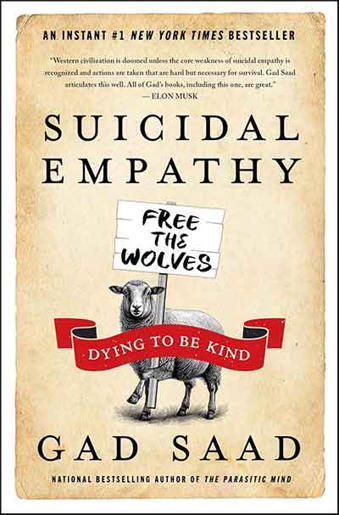
Books like “Toxic Empathy,” by the popular Christian podcaster Allie Beth Stuckey, and “The Sin of Empathy,” by an evangelical pastor and theologian named Joe Rigney, have warned Christians against allowing their hearts to be influenced by progressive appeals to empathy.
In this lecture, we explore the concept of empathy and examine why it is such an important part of emotional wellness, emotional intelligence, and healthy relationships.
Students are introduced to empathy as the ability to understand, recognize, and connect with another person's emotional experience. Rather than simply feeling sorry for someone, empathy involves trying to see the situation from their perspective and appreciating what they may be thinking or feeling.
Many people have narcissistic traits to some degree, for example, confidence in one's own superiority, a sense of entitlement and a desire to be the center of attention. However, some people have notably higher levels of narcissistic traits than others, and the neural basis of so-called "grandiose narcissism" has rarely been studied in socially complex situations.
Artificial intelligence (AI) systems can offer patients empathic support in forms as different as a chatbot on a phone that fits in a pocket and a soft robot they can hug. Much research on empathy in AI, including large language models, focuses on text, which lacks the rich non-verbal cues conveyed through voice, visual expression and touch.
This Perspective introduces a new conceptual framework, the embodiment–scalability spectrum, to help researchers weigh what each modality can offer patients against how widely it can be delivered. It orders communication channels by embodiment: how far each draws on the expressive repertoire of the human body. Voice adds prosody. Visual cues offer facial expression, gaze and gesture through virtual avatars or physical robots.
Touch, the most embodied channel, can offer a hand to hold; no other modality can. But text and voice can reach patients through devices they already own, whereas supportive touch requires dedicated hardware wherever the interaction occurs.
That hardware can demand substantial development, constraining both research and widespread use. Consequently, modality choice fundamentally shapes how patients experience empathy from an AI system and the scale at which that support can be delivered.
As more people turn to large language models (LLMs) during personal crises, the companies behind them are engineering these AI-powered models to be more personal, empathetic and understanding when prompts indicate a user is in emotional distress.
More people are turning to artificial intelligence (AI)-powered chatbots for companionship and to address loneliness. But can AI-generated empathy replace human connection?
In a study published in the journal Communications Psychology, a team led by researchers at Penn State found that human users rated AI-generated empathetic responses higher in quality than human-generated empathetic responses, yet they preferred human empathy over AI. In the following Q&A, C. Daryl Cameron, the Sherwin Early Career Professor and associate professor of psychology at Penn State, and doctoral student Joshua Wenger discussed AI empathy and why it may prove an effective complement to — and not a replacement for — human companionship.
Ahead of the 2026 midterm elections, a new survey from Washington, D.C.-based Public Religion Research Institute (PRRI) found that Democrats (84%) and Independents (70%) are more likely than Republicans (53%) to see empathy as a net positive to society.
White evangelical Protestants are the only religious group in which a majority does not agree that empathy is a foundational moral value (42%). Instead, a majority (54%) say they believe empathy can be dangerous.
The experiences of nurses and the essential role of empathy in healthcare took center stage Oct. 21 at Nashville’s Belcourt Theatre during a special screening of “NURSE: Empathy Heals.” The documentary shares nurses’ personal stories, offering a closer look at the emotional demands of caregiving and the people behind patient care.
The film is part of the Nurse Narratives Initiative (NNI), a collaboration led by East Tennessee State University (ETSU) that brings together StoryCollab, the ETSU College of Nursing, the Tennessee Center for Nursing Advancement and the ETSU Research Corporation, with support from Ballad Health.
We hear a lot today about the importance of empathy, especially in leadership and management. Most of us would likely say we value empathy and try to bring it to our relationships and interactions.
But empathy is more complex than simply caring about people or trying to understand how they feel. And there can be a significant gap between believing we’re demonstrating empathy and how other people actually experience us.
Recent research also challenges the idea that empathy is simply something we either possess or don’t. A 2025 Stanford Graduate School of Education study examining empathetic communication in the workplace describes empathy as a complex but learnable skill.
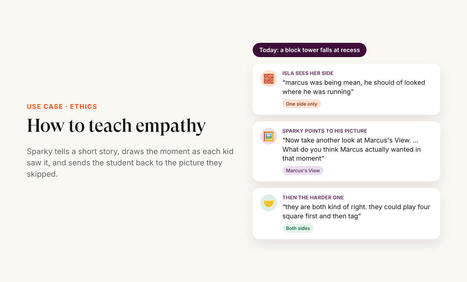
What empathy activities for kids should practice Emotion researchers generally define empathy as the ability to sense other people's emotions, together with the ability to imagine what someone else might be thinking or feeling (Greater Good Science Center).
The same page says the second part, "cognitive empathy," is sometimes called "perspective taking." Sympathy is feeling for someone ("I am so sorry you are hurting"), and empathy is feeling with them ("I feel your disappointment") (Greater Good Magazine). Harvard's Making Caring Common project adds that empathy also means caring about and valuing the other person, and that children have the capacity for empathy but don't develop it on their own (Making Caring Common).
I came across a phrase recently that stopped me in my tracks: toxic empathy. I found myself wondering, how can empathy be toxic?
Apparently, the phrase describes caring so much about others that our judgment becomes clouded. I understand that compassion requires wisdom and discernment. But I wonder if, in our efforts to protect ourselves from caring too much, we are in danger of losing something essential to being human.
Empathy means "to feel with." It is about drawing close, listening, and allowing ourselves to be touched by another person's experience. Sympathy is often about feeling for someone, while empathy invites us to stand alongside them. It asks us to move beyond observation and into connection.
by Robert P. Jones If you don’t live within or adjacent to the white evangelical Protestant cultural world, you might be astonished to learn that the moral sentiment of empathy is under attack.
This well-coordinated assault was mounted by Christian nationalist theologians and influencers, and it has now been mainstreamed by established evangelical leaders.
The new “empathy gap” is not only influencing the midterm elections but is also reshaping the larger partisan fault lines in our politics.
As a Christian, I’m certainly paying attention to the arguments about empathy—particularly those in faith circles. As evangelical leaders like Southern Baptist Theological Seminary president R. Albert Mohler Jr. and conservative commentator Allie Beth Stuckey have criticized the value of empathy, PRRI’s poll is meant to help understand the impact of those arguments. But as I began covering the survey, I started to have some questions.
Respondents could choose either “empathy is a foundational moral value that helps build a healthy society” or that “empathy can become dangerous when it leads people away from building a society guided by God’s truth.” They were asked which statement came closest to their views and were asked to rate on a scale of “strongly,” or “not strongly.” But why did PRRI’s survey frame these two options about empathy as polar opposites?
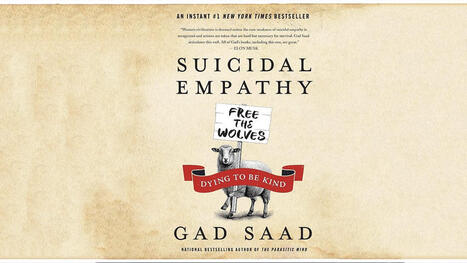
An important subtheme of the book is the destructiveness of emotionalism, the doctrine and practice of placing emotions above facts, logic, and reason. “Our emotions,” Saad writes, “can lead us astray when they are deployed in contexts when it would serve us best to invoke our reasoning faculty” (10). When people succumb to suicidal empathy, he explains, viewing the world through “the prism of maximizing empathy now,” they focus only on “first-order effects” while ignoring the “disastrous long-term consequences” (158–59).
Nurses who report stronger empathic tendencies also tend to hold more positive attitudes toward older adults, according to a cross-sectional study published in BMC Geriatrics.
The team surveyed 305 nurses recruited through snowball sampling, a non-probability method in which participants refer further respondents. Data were collected online between April and May 2023 using three instruments: a personal information form, the Empathic Tendency Scale (ETS) and the Ageism Attitude Scale (AAS). The researchers analysed the responses with descriptive statistics, correlation analysis and linear regression, and reported the study according to the STROBE guidelines for observational research.
PRRI’s 2026 American Values Survey reveals some, uh, interesting views on whether Americans think empathy is a good thing or not. Those respondents unaffiliated with a religion were much more inclined to think that empathy is “a foundational moral value that helps build a healthy society”.
With the exception of white evangelical Protestants (42%), around two-thirds or more of all major religious groups believe that empathy is a foundational moral value for a healthy society, including about eight in ten religiously unaffiliated Americans (83%), members of other non-Christian religions (80%), and Jewish Americans (77%). By contrast, a majority of white evangelical Protestants (54%) believe empathy can become dangerous when it leads people away from building a society guided by God’s truth.
Artificial intelligence is becoming increasingly convincing at expressing emotional understanding, but a fundamental question remains unresolved: does a machine that responds with compassion actually understand human distress, or has it simply mastered the language of empathy?
As conversational systems become more sophisticated, researchers are warning that the distinction between appearing empathetic and possessing empathy carries serious consequences for trust, emotional relationships, and AI governance.
A study titled “From Human Empathy to AI-Generated Empathic Performance: Conceptual Boundaries and Ethical Risks for Human-Centered AI,” published in the journal AI, examines this growing ambiguity.
Authored by Rabia Zamur Tuncer of Istanbul University and Şafak Tanır Levendeli of Istanbul Aydın University, the research argues that emotionally responsive artificial intelligence must be evaluated through a clearer understanding of what machines perform, what humans perceive, and what constitutes genuine human empathy.
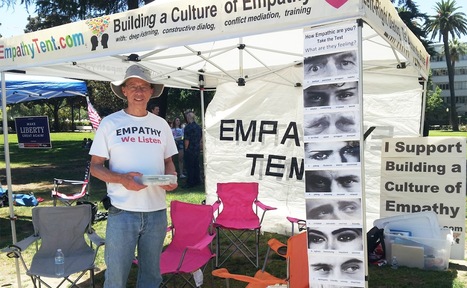
The Empathy Center, started by Edwin Rutsch and his Center for Building a Culture of Empathy, hosts free online Empathy Cafes. In an Empathy Circle, one person speaks while another listens and then reflects back what they heard, until the speaker feels truly understood. Then the roles rotate, so everyone gets a turn to be heard.
The Empathy Center even teams up with Braver Angels for a Bridging Divides Empathy Cafe, which meets online on Sunday evenings. I’ve been invited, and it looks like a wonderful, simple way to practice listening across our differences.
America Faces an ‘Attack on Empathy’ Can we rebuild a sense of trust and understanding between individuals?
The Theological and Political Roots of "Anti-Empathy"
A Coordinated Campaign: Jones highlights that this sentiment is not accidental; it is driven by an orchestrated movement within conservative evangelical circles, citing titles like Toxic Empathy, The Sin of Empathy, and Suicidal Empathy.
Historical Precedents: Jones draws a parallel to Frederick Douglass’s critique of slaveholder Christianity, where theology was used to narrowly circumscribe empathy to the in-group while justifying cruelty toward others.
Modern Authoritarian Purpose: Jones argues the goal of eroding empathy is to desensitize citizens and "numb" them to state-enacted cruelty, particularly regarding harsh immigration enforcement and mass deportation efforts.
Empathy is one of those things that really shouldn’t need defending.
Being aware of other people’s feelings, sensitive to them, and able to put yourself in another person’s shoes is pretty much essential for humans to function as a community. But the current conservative project has zero room for that sort of thing. And it’s not just that they don’t see the point of it. Rather, they see it as an active danger to civilization.
Tuesday, PRRI released its 2026 American Values Survey. As part of the survey, it tried to gauge how Americans feel about empathy.
It’s a (sadly) timely question: empathy has, lately, become a whipping boy if the Right. (Elizabeth Bruenig puts it like this: “A crusade against empathy is sweeping through the right.”) The anti-empathy crusade has become particularly popular among Silicon Valley tech billionaires, but it’s not limited to them. Some pastors and other Christian leaders have framed empathy as a sin (or, at least, a potential sin).
The article argues that the review uses "suicidal empathy" as a cover for anti-Muslim prejudice rather than as a real psychological idea. It says the viper fable—where a farmer warms a snake that then bites him—tells readers to see kindness toward Muslim migrants as foolish and self-destructive, no matter who the people actually are.
The author criticises the review for using one rape case as an example of "orgiastic empathy," saying it turns a survivor's complicated story into a political prop and draws broad conclusions from a single emotionally charged example.
The article also argues that evolutionary psychology, which the review uses to claim empathy can become a civilisational disorder, is a contested field whose own scholars warn you cannot jump from "this is how empathy evolved" to "therefore we should restrict empathy toward Muslims or refugees."
The author concludes that whether empathy can misfire is a fair question for psychologists, but the review hijacks that debate to dress up political views in scientific language.
To get content containing either thought or leadership enter:
To get content containing both thought and leadership enter:
To get content containing the expression thought leadership enter:
You can enter several keywords and you can refine them whenever you want. Our suggestion engine uses more signals but entering a few keywords here will rapidly give you great content to curate.





 Your new post is loading...