Your new post is loading...

|
Rescooped by
Edwin Rutsch
from Compassion
September 28, 2024 3:35 PM
|
|
|
Scooped by
Edwin Rutsch
March 1, 3:01 PM
|
by Georgia Kreiger I would send my students out into the world, let me say, strengthened by empathy, to offer human connection as an alternative to the current tide of self-interest and isolation.
If we can nourish empathy through conscious effort, if we can cultivate it through practice, shouldn’t we?
If empathy can be taught, it should be. The survival of civilization may depend on it.
|
|
Scooped by
Edwin Rutsch
March 1, 2:51 PM
|
Research demonstrates that even if empathy – the capacity to perceive or share emotions with other beings – is not part of a person’s communication skill set, it can be taught. Empathy can, therefore be viewed as an acquired communication skill. Cultivating and practicing the skill of empathy among health care providers enhances the quality of care experienced by their patients which, in turn, can even improve work satisfaction for health care providers.
Many communication textbooks or manuals for care giving professions primarily focus on specific communication skills and techniques. Cultivating Empathy takes a different approach; the book sets empathy as the foundation of all therapeutic interactions and teaches the reader to learn the art of empathy by using constructive approaches and research findings from social sciences and neuroscience.
|
|
Scooped by
Edwin Rutsch
March 1, 1:45 PM
|
Previous reviews have investigated the relationship between empathy and burnout. However, these are now out of date, did not capture the effect of the pandemic, did not include healthcare professionals other than doctors and nurses or medical students, did not assess the impact of differences in profession and did not pool the data, which made estimating the strength of the association unclear. We therefore aim to address these shortcomings in an up-to-date, rigorous, systematic review and meta-analysis.
|
|
Scooped by
Edwin Rutsch
February 25, 2:26 PM
|
Supporting one another has long been part of student life at Notre Dame. In recent years, students have expressed a growing interest in spaces where they can talk openly with peers who understand the rhythms, joys, and challenges of campus life.
The Peer Listening Program (PLP), which officially launched in the fall of 2025, was created to meet that need. Based in the McDonald Center for Student Well-being, the program trains undergraduate students to serve as peer listeners, helping to foster a culture of care, empathy, and connection across campus.
|
|
Scooped by
Edwin Rutsch
February 24, 3:32 PM
|
The high cost of the empathy deficit
There is a lot of enthusiasm about implementing AI, but often when business leaders see the price tag, the first things cut are the ‘soft stuff,’ like experience design and change management. It’s an understandable impulse. But it’s a costly one. It doesn’t matter how technically sophisticated your AI product is, if the design isn’t grounded in how people actually behave, businesses are playing roulette with a significant investment.
And that gamble has real consequences. The Empathy Deficit doesn’t just produce clunky products — it destroys customer experience and, left unchecked, ignites the kind of brand crises that no amount of technical excellence can undo.
|
|
Scooped by
Edwin Rutsch
February 24, 2:31 PM
|
I interviewed Jake Via, organizing director of the American Humanist Association, and discussed the American Empathy Project, which aims to distribute $100,000 in grants for empathy-building projects. The initiative emphasizes empathy as a core American value.
See the link for how to apply.
The Empathy Tent team attended the 2026 California Democratic Party Convention in San Francisco, February 20 & 21 to promote the Movement. (We attended the California Republican State Convention in the past.) See the Full Report
|
|
Scooped by
Edwin Rutsch
February 23, 5:15 PM
|
It's touted that women are naturally empathetic, but science begs to differ
We still typically describe traits like empathy as naturally feminine and traits like dominance and assertiveness as masculine. Even when displaying the same behaviour, men are seen as assertive and women as aggressive.
One particularly notable trait that is often gendered in this way is empathy. Women supposedly are natural empaths while men who show more empathy are typically seen as weak.
But why is that? Is it true that women are naturally more empathetic than men, or are we socialised to be?
|
|
Scooped by
Edwin Rutsch
February 22, 6:44 PM
|
By Caroline Bologna
If asked to name examples of sins, most people would probably not mention “empathy.” But in recent years, attacks on empathy have moved from fringe talking points into mainstream right-wing Christian discourse.
Conservative commentator Allie Beth Stuckey released a book in 2024 titled “Toxic Empathy.” The following year brought the release of “The Sin of Empathy” by right-wing theologian Joe Rigney. Shortly thereafter, billionaire Elon Musk declared on Joe Rogan’s podcast that “the fundamental weakness of Western civilization is empathy.”
|
|
Scooped by
Edwin Rutsch
February 20, 12:12 AM
|
Emotional well-being has become a major factor affecting workplace performance, superseding talent and technology.
Across industries, leaders are witnessing a quiet and costly reality: Disengagement, burnout and silent attrition are increasing, even among high-performance teams. In my experience, the most effective responses do not pertain to introducing new productivity tools or even incentive schemes; instead, they involve empathy that is operationalized as a leadership skill, practiced mindfully and deliberately.
|
|
Rescooped by
Edwin Rutsch
from Teaching Empathy
February 19, 11:59 PM
|
by Nick Hobson and Gregory J. Depow Empathy has become a baseline expectation of modern leadership, but practiced without judgment it can backfire, leaving leaders depleted and employees feeling misunderstood. Effective leadership requires a more discerning approach: wise empathy, which recognizes that different emotional moments call for different responses. Sharing in employees’ negative emotions can accelerate burnout, while responding to those with compassion and support can protect both leaders and teams. The opposite is often true for positive emotions, which benefit from shared celebration. If leaders take five steps designed to guide them in the practice of wise empathy, they can strengthen relationships, improve engagement and retention, and support others without losing their own footing
|
|
Scooped by
Edwin Rutsch
February 19, 11:58 PM
|
Rick Pidcock
Ever since Joe Rigney released his book about empathy being a sin, the TheoBros of conservative evangelicalism have been piling into his bus, demonizing empathy for those they run over as “the greatest rhetorical tool of manipulation in the 21st century,” and as “the progressive gaze.”
Southern Baptist Theological Seminary President Albert Mohler recently climbed aboard the anti-empathy bus. It’s the latest example of Mohler’s flip-flopping.
In 2014, he said Christians should “lead with empathy.” But now Mohler claims: “I don’t think empathy is a thing. I don’t think it’s real. It is a substitute for real Christian morality.”
|
|
Scooped by
Edwin Rutsch
February 16, 4:19 PM
|
by Melissa Hogenboom
Notably, we still typically describe traits like empathy as naturally feminine and traits like dominance and assertiveness as masculine. Even when displaying the same behaviour, men are seen as assertive and women as aggressive.
One particularly notable trait that is often gendered in this way is empathy. Women supposedly are natural empaths while men who show more empathy are typically seen as weak.
But why is that? Is it true that women are naturally more empathetic than men, or are we socialised to be?
|
|
|
Scooped by
Edwin Rutsch
March 1, 3:19 PM
|
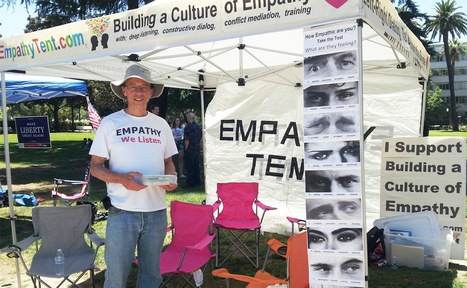
The word empathy is frequently used when talking about improving legal workplace practices, environments, culture and leadership. However, what exactly does this mean? Why should lawyers be more empathetic? And how can we cultivate and develop empathy across the legal practice? This Practice Note introduces you to empathy in law and sets out concrete tips on how to develop empathy for yourself to become a more resilient and valuable legal professional.
|
|
Scooped by
Edwin Rutsch
March 1, 2:53 PM
|
Consider empathy. A recent Public Religion Research Institute (PRRI) survey found that 8 in 10 Americans see empathy as essential to a healthy society. Only 16% called it a “dangerous emotion” that undermines “a society guided by God’s truth.”
In a nation that can barely agree on the weather, that’s striking. But just because we agree on a word doesn’t mean we agree on what it means.
Some conservative evangelical voices have declared a “war on empathy.” Allie Beth Stuckey, author of 2024’s “Toxic Empathy: How Progressives Exploit Christian Compassion,” argues that empathy has become a tool of manipulation in the hands of progressives. Joe Rigney, in his 2025 book “The Sin of Empathy: Compassion and Its Counterfeits,” warns that caring too much about others’ feelings can cloud our grasp of truth.
|
|
Scooped by
Edwin Rutsch
March 1, 2:45 PM
|
Empathy evolves from user-centered usability to human-centered dignity and humanity-centered sustainability. We treat empathy as skill, process, and moral stance—supported by rigorous methods and reflexive practice that avoids “empathy theater.” The chapter frames limits and biases, then explores how AI can augment empathic reach at scale without replacing human care, emphasizing cultural sensitivity, accountability, and the embedding of equity and long-term stewardship in design criteria.
|
|
Scooped by
Edwin Rutsch
February 25, 2:39 PM
|
Imagine a world where everyone's go-to way of relating is empathy. The Gift of Empathy takes a fresh look at this important skill, examining what empath is and isn't, offering practical guidance for empathizing well, and showing how to respond with empathy in all kinds of situations and settings. With ready-to-use principles, this class will empower you to better understand, connect with and empathize with family, friends, coworkers, and others you may relate to.
We will be using the book, The Gift of Empathy, which is available at stephenministries.org.
Don't miss this opportunity to learn the valuable skill of empathy towards others!
|
|
Scooped by
Edwin Rutsch
February 25, 2:01 PM
|
by John Fea
Without empathy, our political opponents become stereotypes. Complex motivations get reduced to malice. In a diverse democracy, tolerating each other isn’t enough; we must try — however imperfectly — to imagine how our neighbors see the world. This is what makes empathy difficult. Stanford education professor Sam Wineburg called this kind of thinking an “unnatural act.”
Convictions without empathy too often harden into dogmatism. Sympathy without discernment becomes sentimentality. Empathy — the discipline of trying to understand before judging — helps steady both.
The PRRI survey suggests that most Americans still believe empathy is foundational to a healthy society. That shared intuition may be one of the last pieces of common moral language we possess.
|
|
Scooped by
Edwin Rutsch
February 24, 3:25 PM
|
for today lets talk about the Empathy Movement’s visit to the California Democratic Convention.
This weekend the Empathy Center brought our message of mutual listening for greater understanding to the Democratic State Convention in San Francisco. Edwin Rutsch and Bill Filler were interviewed by John Ramos from KPIX TV. Jump the fold for some pictures and a link to a short video, and the text of the key section on with the interview with Bill and Edwin.
|
|
Scooped by
Edwin Rutsch
February 24, 1:20 AM
|
Empathy is not a soft skill – Dr Claire Yorke will present the final session in the series, Leading with Empathy: Building Trust and Human-Centred Institutions, which will explore why empathy matters for public sector leadership and how it can transform trust, decision-making, and institutional integrity. Dr Yorke is a Senior Lecturer at the Centre for Future Defence and National Security at Deakin University in Canberra, specialising in the role and limitations of empathy and emotions in security, international affairs, politics, leadership, and society. She is the author of the recent book Empathy in Politics and Leadership: The Key to Transforming Our World.
|
|
Scooped by
Edwin Rutsch
February 23, 5:13 PM
|
Explore feelings and ways to express them! Understanding themselves is an important piece of the building blocks that help children develop empathy as they grow. Empathy is the ability to imagine and understand the emotions of others, which helps children be kind and care about others.
|
|
Scooped by
Edwin Rutsch
February 22, 6:19 PM
|
by Lidewij Niezink , and Katherine Train Youth at risk need structured relational spaces that build belonging, safety, agency, and capability.
An empathic approach strengthens the benefits of support groups for youth in a complex, challenging world.
Empathic intervision reimagines support groups as environments where empathy is systematically cultivated.
The Role of Support Groups Support groups are a vital response in this landscape. At their best, they offer structured relational spaces where young people can process experiences, build connections, and develop practical skills.
However, the effectiveness of support groups depends not only on bringing young people together, but on how those spaces are facilitated. This is where an empathic approach strengthens the benefits.
|
|
Rescooped by
Edwin Rutsch
from Teaching Empathy
February 19, 11:59 PM
|
Now let’s talk about empathy.
A year ago this month, I wrote a newsletter warning about a new trend on the MAGA Christian right. Christian theologians and influencers had begun warning about the “sin of empathy” or “toxic empathy.”....
The problem in those cases isn’t with empathy, which is a vital human virtue, but rather in its selective application. Just as we wouldn’t call love a sin because we might be stingy in our love, empathy isn’t a sin because its application is incomplete.
Or, put another way, our problem isn’t with too much empathy, but too little. We’re unwilling to place ourselves in other people’s shoes, to try to understand who they are and what their lives are like. It’s hard to talk about this issue without recognizing a fundamental truth of the moment: The attack on empathy would have gained very little traction in the church if Donald Trump weren’t president. He delights in vengeance, and he owes his presidency to the evangelical church.
|
|
Rescooped by
Edwin Rutsch
from Teaching Empathy
February 19, 11:59 PM
|
Empathy—the ability to sense another's emotions, to imagine their inner world, to feel with them—is not a decorative feature of human consciousness. It is the foundational architecture upon which relationships, communities, and civilizations are built. It is what stops a hand mid-strike, what draws us toward a stranger's tears, what compels sacrifice for unseen others. And it is facing an existential threat from the very tools designed to bring us together.
|
|
Scooped by
Edwin Rutsch
February 16, 4:21 PM
|
Empathy is the foundation of effective therapy, and our Postgraduate Certificate in Empathy in Therapy will equip you with the skills to deliver compassionate and informed care. By studying this course, you'll gain a deeper understanding of the complexities of human emotions and develop the ability to build strong therapeutic relationships.
With empathy at its core, this course will help you navigate the intricacies of human behavior and provide a supportive environment for clients to explore their thoughts and feelings. Upon completion, you'll be well-positioned for a career in therapy or counseling, with opportunities to work in various settings, including mental health organizations and private practice.
|
|
Scooped by
Edwin Rutsch
February 16, 4:12 PM
|
by @Paul Kuzmickas Empathy every day
In healthcare, we can use empathy to make a positive, memorable impact on the lives of so many. Here are three ways to apply this.
Maintain awareness and perspective. Tomorrow’s procedure could be the 100th one you perform — or today’s presentation could be a monthly occurrence in your schedule — but either could be the first for your patient or colleague.
Seeing each experience through the other’s eyes and responding with compassion and understanding is crucial to the way they’ll remember each moment.
|










![Why Empathy is Important in Law [Lexis® Middle East] | Empathy Movement Magazine | Scoop.it](https://img.scoop.it/tCl9cXrT0w27eSQ6af6t6Tl72eJkfbmt4t8yenImKBVvK0kTmF0xjctABnaLJIm9)