


Are you looking to enhance your employees’ performance? Did you know that microlearning improves learning transfer? In this blog, we discuss a few best practices of creating microlearning videos and their impact on eLearning.
Via EDTECH@UTRGV

 Your new post is loading...
 Scoop.it! Are you looking to enhance your employees’ performance? Did you know that microlearning improves learning transfer? In this blog, we discuss a few best practices of creating microlearning videos and their impact on eLearning. Via EDTECH@UTRGV No comment yet.
Sign up to comment
Scoop.it!

In this article, we will go over how eLearning has the potential to upskill and reskill staff in fast-paced environments, be it for technical training, product training, customer handling, and more. Via EDTECH@UTRGV, juandoming
Scoop.it!
From
aqua

Introduction to Appreciative Inquiry 15 & 16 August Back to Programmes Introduction to Appreciative Inquiry supports a process for facilitating positive change in human systems. This includes working from a positive, strength-based and asset-based standpoint to improve health and care. This programme aims to help participants understand and implement the principles and practices of Appreciative Inquiry (AI). Participants will also explore the opportunities for using AI for quality and safety improvement and leadership development. The programme will cover: The ethos of Appreciative Inquiry The principles of Appreciative Inquiry How to structure an appreciative cycle How to run an appreciative protocol How to apply these skills to healthcare Via F. Thunus
Scoop.it!
From
etreprof
Tous les enseignants ont déjà dit à leurs élèves : « Soyez plus attentifs ! ». Mais avons-nous déjà pris le temps de réfléchir et de définir l’attention ? Jean-Philippe Lachaux, chercheur en neurosciences et fondateur du programme pédagogique ATOLE, définit cette notion de la façon suivante : « Être attentif, c’est concentrer l’énergie de son cerveau pour bien entendre, bien comprendre, bien voir, se souvenir… ». L'attention est un concept que même les scientifiques sont réticents à définir. En effet, bien que l'attention soit omniprésente dans nos vies comme un pont qui nous relie au monde, elle est constituée d'une variété de processus complexes qu'il est encore aujourd'hui délicat de saisir dans leur globalité. Cependant certaines avancées, en neurosciences notamment, nous permettent tout de même de mieux comprendre l'attention et d’en envisager une meilleure maîtrise. Via CECI Jean-François 
CECI Jean-François's curator insight,
July 24, 2022 2:03 PM
Quelques éléments fondamentaux pour mieux comprendre l'attention des apprenants et l'utiliser comme vecteurs de progrès sur les apprentissages. La fameuse expérience du gorille clôture l'article.
Scoop.it!

Juan Domingo Farnós Estamos en un mundo de "herramientas" y en educación, también, ahora solo falta ver como las utilizamos. Por eso la nueva visión de la educación promueve el uso de la tecnología para facilitar el aprendizaje mediante la participación de los estudiantes, la promoción de la creatividad, fomentar el aprendizaje autodirigido, la colaboración… Via juandoming
Scoop.it!

For a variety of reasons, eLearning videos have been widely used to deliver high-impact corporate training. In this article, I will outline the benefits of incorporating microlearning tactics to improve the efficacy of eLearning videos. Via EDTECH@UTRGV
Scoop.it!

"Colleges and universities experienced a surge in ransomware attacks in 2021, and those attacks had significant operational and financial costs, according to a new report."
By Susan D'Agostino “You can collect that money in a couple of hours,” a ransomware hacker’s representative wrote in a secure June 2020 chat with a University of California, San Francisco, negotiator about the $3 million ransom demanded. “You need to take us seriously. If we’ll release on our blog student records/data, I’m 100% sure you will lose more than our price what we ask.” The university later paid $1.14 million to gain access to the decryption key. Colleges and universities worldwide experienced a surge in ransomware attacks in 2021, and those attacks had significant operational and financial costs, according to a new report from Sophos, a global cybersecurity leader. The survey included 5,600 IT professionals, including 410 from higher education, across 31 countries. Though most of the education victims succeeded in retrieving some of their data, few retrieved all of it, even after paying the ransom. “The nature of the academic community is very collegial and collaborative,” said Richard Forno, assistant director of the University of Maryland Baltimore County Center for Cybersecurity. “There’s a very fine line that universities and colleges have to walk between facilitating academic research and education and maintaining strong security.” That propensity of colleges to share openly and widely can make the institutions susceptible to attacks. Nearly three-quarters (74 percent) of ransomware attacks on higher ed institutions succeeded. Hackers’ efforts in other sectors were not as fruitful, including in business, health care and financial services, where respectively 68 percent, 61 percent and 57 percent of attacks succeeded. For this reason, cybercriminals may view colleges and universities as soft targets for ransomware attacks, given their above-average success rate in encrypting higher education institutions’ data. For original post, please visit: https://www.insidehighered.com/news/2022/07/22/ransomware-attacks-against-higher-ed-increase Via Roxana Marachi, PhD
Scoop.it!

Embora muitos de nós ao longo dos anos tenham experimentado e testemunhado o potencial da aprendizagem combinada (ou híbrida) no futuro da educação pós-secundária, a promessa nunca passou da resposta mundial a uma pandemia global e na urgência de continuidade académica por meio da instrução remota de emergência que exigia tecnologias de aprendizagem on-line para misturar ou substituir a experiência no local dos alunos por uma nova experiência on-line. Via Inovação Educacional, juandoming, LGA
Scoop.it!

TinyWow provides free online conversion, pdf, and other handy tools to help you solve problems of all types.All files both processed and unprocessed are deleted after 15 minutes... Via Nik Peachey 
Nik Peachey's curator insight,
July 21, 2022 10:10 AM
This is a great collection of tools for doing various media editing tasks across video and PDF.
Scoop.it!

Research involving a Georgia State University course using a chatbot to keep students connected showed improved grades and retention rates. Via LGA
Scoop.it!
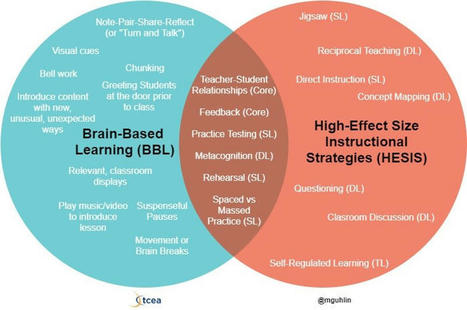
Curious about how evidence-based strategies align to brain-based learning research? This blog entry takes the mystery out of the equation. Via Yashy Tohsaku, juandoming
Scoop.it!

En 2018, le ministère de la Culture a officiellement donné aux bibliothèques le rôle de « favoriser l’inclusion numérique et les actions menées dans le champ social ». Une mission qui, dans la pratique, avait déjà été adoptée par de nombreuses bibliothèques et médiathèques. Via Bibliothèques-Médiathèques de Metz |
Scoop.it!

In life, I would wager that the majority of us prefer the path of least resistance. After all, this is human nature. While we avoid challenges for many reasons, our mindset often keeps us from pushing ourselves if we are comfortable where we are at or we see a more straightforward path forward. Through an inherent fear of failure, mental blocks materialize to keep us in a safe place – free from dealing with potential adversity. Now, this isn’t always the case, but we have all been here at some point. The way we think is often the byproduct resulting from years of conditioning, not being pushed, or a lack of good feedback. Via Edumorfosis, LGA
Scoop.it!

El hombre piensa, experimenta y sueña incluso en el mundo tridimensional. En este espacio llega al conocimiento y adquiere sus experiencias. El conocimiento se consolida de manera más sostenible cuanto más impresionantes son las experiencias y, por lo tanto, las redes neuronales tienen lugar en el cerebro. Via Edumorfosis, juandoming
Scoop.it!

By Ben Williamson " The digital behaviour-monitoring app ClassDojo has become one of the most popular educational technologies in the world. Widely adopted by teachers of young children in Australia, Europe and North America since its initial launch in 2011, ClassDojo is now attracting critical attention from researchers and the media too. These critical perspectives are importantly illuminating how popular classroom technologies such as ClassDojo and the wider ‘ed-tech’ market are involved in reshaping the purposes and practices of education at an international scale. They are global, networked, demanding of teachers’ labour, and based on the extraction of digital information from schools—all raising significant questions for critical interrogation. The purpose of engaging with ClassDojo critically is to challenge some of the taken-for-granted assumptions used to justify and promote the rollout and uptake of new edtech products and services in classrooms. Being critical does not necessarily imply militant judgement, but instead careful inquiry into the origins, purposes and implications of new technologies, their links to education policies, and the practices they shape in schools. What do these new technologies ultimately mean for education looking to the future? Much contemporary education policy and practice tends to be fixated on research that solves problems and offers evidence of ‘what works’ (Biesta, Filippakou, Wainwright & Aldridge, 2019). One of the most important aims of educational research, however, is to identify problems: Educational research that operates in a problem‐posing rather than a problem‐solving mode is … itself a form of education as it tries to change mindsets and common perceptions, tries to expose hidden assumptions, and tries to engage in ongoing conversations about what is valuable and worthwhile in education and society more generally. (Biesta et al, 2019, p.3)... For full publication, please visit: Via Roxana Marachi, PhD
Scoop.it!

The aim of education has always been to equip students with the knowledge, skills and dispositions that would enable them to contribute to the social, economic, and political transformation of the country. However, a contrasting perceived aim is to see education as a medium to enter the next stage of education and career. This leads to a clear lack of clarity about the ultimate aim of education. This is evident in the manner students prepare for entrance examinations. Via Edumorfosis, LGA
Scoop.it!

Juan Domingo Farnos Miro La medición científica de éxito en el aprendizaje, cuando se dio cuenta en situaciones reales de uso, por lo tanto, no es sólo para la medición cuantitativa y cualitativa de éxito en el aprendizaje en sí. Por el contrario, la relación entre un escenario de aprendizaje y el aprendizaje electrónico se… Via juandoming
Scoop.it!

We need to ensure we are implementing instructional technology tools that fit our teaching style, availability, and technology skill level. Via LGA
Scoop.it!

By Ben Williamson, Kalervo N. Gulson, Carlo Perrotta and Kevin Witzenberger
"The global ‘big tech’ company Amazon is increasing its reach and power across a range of industries and sectors, including education. In a new paper for the special symposium ‘Platform Studies in Education’ in Harvard Educational Review, we conceptualize Amazon as a ‘state-like corporation’ influencing education through a ‘connective architecture’ of cloud computing, infrastructure and platform technologies. Like its retail and delivery logistics business it is operating at international scope and scale, and, congruent with Amazon’s growing influence across industries and sectors, possesses the power to reshape a wide range of educational practices and processes. Our starting point is that education increasingly involves major technology companies, such as Google, Microsoft, and Amazon playing active roles as new kinds of networked governance actors. Infrastructures of test-based accountability and governance in education have long involved technical and statistical organizations. However, contemporary education governance is increasingly ‘data-driven’, using advanced technologies to collect and process huge quantities of digital information about student achievement and school and system performance. In this context, new digitalized and datafied processes of education governance now involve multinational technology businesses offering infrastructure, platforms and data interoperability services. These connective architectures can affect the ways information is generated and used for institutional decision making, and also introduce new technical affordances into school practices, such as new platform-based learning, API-enabled integrations for increased interoperability, and advanced computing and data processing functionality from cloud infrastructures. Our analysis focuses on Amazon, specifically its cloud computing subsidiary Amazon Web Services (AWS). Despite significant public, media, and regulatory attention to many of Amazon’s other activities and business practices, its activities in education remain only hazily documented or understood. AWS, we argue, enacts five distinctive operations in education. InscribingThe first part of our examination of AWS identifies how its corporate strategy underpins and infuses its objectives for education—a process we call inscribing to refer to the ways technology companies impress their business models on to the education sector. AWS is Amazon’s main profit engine, generating more than 60% of the corporation’s operating profits. Typifying the technoeconomic business model of big tech, it functions as a ‘landlord’ hosting industry, government, state and public sector operations on the cloud, while generating value from the ‘rent’ paid for on-demand access to cutting-edge cloud services, data processing, machine learning and artificial intelligence functionalities. The ways this process of inscribing the business model on education takes place is evident in commercial marketing and discourse. AWS seeks to establish itself as an essential technical substrate of teaching, learning and administration, promoting its capacity to improve ‘virtual education’, ‘on-demand learning’ and ‘personalized learning’, and to support ‘digital transformation’ through ‘cloud-powered’ services like ‘campus automation’, ‘data analytics platforms’ and ‘artificial intelligence’. These promotional inscriptions paint a seductive picture of ‘pay-as-you-go’ educational improvement and seamless ‘plug-and-play’ transformation. Beyond being discursive, these transformations require very specific kinds of contractual relations for cloud access, pay-as-you-go plans, and data agreements as per the AWS business model. AWS thus discursively inscribes and materially enacts its business model within education, impressing the techno-economic model of cloud tenancy, pay-as-you-go subscription rents, and computational outsourcing on to the education sector—potentially affecting some of the core functions of education in its pursuit of valuable rent and data extraction. Through this strategy, AWS is fast becoming a key cloud landlord for the education sector, governing the ways schools, colleges and edtech companies can access and use cloud services and digital data, while promoting a transformational vision of education in which its business interests might thrive. HabituatingThe second architectural operation of AWS is its techniques for accustoming users to the functionality of the cloud. We term this habituating users to AWS, or synchronizing human skills to the cloud. It does so through AWS Educate, an educational skills program designed to develop teachers and students’ competencies in cloud computing and readiness for ‘cloud careers’. AWS Educate seeks to establish a positive educational discourse of ‘the cloud’, whereby educators and students are encouraged to develop their skills with AWS services and tools for future personal success, thereby connecting hundreds of thousands of students, educators and institutions and accustoming current and future users to the AWS architecture. With stated aims to reach 29 millions learners worldwide by 2025, key features of AWS Educate include Cloud Career Pathways and Badges, with dedicated technical courses and credentials aligned to industry job roles like cloud computing engineer and data scientist. These credentials are underpinned by the Cloud Competency Framework, a global standard used to create, assess, and measure AWS Educate cloud programs informed by the latest labour market data on in-demand jobs. This strategy also serves the goal of increasing user conversions and further AWS adoption and expansion, advancing the business aim of converting user engagement into habitual long-term users as a route to future revenue streams. In short, through its habituating operations, AWS promotes a normative vision of education as electronic micro-bundles of competency training and credentials, twinned with the habituation of users to its infrastructure. While serving its own revenue maximization prospects, AWS Educate challenges public education values of cultivating informed citizenship with values prioritizing a privatized and platformized education dedicated to the instrumentalist development of a future digital workforce. InterfacingThe third operation enacted by AWS in education is interfacing. AWS provides new kinds of technical interfaces between educational institutions, intermediary partners, and the AWS infrastructure. This is exemplified by Amazon’s Alexa, a conversational interface, or voice assistant, that sits between users and AWS, and which AWS has begun promoting for integration into other educational applications. Its interfacing operations are achieved by the Alexa Education Skills Kit, a set of standards allowing Alexa to be embedded in third party products and services. We argue it illustrates how application programming interfaces (APIs) act as a connective tissue between powerful global data infrastructures, the digital education platform industry, and educational institutions. For example, universities can develop their own Alexa Skills in the shape of institutionally branded voice interfaces for students to access coursework, grades and performance data; educators can embed Alexa in classes as voice-enabled quizzes and automated ‘study partners’; and institutions are encouraged to include Alexa Skills in ‘smart campus’ plans. In these ways, the Alexa Skills Kit provides a set of new AWS-enabled, automated interfaces between institutions, staff and students, mediating an increasing array of institutional relations via the AWS cloud and the automated capacities of Alexa. The Alexa Education Skills Kit is one of many APIs AWS provides for the educational sector to access fast, scalable, reliable, and inexpensive data storage infrastructures and cloud computing capacities. The integration of automated voice assistants through the Education Skills Kit provides educational institutions a gateway into the core functionality of AWS. These interfaces depend upon the automated collection and analysis of voice data on campuses, its automated analysis in the AWS cloud, and the production of automated feedback, so generating a cascade of automation within institutions that have synchronized their operations with AWS. It normalizes ideals of automation in education, including the extensive data collection and student monitoring that such automation entails. Through its interfacing operations, we therefore argue, AWS and Alexa are advancing cascading logics of automation further into everyday educational routines. PlatformingCloud computing establishes the social and technical arrangements that enable other technology companies to build and scale platforms. Amazon has developed an explicit market strategy in education by hosting—or platforming—the wider global industry of education technology on the AWS Cloud, specifically by providing the server hosting, data storage and analytics applications necessary for third parties to build and operate education platforms. Its AWS Imagine conference highlights its aspirations to host a huge range of edtech products and other services, and to guide how the industry imagines the future of education. The role of AWS in platforming the edtech industry includes back-end server hosting and data storage as well as active involvement in startup development. Many of the globe’s largest and most highly capitalized edtech companies and education businesses are integrated into AWS. AWS support for the edtech industry encompasses data centre and network architecture to ensure that clients can scale their platform, along with data security and other AWS services including content delivery, database, AI, machine learning, and digital end user engagement services. This complete package enables edtech companies to deliver efficient computing, storage, scale, and reliability, and advanced features like data analytics and other AI services. As such, through its platforming operations, AWS acts as an integral albeit largely invisible cloud presence in the back-end of a growing array of edtech companies. The business model of AWS, and the detailed contractual agreements that startups must sign to access AWS services, construct new kinds of dependencies and technical lock-ins, whereby the functionalities offered by third-party education platform companies can only exist according to the contractual rules and the cloud capacities and constraints of AWS. This puts AWS into a powerful position as a catalyst and accelerator of ‘digital transformation’ in education, ultimately responsible for re-tooling the industry for expanded scale, computational power, and data analytics functionality. Re-infrastructuringThe final operation we detail is re-infrastructuring, referring to the migration of an educational institution’s digital infrastructure to AWS. It does so through AWS Migration services, and by providing institutions with a suite of data analytics, AI and machine learning functionalities. AWS promises that by ‘using the AWS Cloud, schools and districts can get a comprehensive picture of student performance by connecting products and services so they seamlessly share data across platforms’. AWS also promotes Machine Learning for Education to ‘identify at-risk students and target interventions’ and to ‘improve teacher efficiency and impact with personalized content and AI-enabled teaching assistants and tutors’. This seamless introduction of AI and automation is enabled by the formation of ‘data lakes’—a repository that hosts multiple types of data for machine learning analysis and visualization in the cloud. The process of ‘architecting a data lake‘ involves the deployment of multiple AWS products and functionalities, including those for pulling data seamlessly from student information and learning management systems, and for handling the ‘machine learning workload’ of analysis. AWS promotes full infrastructure migration to the cloud in terms of making everything from students and staff to estates and operational processes more intelligible from data, and thereby more amenable to targeted action or intervention. Through cloud migration and data lake architecting, schools and universities are outsourcing a growing range of educational and administrative operations. This ultimately reflects a fresh hierarchical stratification of education, with AWS and its cloud firmly on top, followed by a sprawling ecology of edtech companies that mediate between AWS and the clients at the bottom: the schools and universities that form the data lakes from which AWS derives value. Yet, despite being highly consequential, these infrastructural rearrangements remain opaque, hidden in proprietorial ‘black boxes’, potentially resistant to autonomous institutional decisions, and extremely expensive and challenging to reverse. ‘Big tech’ and ‘state-like corporations’One key implication we detail in the paper is the growing role of multinational ‘big tech’ companies in education, and the complex ways they are advancing longstanding reform efforts to privatize and commercialize public education, albeit through new techno-economic business models and practices. Social scientific and legal scholarship on private platforms and infrastructures has begun to contend with their growing social, technical and economic power, particularly their implications for key functions and processes traditionally considered the responsibility of state agencies or public sector organizations. As a corporate cloud company, Amazon is attempting to create market dominance and even monopoly power across a multitude of sectors and industries, raising sharp political and legal questions over the appropriate regulatory or antitrust measures to be taken. Part of this competition is also for infrastructural dominance in education. The expansion of AWS signifies how the governance of the public sector and its institutions is becoming increasingly dependent on the standards and conditions set by multinational big tech corporations like Amazon and Google. Amazon is gathering significant power as what Marion Fourcade and Jeff Gordon term a ‘state-like corporation’. As a corporation with state-like powers, AWS can use its technical and economic capacity to influence diverse education systems and contexts, at international scale, and potentially to fulfil governance roles conventionally reserved for state departments and ministries of education. As such, the continuing expansion of AWS into education, through the connective architecture we outline in the paper, might substitute existing models of governance and policy implementation with programmable rules and computer scripts for action that are enacted by software directly within schools and colleges rather than mandated from afar by policy prescriptions and proscriptions. As a state-like corporation with international reach and market ambitions, AWS is exceeding the jurisdictional authority of policy centres to potentially become the default digital architecture for governing education globally." The full paper is available (paywalled) at Harvard Educational Review, or freely available in manuscript form.
Please read original post at:
Via Roxana Marachi, PhD
Scoop.it!

Vous ne disposez pas d’un gros budget pour ouvrir une boutique en ligne ? Voici nos conseils et outils pour bien débuter dans le e-commerce. Via blasco IA 
blasco IA's curator insight,
July 21, 2022 5:46 PM
Guide complet gratuit 2022 pour webmaster débutant en e-commerce
Scoop.it!

The field of artificial intelligence (AI) is progressing rapidly and, as a data-driven technology, AI-powered tools lend themselves to a wide range of applications. In this blog we will look at potential opportunities for AI integration into teaching and learning,…Read more › Via Vladimir Kukharenko, LGA
Scoop.it!

Meta et Simplon.co annoncent la création de l’Académie du métavers, première école gratuite et inclusive aux technologies immersives. À la rentrée 2022, ces formations pilotes seront proposées à Paris, Marseille, Lyon et Nice et ouvertes à une centaine d’apprenants. Via Cap Métiers Nouvelle-Aquitaine , Bernard DIVIALLE, juandoming
Scoop.it!

L'Australian Society For Evidence Based Teaching a publié un document énonçant 10 stratégies-clés pour l'enseignement basé sur des données probantes.
Via Sandrine Decamps |






