The potential of personalized learning technology—as evidenced in the military, gaming, corporate training, and informal learning—suggest the potential going forward is much greater that what we’ve seen to date. When technology is used to extend, personalize and transform learning, it makes a world of difference. Getting Smart blog.
"Teachers are the closest source for identifying what is missing from the classroom, and when school leaders start there rather than at the vendor’s value proposition, the solution space opens up in ways that serve schools better."
"Instead of pushing everyone through the same tunnel, AI-supported learning can behave more like a coach. It notices patterns. It responds. It adapts. And that is where the old eLearning model begins to look limited."
Microsoft’s 2026 Work Trend Index highlights a critical reality: the integration of AI agents and human agency is redefining organizational readiness. For businesses to truly capture this opportunity, traditional setups aren't enough, they need next-gen, scalable structures. This is exactly where platforms like Future Multiverse come into play, providing a comprehensive Web4 business acceleration ecosystem that seamlessly merges AI, immersive 3D environments, and blockchain infrastructure. It’s the perfect framework for modern organizations looking to scale their capabilities and future-proof their operations. Explore how to accelerate your business readiness here: https://www.futuremultiverse.com/products_and_services
L'émergence des agents d'intelligence artificielle (IA) a fait exploser la facture IA de bon nombre d'entreprises, qui se tournent vers des modèles moins coûteux pour ne pas rogner sur leur consommation.
Cybersecurity ranks as the No. 1 priority for education technology leaders in the United States, according to the latest State of Ed Tech report from CoSN, yet insufficient cybersecurity staffing and the lack of a dedicated budget are key barriers.
"Budget constraints remain the top implementation challenge: Districts reported risks to classroom technology modernization, devices, cybersecurity, software licenses, and IT staffing after the end of emergency funding programs such as ESSER."
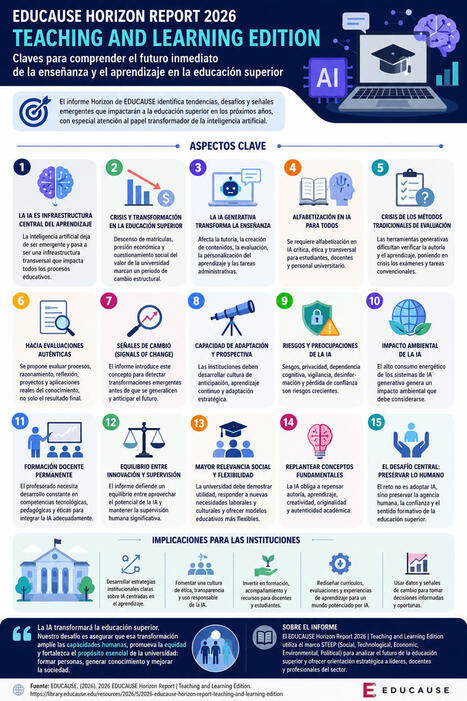
Robert, Jenay, Nicole Muscanell, Mark McCormack y Kim Arnold. 2026 EDUCAUSE Horizon Report | Teaching and Learning Edition.Louisville, CO: Texto completo Sumario ejecutivo El informe 2026 EDUCAUSE Horizon Report constituye una de las radiografías más relevantes sobre el futuro inmediato de la educación...
"Future-ready skills are essential for shaping confident, capable, and compassionate individuals. While academic knowledge forms the foundation of education, these skills enable students to communicate effectively, solve problems, work collaboratively, and adapt to changing environments."
"The challenge is not that institutions are moving too quickly towards AI adoption, but that higher education is approaching AI primarily as a technology implementation problem rather than as a structural transformation of learning, and hence how institutional value is defined and operationalized."
Cette fois c’est 100 % sûr, plus aucun doute à avoir, non vraiment juré-craché : l’avenir est aux agents IA. C’est du moins ce que l’industrie de la tech veut nous faire entrer dans le ciboulot, en nous faisant miroiter un futur riant où les paradigmes actuels sont complètement dépassés : les PC et les smartphones évidemment, mais aussi les systèmes d’exploitation et les logiciels.
Dans une interview accordée au podcast «Rapid Response», Andrew Macdonald a déclaré qu’il devenait de plus en plus difficile de justifier les coûts liés à l’usage de l’IA générative au sein de l’entreprise.
Analyse prospective et dynamique des usages de l'intelligence artificielle en Belgique et en Wallonie. Focus sur les compétences, l'impact sur l'emploi (IWEPS) et les agents autonomes (Agentforce).
"AI is becoming more adept at eliminating the cumbersome, lower-level administrative tasks associated with compiling data and summarizing assessments, giving educators more time to focus on meaningful collaboration and develop richer conversations to better inform instruction."
Learning how to question and analyze are skills that must be honed and practiced. Educators must help train minds to look for flawed arguments, misuse of data, or outright lies so we can ensure that as students form their own thoughts on issues, they are grounding them in reality.
"Digital literacy is critical for K–12 students: Educators must help students question and analyze information, including flawed arguments, misused data, and false claims."
Purpose-built AI systems can analyze patterns in student performance, identify specific skill gaps, and connect those gaps directly to instructional recommendations. Done well, this doesn't remove the teacher from the equation. It sharpens the teacher's ability to act.
"AI-supported tools can turn data into instructional guidance: Purpose-built systems can identify patterns, surface skill gaps, and recommend next steps while keeping teachers in control."
Navigating the world of artificial intelligence can feel like exploring a new frontier, and as a parent, you want to ensure your children are prepared to lead the way safely and confidently. This session is designed specifically for you, offering a clear road map to help your family explore, learn, and grow together in this rapidly changing digital landscape.
In this recording, we move beyond the technical jargon to focus on what matters most: building digital literacy and responsible habits right at home. You’ll discover how to help your children think critically about the information they find online, how to use built-in safety guardrails effectively, and how to establish meaningful ground rules that work for your unique family dynamic. Whether you’re curious, yourself, about how AI works or looking for practical ways start family conversations, this presentation provides the tools and insights to help.
Watch now to learn how you can partner with your children as they navigate the wonders of AI with curiosity and caution.
"As organizations trade long-term talent development for short-term efficiency, they may risk weakening the talent pipeline that generates the on-the-job learning and experience needed for early career professionals to become future subject-matter experts and leaders."
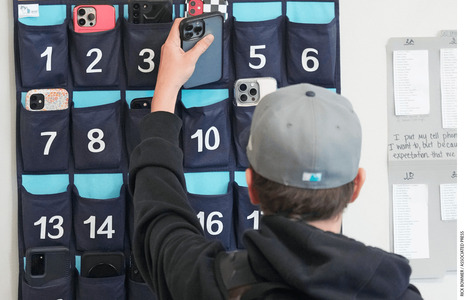
"70 percent of school principals—and 81 percent of middle and high school principals—believe cellphone bans have a positive impact on school climate. However, bans are less popular with students."
"Simmering student fear and anxiety over how artificial intelligence is rapidly reshaping the job market—and humanity—came to a boiling point during some commencement ceremonies this month."
To get content containing either thought or leadership enter:
To get content containing both thought and leadership enter:
To get content containing the expression thought leadership enter:
You can enter several keywords and you can refine them whenever you want. Our suggestion engine uses more signals but entering a few keywords here will rapidly give you great content to curate.


 Your new post is loading...