Your new post is loading...

|
Scooped by
Dr. Tom D'Amico (@TDOttawa)
October 14, 7:00 AM
|
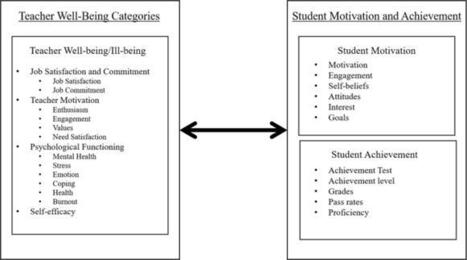
In this meta-analysis, we examine the association between teacher well-being and ill-being with student motivation and achievement. Based on 186 articles, 811 effect sizes, and data from 355,637 teachers, we investigate these relationships through the lens of the Job Demands–Resources Model, Transactional Stress Model, Self-Determination Theory, and the PERMA model. Using three-level meta-analytic models, we found small to moderate associations between student outcomes and teacher well-being (r = .18) and ill-being (r = –.13). These associations were similarly patterned across student motivation and student achievement, with no significant differences by outcome type. Associations were also comparable across domains of teacher functioning with no significant differences by domain. Moderator analyses indicated stronger associations in secondary school settings. Associations were also larger when teacher and student variables were reported by the same informant, although this difference reached conventional significance only for teacher ill-being and approached significance for teacher well-being. These findings suggest that teacher well-being and ill-being show reliable but modest associations with student motivation and achievement across a diverse body of research, though the evidence remains largely correlational. Given this correlational nature and the influence of measurement source, future longitudinal and intervention research is needed to clarify causal mechanisms and the direction of effects.
|
|
Scooped by
Dr. Tom D'Amico (@TDOttawa)
October 12, 7:00 AM
|
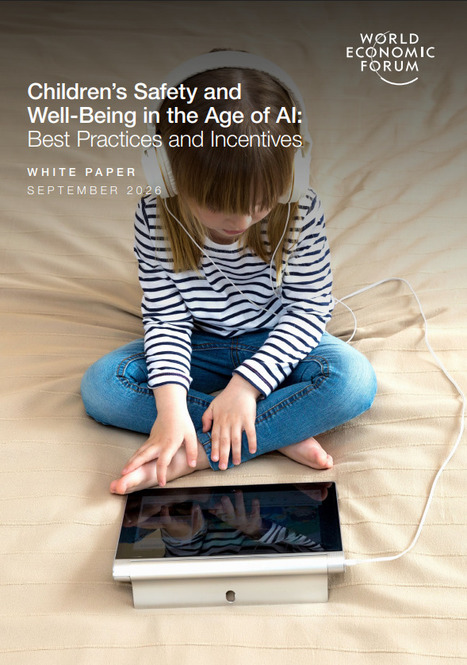
Artificial intelligence (AI) is becoming increasingly embedded into the everyday lives of children and young people, shaping how they learn, communicate, play and make sense of the world. Its rapid development and adoption have generated growing interest and concern among parents, educators and policymakers, with questions arising as to how sustained interaction with AI may influence children’s cognitive, social and emotional development. This report examines AI-mediated environments, while highlighting evidence specific to generative AI (GenAI) where available. Drawing on documented research from neuroscience, education, psychology and related fields, the report explores the implications of AI for children’s socio emotional competences. It synthesises emerging evidence to identify both opportunities and risks and to inform education policies that support children’s learning and development in an increasingly AI-enabled world.
|
|
Scooped by
Dr. Tom D'Amico (@TDOttawa)
October 9, 1:37 PM
|
This report documents the findings and methodology of the consensus research project on Generative AI's impact on learning in K-20 U.S. education.
|
|
Scooped by
Dr. Tom D'Amico (@TDOttawa)
October 6, 7:00 AM
|
AI tools are arriving in schools faster than research can evaluate them. Teachers are experimenting with new tools and districts are writing policies, all while students are already using AI both inside and outside the classroom. But for many education leaders, a basic question remains: What does rigorous research actually say about how AI affects teaching and learning? To help answer that question, we released a new report: The Evidence Base on AI in K-12: A 2026 Review. The report reviews the current research, focusing specifically on studies that convincingly estimate causal impact, meaning studies that can tell us whether an AI tool changed outcomes for students or educators.
|
|
Scooped by
Dr. Tom D'Amico (@TDOttawa)
October 4, 7:00 AM
|
This MOOC offers a comprehensive approach to digital citizenship, geared especially towards the educational field. Throughout the course, topics such as the ethical use of artificial intelligence, disinformation, coexistence in digital environments, the protection of rights, democratic participation, and the development of critical thinking are addressed.
|
|
Scooped by
Dr. Tom D'Amico (@TDOttawa)
October 2, 7:00 AM
|
A free one-day virtual summit on what AI literacy actually is, and how to build it in your community. Join us Nov. 7, 2026.
|
|
Scooped by
Dr. Tom D'Amico (@TDOttawa)
September 30, 7:00 AM
|
|
|
Scooped by
Dr. Tom D'Amico (@TDOttawa)
September 25, 7:00 AM
|
Common Sense Education provides educators and students with the resources they need to harness the power of technology for learning and life. Find a free K-12 Digital Citizenship curriculum, reviews of popular EdTech apps, and resources for protecting student privacy.
|
|
Scooped by
Dr. Tom D'Amico (@TDOttawa)
September 23, 7:00 AM
|
|
|
Scooped by
Dr. Tom D'Amico (@TDOttawa)
September 15, 7:00 AM
|
|
|
Scooped by
Dr. Tom D'Amico (@TDOttawa)
September 13, 7:00 AM
|
Samsung Solve for Tomorrow AI curriculum created in partnership with the Mark Cuban Foundation. This curriculum guides students through the full arc of working responsibly with AI.
|
|
Scooped by
Dr. Tom D'Amico (@TDOttawa)
September 11, 7:00 AM
|
Over the past several weeks, the public conversation about technology and AI in schools has accelerated again. School systems are announcing restrictions. Parents are organizing. Policymakers are responding. Commentators with [...]Read More... from Beyond Bans: What PK–5 Technology Guidance Should Actually Protect
|
|
Scooped by
Dr. Tom D'Amico (@TDOttawa)
September 9, 7:00 AM
|
Curriculum × AI Summit 2026 is Toddle's free virtual event for district leaders. Learn with Heidi Hayes Jacobs, Alana Winnick, and Tony Frontier. Nov 4–6.
|
|
|
Scooped by
Dr. Tom D'Amico (@TDOttawa)
October 13, 7:01 AM
|
|
|
Scooped by
Dr. Tom D'Amico (@TDOttawa)
October 11, 7:00 AM
|
|
|
Scooped by
Dr. Tom D'Amico (@TDOttawa)
October 7, 7:00 AM
|
Compare AI literacy courses for teachers in 2026: Flint, MagicSchool, Google, Microsoft Elevate, CodeAI, ISTE, Common Sense and OpenAI Academy. Cost, time, certificates and staff progress tracking.
|
|
Scooped by
Dr. Tom D'Amico (@TDOttawa)
October 5, 7:00 AM
|
|
|
Scooped by
Dr. Tom D'Amico (@TDOttawa)
October 3, 7:00 AM
|
Educators need agency, not just new rules AI is making student learning invisible to teachers. And it’s turning teachers into someone students look past rather than someone they go to. What if teachers could regain their sightlines by doing something they already know how to do — talking to their...
|
|
Scooped by
Dr. Tom D'Amico (@TDOttawa)
October 1, 7:00 AM
|
AI reached K–12 classrooms before state policies on its use and role in public education did. States are taking action—but for most, that action is still ad hoc, fragmented, and not keeping up with the pace of change in classrooms and workplaces. This report draws on survey responses and interviews with SEA staff and partner
|
|
Scooped by
Dr. Tom D'Amico (@TDOttawa)
September 29, 9:20 PM
|
|
|
Scooped by
Dr. Tom D'Amico (@TDOttawa)
September 24, 8:09 PM
|
|
|
Scooped by
Dr. Tom D'Amico (@TDOttawa)
September 22, 10:02 PM
|
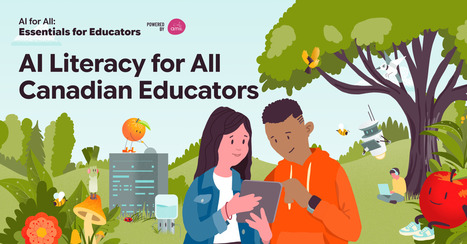
A free, open-access AI literacy course built by educators, for educators. Canadian educators are shaping the future of digital agency, building ethical, research-backed AI confidence rooted in pedagogical excellence, cross-curricular learning, and civic pride.
|
|
Scooped by
Dr. Tom D'Amico (@TDOttawa)
September 14, 7:00 AM
|
|
|
Scooped by
Dr. Tom D'Amico (@TDOttawa)
September 12, 7:00 AM
|
Common Sense Education provides educators and students with the resources they need to harness the power of technology for learning and life. Find a free K-12 Digital Citizenship curriculum, reviews of popular EdTech apps, and resources for protecting student privacy.
|
|
Scooped by
Dr. Tom D'Amico (@TDOttawa)
September 10, 7:00 PM
|
Day of AI empowers teachers and students to learn, think critically, and create with artificial intelligence through free curriculum and training with MIT…
|