

AI is associated with rising productivity expectations and changes to early career tasks, and is exposing gaps in workforce training.
Via EDTECH@UTRGV


|
Rescooped by
michel verstrepen
from Educational Technology News
onto gpmt May 25, 12:15 PM
|
 Scoop.it!
AI is associated with rising productivity expectations and changes to early career tasks, and is exposing gaps in workforce training.
 Your new post is loading...
 Your new post is loading...
Your new post is loading...
Scoop.it!
La IA generativa está transformando la forma de estudiar. Descubre cómo influye en el aprendizaje, qué habilidades serán clave y cómo utilizarla de forma eficaz. Via LGA
Scoop.it!

This article explores why strong Instructional Design skills matter more than industry experience when hiring Instructional Designers. Via EDTECH@UTRGV 
EDTECH@UTRGV's curator insight,
June 22, 6:35 PM
"Instructional Designers Are Learning Experts First"
Scoop.it!
These Guidelines recognize the value of ODL as one of the most sustainable methods for overcoming the educational barriers faced by persons with disabilities. Via Nik Peachey 
Nik Peachey's curator insight,
June 22, 5:19 AM
Inaccessible learning environments pose a significant barrier to quality education for all, affecting the rights of learners. Approximately 15% of the global population, representing one billion people, live with a disability. Amid this, these Guidelines shed light on inclusive education, delving into technology-based approaches for learners with disabilities.
Scoop.it!
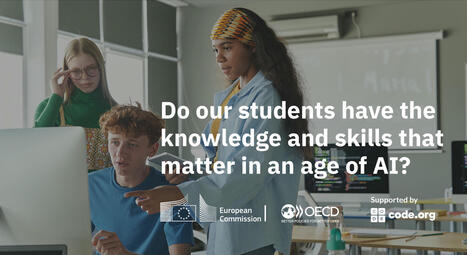
Empower learners for the age of AI with the AILit Framework—a joint EC & OECD initiative, supported by Code.org and international experts. Via Dr. Tom D'Amico (@TDOttawa)
Scoop.it!

Explore two professors' approaches to AI and assignment design, from AI-resistant assessments to AI-integrated learning experiences. Via EDTECH@UTRGV
EDTECH@UTRGV's curator insight,
June 19, 11:30 AM
"[A] question has arisen from teachers of every discipline: how do we develop assignments that facilitate learning with AI constantly present? This question does not have a single correct answer. Different instructors have different opinions on the role AI should play in education due to their discipline or personal teaching philosophy."
Scoop.it!

What if the greatest danger of #AI is not the technology itself… but the way we think? This reflection is part of a broader journey through #ReverseTHINKing—where we move from awareness to responsibility, from reaction to understanding. Image created by ChatGPT, click please to enlarge. Introduction Everybody has already remarked that technology evolution — and…
Learn more / En savoir plus / Mehr erfahren:
https://www.scoop.it/topic/21st-century-learning-and-teaching?tag=Gust-MEES
https://gustmees.wordpress.com/
Via Gust MEES 
Gust MEES's curator insight,
June 19, 3:12 PM
What if the greatest danger of #AI is not the technology itself… but the way we think? This reflection is part of a broader journey through #ReverseTHINKing—where we move from awareness to responsibility, from reaction to understanding. Image created by ChatGPT, click please to enlarge. Introduction Everybody has already remarked that technology evolution — and…
Learn more / En savoir plus / Mehr erfahren:
https://www.scoop.it/topic/21st-century-learning-and-teaching?tag=Gust-MEES
https://gustmees.wordpress.com/
Scoop.it!

Understand the four stages of competence and how they help in skill development and learning in today's fast-paced workplace. Via EDTECH@UTRGV
EDTECH@UTRGV's curator insight,
June 16, 11:30 AM
"The model has four levels: unconscious incompetence, conscious incompetence, conscious competence, and unconscious competence."
Scoop.it!

À mesure que les systèmes d’intelligence artificielle gagnent en puissance et en autonomie, leur fonctionnement devient de plus en plus difficile à saisir. Des chercheurs mettent en garde contre une tendance qui pourrait compliquer notre capacité à garder le contrôle sur ces technologies. Via Intelligence Economique, Investigations Numériques et Veille Informationnelle
Scoop.it!

From
edsurge

"Two school days. That’s all it took. In 2024, I chaperoned field trips two days in a row, for two different grade levels, and came back to roughly 450 ungraded assignments.
I knew what to do, I’ve done it before, mark them credit or no credit and move on. Students get something out of that. They did the practice. But if any of them were practicing it wrong, nobody catches it, nobody tells them, and the misunderstanding rides along into the next unit.
That pile of work led me to build an AI grading assistant. And this past April, I removed its most automated feature: the one that could return an AI-generated grade and comment to a student before I had reviewed it.
Building that feature was easy to justify. Removing it taught me which part of grading a teacher can’t hand off." Via EDTECH@UTRGV
EDTECH@UTRGV's curator insight,
June 15, 2:49 PM
"[W]hen a student asks, “Why did I get this grade?” the answer cannot be, “Because the system said so.”
Scoop.it!

From
everyone
This mapping was developed within iRAISE under the scientific direction of everyone.AI, in collaboration with Via Dr. Tom D'Amico (@TDOttawa) , Nik Peachey
Scoop.it!

From
edsurge
I am going to start where no good teacher should start, with a $10 word: epistemology. It refers to a branch of philosophy that explores how we know what we know – something scholars like John Dewey argued is deeply tied to experience, not just information. Via Nik Peachey
Scoop.it!

From
evolllution
As AI becomes more integrated into higher education, institutions must address ethics, including representation, sourcing, modeling and accountability. Via EDTECH@UTRGV
EDTECH@UTRGV's curator insight,
June 12, 1:54 PM
"AI has the potential to reflect our existing power structures, but—if used intelligently and critically—it can also be deployed to help disrupt them."
Scoop.it!
From
sup
Portail d'outils collaboratifs, expérimentations et modules de développement de sup.miver.fr |
Scoop.it!
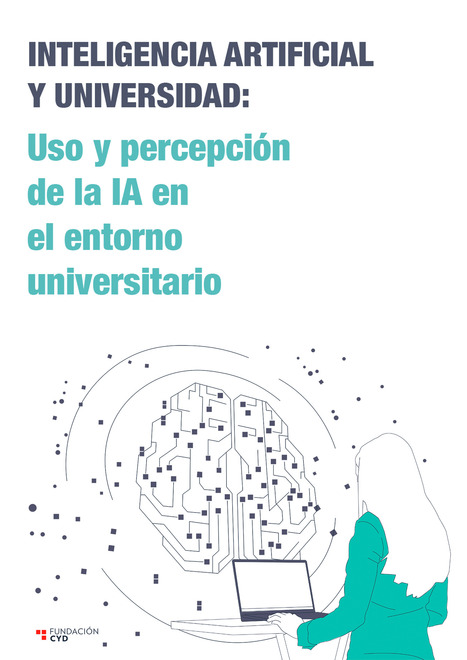
La Fundación CYD ha publicado Uso y percepción de la IA en el entorno universitario, un análisis que muestra cómo las universidades españolas y los estudiantes emplean las herramientas de inteligencia artificial generativa, así como su valoración e inquietudes sobre éstas. Via LGA
Scoop.it!

From
evolllution
Higher education often frames recruitment with motivational rhetoric, but adult learners prefer accessibility, certainty, and community over motivation. Via EDTECH@UTRGV
EDTECH@UTRGV's curator insight,
June 22, 6:40 PM
"For years, higher education has approached adult learners as though they are standing on the sidelines waiting to be inspired. Marketing campaigns focus on aspiration. Recruitment strategies focus on encouragement...The question is rarely, 'Why should I go back to school?' More often, it is, 'Can I realistically do this?'"
Scoop.it!

From
captioner
Captioner is an AI subtitle generator and editor for your videos. Add accurate subtitles to your videos and save hours of work. Upload your videos and edit right on your browser. Via Nik Peachey
Nik Peachey's curator insight,
June 22, 5:13 AM
Free - Captioner lets you add accurate subtitles to videos right in your browser. Upload a file, auto-transcribe and edit precise timestamps. You can translate captions into 98+ languages, export SRT, VTT, or SBV files https://captioner.io/en You can do up to 3 videos per day for free - great if you are producing video based materials.
Scoop.it!

The most powerful belonging practices are built into the weekly routines of teaching, advising, and communication with learners. Via EDTECH@UTRGV
EDTECH@UTRGV's curator insight,
June 19, 11:26 AM
"[B]elonging is built through small, consistent practices that reduce uncertainty, increase connection, and help students believe they can persist."
Scoop.it!
From
www
"The videos are all over social media, making students an irresistible offer: Go ahead and let A.I. do your homework — with the latest technology, you won’t get caught...
These kinds of tutorials are now pervasive on TikTok and YouTube. They show students how to use tools known as humanizers and autotypers, which make it easier than ever to cheat. The videos — sometimes labeled ads, sometimes not — target college and high school students." Via EDTECH@UTRGV
EDTECH@UTRGV's curator insight,
June 19, 11:32 AM
"Big tech companies and small start-ups are using social media to hype new tools that allow students to trick teachers and A.I. detectors."
Scoop.it!

Conversations with Kevin Hogan: SchoolAI policy analyst Sasha Luks-Morgan breaks down the three pillars every district AI policy needs Via EDTECH@UTRGV
EDTECH@UTRGV's curator insight,
June 16, 11:28 AM
"About two-thirds of U.S. districts and states have some form of AI policy in place. The other third is, as Sasha Luks-Morgan puts it, the wild west. And even many of the policies that do exist, she argues, aren't doing what they're supposed to do."
Scoop.it!

The risk of cognitive outsourcing is real. But there is reason for optimism, if students are taught good AI habits early and often. You have seen it happen: A student opens an AI tool, gets a polished essay outline in minutes, submits the assignment and walks away feeling productive. They do well on the exam. The grade is real. But ask them to explain the same concept three months later, and the room goes quiet. Via EDTECH@UTRGV
EDTECH@UTRGV's curator insight,
June 16, 11:32 AM
"I don’t ban AI tools, nor do I treat them as a shortcut to avoid. Instead, I try to structure AI into the learning process in a way that makes its strengths and limitations visible to students."
Scoop.it!
From
teacherforge
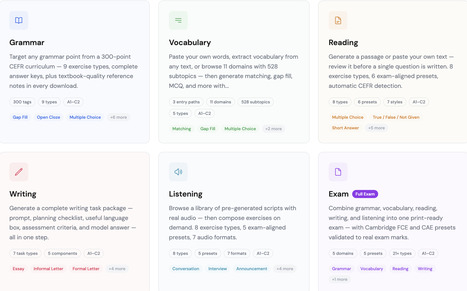
Generate ESL and EFL worksheets and exams with AI. Grammar, vocabulary, reading, writing, and listening — 21+ question types, A1 to C2, with answer keys. Free to start. Via Ana Cristina Pratas
Scoop.it!
From
edsurge
The question for educators: How to know when AI supports real learning.
"Information is more easily accessible than ever before. Anyone anywhere can ask an AI tool a question and receive an answer that seems reasonable, at least on the surface. It’s not surprising, then, to see predictions of the demise of traditional schools and colleges." Via EDTECH@UTRGV
EDTECH@UTRGV's curator insight,
June 15, 2:52 PM
"[E]ducation has never been only about access to information. Students need much more to become capable members of society. They need the ability to assess the quality of information, recognize strong work, and connect ideas."
Scoop.it!
Scoop.it!

Blog de la "RIED. Revista Iberoamericana de Educación a Distancia". La Revista Iberoamericana de la Educación Digital. Via LGA
Scoop.it!
Discover why critical thinking often disappears in student writing and how purposeful reading, synthesis, and thesis-driven writing can strengthen academic work. Via EDTECH@UTRGV
EDTECH@UTRGV's curator insight,
June 12, 1:37 PM
"Orally or in discussion postings, students engage complex ideas but struggle to demonstrate comparable reasoning in writing for assignments. The writing describes what authors wrote, more of a regurgitation, rather than effectively synthesizing sources into the context for their writing." |







"As organizations trade long-term talent development for short-term efficiency, they may risk weakening the talent pipeline that generates the on-the-job learning and experience needed for early career professionals to become future subject-matter experts and leaders."