Empathy is defined as identifying with another person's feelings, or emotionally placing one's self in the place of another. The trait is a theme in Harper Lee's Pulitzer Prize winning novel, "To Kill a Mockingbird...."
The overall character of Atticus Finch is an example of how empathy is used in the novel. He displays empathy in his strong beliefs of racial equality, which was uncommon in the 1930s in Alabama. by Scott Cornell, img http://bit.ly/qCuGfy
I am really enjoying reading your blog. If you want to buy villa in Noida Extension then call on the given number-8375000707 as we give you the best offers for buying villa in Noida Extension. https://www.villasinnoida.com/villas-in-noida-extension.php
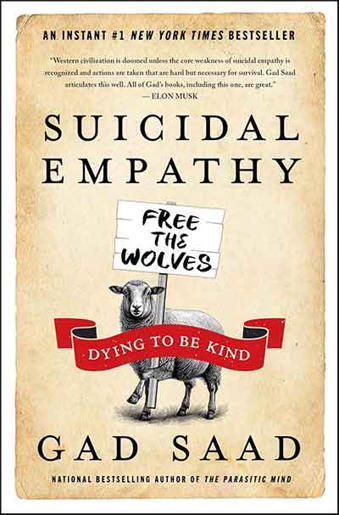
An important subtheme of the book is the destructiveness of emotionalism, the doctrine and practice of placing emotions above facts, logic, and reason. “Our emotions,” Saad writes, “can lead us astray when they are deployed in contexts when it would serve us best to invoke our reasoning faculty” (10). When people succumb to suicidal empathy, he explains, viewing the world through “the prism of maximizing empathy now,” they focus only on “first-order effects” while ignoring the “disastrous long-term consequences” (158–59).
Nurses who report stronger empathic tendencies also tend to hold more positive attitudes toward older adults, according to a cross-sectional study published in BMC Geriatrics.
The team surveyed 305 nurses recruited through snowball sampling, a non-probability method in which participants refer further respondents. Data were collected online between April and May 2023 using three instruments: a personal information form, the Empathic Tendency Scale (ETS) and the Ageism Attitude Scale (AAS). The researchers analysed the responses with descriptive statistics, correlation analysis and linear regression, and reported the study according to the STROBE guidelines for observational research.
PRRI’s 2026 American Values Survey reveals some, uh, interesting views on whether Americans think empathy is a good thing or not. Those respondents unaffiliated with a religion were much more inclined to think that empathy is “a foundational moral value that helps build a healthy society”.
With the exception of white evangelical Protestants (42%), around two-thirds or more of all major religious groups believe that empathy is a foundational moral value for a healthy society, including about eight in ten religiously unaffiliated Americans (83%), members of other non-Christian religions (80%), and Jewish Americans (77%). By contrast, a majority of white evangelical Protestants (54%) believe empathy can become dangerous when it leads people away from building a society guided by God’s truth.
Artificial intelligence is becoming increasingly convincing at expressing emotional understanding, but a fundamental question remains unresolved: does a machine that responds with compassion actually understand human distress, or has it simply mastered the language of empathy?
As conversational systems become more sophisticated, researchers are warning that the distinction between appearing empathetic and possessing empathy carries serious consequences for trust, emotional relationships, and AI governance.
A study titled “From Human Empathy to AI-Generated Empathic Performance: Conceptual Boundaries and Ethical Risks for Human-Centered AI,” published in the journal AI, examines this growing ambiguity.
Authored by Rabia Zamur Tuncer of Istanbul University and Şafak Tanır Levendeli of Istanbul Aydın University, the research argues that emotionally responsive artificial intelligence must be evaluated through a clearer understanding of what machines perform, what humans perceive, and what constitutes genuine human empathy.
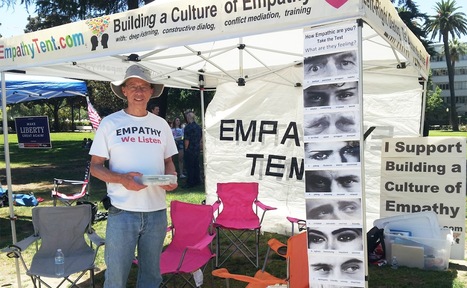
The Empathy Center, started by Edwin Rutsch and his Center for Building a Culture of Empathy, hosts free online Empathy Cafes. In an Empathy Circle, one person speaks while another listens and then reflects back what they heard, until the speaker feels truly understood. Then the roles rotate, so everyone gets a turn to be heard.
The Empathy Center even teams up with Braver Angels for a Bridging Divides Empathy Cafe, which meets online on Sunday evenings. I’ve been invited, and it looks like a wonderful, simple way to practice listening across our differences.
America Faces an ‘Attack on Empathy’ Can we rebuild a sense of trust and understanding between individuals?
The Theological and Political Roots of "Anti-Empathy"
A Coordinated Campaign: Jones highlights that this sentiment is not accidental; it is driven by an orchestrated movement within conservative evangelical circles, citing titles like Toxic Empathy, The Sin of Empathy, and Suicidal Empathy.
Historical Precedents: Jones draws a parallel to Frederick Douglass’s critique of slaveholder Christianity, where theology was used to narrowly circumscribe empathy to the in-group while justifying cruelty toward others.
Modern Authoritarian Purpose: Jones argues the goal of eroding empathy is to desensitize citizens and "numb" them to state-enacted cruelty, particularly regarding harsh immigration enforcement and mass deportation efforts.
Empathy is one of those things that really shouldn’t need defending.
Being aware of other people’s feelings, sensitive to them, and able to put yourself in another person’s shoes is pretty much essential for humans to function as a community. But the current conservative project has zero room for that sort of thing. And it’s not just that they don’t see the point of it. Rather, they see it as an active danger to civilization.
Tuesday, PRRI released its 2026 American Values Survey. As part of the survey, it tried to gauge how Americans feel about empathy.
It’s a (sadly) timely question: empathy has, lately, become a whipping boy if the Right. (Elizabeth Bruenig puts it like this: “A crusade against empathy is sweeping through the right.”) The anti-empathy crusade has become particularly popular among Silicon Valley tech billionaires, but it’s not limited to them. Some pastors and other Christian leaders have framed empathy as a sin (or, at least, a potential sin).
The article argues that the review uses "suicidal empathy" as a cover for anti-Muslim prejudice rather than as a real psychological idea. It says the viper fable—where a farmer warms a snake that then bites him—tells readers to see kindness toward Muslim migrants as foolish and self-destructive, no matter who the people actually are.
The author criticises the review for using one rape case as an example of "orgiastic empathy," saying it turns a survivor's complicated story into a political prop and draws broad conclusions from a single emotionally charged example.
The article also argues that evolutionary psychology, which the review uses to claim empathy can become a civilisational disorder, is a contested field whose own scholars warn you cannot jump from "this is how empathy evolved" to "therefore we should restrict empathy toward Muslims or refugees."
The author concludes that whether empathy can misfire is a fair question for psychologists, but the review hijacks that debate to dress up political views in scientific language.
Medical student empathy trends For a study published in the journal International Medical Education last summer, researchers examined cognitive empathy, compassion, self-compassion and resilience among 98 medical students across all four years of training. Their findings suggest that empathy-related traits come under the greatest strain during the second and third years of medical school.
Across all four years, the study points to a broad pattern in which empathy-related traits appear more intact at the start of medical school, come under greater strain in the second and third years, and then rebound somewhat by the fourth year.
The study’s authors noted that while traditional narratives in medical education have held that empathy dips are most pronounced during the third year, the second year may also be a key pressure point.
If you've practiced and integrated Nonviolent Communication (NVC), you have probably felt and witnessed the transformative power of empathy.
You feel seen, your shoulders soften, and you notice the nuances of your feelings and the needs driving them. The same when you support someone who is upset. You know that identifying their needs changes the perspective.
And yet...
Have you ever found yourself supporting someone who could easily identify their feelings and needs, had received plenty of empathy, understood their situation perfectly well... and still seemed stuck?
Perhaps you've wondered:
When is empathy enough? Is my empathy good enough? What would a more skilled practitioner do in my place? In this free 60-minute session, we'll explore a question that many NVC practitioners, including trainers, encounter:
Artificial intelligence has entered a remarkable new phase of human interaction. Intelligent systems increasingly recognize emotional language, generate compassionate responses, and support conversations once reserved for colleagues, counselors, educators, and organizational leaders. As these capabilities expand, society faces profound questions about emotional expression, interpersonal responsibility, and genuine human connection. Empathy has consequently emerged as one of the most important human capabilities for navigating technological transformation.
by David French I’m highlighting Sey’s story for two reasons. First, it’s directly relevant to a debate about empathy that has long been spreading across the Christian right. Second, it demonstrates the foolishness of mass deportation. Mass deportation doesn’t put America first; it puts vengeance first, and vengeance is a poor substitute for a moral and rational immigration policy.
Let’s begin by talking about empathy. As I’ve written before, one of the most striking aspects of the Trump era has been the evangelical attack on empathy as a virtue.
Books like “Toxic Empathy,” by the popular Christian podcaster Allie Beth Stuckey, and “The Sin of Empathy,” by an evangelical pastor and theologian named Joe Rigney, have warned Christians against allowing their hearts to be influenced by progressive appeals to empathy.
In this lecture, we explore the concept of empathy and examine why it is such an important part of emotional wellness, emotional intelligence, and healthy relationships.
Students are introduced to empathy as the ability to understand, recognize, and connect with another person's emotional experience. Rather than simply feeling sorry for someone, empathy involves trying to see the situation from their perspective and appreciating what they may be thinking or feeling.
Many people have narcissistic traits to some degree, for example, confidence in one's own superiority, a sense of entitlement and a desire to be the center of attention. However, some people have notably higher levels of narcissistic traits than others, and the neural basis of so-called "grandiose narcissism" has rarely been studied in socially complex situations.
Artificial intelligence (AI) systems can offer patients empathic support in forms as different as a chatbot on a phone that fits in a pocket and a soft robot they can hug. Much research on empathy in AI, including large language models, focuses on text, which lacks the rich non-verbal cues conveyed through voice, visual expression and touch.
This Perspective introduces a new conceptual framework, the embodiment–scalability spectrum, to help researchers weigh what each modality can offer patients against how widely it can be delivered. It orders communication channels by embodiment: how far each draws on the expressive repertoire of the human body. Voice adds prosody. Visual cues offer facial expression, gaze and gesture through virtual avatars or physical robots.
Touch, the most embodied channel, can offer a hand to hold; no other modality can. But text and voice can reach patients through devices they already own, whereas supportive touch requires dedicated hardware wherever the interaction occurs.
That hardware can demand substantial development, constraining both research and widespread use. Consequently, modality choice fundamentally shapes how patients experience empathy from an AI system and the scale at which that support can be delivered.
As more people turn to large language models (LLMs) during personal crises, the companies behind them are engineering these AI-powered models to be more personal, empathetic and understanding when prompts indicate a user is in emotional distress.
More people are turning to artificial intelligence (AI)-powered chatbots for companionship and to address loneliness. But can AI-generated empathy replace human connection?
In a study published in the journal Communications Psychology, a team led by researchers at Penn State found that human users rated AI-generated empathetic responses higher in quality than human-generated empathetic responses, yet they preferred human empathy over AI. In the following Q&A, C. Daryl Cameron, the Sherwin Early Career Professor and associate professor of psychology at Penn State, and doctoral student Joshua Wenger discussed AI empathy and why it may prove an effective complement to — and not a replacement for — human companionship.
Ahead of the 2026 midterm elections, a new survey from Washington, D.C.-based Public Religion Research Institute (PRRI) found that Democrats (84%) and Independents (70%) are more likely than Republicans (53%) to see empathy as a net positive to society.
White evangelical Protestants are the only religious group in which a majority does not agree that empathy is a foundational moral value (42%). Instead, a majority (54%) say they believe empathy can be dangerous.
The experiences of nurses and the essential role of empathy in healthcare took center stage Oct. 21 at Nashville’s Belcourt Theatre during a special screening of “NURSE: Empathy Heals.” The documentary shares nurses’ personal stories, offering a closer look at the emotional demands of caregiving and the people behind patient care.
The film is part of the Nurse Narratives Initiative (NNI), a collaboration led by East Tennessee State University (ETSU) that brings together StoryCollab, the ETSU College of Nursing, the Tennessee Center for Nursing Advancement and the ETSU Research Corporation, with support from Ballad Health.
We hear a lot today about the importance of empathy, especially in leadership and management. Most of us would likely say we value empathy and try to bring it to our relationships and interactions.
But empathy is more complex than simply caring about people or trying to understand how they feel. And there can be a significant gap between believing we’re demonstrating empathy and how other people actually experience us.
Recent research also challenges the idea that empathy is simply something we either possess or don’t. A 2025 Stanford Graduate School of Education study examining empathetic communication in the workplace describes empathy as a complex but learnable skill.
But chatbots can’t be empathic partners because they haven’t lived a human life. They don’t experience love. They don’t fear illness and death. They don’t know what it’s like to start out small and dependent and grow up so you’re in charge of your own life, but still feel many of the insecurities you knew when you were little. Without a body, they have no standing to talk about pain, fear, loss, joy, or passion. And they have no stake in our social world—our ability to live and work together in the real. More.
That empathy is both a pseudo-strength and a fatal weakness. When the user says “Me, me, me!”, the bot can reply, “Yes, you, you, you!” Real relationships can never be like that because both parties are real.
What Is Empathy? Empathy is the ability to understand another person’s emotions and perspective and respond with genuine care. It’s saying, I may not know exactly what you’re going through, but I want to understand, and I’m here with you.
Notice what empathy doesn’t require. It doesn’t mean we’ve experienced the same hardship or feel every emotion another person feels. Instead, it means we’re willing to slow down, listen well, and help someone feel seen and heard.
At its core, empathy is an expression of love.
The apostle Paul captures this beautifully in Romans 12:15: “Rejoice with those who rejoice; weep with those who weep” (CSB). He doesn’t tell us to solve every problem. He simply invites us to step into another person’s joy or sorrow. At its core, empathy is an expression of love. It shifts our attention from ourselves to others and reminds us to listen before speaking, understand before correcting, and care before evaluating.
It becomes positively insulting when offered as compensation for failures that somebody has the authority to address, writes Terence Cosgrave
There was a time when if a politician was accused of lacking empathy they might have attempted a defence based on competing financial obligations perhaps – or maybe produced a photograph of themselves listening gravely to a child or elderly woman. Now, in influential corners of American conservatism, the defence has become rather more ambitious. Empathy itself is in the dock. “You don’t need it,” is the cry. You might be better off without it.
If we want to build a culture of empathy, we have to look below the waterline. In her insightful piece "Time to Look Below the Waterline," Maša Blaznik uses the systems thinking Iceberg Model to illustrate how our most urgent crises—war, political polarization, environmental degradation, and social alienation—are symptoms of an underlying paradigm rooted in dominance and disconnection.
True systemic leverage doesn't come from treating surface symptoms; it requires shifting our foundational mental models to an Empathy Paradigm, where empathy serves as the core organizing principle for our institutions and communities.
But moving from theory to practice requires concrete, repeatable ways of relating: this is precisely why we practice Empathy Circles. https://www.empathycircle.com/
By providing a structured, accessible space for mutual active listening and authentic presence, the Empathy Circle operationalizes this shift, bridging divides and rebuilding the interpersonal connection needed to make a violence-based society obsolete.
To get content containing either thought or leadership enter:
To get content containing both thought and leadership enter:
To get content containing the expression thought leadership enter:
You can enter several keywords and you can refine them whenever you want. Our suggestion engine uses more signals but entering a few keywords here will rapidly give you great content to curate.


 Your new post is loading...

























Define in your own words; what is empathy? Give an example in your life from a movie, book or TV show you have seen.