An empathetic workplace is one that accepts that humans work here, and does its best to create an environment where they can thrive. Even on bad days, even during upheaval, even when the world is on fire.
The world has been on fire quite a lot lately.
If we expect people to act like output production machines that are unaffected by the fires around them, we will fail. But if we endeavor to recognize what is actually happening with our workforce, and to give them support when they need it, well. That’s how you build an army. That’s how you create the kind of resilience, trust, and respect that will keep that army cohesive and striving. Even when it’s hard. Even through the mud and fire and chaos.
I am really enjoying reading your blog. If you want to buy villa in Noida Extension then call on the given number-8375000707 as we give you the best offers for buying villa in Noida Extension. https://www.villasinnoida.com/villas-in-noida-extension.php
Why Empathy Cannot Be Left To Chance Child development researchers are clear on one point: empathy is not a trait children simply arrive with fully formed. According to a Psychology Today contributor whose work was reviewed by Gary Drevitch, empathy develops through experience and practice, not automatically.
As the piece explains, empathy is not something a child simply "has" or "doesn't have" by a certain age, and there is no definitive checklist parents can use to confirm their child is on track.
That same research makes clear that empathy is not a developmental checkbox parents can tick off at a certain age. It is shaped by genetics, temperament, environment, and the quality of relationships a child experiences, and it continues evolving well into adolescence.
A new faith in empathy is spreading through academia, technology and politics. The promise sounds humane, but the politics beneath it may be far less innocent than its advocates imagine.
Suddenly, a lot of people, not least in academia, are talking of “empathy”. There are even AI tools and games to help you develop empathy. A highly learned academic told me that she is using some sort of AI interlocutor developed to help you exercise your empathy, because she finds it so difficult to understand Zionists after Gaza. I wanted to ask her why one would want to “empathise” with genocidal Zionists. I, for one, have no desire to empathise with Nazis, or racists, or Al Qaeda terrorists. I might wish to want to understand them, in order to counter them, but understanding does not require empathy.
Don’t misunderstand me. I think empathy is a core and necessary human attribute.
What if one of the most powerful ways to strengthen human connection is the simple act of feeling deeply heard and understood? Join Michelle Villegas for a rich and inspiring conversation with Edwin Rutsch, founder of the Empathy Center, as they explore the transformative role empathy can play in our relationships, communities, and society as a whole.
Drawing from years of research and practice, Edwin shares his vision for building a global culture of empathy and introduces concepts including self-empathy, mutual empathy, imaginative empathy, and the practice of empathy circles—structured spaces where people experience the power of deep listening and authentic understanding. Michelle, bringing her perspective as a therapist, educator, singer, songwriter, and host, helps bridge these ideas with psychology, human development, and creative expression.
Together they explore barriers that often block empathy—including rushing to solutions, judgment, analysis, and disconnection—and discuss how learning to truly listen can open pathways to deeper connection. The conversation also reaches into larger social issues, including , education, and the importance of nurturing empathy in children and future generations.
by @Elizabeth Grace Matthew These are some of the questions animating (and sometimes paralyzing) conversations among thought leaders on today’s political right.
There is Allie Beth Stuckey’s 2024 book Toxic Empathy, which asks readers not to wallow in selective empathy for the pregnant woman or the illegal immigrant unto forgetting that unborn babies and American citizens also deserve due regard. Then there is Stuckey’s conversation with the conservative New York Times columnist David French, in which the two argued about proper Christian attitudes toward transgender issues, abortion, decency, empathy itself, and more.
Most recently, there is Canadian academic Gad Saad’s May 12 book Suicidal Empathy, which remakes many of Stuckey’s arguments in a more visceral and discursive way—and which, truth be told, adds little if any substance to the conversation.
1. The Health Communications Gap: You’ve worked across pharma, biotech, non-profits, and academia. Where do most health communications strategies fail—lack of scientific rigor, lack of human empathy, or lack of boldness?
Probably all three but if I had to name the one that holds everything else back, it’s the failure of empathy. You can have the most rigorous science and the most daring creative strategy in the world, but if the work doesn’t connect with how a real person actually feels about their health, their body, their fears, it doesn’t move anyone.
Most of us have not literally experienced such an Exodus, but we must imagine ourselves in that scenario, empathize with those who have lived through it, and act on our empathy.
In mandating that we place ourselves in the shoes of a stranger, the Torah demands that we exercise what modern-day psychologists call our Theory of Mind, our ability to understand that other people have different perspectives and emotions from our own. The Theory of Mind develops early on, when children realize that other people are distinct from themselves. This understanding is key to the development of empathy, and it allows us to anticipate the needs of others. In mandating generosity and empathy, the Torah lays out what human behavior looks like when we act on our Theory of Mind.
"We are living through a period of extreme narcissism. Our current leadership in Washington believes that empathy is a weakness and that our nation stands supreme and alone."
Conan O'Brien delivers a hilarious and surprisingly heartfelt commencement address at Harvard University, joking about AI, Ivy League culture, foreign students, humility, success, ego, and the future facing graduates.
From roasting Princeton and Harvard traditions to sharing emotional lessons about luck, community, failure, and reinvention, Conan mixes comedy with genuine advice for the Class of 2026.
Even when we try to put ourselves in someone else’s shoes, we’re often missing the deeper frameworks that shape how they think and act.
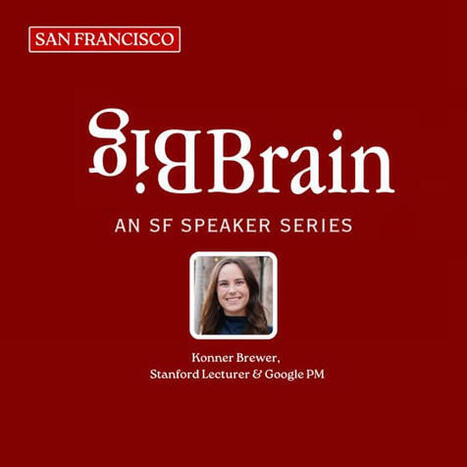
In this lecture, Konner Brewer, Stanford Lecturer and Product Manager for Applied AI at Google, explores why understanding others is more complex than it seems. Through case studies and classic experiments, she reveals a key insight: people can’t always explain why they do what they do.
Instead, we rely on stories - our own and others’ - to make sense of behavior. This talk challenges conventional ideas of empathy, because in a globalized world, if we want to truly connect with others, it’s not enough to feel what we would feel in their position, we have to learn how to see the world as they do.
In this clip from The Late Show with Stephen Colbert, director Steven Spielberg discuss how empathy is used as a core concept—and a literal "superpower"—in his film Disclosure Day.
Here is what the video says about it
Empathy as a Superpower: Spielberg explains that the characters in his film develop incredible abilities after being exposed to extraterrestrial secrets. Instead of classic comic book abilities like flying or super strength, these are powers rooted in deep human connection and empathy [04:57].
Changing Other People: Stephen Colbert notes that when Emily Blunt's character expresses this deep empathy toward others, it doesn't just get her out of difficult situations—it actually transforms the people she is connecting with [06:04].
Becoming Someone Else: Spielberg describes the peak of this power as the ability to completely "become" the person you are talking to for just five seconds. In that brief moment, you completely and deeply understand everything that person has been through in their entire life [06:24].
A Lesson for Humanity: Spielberg concludes by saying that if humans actually possessed this kind of instant, deep empathetic understanding of one another, "there would be a lot more cooperation between our own species on this planet." [06:37]
Is there such a thing as having too much empathy? That's a theory gaining the support of some of the world’s richest people following the release of a new book by Gad Saad, a Canadian marketing professor and frequent critic of liberal policies.
"A society dies when it cares more about exhibiting infinite tolerance and empathy than invoking its survival instinct," Saad argues in his book, Suicidal Empathy: Dying To Be Kind. Saad’s ideas have drawn frequent praise from prominent billionaires Bill Ackman and Elon Musk, who said suicidal empathy will "end civilization
Join national leaders as they showcase breakthrough research, programs, and ideas shaping a more compassionate world.
Experience three inspiring days with leaders advancing empathy and compassion as drivers of better care, learning, and culture. Attendees will:
Explore emerging empathy and compassion research that translates into real, measurable impact Reimagine the future of medical education to prepare the next generation of compassionate clinicians Build more sustainable care environments that support healthcare workforce well-
Dr. Gad Saad: "Too little empathy or no empathy makes you a psychopath. Too much empathy when it's hyper fires in the wrong situations towards the wrong targets — you end up with a malady that can destroy the West."
Do empathetic healthcare organisations deliver better care? Howick has spent more than a decade researching what empathy does inside healthcare systems and, critically, what destroys it. His most recent study, the first of its kind, built a system empathy index across NHS trusts in England and tested whether more empathic organisations actually deliver better care.
The results are stark. A healthcare trust scoring just 2.5% higher on the empathy index had 76% higher odds of being rated good or outstanding for patient safety, and 46% greater odds of being rated good or outstanding for effectiveness. Higher empathy scores were also associated with lower staff burnout, lower sickness absence, and lower spending on agency and temporary staff – the very pressures that Nottingham’s maternity unit was drowning in.
Empathy has become one of the most appreciated and universal ingredients of work-related potential. Leadership books praise it. CEOs display it on LinkedIn. HR departments measure it, train it, benchmark it, and occasionally weaponize it. In the modern organization, empathy is no longer a “nice to have,” but widely treated as the hallmark of modern leadership.
To be fair, there are actually good reasons for this.
Empathy, broadly defined, is the ability to understand and share the feelings of others. Psychologists usually distinguish between cognitive empathy, understanding what someone else feels, and affective empathy, actually feeling some version of it yourself.
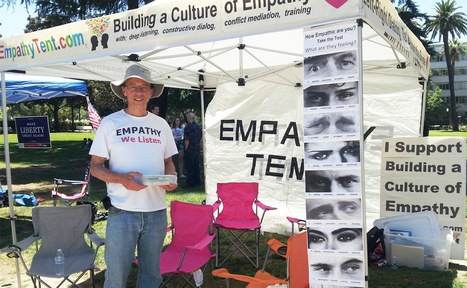
Our summits are comprised of a number of 15 minute presentations on the chosen theme for the quarterly summits. After the presentations the attendees are invited to participate in an Empathy Circle. Past summits have been on conflict resolution, training programs from around the world, and empathy book authors.
In addition the summit is reunion and re-connection of circle trainers, trainees, facilitators, practitioners and supporters.
Our theme is on The Foundational Practice of the Empathy Movement.
Join this Summit if you are ready to roll up your sleeves and help build the Movement. The Empathy Movement is a transformative force in addressing the growing fragmentation and polarization in modern societies. At its core, the movement seeks to reorient how individuals and groups relate to one another, shifting from transactional, adversarial and authoritarian interactions to ones rooted in mutual listening, deep dialogue, understanding, constructive collaboration and seeing our shared humanity.
The death of human empathy is one of the earliest and most telling signs of a culture about to fall into barbarism.” — Hannah Arendt
I’d come across the line years ago, but its true implications were lost on that younger version of myself. But the words popped up in my Facebook feed recently and I couldn’t help thinking this is us right now. You need only read or watch the news on a typical day and — if you’re paying attention — you’ll understand we’re on the precipice of becoming exactly that sort of cultural catastrophe.
If you don’t look like me, I hate you.
If you don’t act like me, I hate you.
If you don’t vote like me, I hate you.
If you don’t share my beliefs on this, that or the other — you guessed it. I hate you.
Gad Saad, in his book "Suicidal Empathy: Dying To Be Kind," warns that excessive empathy and unbounded tolerance is leading the West toward its own destruction. With examples in New York, California and transgender activism, the professor explains how prioritizing foreigners, criminals and activists over one's own citizens can be suicidal for a society. The theory is supported by Elon Musk.
For more than two decades, empathy has occupied a near-sacred place in leadership thinking. It has been framed not as a soft skill but as a strategic capability essential for influence, collaboration, and effective decision-making. The World Economic Forum Future Job Report 2025 reinforces this trajectory: “empathy and active listening” rank in the top 10 core skills, with employers expecting them to remain just as significant, if not more so, over the next five years.
Yet, this consensus sits uneasily alongside another reality. As global workplace research from Gallup shows, leaders are operating under sustained pressure and emotional strain. Time horizons are shrinking. Stakes are rising. In precisely the conditions where empathy is most needed, it is becoming harder to practice.
In this episode of Tech Won’t Save Us, we are joined by Julia Carrie Wong to discuss Elon Musk’s recent opposition to empathy, how it comes out of the Christian right, and the relationship it has to previous discussions of longtermism.
In recent years, empathy has gotten a bad rap. Paul Bloom's famous work Against Empathy argued empathy was necessarily biased and should be thrown out. Figures like Elon Musk argue our instinct for compassion is leading to bad outcomes. Here, philosopher Gigla Gonashvili argues we must reclaim our empathy from those who seek to temper it. We must embrace our will to care.
As we watch the world aflame today, we naturally wonder with whom we should empathize the most, or whether our empathy is of any use at all. Recently, there has been a growing discontent with empathy, primarily due to its partial and biased nature. And yet, empathy cannot be so easily discarded or downgraded. It is inextricably tied to the concept of the will—a fundamental concept in both philosophy and religion.
by Element Love by George Clausen Shifting from Protection to Integration The biggest hurdle to teaching empathy is the widespread misconception that being empathetic makes you vulnerable to being overwhelmed. Many sensitive people spend their lives feeling like sponges, absorbing the grief, anger, and anxiety of everyone they encounter, eventually retreating behind thick emotional layers just to survive the day-to-day routine.
But absorbing noise isn’t empathy; it is a symptom of an unmanaged field. When you absorb someone else’s emotional output, you are matching their chaotic frequency instead of holding your own. You are letting their wave dictate your rhythm.
True empathy requires a quiet, rational mind working in perfect tandem with an open heart. It allows you to recognize the heavy energy someone is carrying without taking it onto your own ledger.
Gad Saad breaks down his framework of "suicidal empathy." He argues that empathy, like any other human instinct, is only a virtue when operating within its optimal range. Too little and you're a psychopath. Too much, aimed at the wrong targets, and you get a civilization that serves the interests of its enemies.
Gad explains why the wealthiest societies in human history are also the most vulnerable to parasitic ideas, how the human mind gets hijacked by ideologies the way a parasite hijacks its host, and why communism, wokeness, and every other "bad idea that won't die" keeps returning generation after generation.
Some people are good at putting themselves in another person’s shoes. Others may struggle to relate. But psychologist Jamil Zaki argues that empathy isn’t a fixed trait. This week, we revisit a favorite episode about how to exercise our empathy muscles. Then, Leslie John answers listener questions about the benefits of opening up to others, in our latest installment of Your Questions Answered.
This webinar focuses on the potential for reading to support young people’s empathy
There is growing interest in the relationship between reading and empathy, specifically understanding whether, how, and for whom, book reading fosters empathy. This webinar explores the potentially enriching effects of books, and other texts, to support empathy. The speakers will provide examples of contemporary research studies to exemplify the relationship between fiction book reading and empathy, and provide book recommendations for secondary school pupils, to nurture empathy among adolescent readers.
To get content containing either thought or leadership enter:
To get content containing both thought and leadership enter:
To get content containing the expression thought leadership enter:
You can enter several keywords and you can refine them whenever you want. Our suggestion engine uses more signals but entering a few keywords here will rapidly give you great content to curate.





 Your new post is loading...