Seeking to mediate between the "classical" view of countertransference as a neurotic impediment to the treatment process and the more recent "totalist" perspective, which assumes that the therapist's emotional response necessarily reveals something about the patient, Tansey and Burke stake out a thoughtful middle ground.
They submit that the therapist's utilization of adequately processed countertransference reactions is in fact integral to treatment success, while arguing against the totalist assumption that the therapist's emotional to the patient must be revelatory in a direct and immediate way.
I am really enjoying reading your blog. If you want to buy villa in Noida Extension then call on the given number-8375000707 as we give you the best offers for buying villa in Noida Extension. https://www.villasinnoida.com/villas-in-noida-extension.php
Empathy lies at the core of human social life and shapes interpersonal understanding, cooperation and psychological well-being. Traditionally, empathy research has focused on the empathizer: the individual who experiences and expresses empathy towards another person or group.
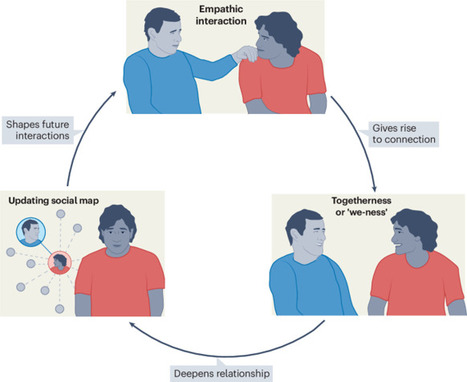
However, a growing body of work suggests that empathy is best understood within a dyadic process that is shaped by both partners over the course of an exchange. In this Review, we conceptualize empathic interaction as a shared, ongoing, dyadic process that involves an empathizer, a recipient (target) and a jointly constituted experience that can foster positivity resonance and togetherness.
We consider the cognitive, affective and motivational aspects of empathy through a dyadic lens. In doing so, we clarify how each component manifests for both empathizers and recipients, and how partners’ reciprocal cues, interpretations and responses dynamically influence one another across these components.
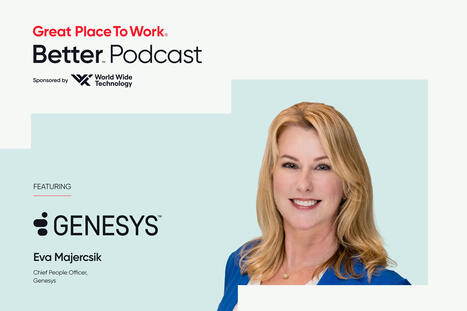
Key takeaways 1. Empathy is a business strategy, not a soft skill. Majercsik argues that empathy is often misunderstood. It isn't about being nice all the time. It's about listening, understanding another person's perspective, and using that understanding to build stronger relationships with employees and customers.
2. You can't train someone to be empathetic, but you can give them the tools. Genesys reinforces empathy through active listening, manager development, radical candor, and regular feedback. The goal is helping leaders listen to understand rather than listen to respond, making empathy a daily practice instead of an aspiration
Understanding why someone believes something does not require adopting that belief. Listening to another person’s experience does not require surrendering your own. Showing compassion toward someone on the opposite side does not make you weak.
It makes meaningful disagreement possible.
Yet much of modern culture pushes us in the opposite direction.
Social media rewards outrage. Political fundraising thrives on fear. Cable television knows conflict keeps audiences watching. Algorithms learn what makes us angry and provide more of it.
This argument has gained currency over the past few years due to a slew of best-selling books. Allie Beth Stuckey, an influential podcaster in Christian Evangelical circles, has written one such volume called “Toxic Empathy.” This condition, she writes, “blinds a person to both reality and morality, ignoring the victim on the other side of the moral equation.” Stuckey takes aim, for example, at progressives who express concern for the plight of asylum-seekers “while obscuring the chaos and death enabled by the [immigration] crisis.”
An even stronger version of the argument is put forward by Gad Saad, an academic whose previous work applied evolutionary psychology to the study of marketing. In his recent book, “Suicidal Empathy,” Saad argues that while the ability to understand and share the feelings of others is a noble virtue, it can lead entire societies astray when it is the primary basis for policymaking.
Connecting the dots: stress and inflammation Chronic inflammation is associated with auto-immune disorders such as asthma, irritable bowel syndrome (IBS), metabolic disorders, and allergies with which many people struggle, thereby finding their vitality reduced. People sometimes respond to these disorders by engaging in proper self-care, daily exercise, and well-balance diets. People also respond by engaging in self-defeating behaviors. People try to self-medicate with alcohol. They try to regulate and regain their emotional equilibrium in the face of social stressors by acting out in way that sabotage their own long-term well-being.
A psychologist at the Nuremberg War Crimes trial, G.M. Gilbert made an observation about the nature of human evil that he had witnessed in the face of the Holocaust of World War II: “Evil is the lack of empathy,” he said.
I believe this quote is relevant to a growing movement within the American Christian church culture today. The issue troubling me is the promotion of a teaching called “toxic empathy.” It is the idea that if we engage or have working friendships with people who have beliefs that are to some degree in conflict with the teaching of Christ and Scripture, that we might be promoting a biblically false form of empathy and toleration: we might be promoting a form of “toxic empathy.”
Operational Empathy Starts With Understanding The Work Operational empathy means understanding what workers actually encounter before that friction manifests in financial impact. Most organizations view turnover, absenteeism and workers’ compensation claims as outcomes for HR or EHS to manage, after the fact. But the root inputs are physical and procedural: awkward lifts, unclear staging, congested aisles or material handling systems that feed a station faster than a team can safely process. In those environments, workers are forced to absorb the mechanical friction that the system failed to accommodate.
Empathy is more than simply understanding how another person feels, according to new research from QUT.
New scale measures how people share positive or negative emotions
Researchers distinguished three forms of empathy and linked them to personality traits and behaviour
People who shared others' negative emotions were less likely to report prosocial intentions.
QUT researchers have developed a short, practical scale that measures how people experience empathy, distinguishing between understanding another person's feelings and sharing either their positive or negative emotions.
The team of consumer researchers in QUT's School of Advertising, Marketing and Public Relations published their eight-item Valenced Arousal Empathy Scale (VAES) in Personality and Individual Differences.
New research reveals how people process empathy when they see someone in pain, showing that physical attractiveness and moral history both influence our emotional responses. The findings indicate that moral judgments dominate our conscious feelings of pity, while physical attractiveness exerts a subtle influence during different stages of brain activity. The small study was published in the International Journal of Psychophysiology.
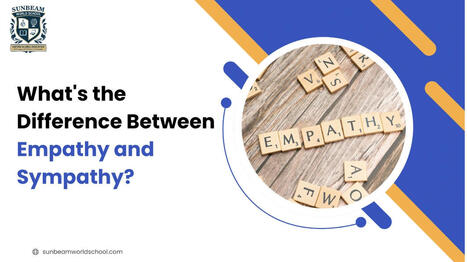
Quick Summary Sympathy means feeling sorry for someone from your own point of view. Empathy means understanding and sharing their feelings from their point of view. Sympathy says "I feel for you," while empathy says "I feel with you," so empathy usually leaves a person feeling understood rather than pitied.
Empathy shares a person's feelings from their side, while sympathy looks at their pain from your own. Both show care, but they make people feel very different.
Imagine a child who comes home upset because nobody sat with them at lunch. One parent says, "Oh no, I'm so sorry, you'll make new friends." Another parent sits down and says, "That sounds really lonely. Tell me what happened." Both parents care, but the first reply is sympathy and the second is empathy.
Empathy, often misunderstood, is a complex, learnable skill, not just a feeling. Recent Stanford research shows VR training can enhance empathetic communication. True empathy involves five key aspects: perspective-taking, focusing on *their* experience rather than projecting our own; emotional attunement, paying attention to feelings and using sensitive language; curiosity, staying open to unknown factors before judging; empathic concern, caring without rescuing or dictating solutions; and responsive empathy, tailoring support to individual needs. Empathy isn't agreement or fixing problems, but deeply understanding others by asking, "Help me understand more about what you're experiencing," before offering advice.
A prominent Catholic bishop and commentator has waded into the ongoing culture war over empathy and its role in Christianity, siding with conservative influencers who argue that practicing empathy carries great risk. Bishop Robert Barron, who heads the Diocese of Winona-Rochester, Minnesota, and founded the popular online media organization Word on Fire, devoted a recent podcast and homily toward undercutting the role of empathy in U.S. culture.
In a YouTube video posted Sept. 6, Barron said, "If you put empathy, so defined, in the center of your preoccupation, truth, reality, justice and love are going to be threatened."
Empathy provides a cognitive and emotional bridge that connects individuals and promotes prosocial behavior. People empathize with others via two complementary perceptual routes: Cognitive Empathy or the ability to accurately recognize and understand others' emotional states, and Affective Empathy or the ability to 'feel with' others. This Element reviews past and current research on both cognitive and affective empathy, focusing on behavioral, as well as neuroscientific research. It highlights a recent shift towards more dynamic and complex stimuli which may capture better the nature of real social interaction. It expands on why context is crucial when perceiving others' emotional state, and discusses gender differences, biases affecting our understanding of others, and perception of others in clinical conditions. Lastly, it highlights proposed future directions in the field.
In our conversation, we explore: → Empathy as a skill: what his lab found, and how to turn a belief into a plan and daily habits → Kind systems: why people think they are alone in wanting more empathy at work, and how leaders can change the norm → Stack ranking, cynicism and accountability: why pitting people against each other backfires → Artificial empathy: why chatbots now sound more caring than strangers, and the risk of AI that only tells us we are right → Young people, self-criticism and hope, and three practices to start tomorrow morning
"It's like a suit of armor that you put on, but instead of protecting you, it suffocates you." Jamil Zaki, on cynicism
If you have ever been told that empathy is soft, or felt that cynicism keeps you safe, this conversation is for you.
In my previous article, I wrote about the empathy gap in social innovation, which is the distance between those designing solutions and those living with the problems they aim to solve. Research, funding and expertise can create the illusion of understanding while still missing what people actually need. Good intentions are not enough; meaningful innovation requires staying close to lived experience.
In the age of AI, another gap matters just as much: the frontline gap. This is the distance between decision-makers and the people experiencing systems every day. As AI makes it easier to automate and scale, that distance is more consequential. The faster we build, the more important it is to make sure we are solving the right problem.
✨ Empathy begins with the ability to imagine another person’s experience.
In this clip from LIGHTWORKERS, Keith Olbermann reflects on why empathy matters, the simple but powerful act of placing ourselves in someone else’s position and recognizing our shared humanity.
We may not live the same lives. We may not face the same struggles. But we can choose understanding.
LIGHTWORKERS is a documentary from filmmaker Bobby Roth asking a simple but urgent question:
“What can we do?”
Featuring voices including Keith Olbermann, Henry Winkler, Tom Morello, Jamie Raskin, Adam Kinzinger, Peter Coyote, and many others.
According to Yale psychologist Paul Bloom, empathy is inherently biased, and there is no point in attempting to convince ourselves we feel strongly and compassionately for all human beings. Bloom notes that our desire to help others is usually selectively aimed at those we relate to or that experience similar life circumstances. The issue, however, does not end here. It is not simply a lack of empathy that we are facing, but also a perverted obsession with punishment looming over online spaces. It is not enough that the woman is paralysed and has already lost her three children and husband – we want to see her suffer more, suffer endlessly to satisfy an itch for vengeance. In particular, we want to see the punishment of a woman, even more so than that of a murderer.
The trend is raising concern about how well prepared ChatGPT, Claude, Gemini, and other popular LLMs are to provide appropriate emotional support.
To address this concern, Georgia Tech researchers have developed a new neural framework that examines how different training sources influence empathy and social reasoning within these AI-powered models.
“A lot of people are using LLMs to help process the death of a loved one, or maybe their girlfriend broke up with them, or their boyfriend cheated on them,” said Glenn Matlin, a Ph.D. student in the School of Interactive Computing.
Matlin said the new framework he and a Georgia Tech-led research team have developed audits neural networks with an LLM and estimates the influence documents, transcripts, and other data sources have on a model’s output.
The magic of empathy not being sympathy, not being compassion even, but being a precursor to compassion, and you start applying empathy in that form to all problems, and they solve real fast. And so, I just remember thinking, this empathy, it’s a very caring thing to do. Shouldn’t I be able to do that with people that matter to me?
I mean, why has it got to be restricted to somebody who’s in crisis?” “Mm-hmm.” “I started to experiment with it in my personal life and my professional life. And every now and then, I’d hit a home run that I didn’t expect. At one point in time, I remember being in a conversation with a person, and she said to me, ‘You’re reading my mind.’
And I’m like, no, I’m reading your emotions. It feels like I’m reading your mind. And then I began to really understand the different levels of it. Hostage negotiators across the US will tell you, yeah, it works with bad guys, but it doesn’t work at home. And I wasn’t willing to accept that premise.” “Your approach is rooted in — the term you use is ‘tactical empathy.’ Can you explain what that is and why it’s effective in negotiation?” “Yeah, the real roots are in Carl Rogers, this American psychologist, ‘50s, ‘60s, ‘70s
As a doctor, these findings concern me, but don’t surprise me. People crave empathy, humility, and active listening. AI—as well as friends, family, and social media—can provide that. Whether they provide accurate information is, however, up for debate.
Empathy alone isn’t, of course, a substitute for good data. Our analysis shows what may work in the face of confusion: recognizing that people are far more likely to accept good advice when they believe their concerns are truly heard. That principle applies not only to the exam room, but to anywhere public health asks people to place their trust in expertise.
When will AI minds become truly self-aware? Is the current path of AI development likely to lead to truly self-conscious artificial minds? To answer this question, we need to look at what makes human minds truly unique. There are three defining human abilities for thinking and world exploration that set humans apart, enabling them to learn, grow, and create. These are embodied, metaphoric, and empathic thinking. When AI agents can replicate them, especially true empathy, they will become truly conscious.
First, there is embodied thinking, which provides thinking entities with a type of situational awareness that feeds their imagination. Minds live in bodies that relate to the world through conscious and unconscious relationships, supported by the senses and by the cognitive capacity to imagine new paradigms of being, given embedded experience. We would not have come up with Riemannian spaces or the entire branch of topology in mathematics without our prior understanding of space as a fundamental reality.
Empathetic leadership: Often heralded. Less often successful.
We’ve heard for years that empathy is a leader’s best tool. But there’s research that suggests it’s not always the most practical tool.
The empathetic leader is supposed to have a genuine interest in the lives, challenges and feelings of their employees and colleagues. On top of that, they try to understand others’ needs and be aware of their feelings.
Quite honestly, that’s a tall order.
And that’s why many managers in the past few years have felt pressured to fake the high-level empathy that’s often reserved for close friends and beloved family members.
by Walt Rakowich That’s where empathy gets tricky.
We often can have an intellectual understanding of a situation. We can know the details and facts even if we weren’t involved, and we can know the event likely would have caused someone to have an emotional response. We can even imagine how that person might have felt. But we can’t always have an empathetic understanding where we know or feel what another person is going through. Our limited imaginations often won’t let us share in the emotions they are experiencing.
Thankfully, innate abilities can come to our aid, according to Helen Riess, chief scientific officer of Empathetics and an associate professor of psychiatry at Harvard Medical School. Brain research, she notes, shows that empathic people can “exhibit unconscious mimicry of the postures, mannerisms, and facial expressions of others to a greater degree than individuals who are unempathic.” In other words, some people express empathy just by intuitively reflecting what they see in others.
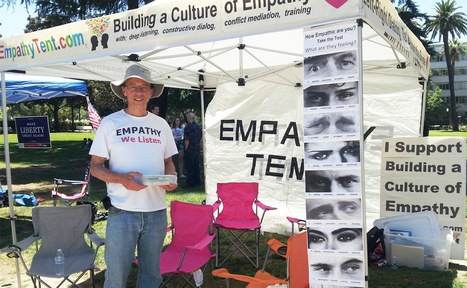
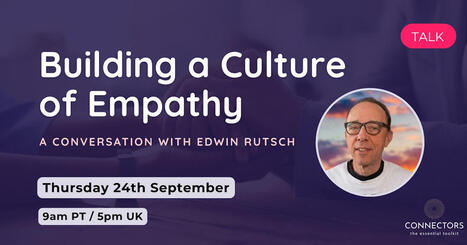
What happens when we think of empathy not only as an individual quality, but as something we can cultivate collectively? In this conversation, we’ll explore the science of empathy with Edwin Rutsch, founder of the Center for Building a Culture of Empathy.
We’ll look at what empathy is, what makes it difficult to practice, and what gets in the way of creating more empathic relationships and communities.
But this isn’t just about understanding empathy. Together, we’ll explore how we can put empathy into practice in our everyday lives, and how small, intentional actions can contribute to a more empathic culture around us.
We’ll consider questions such as:
What does science tell us about how empathy works?
What are some of the common challenges and misconceptions around empathy?
What prevents us from empathising with others, especially when we disagree?
How can we strengthen our own capacity for empathy?
What simple practices can help us bring more empathy into our relationships, communities and everyday interactions?
And how can individual acts of empathy contribute to a broader culture of care and understanding?
This is an invitation to move beyond empathy as an idea and explore it as a practice, one that each of us can cultivate and share with others.
Empathy allows us to connect with others and understand someone else’s experience. Empathy strengthens the social fabric that sews us all together. It encourages kindness to strangers, help to those who need it and pushes for a stronger connection amongst humanity.
Becoming educated and aware of issues around the world does not make you responsible for fixing them, but rather allows for understanding and consideration of those issues and the people affected.
To get content containing either thought or leadership enter:
To get content containing both thought and leadership enter:
To get content containing the expression thought leadership enter:
You can enter several keywords and you can refine them whenever you want. Our suggestion engine uses more signals but entering a few keywords here will rapidly give you great content to curate.


 Your new post is loading...