Empathy is the ability to feel with another human being. And we're getting worse at it. Parenting expert Dr. Michele Borba, Ed.D., explains how you can help your child learn to be more empathetic.
Fortunately, empathy can be taught and cultivated. But we have to put our phones down to do it. "Empathy starts with face-to-face interaction," Dr. Borba said. Here, her top tips for helping your kid care more:
* Read (and talk) more... * Teach kindness... * Emphasize eye contact.... * Share good news. ... * Establish your family values.... * Do as you say....
I am really enjoying reading your blog. If you want to buy villa in Noida Extension then call on the given number-8375000707 as we give you the best offers for buying villa in Noida Extension. https://www.villasinnoida.com/villas-in-noida-extension.php
Empathy plays a central role in healthcare delivery, where higher clinician empathy is consistently associated with improved therapeutic alliance, increased patient satisfaction, better adherence, and improved outcomes.
Empathy-focused educational and behavioral interventions have therefore been increasingly adopted in medical and allied health training programs, with systematic reviews demonstrating moderate but reliable improvements in empathic skills. Educational systems similarly acknowledge empathy as a fundamental social–emotional competency associated with mental health, academic engagement, and prosocial behavior."
For the second time, people in Philadelphia have beaten up a robot. Last month, an Uber Eats delivery robot was kicked over and vandalized. About a decade ago, Hitch Bot was also beaten up in the City of Brotherly Love.
Daryl Cameron, associate professor of psychology at Penn State and director of SSRI's Consortium on Moral Decision-Making, studies how humans interact with, and feel emotion towards artificial intelligence like robots and Large Language Models (LLMs). In this video he explains these interactions show concerns that a lot of people have about AI taking over jobs. But the way people interact with robots and AI also says something about the empathy they have for society.
Cameron was also featured on The Last Show Podcast, where he explores whether true empathy is possible between humans and AI.
The word “empathy” carries a curious linguistic history in meaning that stretches across centuries and languages. It once existed in Greek as empathia (εμπάθεια), a term associated with emotion and inner movement. Today, English uses “empathy” to describe understanding and compassion, while in Modern Greek, empathia often conveys hostility or resentment.
From emotion to excess: The ancient roots of the Greek word “empathy”
Listening is a habit—and habits aren’t fixed Graham Bodie, professor of communications at the University of Mississippi, describes listening as a habit-based behavior. Like other habits, he says, “listening becomes ingrained through repetition, often runs below conscious awareness, and remains malleable.”
That framing matters. If listening were a fixed trait—something you “have” or “don’t have”—we’d be stuck with our defaults. But if listening operates like a habit, we can strengthen it. We can notice our filters, experiment with new choices, and adapt our listening to what the moment requires.
Listening intelligence (LQ), a framework developed by Bodie and several colleagues, invites us to build three capacities:
Lo más potente del texto es entender que no escuchamos "mal", escuchamos en automático. Cada uno tiene un filtro unos buscan hechos, otras emociones, otras soluciones. El problema es cuando mi filtro no es el que el otro necesita en ese momento. Por esto debemos aprender a escuchar y de esta manera comprendemos todo. Además me llamo la atención por como explica todo y la forma de pensar del autor.
Artificial empathy refers to the capacity of artificial agents—particularly social robots—to engage in interactions based on emotional communication that are interpreted as empathic by human users. While often treated as a simulation of human emotional capacities, the concept has evolved into a site of theoretical inquiry at the intersection of cognitive science and (embodied) AI, philosophy of mind, philosophy of technology, and ethics. Rather than interpreting empathy in terms of internal emotional states, emerging approaches reframe it as a relational, embodied, and distributed process. This entry explores the origins, conceptual shifts, debates, and implications of artificial empathy, with particular attention to its potential to reshape understandings of emotion, sociality, and human–machine interaction.
At the heart of counselling and psychotherapy is the formation of an empathic and safe relationship. This relationship is nurtured and developed between you and your therapist through open communication, trust and understanding.
AIM
Our aim at Empathy Counselling & Psychotherapy is to create a warm and safe environment in which you will be supported in dealing with the issues and difficulties that life presents. Counselling and psychotherapy provide individuals with the opportunity to explore ways of living a more resourceful life. Through working with a trained professional, you may explore feelings about present and past life difficulties and work towards a more satisfying way of being.
Summary: What makes us human? For decades, scientists have debated whether our ability to speak and our ability to understand others’ feelings (Theory of Mind) grew from the same “mental soil.” A new study has finally settled the question.
Using fMRI to scan children as young as three, researchers found that these two sophisticated skills originate from completely separate, non-overlapping brain regions. This “discrete architecture” suggests that our brains evolved with specialized wiring for language and empathy from the very beginning, rather than these skills branching off from a single cognitive source as we grow.
When empathy is integrated into healthcare innovation, it changes the way solutions are designed from the ground up. Instead of focusing solely on efficiency or performance, developers begin to consider how patients experience care in real life. A system may be highly advanced, but if it creates confusion or anxiety, its effectiveness is limited. For example, a digital health platform might offer powerful features, but if patients struggle to navigate it during stressful moments, the technology fails to achieve its purpose. Empathy helps ensure that innovation is not only intelligent but also intuitive and supportive.
The gap persists through three recognizable and reinforcing patterns.
The first is the empathy ceiling, in which empathy comes to function as an endpoint rather than a baseline for leadership. Once a leader expresses awareness through language, identity, or stated intent, scrutiny recedes. Leaders perceived as “getting it” are questioned less, even when hiring and promotion outcomes for women remain unchanged.
The second is intent inflation. Organizations routinely over-credit leaders for intent while under-pricing the cost of inaction. Leaders earn credit for expressing the right values even when advancement outcomes remain flat. When intent is rewarded without regard to outcome, intervention becomes optional.
The third and most operationally consequential pattern is ambiguity transfer: when unclear ownership gets converted into invisible cleanup labor and pushed onto those without the formal authority to assign, decline, or be rewarded for it. I
Empathy sits at the heart of effective helping relationships. This eBook explores the difference between innate empathy and the learnable skill of accurate empathy, showing how reflective listening deepens understanding, strengthens connection, and supports meaningful client change.
In this eBook, discover how to:
Understand empathy as both a natural trait and a clinical skill
Use reflective listening to clarify meaning and build trust
Recognize common barriers to empathic communication
Develop accurate empathy that fosters real therapeutic progress
“The Empathy Evolution” by Ronald Goldman, PhD, Provides a Groundbreaking Guide to Building a More Caring Society
MA, UNITED STATES, April 15, 2026 /EINPresswire.com/ — The latest book by award-winning psychologist Ronald Goldman, PhD, “The Empathy Evolution: Preventing Violence, Racism, Political Corruption, and Mental Illness by Creating More Caring People,” is a landmark work in social science that offers a revolutionary approach to addressing some of society’s most persistent and troubling issues.
This 305-page book dives deep into the long-term effects of American childcare practices on personal and social problems. Drawing on decades of research, Dr. Goldman highlights how early traumas sustained from cultural practices create ripples throughout a lifetime, contributing to issues such as violence, racism, political corruption, and mental illness. By adopting strategies proven in other countries and providing what is natural for infants and young children, Dr. Goldman explains that Americans can create profound, positive change.
Bio: I am a dual PhD student in social psychology and cognitive science studying moral psychology, viewpoint diversity, and empathy. (LinkedIn) (Facebook) (Website)
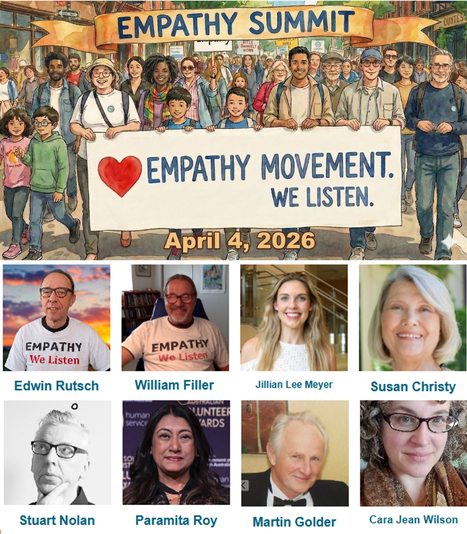
Topic: Exercising Empathy and Strengthening the Empathy Movement
Abstract: The empathy movement is facing a growing challenge as scholars increasingly highlight its “dark sides,” from bias and burnout to what some call harmful or even toxic forms of empathy. This talk argues that the problem is not empathy itself, but how we understand and use it—proposing a new framework that treats empathy as a moral muscle that can be underdeveloped, overextended, or well-trained. By shifting the goal from “more empathy” to “better-calibrated empathy,” this model offers a path forward for building an empathy movement that is both effective and sustainable.
In May our theme for Mental Health & Education Week is "Feel Well, Think Well, Learn Well….Together!". When we practice empathy, we help each other feel well by creating safe and supportive spaces, think well by understanding different perspectives without judgment, and learn well…together by growing through shared experiences and mutual care.
This month, we are focusing on the theme of EMPATHY with students as part of their mental health skill-building. Empathy is the ability to understand what someone else may be experiencing by imagining how they might feel or think. It’s about “walking in another person’s shoes,” listening to their perspective without judgment, and expressing our understanding of their emotions. Empathy involves recognizing the humanity in others, being fully present, and validating their feelings. Often, it is the first step toward compassionate action and supporting others in meaningful ways.
Empathy is important because it helps us:
Treat others in the way they want to be treated
Better understand the needs and feelings of those around us
Recognize how our words and actions are perceived by others
Respond more thoughtfully to the needs and experiences of others
A new study is the first to show that two of our most sophisticated cognitive functions, using and understanding language and being able to sense how other people feel, have distinct origins in the brain in young children – matching what we know about the adult brain.
The findings suggest that these separate but related ways of processing complex concepts, both uniquely human skills, do not originate from overlapping brain areas and grow more distinct as the mind matures, which challenges prior theories. Instead, our brains appear to have evolved with discrete architecture and wiring enabling these different kinds of thinking.
At work, the human case for empathy is straightforward: Social connection is one of our greatest sources of well-being, and when workers feel it they grow happier and healthier. Research has now made the business case for it equally clear: Employees of empathic companies do better, working harder, collaborating more efficiently, and generating stronger ideas.
AI, however, is putting human connection at risk. Many workers, deeply concerned about how the technology will change their jobs, are experiencing rising levels of mistrust and “FOBO,” or fear of becoming obsolete. A 2025 study found that when companies adopted AI, employees’ depression levels tended to increase over time.
In the study, researchers analyzed conversations in which participants responded to emotionally charged scenarios and practiced writing empathetic replies. Some did so without any feedback, others were allowed to watch a video with suggestions from a communications expert, and others got personalized feedback from an AI coach.
The experiment involved 968 participants, producing over 2,900 conversations and over 30,000 messages exchanged. The conclusion highlighted a surprising but powerful insight:
The ability to feel empathy is different from the ability to express empathy.
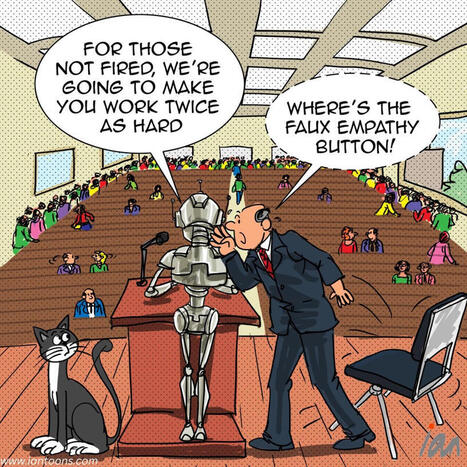
Empathy is increasingly held up as the one leadership quality AI cannot replicate. The irony, then, is that new research from Stanford suggests it can be trained using AI — but doing so may produce leaders who communicate empathy without actually feeling it.
Empathy is Our Strategic Superpower I’ve always been told empathy is a soft skill, but that’s the furthest from the truth. Empathy is our most potent strategic advantage. While the ‘half-life’of specialized technical skills1 has plummeted to just four years, foundational human strengths like ethical decision making, adaptability, and critical thinking endure.
Consider the “new work day” in HR: Sana agents can now cross-reference internal mobility data and flag flight risks, recommending a promotion and a new hire before a manager even starts their day. This creates space for leaders to have meaningful conversations about ambition and growth—the ones only humans can have.
El texto rompe el mito de que la IA reemplaza el liderazgo. Al contrario, al automatizar lo rutinario, obliga a los líderes a enfocarse en lo esencialmente humano. La empatía deja de ser "habilidad blanda" y se vuelve ventaja estratégica. Lo más potente es la idea de vulnerabilidad como superpoder en un mundo donde la IA da respuestas rápidas, el líder que admite "no sé" genera la confianza que ninguna máquina puede crear.
La nueva jornada laboral no es humanos vs IA, es humanos + IA con roles claros.La IA nos da velocidad, pero el liderazgo humano nos da dirección. Sin empatía, solo estamos automatizando el error más rápido
“Empathy is about finding echoes of another person in yourself.” – Mohsin Hamid.
As conversations around mental health continue to grow, the importance of safe, supportive spaces has never been more evident.
Empathy Counselling & Psychotherapy, based in Portlaoise, has been quietly providing such a space for over two decades.
Founded by Siobhan Galvin, the practice has evolved into a team of experienced, accredited and pre-accredited psychotherapists. Located discreetly off Grattan Street, it offers a warm, comfortable, and private setting where individuals can feel at ease.
At the heart of the service is the belief that effective counselling begins with an empathic and safe relationship—built on trust, openness and understanding.
In this Pearl, Maria shares how leading with empathy can transform both student behavior and relationships within a school community. Reflecting on a challenging experience with a student, she explains how listening, building trust, and seeking the “why” behind behavior shifted her process from correction to understanding, and led to meaningful change. Her story highlights that true leadership is grounded in human connection, reminding us that “success isn't just about the standards and scores. It's about human connection.”
Allie Beth Stuckey's debate with David French shows a textbook example of toxic empathy at work.
His sit down with Allie Beth Stuckey on her podcast, “Relatable,” was civil, polite, and respectful from beginning to end. But maybe the most ironic aspect of the conversation, though, centered around their debate over “toxic empathy” – the name of Stuckey’s bestselling book, and a topic that clearly bothers David French.
According to Stuckey, “toxic empathy” is empathy that overrides truth or moral judgment and “encourages the affirmation of lies, sin, or destructive politics.” Empathy becomes harmful when it leads to someone affirming something that is harmful and wrong – especially sexual confusion.
Pressing David French on why he used the preferred pronoun “she” to describe a “he” he replied, “I don’t see the value in saying something that I know and they know is going to be hurtful to them. It’s just normal, complete politeness and manners.”
Much of the blowback against the book has twisted Stuckey’s argument to claim that she is against any sort of empathy. (In this sense, it’s something of a mirror image, perhaps deliberately, of the “toxic masculinity” debate.)
But Stuckey doesn’t argue against empathy; she simply contends that it’s a tool rather than a virtue in itself, which can lead us to bad ends as well as virtuous ones. French’s disagreement with her is less with the characterization of one-sided empathy than with his general view that we need more, rather than less, empathy in politics, while Stuckey argues that feelings-based politics tends to be dangerous. As she told Douthat,
“There are always going to be people on both sides of any story with real pain, with real stories that matter. And both people are made in the image of God. At the end of the day, that’s why you can’t be led by empathy, because if you allow yourself, you can feel really deep empathy for people with competing needs and interests.”
Allie sits down with New York Times columnist David French for a candid discussion on faith, culture, and politics. They debate over the definition of “toxic empathy” and how it is used to advance progressive causes on issues like gender, sexuality, and social justice.
Allie argues that compassion must be grounded in biblical truth rather than emotional manipulation. French says that the real problem is selective or incomplete empathy and that he’s seen an increase in “Christian cruelty.” The conversation explores where Christians should draw lines between mercy, justice, and cultural engagement in an increasingly polarized America. Nothing is off the table, including hot-button topics like Trump, Luigi Mangione, January 6, abortion, and pronouns. Allie and David find some fascinating points of agreement despite public disagreements online.
The video titled "Empathy Summit: Debrief: How Might We Build the Empathy Movement?" is a collaborative reflection session involving over a dozen participants who share their experiences from a recent Empathy Summit. The group discusses the technical aspects of the practice, its emotional impact, and strategic ideas for scaling empathy into a global movement.
Summary
The debrief highlights a tension between the "rigid" structure of reflective listening and the desire for deeper, "heart-centered" connection. While some participants expressed concern that strictly repeating words can feel intellectual rather than emotional, others defended the structure as a necessary starting point for beginners, children, and non-native speakers. Strategic ideas for building the movement included renaming "empathy" to "listening" to avoid negative stigmas, developing a formal training curriculum, and high-visibility public actions like "Occupy Empathy" to encourage dialogue between opposing political groups.
Bio: Bill Filler is retired special education teacher who has worked with at-risk children of all ages for over 30 years. He has been involved in the Empathy Circle since 2017. He co-created the Empathy Circle Facilitator training with Lou Zweier and Edwin Rutsch, and has been holding trainings since March 2020. He is a member of the Empathy Center Board of Directors. (LinkedIn) (Facebook)
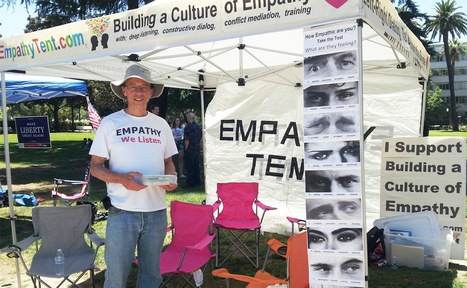
Topic: Bringing the Empathy Movement Message to the California State Democratic Convention
Abstract: We brought the message of the Empathy Movement to the California State Democratic Convention. When we got to the convention in San Francisco we found that people were open to a new way of relating to each other, and when they were listened to, were happy they tried the Empathy Circle process. We listened to individuals, brought our message to politicians, and got our message out during a short interview on KPIX TV, a local San Francisco TV station.
To get content containing either thought or leadership enter:
To get content containing both thought and leadership enter:
To get content containing the expression thought leadership enter:
You can enter several keywords and you can refine them whenever you want. Our suggestion engine uses more signals but entering a few keywords here will rapidly give you great content to curate.





 Your new post is loading...