
Both words share the root pathos, which originally meant a quality that evokes pity or suffering.
This is the key difference:
Sympathy means to feel pity or suffering with someone.
Empathy means to be inside someone else’s pity or suffering.
Get Started for FREE
Sign up with Facebook Sign up with X
I don't have a Facebook or a X account


|
Scooped by
Edwin Rutsch
onto Empathy Movement Magazine May 20, 2016 4:21 PM
|
 Scoop.it!
Both words share the root pathos, which originally meant a quality that evokes pity or suffering.
This is the key difference:
Sympathy means to feel pity or suffering with someone.
Empathy means to be inside someone else’s pity or suffering.

 Your new post is loading...
 Your new post is loading...
Your new post is loading...
Scoop.it!
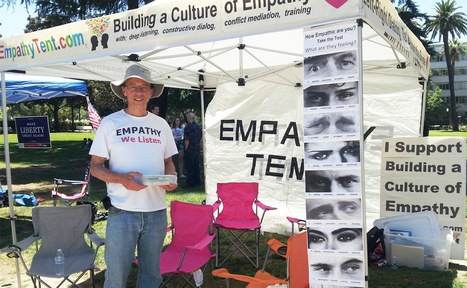
The Empathy Center Magazine Table of Contents
Visit the individual magazines specifically for empathy and;
Edwin Rutsch Director: The Empathy Center http://TheEmpathyCenter.org http://BestEmpathyTraining.com
Connect /Friend Me: Facebook: http://Facebook.com/edwin.rutsch/ Linked-In http://Linkedin.com/in/edwinrutsch/

ameliabiber367@gmail.com's comment,
December 25, 2025 1:31 AM
I am really enjoying reading your blog. If you want to buy villa in Noida Extension then call on the given number-8375000707 as we give you the best offers for buying villa in Noida Extension. https://www.villasinnoida.com/villas-in-noida-extension.php 
meerutrealtty@gmail.com's comment,
December 25, 2025 2:10 AM
I am really enjoying reading your blog. If you want to buy Plots in Meerut then call on the given number-7289000808 as we give you the best offers for buying Plots inMeerut. https://www.meerutrealty.in/shree-kunj-greens-shamli-road-meerut.php 
plotsinnoidaa@gmail.com's comment,
December 25, 2025 6:00 AM
I am really enjoying reading your blog. If you want to buy plots in Noida Expressway then call on the given number 7289000808 as we give you the best offers for buying plots in Noida Expressway. https://www.plotsinnoida.com/residential-plots-in-noida-expressway.php
Scoop.it!

Cognitive empathy: understanding the story behind the feeling
Scoop.it!
From
medium

Previously, I wrote an essay called ‘Empathy is Overrated’. A clickbaity title, I know. I wanted to overwrite that essay, since I felt a lot of it was outdated and poorly phrased…but an acquaintance of mine recommended that I instead make it a separate essay, keeping the original.
Scoop.it!

From
www
Dark empathy allows you to recognize what someone is feeling without emotionally merging with them. You can identify distress, insecurity, or manipulation while staying internally regulated. This emotional distance keeps you from spiraling when others do. It allows you to act strategically instead of reactively.
Scoop.it!
'Nurse: Empathy Heals' film premieres at ETSU Martin Center for the Arts
Scoop.it!
Allison Myers and Dr. Dena Evans, share with us all the details of the film "Nurse: Empathy Heals" that premieres this Thursday evening at Martin Center for the Arts at ETSU! Please watch the video to discover more about this powerful film that tells the narrative and stories of Nurses lived experiences.
Scoop.it!
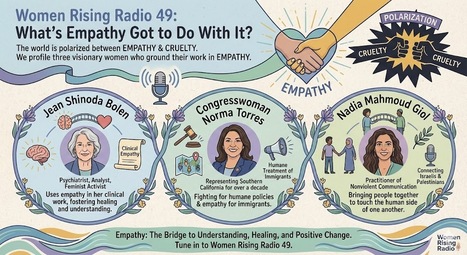
The world is polarized between empathy and cruelty. In this program we profile three visionary women who ground their work in empathy.
Jean Shinoda Bolen is a psychiatrist, analyst and feminist activist who uses empathy in her clinical work.
Congresswoman Norma Torres has represented her southern California district for over a decade, fighting for humane treatment of immigrants.
And Nadia Mahmoud Giol is a practitioner of Nonviolent Communication, bringing Israelis and Palestinians together to touch the human side of one another.
Scoop.it!

Empathy fatigue often shows up subtly. You might feel irritation when another ‘important issue’ appears on your feed, or guilt for not sharing, donating, or speaking up. Emotional numbness may hide behind humour or memes. Over time, tragedies blur together, losing their human specificity. When everything is framed as equally urgent, the mind flattens it all.

VelvetVanta's curator insight,
Today, 10:01 AM
"I really resonated with the point about empathy turning into 'unpaid emotional labor.' In my experience working with leaders in 2026, we’re seeing a 'Quiet Cracking' because people are performing compassion instead of practicing it. We’ve traded real presence for digital performance, and our nervous systems are paying the price. This is a vital conversation for the current climate
Scoop.it!

From
lhagsam
Join us for a series of Empathy circles using the “Conversations that Matter”, a new way of bringing inspiration for wise and compassionate action based on the 16 Guidelines for Life.
Scoop.it!

From
news
The team of faculty members - Leah Cheek, Vinson Carter, Michael Daugherty and Chris Goering - was recognized with the 1909 Conference’s Outstanding Publication Award for their recent publication, “Connecting compassion: Empathy’s role in STEM and literacy integration.”
Scoop.it!
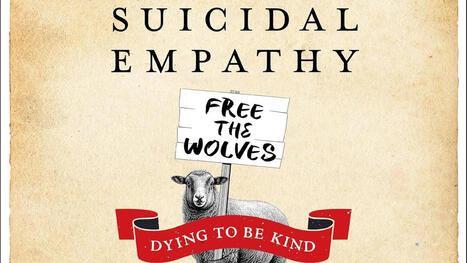
Canadian conservative philosopher Gad Saad is launching his sixth book, titled Suicidal Empathy: Dying to be Kind. According to an announcement made by Saad himself on X, the book is now available for pre-order.
Scoop.it!

From
hbr
Empathy has become a baseline expectation of modern leadership, but practiced without judgment it can backfire, leaving leaders depleted and employees feeling misunderstood. Effective leadership requires a more discerning approach: wise empathy , which recognizes that different emotional moments call for different responses. Sharing in employees’ negative emotions can accelerate burnout, while responding to those with compassion and support can protect both leaders and teams. The opposite is often true for positive emotions, which benefit from shared celebration. If leaders take five steps designed to guide them in the practice of wise empathy, they can strengthen relationships, improve engagement and retention, and support others without losing their own footing.
Scoop.it!

In a post-pandemic world, empathy is no longer a "soft skill" but a strategic imperative for high-performance leaders and organizations.
|
Scoop.it!

Scoop.it!

Every president I’ve ever covered gets more full of himself the longer he remains in office, and when you start out with Trump-level self-regard, the effect is grandiosity, entitlement, lack of empathy and ferocious overreaction to perceived slights.
Scoop.it!
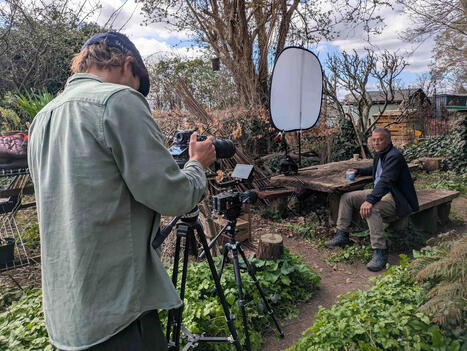
Bel Jacobs and The Empathy Project team would like to invite you to the first screening of The Empathy Project film, a documentary about change and compassion in animal activism.
Scoop.it!

On Jan. 8, the film “NURSE: Empathy Heals” premiered at the ETSU Martin Center. The film is the culmination of the Nurse Narratives Initiative, a collaborative effort of ETSU College of Nursing, Ballad Health, the Tennessee Center for Nursing Advancement and StoryCollab. The initiative has worked with nurses, nursing students, faculty and patients to tell their stories through a series of reflective workshops.
Scoop.it!

One hundred years ago, the word empathy entered the English language, coined by largely forgotten Cornell psychologist Edward Titchener, a disciple of Wilhelm Wundt. Over the ensuing decades, use of the word empathy exploded beyond the field of psychology, becoming central to how humans discuss understanding one another.

Laura Arcas's curator insight,
January 21, 3:47 PM
Tras acuñar los conceptos de "empatía e intensidad" Titchener, comprendió la atención humana mediante la introspección.
Debido a las características de la sociedad de hoy en día, la atención se ha visto fuertemente mermada, ya que únicamente se queda en lo superficial: escuchar por obligación, mirar un rostro porque toca, pasar por actividades emocionales sin realmente estar ahí... (Burnett, y Mitchell, 2026), El artículo propone que la verdadera atención es una fuerza humana profunda que nutre la conexión emocional entre personas. Sin embargo, ha sido erosionada por la cultura digital y la lógica de mercado que promueve la distracción constante y la fragmentación de la experiencia humana. En el contexto educativo, esto tiene un impacto enorme. ¿Cómo acompañamos a un niño o a una niña emocionalmente si no podemos sostener su atención más allá de la vigilancia o la transmisión de contenidos? Necesitamos recuperar una atención más humana. De aquí debemos partir para crear un aprendizaje tanto formativo, como para enseñar competencias emocionales como el respeto, la empatía y la autorregulación, que nos permitirán alcanzar ese desarrollo integral, que nos permita desenvolvernos en todos y cada uno de los ámbitos, con responsabilidad.
Scoop.it!

From
www
It is worth remembering that these AI chatbots are not displaying real empathy, but rather simulating it based on what they have learned from huge datasets of human interactions.

Mar V's curator insight,
January 21, 12:17 PM
En este caso, poniendo el foco en la Inteligencia Artificial, cabe tener en cuenta que esta ofrece grandes oportunidades a nivel educativo. Pudiendo hacer uso de ella para mejorar la capacidad de escucha activa, haciéndonos reflexionar sobre nuestra manera de comunicarnos y cómo esta es percibida por el receptor o qué emociones genera en este. De manera que los modelos tecnológicos nos pueden servir de reflejo para identificar aspectos de mejora sobre nuestros actos comunicativos.
Scoop.it!

Do you ever feel like you’re constantly the one listening, supporting, and showing up for others, until one day you hit a wall and think, I can't do this anymore?
Scoop.it!
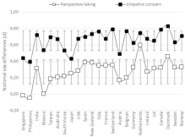
Females tend to score higher than males in the cognitive and emotional components of empathy. Similar to how temperature correlates positively with aggression, national sex differences in self-reported empathy could vary with latitude (i.e., distance from the Equator). Leveraging data from 24 primarily global-north countries (n = 101,137; 39,906 females), we examined whether perspective taking and empathic concern were associated with the distance from the Equator beyond individualism/collectivism and power distance. Across countries, sex differences in perspective taking (mean d = 0.28) were smaller than in empathic concern (mean d = 0.65).
Scoop.it!
From
red-slice
My guest today, Ed Kirwan, is doing exactly that. Ed is the CEO and Founder of Empathy Studios, a creative education organization using the power of film to develop empathy as a real, learnable skill. He’s also the founder of Empathy Week, now the world’s largest empathy festival for schools, reaching more than 1.8 million students across 56 countries since 2020.
Scoop.it!

We’ve been sold a cheap version of empathy. A polite, sterile nod from across the street. A social media post with a sad emoji. It’s a hologram of a hug—it looks right, but there’s no warmth, no substance. True empathy doesn't keep a safe distance. It crosses the line. It walks into the room nobody else wants to enter.

anita92delarosa@gmail.com's curator insight,
January 16, 8:10 AM
El artículo "La empatía no es agradable. Es revolucionaria". de Sloane Ramsey sostiene que la empatía auténtica va más allá de una respuesta cordial superficial y actúa como una fuerza que derriba barreras sociales y conecta a las personas desde una comprensión compartida de la experiencia humana. A través del ejemplo del concierto de Johnny Cash en la Prisión de Folsom, el texto argumenta que la empatía implica “entrar en la habitación que nadie más quiere entrar”, es decir, participar activamente en la experiencia del otro en lugar de simplemente observarla desde la distancia. La diferencia entre simpatía y empatía se define así: la primera mira desde fuera, mientras que la segunda se sitúa con el otro y comparte su realidad emocional.
Sin embargo, esta visión, aunque inspiradora, carece de una referencia teórica crítica que aborde las limitaciones estructurales o psicológicas de la empatía. La literatura contemporánea, por ejemplo, discute cómo la empatía puede ser selectiva o sesgada, enfocándose en individuos o grupos cercanos y, en algunos casos, exacerbando prejuicios sociales o decisiones irracionales si se la toma como único fundamento moral (como argumenta Paul Bloom en Against Empathy, donde propone la compasión racional como alternativa más equilibrada). Además, el artículo de Ramsey idealiza la empatía sin considerar cómo su práctica puede verse condicionada por contextos culturales, institucionales o de poder, aspectos que la investigación psicológica y social señala como determinantes para el ejercicio efectivo y ético de la empatía. En suma, aunque el texto promueve una idea valiosa de empatía como acción transformadora, su análisis sería más sólido si integrara marcos teóricos y evidencias que también contemplan sus límites y desafíos en contextos reales. Referencia Bibliográfica: Ramsey, S. (2026). La empatía no es agradable. Es revolucionario. Perspectivas hechas en China. https://insights.made in china.com/Empathy Isn't Nice It's Revolutionary_JtcGxIUOoEHm.html
Scoop.it!
Health policy is motivated by a variety of factors including moral concerns, values and convictions. Policymakers are motivated to consider how constituents and those directly impacted by policies will react to the policies they enact. Thus, it is advantageous for policymakers to understand the psychological processes that shape constituents' reactions toward health policies. We outline how and when policymakers and constituents are motivated to empathize, moralize, and compromise on divisive health policies, such as opioid-related policies, by considering the motivational frameworks of empathy and the plurality of moral values that inform attitudes.
We offer insight for policymakers balancing tradeoffs between different moral values and concerns, suggesting that policymakers should consider cultivating an active dialogue around the relevant moral emotions felt by both supporters and opponents. For example, when considering syringe services programs, supporters and opponents may both be motivated by the moral concern of harm—as supporters may see services as preventing infections and keeping people healthy, while opponents may see services as promoting drug use and in turn, harmful health outcomes.
We suggest that such a morally pluralistic effort will (1) highlight moral alignment amongst supporters to cultivate collective resolve and (2) acknowledge the competing moral concerns of opponents so that they feel understood and in turn, feel more willing to understand competing perspectives. While leaning into moral emotions may feel like a turn toward divisiveness, we suggest that acknowledging the plurality of moral values at stake sets the foundation for support and compromise.
Scoop.it!

The social justice mindset has rotted people’s minds to the point where they no longer understand truth, justice, consequences, or personal responsibility. Toxic empathy has replaced biblical realism. We feel bad about outcomes while refusing to acknowledge that actions have consequences.
Christians must stop the insanity of toxic empathy. We need a healthy dose of biblical realism: If you attack law enforcement, if you weaponize your vehicle against federal agents, you may be met with lethal force. That’s not injustice. That’s law enforcement protecting their lives while performing their duty.\
|





